The ebike battery is the engine of your electric ride that determines the distance you cover and the comfort you achieve on your way. But, like any other battery, it is not eternal. In the long run, the performance decays, the range decreases, and the charging can no longer be counted on.
Being aware of the signs of a dying e bike battery will help you not to get stuck or spend unnecessary money on a high-priced repair. Here we are going to discuss how to identify battery problems, voltages 48V ebike battery and 52V ebike battery, and when to perform an ebike battery replacement or a simple maintenance.
Why Understanding Your E-bike Battery Matters
The ebike battery is your ebike. It is your electric workhorse, it dictates your range, and it determines the overall riding of your e-bike.
The first signs of battery degradation in your electric bike battery will be noticed in the form of shorter rides, slower acceleration or issues with the charging, but most riders will choose to ignore these warning signs.
An ebike battery can last between 3 to 5 years, again depending on your riding habits, your charging habits and also on the quality of the pack. Like all lithium-ion batteries, this one does not last forever.
Being aware of the signs of ebike battery dying can help you avoid unexpected failures, battery replacement, or even dangerous road accidents.

Common Signs Your E-bike Battery Is Dying
Here are the telltale symptoms that your battery may be nearing the end of its life:
1. Decreased Range
When your e-bike used to travel 80 km on a single charge, then today, you can barely travel 50km, that is one of the most visible signs of battery degradation.
The capacity of lithium cells is lost during hundreds of charge cycles - usually after 500-1000 charge cycles.
2. Slow or Incomplete Charging
When your ebike battery charger light stays on longer than usual or never turns green, the internal cells might be failing to balance properly.
In case your ebike battery charger light remains on longer than the usual length of time or does not turn green at all, it may be possible that something has gone wrong with the internal cells, and they are not balancing correctly.
3. Voltage Drops Quickly
A properly charged 48V ebike battery is expected to maintain a charge. When your display goes dead in a few minutes and you find that it only goes halfway, it is a sign of weak or disbalanced cells.
4. Overheating During Use or Charging
When your e bike battery gets overly hot during one of your rides or when you are charging it, discontinue using it. Overheating may imply short-circuiting of the cells or an ineffective connection within the battery casing.
5. Motor Power Feels Weak
You will notice it instantly: reduced acceleration rate, reduced pedal power, and reduced maximum speed. Less current is taken by the motor as the voltage is reduced by the load.
6. The Battery Doesn’t Charge at All
In case the charger and the battery indicator do not react, there may be a problem with the internal BMS (Battery Management System), or the ebike battery connector types may be corroded or disconnected.
7. Visible Damage or Corrosion
Cautionary signs such as cracks, dents or swelling are harmful. The ebike battery connector may be corroded by moisture or a lack of sealing, which may also result in a short circuit.

How Long Does an Ebike Battery Last?
The majority of lithium-ion batteries, such as a 48 volt ebike battery or 52V ebike battery have 500-1,000 charge cycles, and this would be an approximate 3-5 year life expectancy.
A 72V ebike battery can be higher, and it can provide greater performance, but it will wear out more quickly unless it is handled with caution because of heat and stress on internal cells.
Usage habits heavily influence longevity:
- Frequent full discharges shorten battery life.
- Storing at 20–80% charge helps preserve capacity.
- Cool, dry environments are ideal for storage.
Even high-end options like a Bosch ebike battery eventually lose efficiency though they’re known for stability and advanced thermal management.
Why Voltage Matters (48V, 52V, and 72V Explained)
The voltage of your battery determines how much power your motor can draw:
|
Voltage |
Common Use |
Key Features |
|
36V |
Entry-level city bikes |
Efficient, moderate power |
|
48V |
Mid-range e-bikes |
Standard balance of range & speed |
|
52V |
Performance commuters |
Faster acceleration, higher torque |
|
72V |
Off-road / performance |
Extreme power but shorter lifespan |
A 48V battery ebike is suitable in the case of everyday riders who need to balance between range, reliability and safety. A 72V ebike battery may be quite impressive, but it must be managed very carefully - these are normally employed in extreme power off-road systems.
Whether your e-bike takes dual packs or not, with a dual battery ebike you can increase your riding range twice and decrease the amount of deep discharge cycles, which helps to increase the overall life cycle.
Why Do E-bike Batteries Fail Over Time?
Even the best ebike battery will degrade naturally. Here’s why:
- Heat buildup shortens cell life.
- Overcharging or over-discharging damages internal chemistry.
- Moisture exposure causes corrosion on the ebike battery lock and connectors.
- Cheap chargers without voltage regulation can cause imbalanced charging.
- Ageing cells gradually lose efficiency.
In case the ebike battery repair or replacement in your ebike, it is important to ensure that the voltage and connector systems are compatible. Shuffling of brands or connector types may result in short-circuiting or poor performance.

Can You Repair an E-bike Battery?
Yes — in some cases, but not always. Ebike battery repair depends on what’s wrong:
- Dead cells can sometimes be replaced.
- Broken wires or connectors can be resoldered.
- BMS failure can often be fixed by a professional.
But in case your battery swells significantly or corrodes, it is better to recycle it and replace it. Always employ certified repair services that know your particular ebike battery connector types on your e-bikes and your battery management system.
E-bike Battery Replacement: When and How
If your e-bike consistently loses power, replacing the battery is more cost-effective than patch repairs.
When buying an ebike battery replacement, match:
- Voltage and amperage to your motor (e.g. 48V or 52V).
- Connector type (XT60, Anderson, etc.).
- Physical dimensions to fit your frame or rack.
As an illustration, the operation of a dual motor dual battery ebike by a rider requires that both packs are of the same voltage and charge; otherwise, the rider will experience an imbalance. When you are purchasing a battery for ebike, do you verify warranty and certifications (CE, UL)? Do not buy imports of low quality.
How to Charge an Ebike Battery Safely
To get the longest life out of your ebike battery 48V or 52V ebike battery, proper charging habits are essential.
Charging Tips
- Always use the manufacturer’s ebike battery charger.
- Plug the charger into the wall before connecting to the bike.
- Unplug when the indicator shows full — overcharging shortens lifespan.
- Don’t charge immediately after a ride — let the battery cool down.
- For long-term storage, keep between 50–60% charge.
How Long to Charge Ebike Battery
Charging times depend on capacity and charger power. A 48V 13Ah pack typically takes 5–6 hours, while fast chargers may cut this to 2–3 hours.

How to Charge an E-bike Battery Without a Charger
If you lose or damage your charger, it’s possible to use a universal power supply with the correct voltage and polarity, but only temporarily. This method should only be attempted if you know how to measure voltage safely.
Safety Tips for E-bike Battery Care
To avoid hazards and premature wear:
- Keep the ebike battery lock engaged during storage.
- Don’t expose batteries to rain or submersion.
- Avoid storing fully charged for months.
- Never use damaged connectors or frayed cables.
-
Dispose of old packs at certified recycling centres.
A simple cleaning routine using a soft, dry cloth and electrical contact spray can prevent corrosion on the ebike battery connector and terminals.
Recommended E-bikes with Reliable Battery Systems
Battery reliability must always be of priority when deciding on the selection of an e-bike. Long-lasting battery guarantees long-life performance, stable power supply and secure battery charging patterns.
Although all brands create batteries in different ways, it is possible to find some models whose quality engineering, efficiency, and smart protection system make them outstanding.
Here are a few excellent examples that combine dependable performance with innovative battery technology:
Trek Verve+ (Bosch System)
The Trek Verve+ has the Bosch eBike battery that is intended to be reliable and safe. It has smart cell balance, thermal safety and easy transit of power to commute in the urban areas. The mid-drive unit of Bosch also implies handling balance and weight evenness - this is very advantageous to the daily rider who desires to have a smooth ride.

Giant Explore E+
Another bike that is commuter-friendly and has been known to be of good quality is the Giant Explore E+, which has a Smart Charger system and stable battery management.
The 48V eBike battery provides a range of impressive long-range rides, and the battery health is ensured with the help of optimised charging. The model is effective in the case of riders requiring performance and endurance over different terrains.

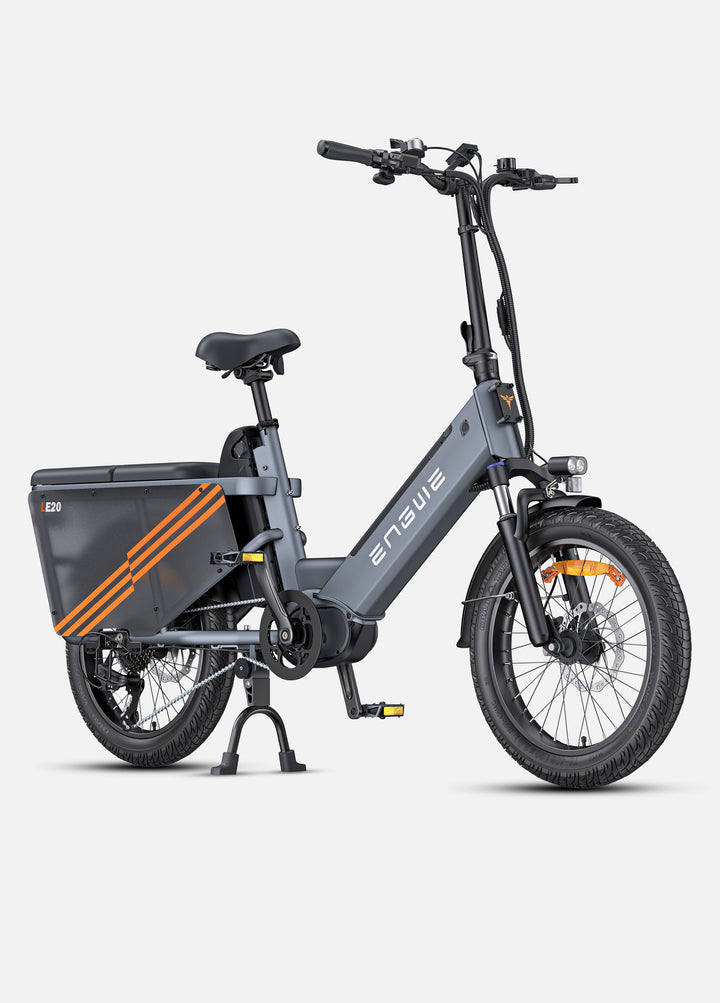
ENGWE L20 Boost — The Everyday Utility Champion
In case you need a dual battery eBike that is efficient, safe, and created to be used every day, the ENGWE L20 Boost will be an excellent choice. According to this model, the 48V 13Ah lithium battery, can provide a 126km range when charged.
The torque sensor provides smooth acceleration, and the Boost Button provides you with added power on the hills or heavy loads. The removability of its battery for eBike fits conveniently in eBike design, thus it can be charged inside the house.
It has a rough payload capacity of 200 kg, which is achieved with its durable aluminium frame. The ENGWE L20 Boost is both practical and powerful, whether you have to do some commuting, shopping, or you cannot help the urge to ride.

ENGWE E26 — Power and Range for All Terrains
To the riders who require adventure, the ENGWE E26 will perform excellently in battery life in an all-terrain package. It has a 48V 16Ah lithium battery that provides up to 140 km range per charge, making it one of the most efficient commuter and off-road e-bikes in its category.
The versatile 70 Nm motor, full front and rear suspension, and 26x4.0-inch fat tires are sure to make this a dual suspension eBike that is ideal during city trips, on the dirt trails, or just over the weekend. The hydraulic brakes have good stopping power, and the rear rack can carry up to 25 kg, which is sufficient in case of errands and camping.

How to Store Your E-bike Battery During Off-Season
If you won’t ride for a while:
- Charge your battery to around 60%.
- Store it in a dry, cool environment (10–20°C).
- Check it monthly — if voltage drops below 30%, recharge lightly.
- Avoid storing your ebike with removable battery in direct sunlight or freezing garages.
Conclusion
The ebike battery does not run out of power at night; it softens. It will help you estimate when the signs of ebike battery dying too soon appear and save you the trouble of making a last-minute rush to the store.
You can ride a 48V ebike battery commuter or a dual battery ebike, but you can continue to ride your bike with smart maintenance that will last years. Always use correct charging patterns, check connections and do not use deep charges.
However, all electric bike battery have their limit as their life cycle ends at some point, but with proper care and attention, you will get the most out of each charge in terms of performance, safety and value.