So the key to picking the best fat tire electric bike is to learn as much as you can about its heart – the drive system. From basic hub motors to the more advanced mid-drives, it also directly influences both performance and ride dynamics. This guide further delves into the three main types of drive, with tried and tested insights and the experts’ recommended models to help you choose that perfect e-bike, whether you are powering through the city or traversing mountains.
Comprehension of the base drive units and their properties
Before we look at individual models, however, one thing that is really worth understanding are the basic differences between the three main types of electric bike motors. You get a different ride feel, set of benefits, and proper use case for each system. This is especially important with a fat tire e-bike given its weight and the fact that it’s designed to traverse all different types of terrain. By decoding these dynamics, you can take a first step toward making an intelligent investment — rather than the sort of hasty purchase that leads to buyer’s remorse.
-
The Front Hub Motor
With the motor located within the hub of the front wheel. It pretty much drags you down the road, producing an “all-wheel-drive” feel while your legs are powering the rear wheel.
Pros: Easy to install and service, less common on lower-end e-bikes, good weight distribution when the battery is in the rear.
Cons: You may feel at times as if the front wheel is slipping a bit on loose ground or steep hills; the kit can make steering slightly less responsive.
-
Rear Hub Motor
The most common type, the motor is mounted in the rear wheel hub. It offers a strong push behind you, and most riders find that to be very natural and intuitive.
Pros: Top-notch traction for acceleration and climbing, gives a muscular, sporty feel, wide variety of styles from mild to wild.
Cons: Adds weight to the back of the bike; changing a rear flat tire may be trickier than on a bike without a hub motor.
-
Mid-Drive Motor
This high-performing class is new for e-biking, which places the motor at the bottom bracket, exerting pulling rather than pushing force. It drives the chain directly, turning the bike’s gears as it goes.
Pros: Equal weight distribution and good handling from a low center of gravity, highly efficient climbing due to the use of bike gears; most natural and responsive pedaling feel possible because this e-bike uses torque sensors.
Cons: Generally more expensive, potentially puts greater stress on chain and drivetrain components.
| Feature | Front Hub Drive | Rear Hub Drive | Mid-Drive |
|---|---|---|---|
| Riding Feel | Tug | Push | Amplified pedaling |
| Weight Distribution | Front-heavy | Back-heavy | Centered, low |
| Hill Climbing | Fair | Good | Excellent |
| Efficacy | Good | Good | Excellent |
| Complexity of maintenance | Simple | Moderate | More complex |
| Drivetrain Wear | Low | Low | Higher |
| Target Users | City-dwelling commuters | Cross-training, diverse terrain, adventure riders | Extreme hill climbers, technical trails |
Mid-Drive Excellence and the Flagship ENGWE L20 3.0 Pro
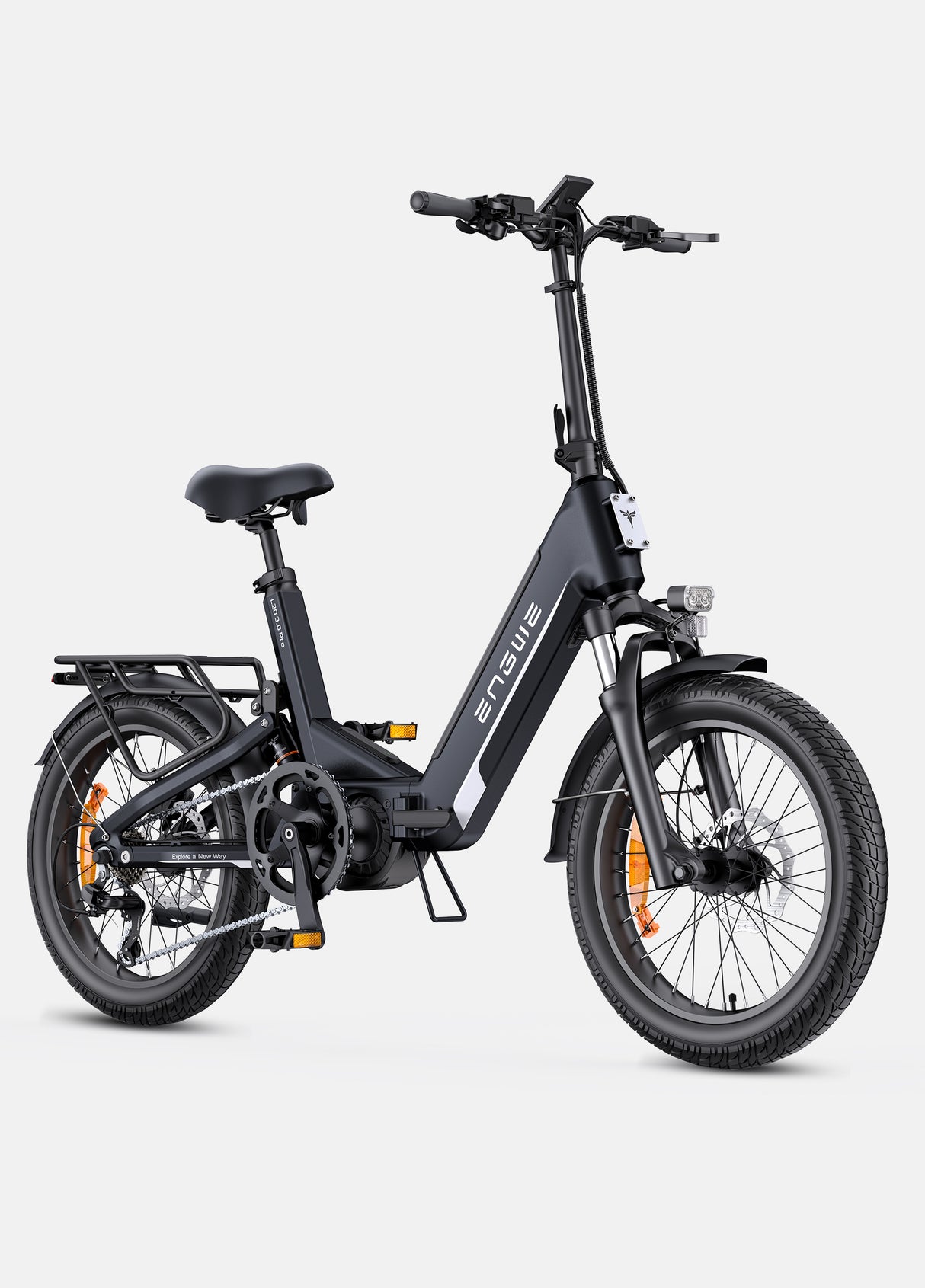
For those who are performance-driven, balance-tolerant, and not willing to compromise when it comes to new technology - the mid-drive system is your best choice. And with the capability to fit the bike's gearing perfectly, it’s even better at climbing. This is where the top-class engineering comes into play, and one of the best bikes in this category is the ENGWE L20 3.0 Pro. It is a new kind of compact e-bike, one that features the power of the mid-drive motor and the comfort of full-suspension, making it an excellent choice for your first e-bike.
The new ENGWE L20 3.0 Pro is designed to offer the best in urban and light trail riding.
-
Powerful Mid-Drive Motor:
Underneath is its in-frame Mivice X700 250W mid-drive system. Where it really stands out is that extraordinary 100Nm of torque. This provides exceptionally fast acceleration from a standstill and even makes tackling steep city hills feel like child's play.
-
Comfort unparalleled:
For the first time, a compact e-bike is equipped with a full-suspension system (with a front hydraulic fork and rear travel of 30mm) which allows absorbing up to an amazing 90% of vibrations. With its 3.0” wide tires, it makes for one of the smoothest rides over potholes, cobbles, and down bumpy paths.
-
Unparalleled Range with Super Fast Charging:
The impressive 720Wh battery from Samsung gives a maximum range of up to 160km on a single charge. When it’s time to recharge, the included 8A fast charger will have you going again in much less time than typical chargers.
-
Smart Technology:
Security is a priority, and the L20 3.0 Pro comes equipped with an advanced ENGWE IoT module. That gives you peace of mind thanks to real-time alerts, GPS tracking, and app-based monitoring, all designed to help take care of your investment.
-
User Friendly Design:
The foldable step-through frame adds stability while mounting and dismounting, as well as the ability to store in compact spaces. It’s got a bright 3.5” color display, powerful dual-piston hydraulic brakes for confident stopping, and a tough rear rack for your daily cargo needs.


Hub Motors: The Power Players You Can Count on for Everyday Rides
Mid-drives are the zenith of electric bike technology, but hub motors are still decent pedal-assist workhorses for most applications with dynamic performance characteristics and distinct advantages in cost and simplicity. They are a great option for the broadest, highest-quality riders and especially among fat tire e-bike riders who use their bikes to commute, cruise around, or for recreational trail riding. Either a hub motor in the front wheel or even the rear hub will suffice, but you’ll benefit more from considering your requirements.
-
How to Choose a high quality front hub E-bike:
- Focus on All-Weather Commuting: The all-wheel-drive snowball effect can mean added stability when the road is wet or slick.
- Check for Torque Arms: An essential safety device, especially with higher powered front hub motors to avoid the axle spinning out of your dropouts.
- Balance the Battery: The models with a mid-frame or rear-rack battery are better balanced to offset the front-end weight of the motor for more responsive steering.
-
How to Choose a Good Rear Hub E-bike:
- Mash Up the Power and Traction: If you’re looking for that low-end rumble and don’t want to rely on gradations of pedal assist, get a rear hub. Those numbers hover around at least 500W and 60Nm for a fattie.
- Check Controller and Sensor Types: A good controller should deliver power in a smooth fashion. Cadence sensors are common, but higher-end hub models also come with a torque sensor, which feels more natural.
- Investigate the Freewheel/Cassette: Lower-end models come with a freewheel system, whereas higher-quality ones use a cassette—it’s sturdier and provides superior gear shifting. For both men and women, strength is in the drivetrain.
Motor System-Independent Critical Elements
More than a motor. That said, a great fat tire e-bike is about so much more than its motor. The supporting elements are just as important for your safety, comfort, and in the long run for the bicycle itself. Dialing in on these details when choosing your bike is a great way to maximize the return on your investment and ensure you'll be happy with your ride for years to come. Skipping these can result in expensive upgrades or a lousy riding experience.
-
Battery Capacity (The Fuel Tank):
- What to Look For: So don't just reference Amp-hours (Ah) alone; Watt-hours (Wh) is the most accurate measure of total capacity (Volts x Amp-hours = Watt-hours).
- Money-Saving Tip: If you have saved money buying a heavy fat tire e-bike, don’t do yourself or your purchase the disservice of under-performing batteries (sub-500Wh). They won’t be up to snuff, leading to range anxiety. Consider investing in a bike with no less than a 600Wh-750Wh battery from a reputable cell manufacturer (such as Samsung or LG) and it will be the wisest long-term choice, even if you pay more up front.
-
Brakes (The Safety Net):
- Mechanical vs. Hydraulic Disc Brakes: Mechanical brakes rely on cables to stop, which makes them cheaper. Hydraulic brakes involve fluid, and nothing else comes close for stopping power, modulation, and consistency with lower hand fatigue.
- Expert tip: E-bikes over 50 lbs (23kg), particularly fast rollers with huge tires, should have hydraulic disc brakes to keep your super-powered bike under control. 180mm rotors, or larger, provide better heat dissipation and stopping power.
-
Suspension System (The Comfort Factor):
- Hardtail (Front Suspension): A suspension fork in the front to help smooth out the terrain. It is a wonderful combination of comfort and efficiency.
- Full Suspension: Front fork and rear shock included. It provides the smoothest ride but with added weight, cost, and maintenance. It would be great for very rough terrain or riders who want the comfiest ride possible.
- Quality Check: You want to see at least adjustable preload (so you can set it for your weight) and lockout (to make the suspension rigid so you can pedal efficiently on smooth roads).

Investigating Other Promising Hub-Drive Systems
Although you won't get the high-end quality of a mid-drive as with the ENGWE L20 3.0 Pro, there's a big market for hub-drive fat tire e-bikes out there and all sorts to choose from no matter your budget or style. For those of you who appreciate the simplicity, performance, and power of a rear hub motor, there are plenty of good bike options to choose from. These bikes are well known for their solid construction, impressive performance, and dedicated community support so they are both great options for new and experienced riders.
Some well-known rear hub drive fat tire bikes are:
- Rad Power Bikes — Popular choice for the robust and cost-efficient RadRover series.
- Aventon Aventure models that have glassy, frame-integrated, and rich displays.
- Himiway Cruiser: You might like this long-ranger with its mammoth battery.
Frequently Asked Questions
Q1: What drive type would be best for soft sand or snow riding?
A1: Rear hub drive does have a bit of an advantage on soft surfaces such as sand or snow. The weight of the motor is above the rear wheel so it has a better grip and does not dig into the tire. But, in high-power mode on a mid-drive e-bike, mated with a solid rider, the system sings by enabling you to apply power extremely precisely via cadence and angle on the gears.
Q2: How do I save money on long-term e-bike service?
A2: The most affordable way is just simply to maintain it. One major hint: Keep the chain clean and lubed, especially in a mid-drive model, to extend its life as well as that of the cassette. And, know how to inspect your brake pads for wear, and keep your tires inflated to the recommended pressure. In addition, it increases efficiency and range, while protecting expensive rims and tires from hitting potholes.
Q3: Is a torque sensor superior to cadence sensors in all cases?
A3: Generally, yes. A torque sensor gauges how hard you are pedaling and delivers motor assistance accordingly, for a seamless, intuitive ride. A cadence sensor is just going to know if the pedals are moving and send power at a pre-set rate for your chosen assist mode. Cadence sensors are cheaper and more basic; a torque sensor (which is what you'll find in most high-end mid-drive systems) simply gives better, more natural control over your ride.
Now that you know what is a weak, strong, and best fat tire electric bike, you can choose the one that suits your adventure.