For many biking enthusiasts, the decision to make or buy your fat tire e-bike is a serious juncture in the road. Fat tire e-bike conversion kits claim to provide an affordable and customizable entry into the realm of electric-powered, all-terrain travel. But does it live up to the hype? This guide will break down the worth of said kits in five key dimensions, enabling you to see (ahem) clearly whether this is something you want to consider as a DIY endeavor.
1. The Financial Equation: Initial Cost vs. Value Over Time
The main attraction of a conversion is that it's much cheaper than buying a new factory-made electric bicycle. Although the direct ticket cost for a kit is only $2.25, when an economic analysis is performed, things aren't as straightforward. In order to figure out if it’s actually financially worth it, you need to consider what all of the costs are and where you can get the most out of your money. It’s smart to calculate both the direct and indirect costs involved in this project.
Things to consider when budgeting for all the costs of your conversion:
- The Core Kit Pieces: The cost primarily depends on the motor and battery type and strength. The key components of any such system will be the motor (either mid-drive or hub), battery and mounting, a controller and display, throttle, along with wiring as necessary.
- The Donor Bike: Do you have a fat bike that can serve as the donor? If not, the price of obtaining one has to be considered. A sturdy steel frame with disc brakes is a plus to be able to accommodate the increased speed and load.
- Essential Tools: You may need to buy specific tools for installation that you don't already own, like a crank puller or bottom bracket tool.
- Upgrades and Ancillaries: Not to be considered secondary are costs associated with ancillary support. This can range from better brakes and a torque arm (needed for hub motors to avoid potential frame damage) to better tires.
- Labor Costs, Perhaps: If you run into a step you can’t do on your own, say because the tool is too expensive or isn’t sold at retail, you might need to take it to a bike shop and pay for their help, counting against any savings.
Cost-Saving Tips:
- Buy a Complete Kit: Buy a kit containing every necessary item from one reputable source. This means all of the components will work together, and it's usually less expensive than purchasing parts separately.
- Honest Evaluation of Your Donor Bike: It’s tempting to think a cheap old bike would make for an awesome starting point, but if the bike requires copious repairs or upgrades, it’s easy for your project to become a money pit.
- A Quality Battery Saves Money: The battery is the most costly part of your e-bike. Skimp here and you will have a lousy range and a short lifespan, which is more expensive in the end.
2. Performance and Technical Realities
There’s no guarantee a conversion kit will perform as well as a purpose-built e-bike. The end result is very dependent on the parts you select and how they fit your donor bike. Knowing the exact specs is important if you plan on building a machine that delivers the power, range, and ride quality (on different terrains, including tough tracks where these fat tires shine) that you expect. Most importantly, the motor you pick is bound to shape entirely what you think of as an electric bike.
Key performance factors to consider:
- Type of Motor: The two main types are hub-drive and mid-drive motors. Hub motors, especially rear ones, put a nice bit of traction on the ground. Mid-drive motors generally handle better and use the bike's built-in gears for superior hill climbing.
- Power and Voltage (Watts & Volts): More wattage means more power for acceleration and hill climbing. More voltage (48V or 52V) generally means better power transfer. For heavy fat bikes, a motor of 750W or more is commonly suggested.
- Battery Capacity (Amp-Hours): This is what determines your range. The higher the Ah rating, the further you can go on a single charge. Add up the average length of your rides to avoid over- or under-buying.
- Component Compatibility: One of the biggest technical issues that arises is whether or not the kit will fit on your bike. You'll definitely need to measure your bike's bottom bracket width and dropout spacing before you order a kit. Failing to do so is the biggest and most expensive error you can make.
| Feature | Hub-Drive Motor | Mid-Drive Motor |
|---|---|---|
| Positioning | In the center of the front or rear wheel | At the bicycle bottom bracket/crankset |
| Installation Time | Usually easier, just swapping a wheel | More complicated, need to take the cranks out |
| Weight Distribution | Unbalanced (front or rear heavy) | Centralized and low center of gravity for better performance |
| Hill Climbing | Good, but can have some issues on a steep hill | Great; leverages the bike's gears |
| Drivetrain Wear | Hardly any effect on chain and cassette | Higher wear on drivetrain parts |

3. The DIY Experience: Talent, Time, and Your Stamp
Starting a fat tire e-bike conversion is very much a hands-on adventure, and you have to love that; it leaves an enormous sense of satisfaction and freedom. It also requires a bit of mechanical skill, patience, and time. Make sure the DIY journey itself is one you can honestly see yourself enjoying before you commit. The process will allow you to customize your e-bike in every way imaginable, from power output to display type, but it’s not a plug-and-play affair.
What the DIY process entails:
- What You'll Need: Basic bike knowledge. If you’ve never changed a tire or adjusted your brakes, it may be an intimidating process.
- Time Required: Plan on investing several hours, perhaps much of a weekend, for the installation. Rushing can lead to mistakes.
- Essential Tools: At a minimum, you’ll want a decent set of Allen keys, wrenches, wire cutters/strippers, and zip ties. Specialized tools such as a crank puller are frequently required.
- The Thrill of Customization: You get to create your dream machine. You get to pick a powerful motor for off-road trails or a smaller, lighter system for commuting. You can choose the battery size you need to fill your range demands.
Step-by-Step Installation Overview:
- Prep: Give your donor bike a good clean, and collect all of your tools & kit parts.
- Motor Installation: For a hub motor, this means replacing your current wheel with the new motor wheel. For a mid-drive, you will need to remove the cranks and bottom bracket in order to install the motor.
- Battery Fastening: Attach the battery holder to the frame (usually on the down tube).
- Component Installation: The display is mounted on the handlebars; the throttle and brake sensors connect to the handlebar and brakes respectively. A speed sensor is attached to the frame.
- Wiring Management: This can be a tricky step. Carefully run the wires from the components to the controller, making sure they cannot be caught or trapped. To give it a polished look and to ensure your wires stay in place, use zip ties.
4. The Better Option: A Factory-Built E-bike

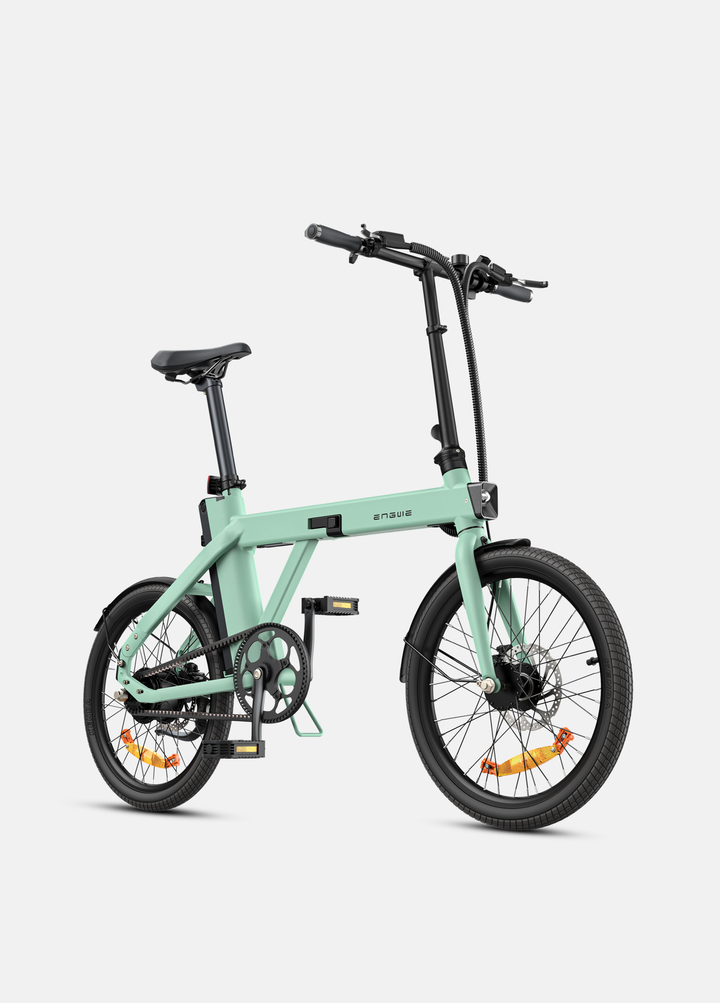
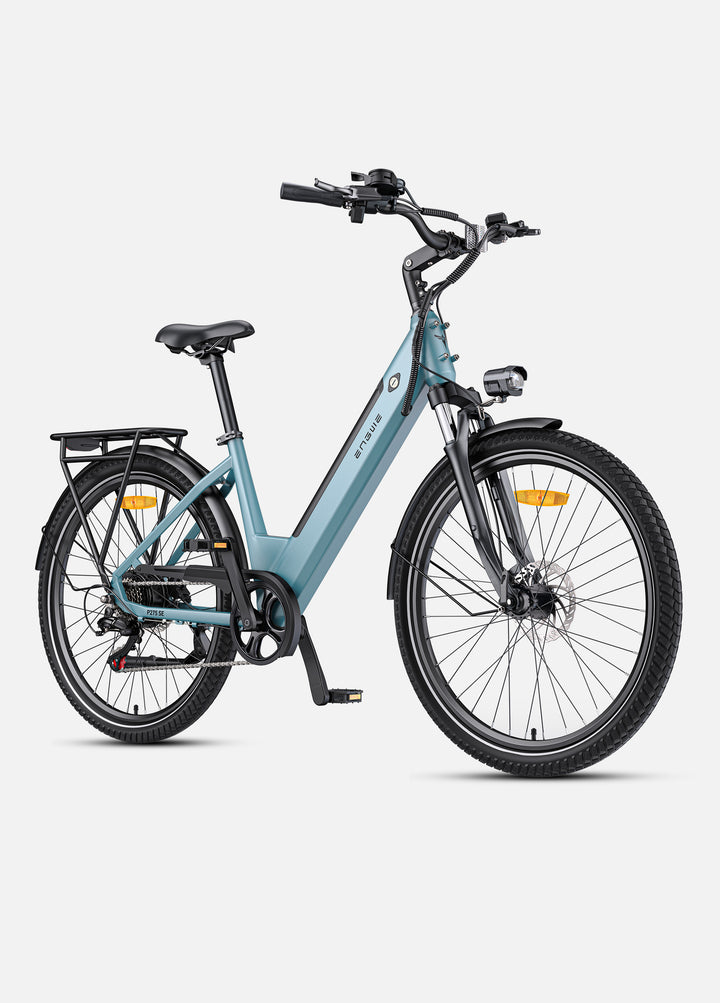
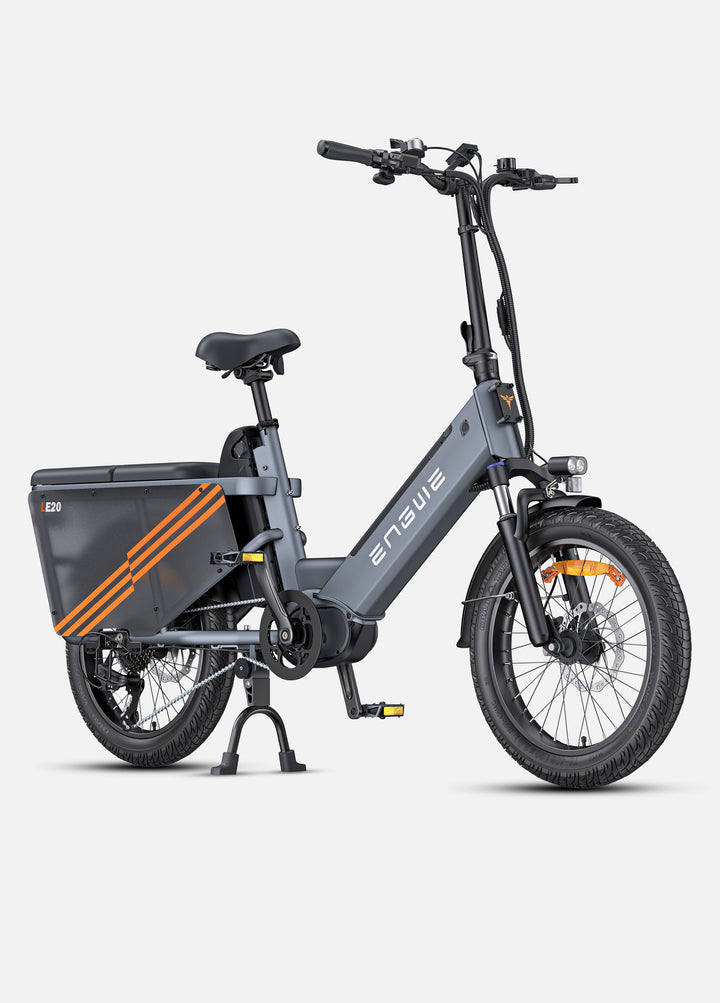
While you can get a DIY e-bike kit with customization to your liking, you cannot get the integrated design, engineering, and confidence that comes from a factory-built electric bike. If you are the kind of rider who values reliability, security, and ease of use without having to think about a high-tech performance edge right from the factory, then a purpose-built bike is definitely the way for you. ENGWE is becoming a force to be reckoned with in the category, and their fleet of well-built e-bikes, like the ENGWE M20, are a shining example of why avoiding the hassle of DIY can be rewarding. It’s an adventure-geared machine built from the ground up to explore any trail or road with power and style.

Where conversion kits tend to fail, the ENGWE M20 succeeds:
- Integrated Design: Drawing from the aggressive lines of a motorcycle, the M20’s aluminum alloy frame provides an ultra-durable chassis that can withstand high speeds produced by its powerful motor and ensure stability due to the dual battery system. It is designed with an all-around construction that provides the perfect balance and the best durability.
- Unrivaled Comfort & Control: The dual suspension system, featuring a front hydraulic shock and a rear air shock absorber, allows the bike to handle double the amount of force so you have more control with half the impact. What that means is a more damped and controlled ride on bumpy trails or city streets.
- No More Range Anxiety: The M20 supports a dual-battery option (both 48V 13Ah) which gives you an extraordinary range of up to 75km+75km. This is not an easy feature to replicate with a DIY kit.
- Performance and Safety: The M20 is built with a high-speed 55 N.m brushless motor and reliable Shimano 7-speed gears with a quick shift, all kitted out to ensure your ride safety every time! The triple-layer 20x4.0 tires provide an incredible grip as well as plenty of cushion to ensure a comfortable ride.
When you choose the ENGWE M20, you're not just getting an electric bike. You’re also investing in a high-quality, adventure-tested e-bike built from the ground up with a full warranty and support that helps get you out of bench-fixing and on to actually riding.

5. Longevity and Applications
Finally, is a conversion kit “worth it”? This depends on whether or not the cost and configuration you go with works for the long-term. Your choice should reflect how you will use the e-bike, and your expectations of maintenance, support, and eventual resale value. Kits are fantastic for certain riders, but a point of frustration for others. An off-the-shelf e-bike typically provides a simpler, more predictable ownership scenario.
Who should buy conversion kit bikes?
- The Tinkerers and The Hobbyist: If you genuinely like to build, test out, repair, and upgrade your devices, then it will feel rewarding.
- The Budget-Conscious Rider with a Great Donor Bike: If you already have a high-quality fat bike that you adore, kitting it out can be an inexpensive way to “make it electric.”
- The Specialist: Riders who have very specific performance requirements that are not met by any off-the-shelf e-bike can build a bike for their purposes.
Long-term considerations you must weigh:
- Warranty: Individual parts on conversion kits are warrantied for short periods. Diagnosing a problem can be challenging, with no single manufacturer to call for help. A factory e-bike is backed by a full warranty.
- Reliability and Maintenance: A DIY unit can have unforeseen problems, such as loose connections or faulty components. It also needs to be constantly attended to.
- Resale Value: Converted e-bikes have far less resale value than a branded, factory-built model because of fears about the quality of the build and a lack of warranty protection.
- Reputable Kit Brands: For those inclined to take on the DIY route, you’ll find great brands like Bafang, known for their mid-drives, and Tongsheng, also a well-known name, especially for their torque-sensing mid-drives.
Your Questions Answered
What’s the single most catastrophic thing I can do with a conversion kit?
The single biggest mistake is not ensuring component compatibility. Before placing your order, you will need to know how to measure dropout width (for hub motors) or bottom bracket shell size (for mid-drives).
Is a converted fat tire e-bike as safe as a factory one?
Not inherently. A professionally installed kit on a well-made frame with upgraded brakes is probably quite safe. However, a strong motor on an inferior frame with insufficient brakes is extremely dangerous.
If I use a conversion kit, will it void my original bike's warranty?
Yes, almost certainly. Any such major modification to the frame or components will invalidate any warranty that may be in force on the bicycle.
In the end, the best option is what gets you riding with confidence and a smile.