The world of electric bikes is exploding in popularity, but the rules of the road can seem confusing. As an e-bike rider, understanding your legal obligations isn't just about avoiding fines—it's about ensuring your safety and the safety of others. This guide breaks down the essential 2025 regulations, from classifications and licensing to where you can legally ride, helping you enjoy your e-bike with confidence and peace of mind.
E-Bike Classifications Explained
Understanding the fundamental classification of your electric bike is the first and most critical step, as all other rules and regulations stem from this core identity. Globally, authorities categorize e-bikes based on motor power, top assisted speed, and how that power is delivered. Failing to know your e-bike’s class is like driving a car without knowing if it's a sedan or a commercial truck—the rules are entirely different. This classification is usually printed on a sticker on the bike's frame. Before you ride, locate this information. It is the key that unlocks which laws apply to you.
Here is a breakdown of the most common systems:
United States 3-Class System:
- Class 1: The motor provides assistance only when the rider is pedaling (pedal-assist) and ceases to provide assistance when the e-bike reaches 20 mph. These are generally permitted wherever traditional bicycles are allowed.
- Class 2: The e-bike is equipped with a throttle that can propel the bike without pedaling, but the motor ceases to provide assistance when the bike reaches 20 mph. Rules are often similar to Class 1.
- Class 3: The motor provides assistance only when the rider is pedaling (pedal-assist) and ceases when the e-bike reaches 28 mph. These are often subject to more restrictions, such as age limits and exclusion from certain bike paths.
European Union System:
- L1e-A (Powered Cycles): These are often low-power throttle-based bikes and are treated more like mopeds.
- L1e-B (Pedelecs): This is the most common category. The motor cannot exceed 250W of continuous power, provides assistance only when pedaling, and cuts off at 25 km/h (approx. 15.5 mph). They are legally considered bicycles.
- Speed Pedelecs (S-Pedelecs): These can assist up to 45 km/h (approx. 28 mph). Due to their higher speed, they are classified as mopeds, not bicycles, and are subject to much stricter regulations.
E-Bike Classification Quick-Reference Table
| Category | Power Delivery | Max Assisted Speed | Common Legal Status |
|---|---|---|---|
| US Class 1 | Pedal-Assist Only | 20 mph | Bicycle |
| US Class 2 | Throttle-Assist | 20 mph | Bicycle |
| US Class 3 | Pedal-Assist Only | 28 mph | Varies, often with restrictions |
| EU Pedelec | Pedal-Assist Only | 25 km/h | Bicycle |
| EU S-Pedelec | Pedal-Assist or Throttle | 45 km/h | Moped |
Licensing, Registration, and Insurance
The central question for most new riders is whether they need a license, registration, or insurance. The answer, for the vast majority of e-bike users, is no—but this is entirely dependent on your e-bike’s classification and your location. For lower-speed electric bikes treated as conventional bicycles, the legal framework is simple and accessible. However, as you move into higher-speed categories, the requirements shift dramatically towards those governing motorized vehicles like mopeds. Crucial Point: Always verify regulations with your local Department of Motor Vehicles (DMV) or city transportation authority, as municipal laws can be stricter than state or national ones.
Here’s a detailed look at the requirements:
Licensing:
- No License Required: For US Class 1, Class 2, and most Class 3 e-bikes, a driver's license is not required for operation. Similarly, for EU Pedelecs (up to 25 km/h), no license is needed. This is the biggest draw for many riders.
- License May Be Required: For EU S-Pedelecs, a specific moped or car driver’s license is mandatory. In some US jurisdictions, Class 3 e-bikes might fall under local ordinances that require some form of licensing or permit, though this is less common.
Registration & Plates:
- No Registration Required: Virtually all US Class 1 and Class 2 e-bikes are exempt from registration, titling, or license plates. They are treated like bicycles.
- Registration Required: S-Pedelecs in the EU must be registered with the national vehicle authority and must display a license plate. This is a non-negotiable legal step. Some US states may also require registration for Class 3 e-bikes, treating them as mopeds.
Insurance:
- Not Legally Mandatory (But Recommended): For standard e-bikes (Classes 1-3, Pedelecs), liability insurance is typically not a legal requirement.
- Money-Saving & Safety Tip: Despite not being mandatory, insurance is highly recommended. A standard homeowner's or renter's policy may not cover theft or liability for an e-bike, especially a high-value one. Specialized e-bike insurance can protect your investment and cover you in case of an accident.
- Mandatory for S-Pedelecs: In the EU, S-Pedelecs require mandatory liability insurance, similar to a moped or motorcycle.

Where You Can Legally Ride
Knowing where you can legally ride is just as important as knowing the speed limits. Access rules are designed to ensure the safety of all path and road users, from pedestrians to motorists. The general principle is simple: the faster the e-bike, the more it is restricted to the road alongside cars. Riding a high-speed e-bike on a crowded pedestrian path is not only illegal but also incredibly dangerous. Actionable Step: Before exploring a new trail system, check the website of the park or land management authority. They will have specific rules posted for e-bike access, which often differ from rules for traditional mountain bikes.
Here are the common access rules based on location:
Bike Lanes and Streets:
- Universal Access: All classes of e-bikes are generally permitted to use on-street bike lanes and can be ridden on most public roads, just like a traditional bicycle.
- Follow Traffic Laws: When on the road, you are a vehicle. You must obey all traffic signals, stop signs, and ride in the direction of traffic.
Sidewalks:
- Generally Prohibited: Riding an e-bike on the sidewalk is illegal in the vast majority of cities and states. Sidewalks are for pedestrians. This is one of the most common and easily avoidable infractions for new riders.
Multi-Use Paths and Trails:
- Class 1 & 2 Often Allowed: Many paved paths shared by cyclists, joggers, and walkers allow Class 1 and Class 2 e-bikes, as their 20 mph speed limit is more compatible with other users.
- Class 3 & S-Pedelecs Often Prohibited: Due to their higher top speed of 28 mph (45 km/h), these bikes are frequently banned from multi-use paths to prevent dangerous speed differentials with slower users.
- Mountain Bike Trails: E-MTB (electric mountain bike) access on natural-surface trails is a complex and evolving issue. Federal, state, and local land managers have different policies. Always check the specific rules for the trail you plan to ride. Some trails may allow Class 1 e-MTBs but prohibit those with throttles (Class 2).
Safety Regulations and Rider Gear
Beyond licensing, most jurisdictions have specific laws regarding rider age and the safety equipment you must use. These rules are not suggestions; they are legal mandates designed to prevent injury. For instance, while you might feel confident riding without a helmet, a serious accident can have life-altering consequences. Investing in quality safety gear is the single best way to protect yourself. Quality Tip: Look for a helmet certification sticker (like CPSC in the US or EN1078 in the EU) to ensure it has passed rigorous safety testing. For higher-speed Class 3 or S-Pedelec use, consider a helmet with an NTA 8776 certification, which is specifically designed for faster e-bikes.
Here are the key safety regulations to be aware of:
Minimum Age Requirements:
- Class 1 & 2: The minimum age often aligns with local bicycle laws, but some states set a minimum of 14 or 16 years old.
- Class 3 & S-Pedelecs: Because these are faster vehicles, the minimum age is almost always 16 years or older, and riders may be required to hold a license or permit.
Helmet Laws:
- Riders Under 18: Most states and countries have mandatory helmet laws for e-bike riders under a certain age, typically 16 or 18.
- All Ages for High-Speed E-Bikes: For faster e-bikes like Class 3 or S-Pedelecs, many jurisdictions mandate helmet use for all riders, regardless of age.
- Best Practice: Regardless of the law, you should always wear a properly fitted helmet.
Required On-Bike Equipment:
- Brakes: Your e-bike must be equipped with fully functional brakes.
- Night Riding Lights: If you ride at night, a white front headlight and a red rear reflector or light are almost always legally required. The headlight must be visible from a specific distance (e.g., 500 feet).
- Bells or Horns: Some areas may require a bell or other audible signal to warn pedestrians and other cyclists.

Choosing Your E-Bike
Choosing an e-bike that is not only thrilling to ride but also fully compliant with local laws is paramount. This is where a brand like ENGWE truly shines, offering powerful, feature-rich, and thoughtfully designed models.
Spotlight on the ENGWE M1

For riders seeking a perfect blend of motorcycle-style aesthetics, long-range capability, and robust performance, the ENGWE M1 is an exceptional choice. It is engineered with a potent 250W brushless motor that delivers an impressive 65 Nm of torque, making steep hills feel effortless. What truly sets the M1 apart is its incredible range, thanks to an optional dual-battery system that provides up to 170 km on a single charge. It’s not just a solo machine; the spacious dual seat and a max load of 150 kg make it perfect for riding with a partner. Safety and comfort are prioritized with a full dual suspension system for a smooth ride and powerful hydraulic disc brakes for reliable stopping power. The M1 is road-ready with a complete lighting system, including a headlight, rear light, brake light, and even turn signals, ensuring you are seen and safe. Its durable 20 x 4.0 fat tires provide superior grip and stability on any terrain, making the ENGWE M1 a versatile and commanding presence on the road.

To help you explore the market further, consider these popular e-bike categories:
Lightweight Commuter E-Bikes:
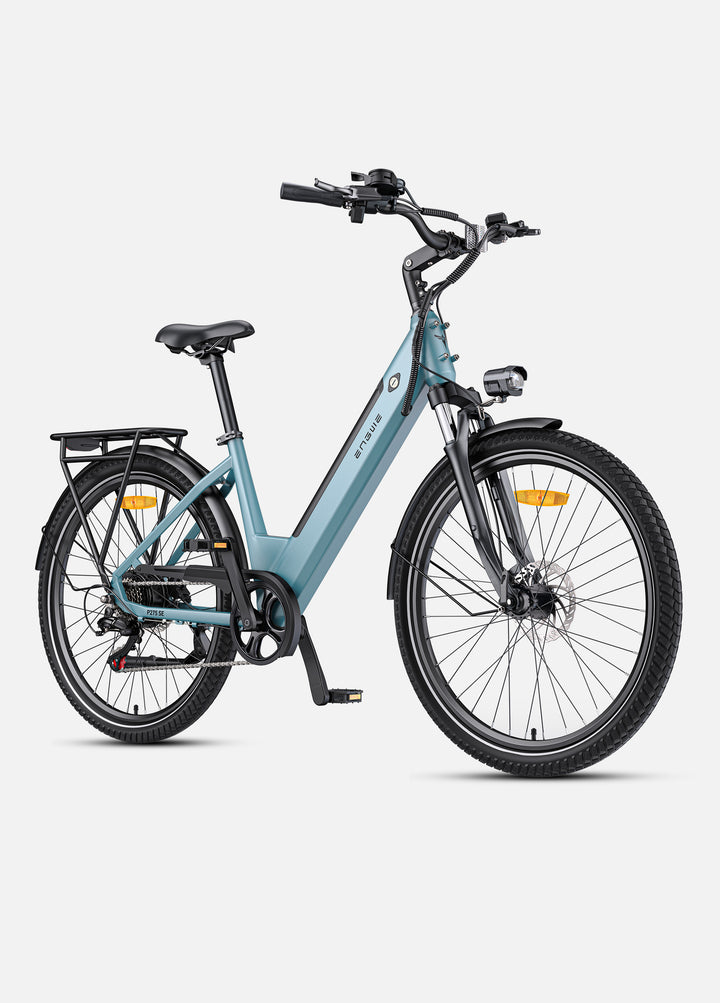
- Focus: Designed for urban environments, these bikes are often light, agile, and may feature integrated racks and fenders. They prioritize efficiency and portability for daily commutes.
Cargo E-Bikes:
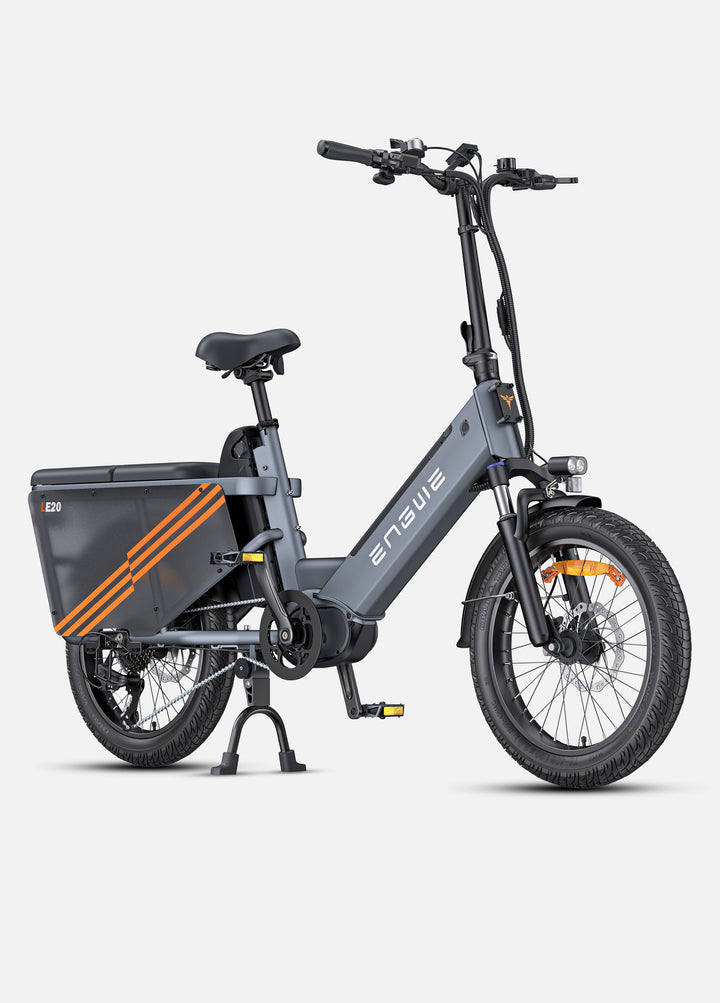
- Focus: Built with extended frames and heavy-duty components, these are the "minivans" of the e-bike world. They are designed to carry heavy loads, from groceries to children, making them a popular car replacement.
Folding E-Bikes:
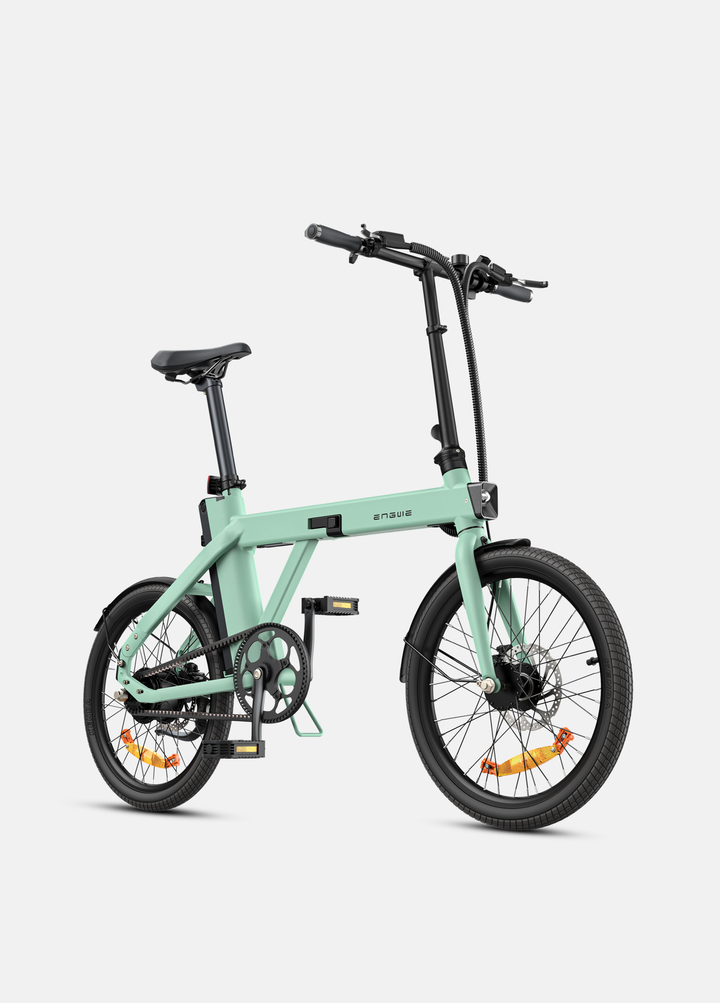
- Focus: Ideal for riders with limited storage space or those who combine cycling with public transit. They fold down into a compact size for easy carrying and stowing.
Electric Mountain Bikes (E-MTBs):
- Focus: Equipped with rugged frames, advanced suspension, and knobby tires, these bikes are built to tackle off-road trails, providing the power to climb steeper terrain and ride for longer.
Frequently Asked Questions
-
Q1: Can I ride my e-bike on the sidewalk?
A: Almost universally, the answer is no. Most cities and states ban motorized vehicles, including e-bikes, from sidewalks to protect pedestrians. Always use bike lanes or the street. -
Q2: Do I need insurance for my e-bike?
A: While only legally mandatory for high-speed S-Pedelecs in regions like the EU, it is highly recommended for all riders. It can protect against theft and liability in an accident. -
Q3: What's the main difference between US and EU e-bike laws?
A: The US uses a 3-class system based on speed and assist type (pedal vs. throttle), while the EU primarily distinguishes between 25 km/h "Pedelecs" (bicycles) and 45 km/h "S-Pedelecs" (mopeds).
Understanding these rules ensures your rides are both legal and enjoyable.