Understanding Your E-Bike's Battery
It’s a convenient habit, leaving your electric bicycle to charge overnight—but is it safe? The old rules of charging no longer apply, thanks to today’s powerful lithium-ion batteries. Risks remain, even though contemporary systems include safeguards. This deep dive will explain how your battery works, the practical hazards of overnight charging, how to stay safe and extend its lifespan through best habits, what quality means when it comes to gear, and which accessories deliver ultimate peace of mind.
The heart of your contemporary e-bike is its Lithium-ion (Li-ion) battery, which is leagues ahead of even the best efforts from days gone by. The most common concern of overnight charging—overcharging—is mostly a myth with current technology, all thanks to an important part inside every EV called the Battery Management System (BMS). This onboard computer is the real unsung hero of your e-bike’s power system, always paying attention and safeguarding the battery. Its job is to protect itself from damage, and it does so by controlling the charging and discharging schedule of your battery to guarantee a safe and long lifespan. Knowing what's what is the first step towards charging with confidence.
Just some of the capabilities of today’s BMS are:
-
Overcharge Protection
The battery management system (BMS) will cause the charging system to interrupt charging when it detects that the maximum charge of any one cell is about to be exceeded. This is the most crucial thing that keeps your battery from getting overcharged.
-
Over-Discharge Protection
It also won’t let the battery drain too far, which previously could result in the death of battery cells.
-
Temperature Monitoring
With temperature sensors, the BMS is aware of the battery's temperature at any time and disconnects charging or discharging if it ever gets too hot or cold to eliminate thermal runaway risk.
-
Cell Balancing
It balances all the cells in the pack to a single voltage, which is important for getting maximum life and run time out of your battery.
The Real Risks of Overnight Charging
Even with a good working BMS preventing "overcharging," it's not all risk-free leaving your bike plugged in overnight. The threats are more subtle and rely on other component failures rather than the battery’s inherent design. The number one watch-out here is heat. The charger and the battery can still get a little warm even if they’re already 100% charged. This continued, low-level heat over many hours and nights can deteriorate the battery’s cells bit by bit, reducing its overall capacity and lifespan. But the biggest, most immediate danger is that of a defect, albeit quite rare, which could lead to serious injury.
Risks include:
-
Charger or BMS Malfunction
This is the most dangerous situation. If the charger’s safety circuits were to fail or if there was a malfunction of the battery’s BMS, it is theoretically possible for a fully charged battery to keep receiving power, causing overheating and a potential fire risk. Cheap, uncertified, or damaged chargers multiply this risk greatly.
-
Electrical Grid Issues
Brownouts, power surges, or lightning strikes can damage your charger, which in turn can harm your battery. Your run-of-the-mill wall outlet doesn't do much to guard against these types of uncertainties.
-
Environmental Elements
Where you charge is important. Charging your e-bike on a flammable surface, such as a carpet or sofa, traps heat and creates a big fire risk if something were to go wrong. Also, recharging in a wet or crowded environment is quite dangerous.
-
Physical Trauma
A battery that has been dropped or is cracked from damage. Severely damaged batteries should never be charged because the internal electrolyte can be unstable.

Best Practices for Safe Charging
It’s becoming increasingly important to embrace a set of smart charging practices, as they’re the best way to protect your investment and extend the life of your battery while also ensuring safety. They are easy-to-follow steps taken from the basics of lithium-ion battery maintenance. Rather than depending only on the BMS as a failsafe, you become an active participant in keeping your e-bike healthy. This not only eliminates overnight charging range anxiety but can also save your battery over the long term, as it allows you to maximize the number of charge cycles you get before the battery needs replacing.
| DOs: Best Practices | DON'Ts: Common Mistakes |
|---|---|
| Use the manufacturer's original charger. | Use cheap, unbranded, or third-party chargers. |
| Charge on a hard, fire-proof surface (e.g., concrete). | Charge on flammable surfaces like carpets, beds, or sofas. |
| Let the battery cool to room temperature after a ride. | Plug in the battery for charging immediately when it's still hot. |
| Follow the 80/20 rule for daily use (charge to 80%, don't let it drop below 20%). | Always charging to 100% and leaving it plugged in for extended periods. |
| Charge in a room-temperature, dry environment. | Charge in extreme heat, cold, or damp conditions. |
The following are some of the best practices for maintaining good battery health and safety:
-
Use the Manufacturer's Charger
Always use the charger that came with your e-bike. It is programmed and optimized for your battery's voltage, geometry, type, and capacity. Never use a generic or third-party charger.
-
Charge on a Hard, Fire-Proof Surface
It may seem obvious to some, but for your battery and charger, place them on a hard, fire-proof surface like a concrete floor or ceramic tile. This helps dissipate heat well and minimizes the risk of fire.
-
Avoid Extreme Temperatures
Your battery works best in a room-temperature environment. When lithium-ion cells are charged or discharged at very high or low temperatures, it places undue stress on them, and their capacity may be permanently diminished.
-
Let It Cool
After a long ride, your battery will be warm. Wait a minimum of 30 to 60 minutes for it to cool down to room temperature before you plug it in again.
-
The 80/20 Longevity Trick
To maximize battery life for everyday commutes, charge to between roughly 20% and 80%. This is least stressful on the lithium-ion cells and can really extend the overall life of the battery. Only charge to 100% when you need the maximum possible range for an extended trip.
Quality Gear and Accessories for Peace of Mind

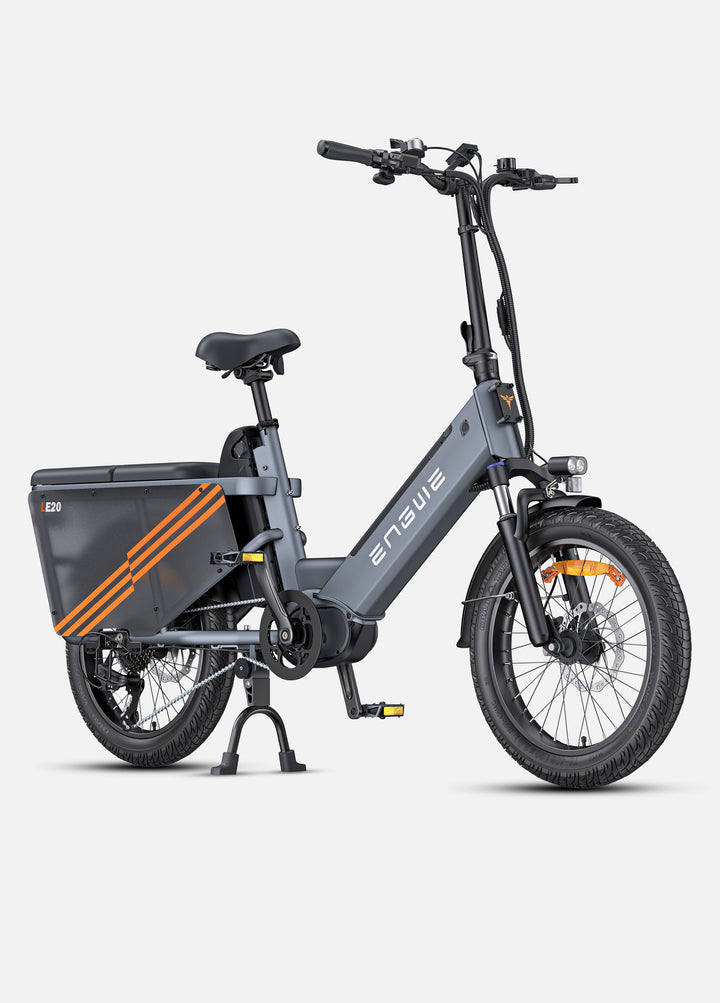
On a basic level, safe charging starts with quality components. This is where buying a high-quality e-bike, like one from ENGWE, becomes worth the investment. A reputable brand means a high-quality battery pack, a certified charger, and an advanced BMS are used, all meticulously engineered to work in complete unison. The ENGWE L20 Boost is evidence of this performance promise and commitment to safety. More than just the joy of the ride, it is engineered for safe and worry-free ownership with features that contribute to a secure charging experience.

Why you can trust the ENGWE L20 Boost:
-
Power You Can Rely On
It is equipped with a high-power 48V 13Ah Lithium-Ion battery, which is made of quality cells and comes with an advanced BMS. This system is built to last and keeps you riding, safely.
-
Great Mileage and Range
With up to 126 km max. in PAS mode, there is no need for recharging the L20 Boost on a daily basis. Less frequent charging overall puts less wear on the battery. The enhanced torque sensor provides quick and smooth power output while maximizing the range on every charge.
-
Clear and Simple Monitor
You can clearly monitor your riding stats with our colorful LCD display, so you can charge it on time, which is good for long-term battery health.
-
Designed for Toughness
Featuring 20x4.0” fat tires, a rugged frame, and racks, everything about the ENGWE L20 Boost is designed from the ground up for the long haul, making it a durable machine you can rely on.
And for those extra cautious, a couple of smart gadgets can make overnight charging basically risk-free. Putting you in full control of your charging environment, these devices are secondary failsafes. They are relatively inexpensive one-time costs that can save your expensive electric bike and your house. Throw one or more of these options into your charging regimen, and when you plug in to charge your e-bike, get some rest knowing you’ve covered all safety measures. Consider these an insurance policy for your charging system.
The best accessories for added charging security are:
-
A UL-Certified Surge Protector
This is non-negotiable. A good surge protector, like one from Belkin or Anker, will protect your charger and battery from any rogue power jumps.
-
Smart Plug or Outlet Timer
This gives you control. You can use a smart plug (from a brand like Kasa) or an ordinary mechanical timer to kill the power to the charger after a set number of hours. This lets you control your charger without having to leave it on all night.
-
A Smoke Detector
Always keep a working smoke detector in the area where you charge your e-bike. It is the simplest and most effective safety alert system.
-
Fire-Resistant Battery Bag
For the greatest peace of mind, particularly when charging the battery off the bike, you can put it in a special fire-resistant LiPo battery bag.

Frequently Asked Questions
Q: Can I really not charge my e-bike overnight?
A: It is not inherently dangerous with a decent, modern e-bike that has a quality BMS. However, long-term, it's not best for the battery's health due to prolonged, low-level heat. A possible risk is a failure of the components.
Q: How do I maximize my battery life?
A: For regular use, adhere to the 80/20 rule (keep the charge between 20% and 80%). Only use the provided official battery charger, avoid charging in extreme temperatures, and let your battery cool down after a ride before charging.
Q: Are cheap, unbranded replacement chargers safe to use?
A: No. They pose a real risk to safety. Such products often don’t carry appropriate UL certification or the advanced safety features of legitimate chargers, raising the risk of a malfunction and fire.
With knowledge of your battery and a few smart habits, you can ride your electric bike more care-free.