Thinking of electrifying your ride? For this purpose, there are friction drive e-bike kits that provide an easy, lightweight, and even cost-effective way to convert a standard bicycle into an electric bike. This guide gives in-depth recommendations to help you choose between them. We will go over the basics, how to pick the best for your needs or budget, my top 4 recommendations, and maintenance tips so you can find the right bicycle friction drive kit for your cycling style – whether a bike commuter or leisure cyclist.
1. Basics: Pros, Cons and Best Use Cases
A friction drive conversion is the simplest form of an e-bike. What it does is transfer power via a motorized roller that sits directly on top of your bike’s tire, which in turn drives you forward. Unlike hub or mid-drive motors built into the bike's wheel or crankset, this is one of the simplest kits to install and just as easy to remove if you fancy a cool off-road ride. But this style, like everything else, has its own advantages and disadvantages that you need to carefully measure before committing! Knowing these is the first step in evaluating whether or not a friction drive is right for you.
Advantages of Friction Drive Kits:
- Simplicity and Ease of Installation: Most manufacturers report installation times of no more than an hour using simple hand tools because you will not have to remove a wheel or alter the drivetrain.
- Lightweight: They weigh less than other conversion systems - they won’t change your bike’s handling.
- Transferability: Many of them are designed for easy, no-tool transitions between multiple bicycles, and are very portable if you have more than one bike.
- Minimal Drivetrain Wear: With the motor placed on the tire, there is no stress added to your chain, cassette, or derailleur.
Potential Drawbacks to Note:
- Wet Traction: This is the biggest weakness. In wet conditions, if the roller slips on the tire due to rain, mud, or snow, this means either a massive loss of power or no engagement at all.
- Tire Wear: The frequent pressure and friction will cause your rear tire to wear down more quickly than usual. It is very advisable to have reliable tires, slick or semi-slick.
- Efficiency: They are not as efficient as direct-drive systems because of potential slippage and friction.
- Noise: Friction drives can be louder than other motor types (especially depending on the model and roller material).
2. You must have these features in a good kit
Narrowing down the best friction drive kit for you is not just about picking a powerful motor. Its performance, reliability, and compatibility with your bike depend on several different features. Carefully considering these factors allows you to make an informed purchase and prevent errors when choosing your kit. Here are the key factors to consider before you buy.
-
Power and Voltage of Motor:
Most normal friction drive kits are 250W to 500W. You should only need around 250W for flat city commutes, and that will also be street-legal in Europe. For hilly terrains, a 350W or 500W system should offer more help when tackling climbs. Voltage (typically 24V, 36V, or 48V) indicates the system's overall power output and efficiency.
-
Battery Specifications (Capacity and Chemistry):
Battery capacity is measured in Watt-hours (Wh). A higher Wh number means a longer range. Factor in your daily commute distance and budget for a battery that can offer at least 50 percent more range than you require — that way, even with considerations such as wind, hills, and reduced battery capacity over time, you’ll have enough juice.
Search for units that use good quality Lithium-ion cells such as Samsung, LG, or Panasonic for better performance and longer battery life. -
Roller Material and Design:
The roller is the heart of the system. Urethane or chemically coated aluminum rollers are considered to give a good tradeoff between adhesion and long wear. Some of the higher-end versions use a super rough or abrasive surface for better grip; however, this comes along with faster tire wear.
-
Weatherproofing:
Considering their exposure to moisture, check the Ingress Protection (IP) rating of your kit. A rating of IPX4 or above suggests it’s splash-proof from any direction and will be the minimum you require if you want to ride in potentially damp conditions.
-
Bike Compatibility:
Crucial Step: Before purchasing, make sure the kit will fit your bike’s frame, seat post size, and especially tire type and size. Friction drives are best for smooth, even tires (slicks or commuters) and are not always compatible with aggressive, knobby mountain bike treads.

3. Top Friction Drive Kit Recommendations
The market offers niche players, but some brands have become known for their innovative designs and solid performance. When you are doing your research, look out for these models – those that solve the inherent problems of friction drives: wet weather performance and user experience. Here's a look at some of the more notable options, each with a different way to transform your bike.
Top Recommendations:
- Rubbee X: Perhaps the best-known version, this all-in-one unit houses the motor, battery, and controller in one quick-release unit that you clamp onto your seat post. It uses numerous battery modules and offers a customizable range, as well as a wireless cadence sensor for seamlessly delivering power. Most impressive is how easy it is to install or remove – we’re talking seconds.
- ONYX CTY2: This system is all about high performance and strong construction. The motor unit is constructed for long-lasting durability and optimum power transmission. It tends to offer more torque than competitors, which makes it a stronger option for riders in hillier areas. It favors a sturdy, bolted-on mount that ensures the install is secure so riders can have confidence in their performance.
- Alizeti 300C: This is a one-of-a-kind kit that houses the motor, battery, and electronics in a rear rack. This model serves not only as a power source but also as a utility rack for your bicycle. It comes with integrated lights and a control system that can be controlled through a smartphone app, making it an all-in-one solution packed full of features for commuters.
| Feature | Rubbee X | ONYX CTY2 | Alizeti 300C |
|---|---|---|---|
| Mounting | Quick-Release Seat Post Mount | Bolt-On Frame/Seat Stay Mount | Integrated Rear Rack |
| Key Advantage | Versatile Portability & Modularity | Power & Durability | Utility & Tech All in One |
| Best For | Multi-bike owners and renters | Performance-focused commuters | Daily commuters carrying cargo |
| Control System | Wireless Cadence Sensor | Handlebar-Mounted Throttle/Display | Smartphone App & Display |
4. The Deluxe Option: The Mid-Drive Integrated E-bike Experience
If the simplicity of friction drives is what attracts you to electric bike conversion, but you want an even more reliable, powerful, and integrated system, then a completely purpose-built electric bike with a world-leading mid-drive motor is sure to appeal. By using the bike’s own gears, these systems deliver great performance, especially on hills. Nowhere is this more evident than in premium electric bikes, of which the ENGWE L20 3.0 Pro is a prime example. This model is an example of how an all-in-one design approach allows for a ride quality that conversion kits can't compare to. You’re investing in a smooth, powerful, and naturally comfortable riding experience.
What We Like About the ENGWE L20 3.0 Pro:
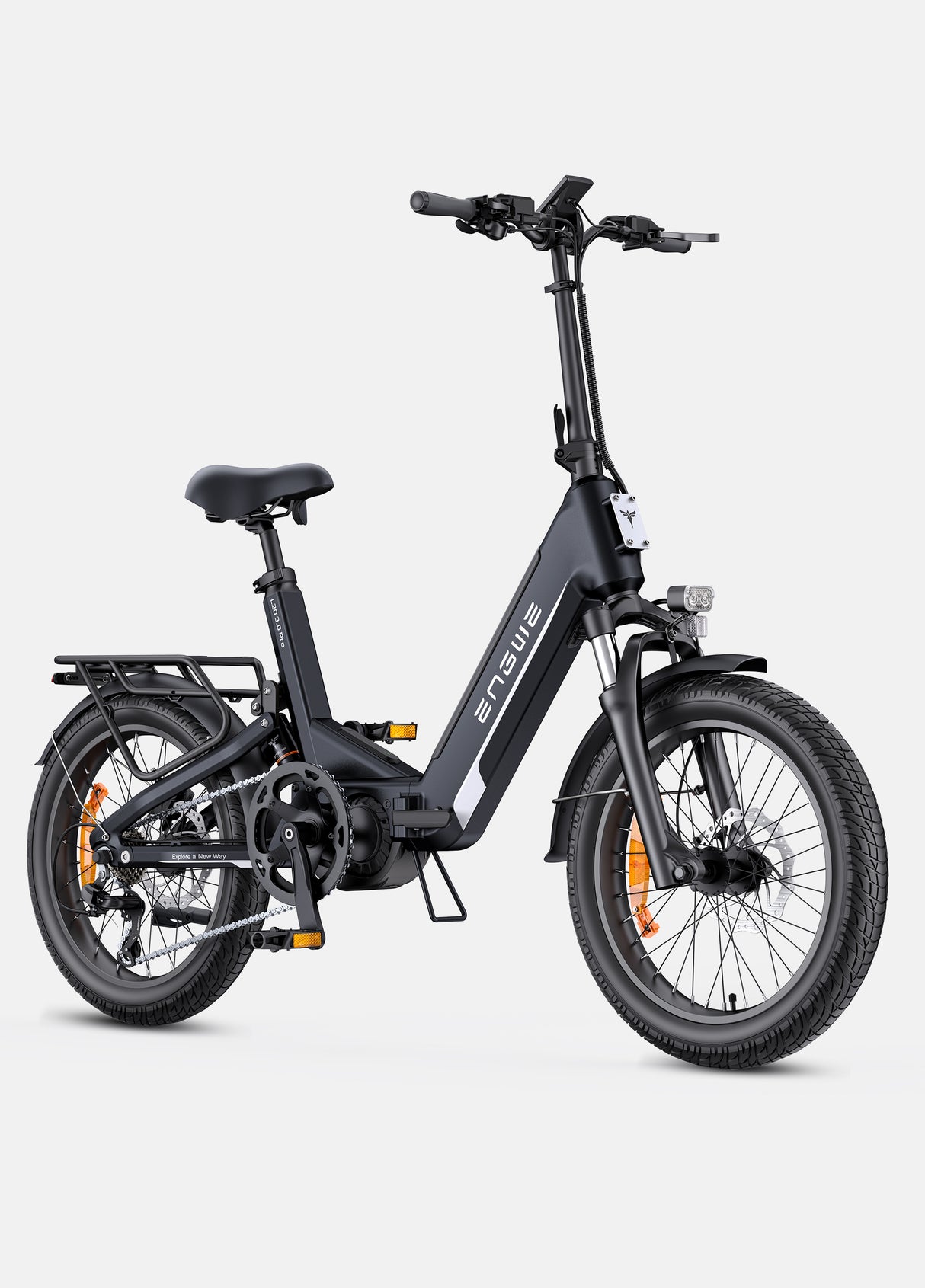
- Powerful, Efficient Motor: High-performance Mivice 250W mid-drive motor with an impressive torque of up to 100Nm. That way, your bike will deliver maximum take-off performance!
- Unbelievable Range: It utilizes a huge 720Wh Samsung battery, offering an incredible range of up to 160km, making range anxiety a thing of the past for all but the longest urban explorations. It also features 8A fast charging.
- Unparalleled Comfort: The only e-bike on the market with a full suspension system, it absorbs up to 90% of vibrations for the ultimate riding experience on city streets.
- Sensible cycling: The torque sensor generates natural and responsive pedal assistance, proportional to the power the motor gives.
- Smart & Safe: It has an advanced ENGWE IoT module with GPS tracking, anti-theft protection, a 4G wireless network, app control (real-time location), and an intelligent security system.
- Convenience and Practicality: The step-through model is designed with a low-entry frame for easy mounting and dismounting. Its 20" x 3.0" anti-puncture wide tires let you ride worry-free from pavement to dirt. A folding rear rack adds plenty of carrying space, which is ideal for shopping or daily commuting.


5. Installation, Maintenance & Tips to Keep Your Kit Performing Optimally
Proper installation and regular maintenance are key to getting the best performance and longevity from your friction drive kit. The better you take care of your kit, the longer it will last and the more reliable and effective it will be, which in turn saves you money on replacement parts and keeps your tire healthy. The connection between the roller and the tire is the most critical part, so it requires the most attention.
Best Practices - Installation
- Tire Pressure is Key: Inflate the rear tire to the upper end of its recommended PSI range before installation. The harder the tire, the better the surface contact with the roller and the less room for slippage.
- Solid, Even Contact: Position the motor so that the roller makes solid, even contact across the tire. Too little pressure results in slippage; too much creates excessive drag and wear.
- Secure all wiring: Route, fasten, and tie down all wires away from moving parts (handlebars, pedals, chain, etc.). Use zip ties to prevent snags and damage.
Essential Maintenance Checklist:
- Clean the Roller: Dirt and debris on the roller can diminish grip and wear down your tire. Clean it with a damp cloth after rides, particularly in wet or dusty conditions.
- Examine Your Tire Weekly: Look for a squared-off center tread, cuts, and embedded debris. Rotate or replace the tire as necessary to maintain a good contact patch.
- Inspect Mounts and Connections: Periodically check that all mounting bolts on the kit are tightened down. Every few months, you should also make sure there are no loose connections in your wiring loom and that they haven't become oxidized or corroded.
Frequently Asked Questions:
Q1: Will a friction drive work with any bicycle tire?
A: No. They work best on smooth or semi-smooth commuter tires. Aggressively knobby or deeply treaded mountain bike tires provide limited contact and cause too much vibration, resulting in slippage.
Q2: What sort of range can I expect from a friction drive kit?
A: This is dependent on many factors, including battery capacity, power settings, terrain, rider weight, and brake use. A typical 250-350Wh kit will get you around 20-50 km per charge, but this varies greatly. You should always get a battery that is larger than your daily requirement.
Q3: Are friction drive E-bike kits street legal?
A: In most cases, yes, as long as they adhere to local electric bike regulations (often specifying a maximum motor power, e.g., 250W in the EU, and/or a speed limitation). Always check your local laws.
In the end, the right choice will give your travel an entirely new pace.