Defining High-Performance: More Than Just Watts
Looking for a high-performance fat tire e-bike? More than speed, you are seeking. Real power is the combination of motor robustness, battery stamina, solid workmanship, and nth-level smarts. Here’s a breakdown of the most important things to keep in mind, such as raw torque and all-terrain ability, long-range batteries, and robust builds. We will assist you in finding the characteristics which set apart a HIGH-performance e-bike from one that is simply non-sucky, so you will have an incredibly enjoyable and fulfilling purchase experience.
When it comes to power, it’s all about the motor. The raw output in watts (W) and Newton-meters (Nm)—which refers to the amount of power at the pedals—is the easiest indicator of an e-bike’s strength. Whereas most traditional e-bikes range somewhere between 250W to 500W, high-powered fat tire electric bikes come with motors that are rated at 750W to as much as 1,000W and up (upwards rating could be closer to a couple thousand). But wattage alone doesn’t always tell the true story. The most important number for real-world, on-the-road power, particularly for climbing hills and accelerating briskly, is torque. A high-torque motor can make a 750W e-bike even more powerful than a 1000W cheapo with low torque.
Here are some key things to keep an eye out for in a high-quality motor system:
-
High Nominal Wattage:
To deal with challenging terrain, the motor needs to have a minimum continuous power rating of 750W.
-
Peak Power Output:
Quite a few motors can output more than their "rated" wattage for brief periods. A higher peak rating is ideal for overcoming initial inertia or a steep incline.
-
Torque Rating:
Look for e-bikes with a torque rating of 80 Nm or higher. Any more than 100 Nm is getting into the highest echelons of power, delivering thrilling acceleration and mountain-goat climbing ability.
-
Motor Type:
There are many electric motor options to choose from, but if performance is a high priority or you’d like the bike twice as good (or three times), mid-drive motors pull the rear wheel along using the bike's gear train and power for better efficiency and climbing ability.
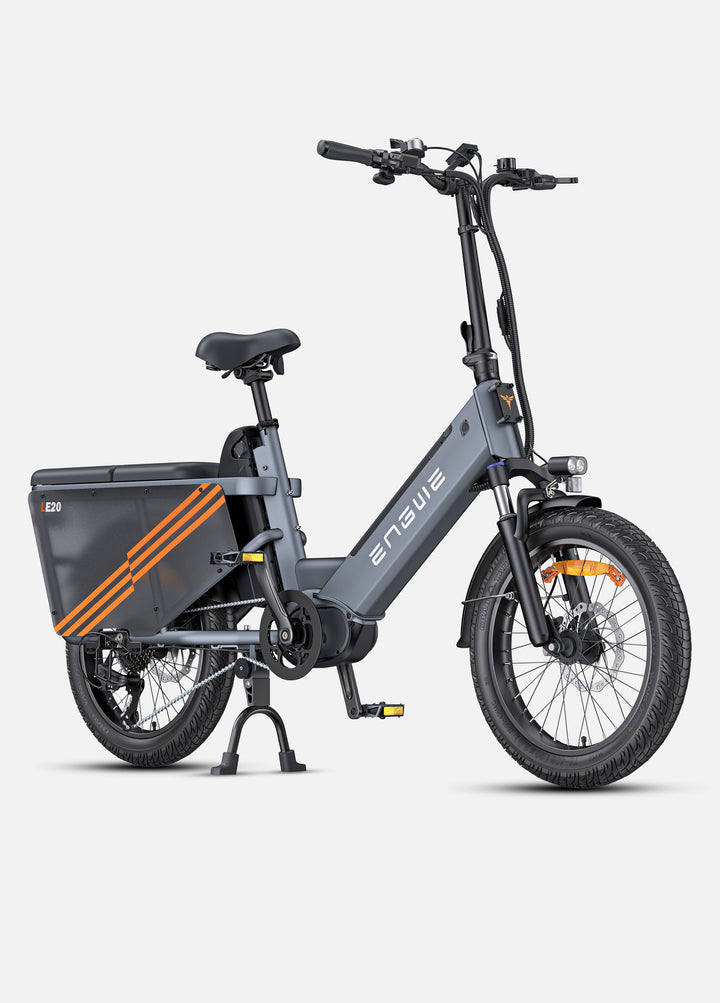
The ENGWE L20 Boost: A Study in Smart Power

The best e-bike is one that uses its maximum power with wisdom, and the ENGWE L20 Boost is a study in this principle. It reframes power, not as brute force but as responsive on-demand ability to fit any need. It has a solid 250W brushless motor at its heart, but there are lots of smarts around it. The 75 Nm power-boost button is a good feature. This means you can take on inclines or pull away at a standstill with complete ease. And most of all, the L20 Boost comes with the latest generation of torque sensor. As opposed to more basic cadence sensors that measure how many times you are pedaling, a torque sensor exactly gauges how hard you are turning the pedals and provides motor assistance parallel to your effort in real time so that power delivery is extremely natural and intuitive while riding.

This smart power is backed by an equally impressive construction:
-
Great Range:
The detachable 48V 13Ah Lithium-Ion battery provides up to 126 km of range in Pedal Assist Mode (PAS), allowing your power source to last all day.
-
All-Terrain Beast:
Its 20x4.0-inch fat tires greatly enhance stability; durable front and rear alloy wheels with 2.8″ tires, and a rigid steel frame with front suspension guarantee the best riding experience on unpaved trails, up hills and down them. This bike provides massive fun.
-
Unparalleled Utility:
Power is also a matter of what you can do. With the included front basket and sturdy rear rack, you will have plenty of cargo space to bring everything with you while cruising around town, commuting, running errands, or delivering.
The Power Source: Long-Range Batteries
An e-bike is useless if it runs out of power halfway through a trip. With that in mind, a huge lithium battery is the sine qua non of power in straight-miler terms – it equates to distance and life. The total amount of energy stored in a battery is often categorized as the capacity and is indicated in watt-hours (Wh). To find this, you can multiply the voltage (V) by its amp-hours (Ah). The higher the Wh number, the farther you can ride and the more pedal assist you can apply without worrying about running out of juice. If you are in the market for a really powerful fat tire e-bike built for long distances, then you also need to be demanding about your batteries.
Here’s what a dominant battery system looks like:
-
High Voltage:
Higher voltage e-bikes are more powerful. Higher voltage provides for more efficient power transfer from the battery to the motor, with less heat and longer run-time as a result.
-
High Amp-Hours (Ah):
This is the equivalent of the battery's "fuel tank." Look for a 15Ah+ battery. Higher-end bikes may have 20Ah, 25Ah, or even twin-battery systems that muster up over 30Ah for an epic range.
-
Watt-Hours (Wh):
Look for a battery with at least 700Wh. Anything above 1000Wh and the e-bike is getting into hard-to-beat long-range territory.
-
High-Quality Battery Cells:
One smart way to help and save money is to check to see if the manufacturer of your battery pack has utilized a good brand name for the inside components. Companies such as Samsung, LG, and Panasonic manufacture the best cells: reliable ones that give your battery a longer life and more charge through hundreds of cycles.

Built to Last: Robust Frames and Components
It takes a strong frame and components to withstand the additional speed, weight, and stress the powerful motor and extra-large battery bring. Quality of construction is an important but underappreciated aspect of power. Its strong construction makes it a safe, durable product you can depend on, in particular when navigating difficult off-road terrain or while carrying heavy loads. However, to safely realize the full potential of your e-bike experience, you will want to invest in a bicycle that has quality components. A weak frame, flimsy brakes, or crappy suspension can transform your powerful ride into a dangerous one in the blink of an eye.
Consider carefully these structural and component specifics:
-
Frame Material and Shape:
Seek out 6061 or 7005 grade aluminum frames, which are known for offering a strong strength-to-weight ratio. Inspect the welds and frame geometry, which should be able to handle high torque.
-
Braking System:
This is a must-have safety feature. If traveling heavy and fast on any e-bike, you want hydraulic disc brakes over mechanical. They have a lot more power for way less effort and offer better modulation and consistency in all conditions.
-
Suspension:
A good suspension fork is essential to maintaining control and comfort when riding faster on rough terrain, which typically will include features like lockout and preload adjustment. For serious off-roading, full suspension is the most capable and comfortable.
-
Payload Capacity:
Products with a high maximum payload capacity (e.g., 300 lbs / 136 kg) generally indicate a higher quality frame and components.
The Brains Behind the Brawn: Advanced Tech
More than just the base gear, advanced technology and high-end components make up the riding experience for a powerful fat tire electric bike. These are what dictate how that power is exercised, regulated, and utilized. An e-bike with a brilliant, powerful motor technology but a clunky, old-school control system will feel clumsy and less capable. In contrast, the e-bike that combines this muscle with some smarts is a better, more tailored, and more fun ride. Choosing a model with the right features gives you control of the bike’s performance, whether conserving battery on a long ride or using all available power on a steep trail.
| Feature | Standard Option | High-Performance Option | Benefit of High-Performance |
|---|---|---|---|
| Sensor | Cadence Sensor | Torque Sensor | More precise, natural, and efficient power transmission. Optional: Factory unlocked for 55km/h (optional) – With a throttle for non-motor vehicles applications. |
| Braking | Mechanical Disc | Hydraulic Disc | Better stopping power, control, and reliability. |
| Display Type | Simple LCD | Full Color LCD | More data, easier to see, and more capable display. |
| Drivetrain | 7-speed | 8-9 speed or higher | More precise control of cadence, better efficiency. |

Top Picks and Final Advice
A few of the best models from other heavy hitters known for their horsepower:
-
Aventon Aventure:
Turner calls it sleek and well-built; the visible welds are attractive, with a muscular 750W motor combined with a torque sensor for a smooth ride.
-
Rad Power Bikes RadRover:
A well-regarded model that combines power and value, with a 750W hub motor and durable components.
-
Himiway Cobra Pro:
On top of a robust mid-drive motor, this model features a full-suspension frame for some serious off-road performance.
Are motor watts or torque more important?
Torque (Nm) is most important for accelerating from a stop and climbing hills, which are what most riders associate with “power.” Wattage (W) is more related to when you’re pushing high speeds on the flats. If you want to feel a lot of power, it’s all about high torque.
How do I get the most out of my e-bike?
Lower the PAS level, keep your tires well inflated, don't brake and accelerate harshly, and try to ride steadily at a smooth cadence. This takes a load off the battery.
Are hydraulic brakes truly necessary?
For the speed and mass of a high-powered fat tire e-bike, you should opt for hydraulic disc brakes. I would strongly recommend it.
Selecting the right model involves your unique riding adventures matching up to the specific power profile of that suggested model.