Core Components for Winter E-Biking
It's a thrill to ride an electric bike through snowy landscapes, but it takes a machine that is up for the challenge. Most e-bikes don't work well in snow, but fat tire e-bikes are made to dominate it. This guide will make it easy to see what truly makes an electric fat tire bike stand out in the snow. Here we consider the five key aspects of a winter-proof pedal-assist bike so you can find a ride that has safety, power and fun on any frozen trail.
A great snow e-bike starts with its core technical components, which should be rugged enough to withstand cold and challenging terrain. The motor, battery and brakes are the trinity of winter happiness. A weak motor will leave you stranded in deep snow, a battery unprepared for the cold will give out early, and ineffective brakes are a huge safety hazard on ice. The following specs are what you need to keep in mind before any other if it is a winter e-bike that you’re going for so as to ensure your biking experience remains dependable and secure.
Motor Power & Type
You’re going to want a high-torque motor for snowy terrain, especially deep powder or thick slush. A 250W motor might work as a baseline but in the end it is about instant power. Search for models that boast a high number of Newton-meters (N.m) in terms of torque. Hub motors can work well, but mid-drive motors often offer superior weight distribution and more natural-tasting power that can deliver more traction and control on soft terrain.
Battery Capacity and Cold Weather Performance
Cold is the death knell of battery life, which can shrink in cold weather by 20-40%. To overcome this, make sure you select an e-bike with a high capacity battery in Amp-hours (Ah) or Watt-hours (Wh). We would strongly suggest using a battery that is 13Ah or greater. Pro Tip: For best results charge your battery indoors (at room temperature). It’s not meant to sit on the bike in a cold garage overnight.
Brakes
You need to be able to stop safely in snow and ice. Disc brakes are non-negotiable. Hydraulic disc brakes provide more stopping power and more modulation (control) than mechanical, which is important when you’re dealing with slippery surfaces. They are also a sealed system, which makes it less likely to freeze and be contaminated with salt and slush.
Tires and Suspension: The Keys to Traction
The former are the engine, the latter suspension and tires that keep your wheels planted on terra firma. Fat tires are the most distinctive feature of snow riding and act like snowshoes themselves — allowing your bike to “float” over soft powder rather than sink in (a major drawback of regular old skinny tire bikes). But not all fat tires are created equally, and there is a lot of nuance to tire pressure, tread and travel that can make or break one. Ride setups really do make the difference in turning a challenging ride into an enjoyable adventure.
Width and Pressure of the Tire
The greatest feature of a fat tire e-bike would be its wide tires, usually at 4.0 inches or above. This wide contact patch means you can run very, very low tire pressure (PSI). Practical Tip: For packed snow go for 8-10 PSI, drop as low as 4-5 PSI for deep, soft powder. When the pressure of the tire decreases, the contact size increases giving a "floating" sensation and offers maximum traction. Experiment to find the optimal for your weight and conditions.
Tread Pattern
Search for tires with an aggressive, knobby tread pattern. The deep, widely spaced lugs do a fine job of not only shedding snow and digging in for grip but also keeping your wheels from spinning out when you’re climbing or accelerating. A slick or street-orientated tire will be all but useless even in the lightest of snow falls.
Studded Tires
If you want to ride on ice at all – such as over frozen puddles or packed trails that have thawed and refrozen – studded tires are a necessity for safety. Metal studs embedded in the tread of these tires bite into the ice and deliver grip where rubber has no impact. They are usually sold separately, so you can install them for the winter season.
Suspension
If you can afford it, a hydraulic front suspension fork really makes a difference in comfort and control. It soaks up bone-jarring impacts of frozen ruts and chunks of ice and unevenly packed snow, minimizing rider fatigue and enabling the front wheel to knife through for a better handling.

Featured Model: The ENGWE L20 Boost

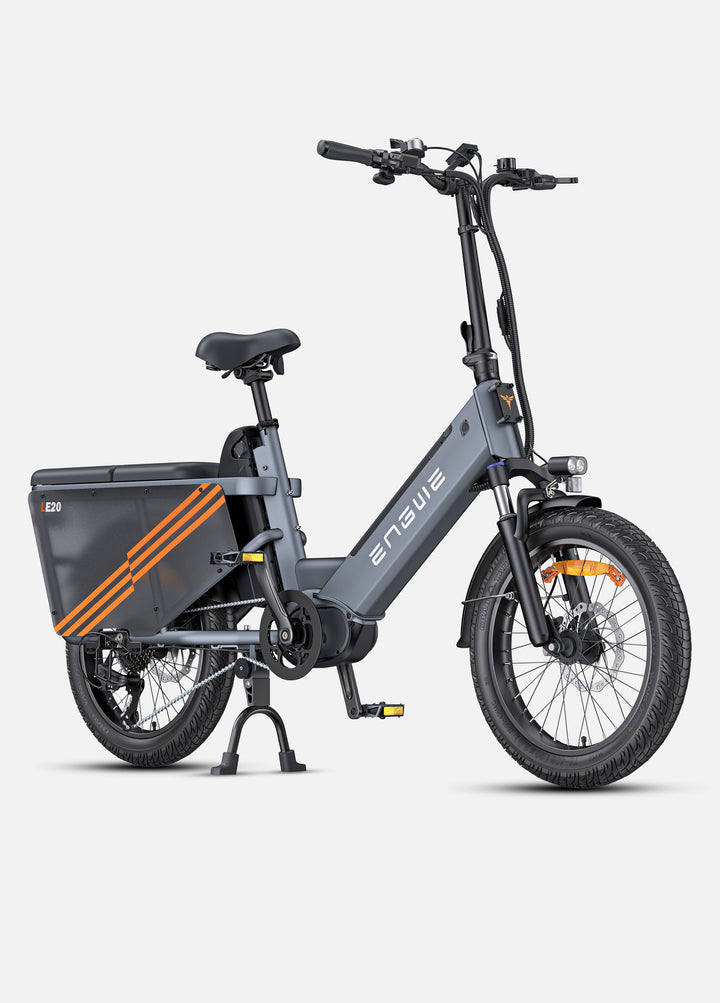
If you’re looking for a premium offering that perfects this snow-capable formula, look no further than the ENGWE L20 Boost. It is a powerhouse in both utility and performance from the engineering excellence of ENGWE, with added bonus for winter adventure seekers. It’s not just an e-bike with fat tires, but rather a well-thought-out package where every part does its best to seamlessly deliver the substantial power in all situations. The L20 Boost is designed to deliver best-in-class rider control, all day range, and raw power - the 3 factors that matter most if you're a winter e-biker.
Torque on Demand
Boasting a 250W brushless motor and the torque sensor, it will help you tackle steep slopes with ease up to 15-degree. This feature is a game changer when you need to blast through snow drifts or power up an icy hill.
Responsive Power Delivery
The state-of-the-art torque sensor is a bonus feature that delivers a smooth boost of power. It senses your pedaling effort and provides an amount of power support that complements it perfectly, creating smooth traction between your tires and the ground, avoiding sudden surges in power output and wheel spin on loose surfaces.
Winter-Ready Foundation
It’s equipped with durable 20” x 4.0” wide fatties up front – flotation and traction leads the way! This is completed with a 50mm travel front suspension fork to even out the most roughest winter road surfaces.
Remarkable Cold-Weather Range
Long-range 48V13Ah ultra-portable lithium battery delivers up to 126 km on your longest, lowest-effort winter rides with no fear of running out.

| Specification | ENGWE L20 BOOST |
|---|---|
| Motor | 250W Brushless Motor |
| Max Torque | 75 N.m (Power-Boost Button) |
| Battery | 48V13Ah Li-ion |
| Range | 126 km (PAS Mode) |
| Sensor | Torque Sensor |
| Suspension | Front Suspension (50mm travel) |
| Brakes | 160mm Front & Rear Mechanical Disc Brakes |
| Tires | 20” x 4.0” Fat Tires |
Essential Winter-Proofing Features
But a great snow e-bike is so much more than the sum of its motor and wheels; it’s also everything else that makes winter riding feasible and safe – the features, the accessories. Darker days, slushy melting snow and corroding road salt are all obstacles. If it is equipped right a e-bike should have solutions to this problems built-in helping you stay visible, dry and protecting your bike's components from the elements. Otherwise, investing in a model with these features already integrated could end up being an affordable venture compared to adding them post-purchase.
Full-Coverage Fenders
Absolutely necessary. Fenders prevent snow, slush and salty spray from pelting you on the road — and more importantly for e-cyclists, on your (expensive!) sensitive drivetrain and electrical parts. This keeps you cleaner and helps to discourage premature rust and wear.
Powered Lights
With daylight hours shorter in winter, seriously bright front and rear lights are an essential safety feature. Lights that are included and operate off of the main battery are great, because you never have to deal with lights running out of batteries or forget to charge them. Find a model with a separate brake light for even more visibility.
Water Resistance (IP Rating)
Electronics do not play well with water. Look at the e-bike’s Ingress Protection (IP) rating, which reveals how well it repels water and dust. An IPX4 rating is the least you should accept, guarding against all splashes in any direction. Good old IPX4 is fine, but an even higher rating, such as IPX5 or IPX6, will give you extra peace of mind.
Drivetrain Durability
Seek out components from reputable brands — such as Shimano. 7-speed is cheap and simple - it will last longer in winter than expensive, complex high end drivetrains. Maintenance Tip: After each snowy ride, you’ll want to clean your chain and apply a wet-conditioner lube to keep rust at bay.

Other Top Snow E-Bikes and FAQs
The ENGWE L20 Boost is a great all-rounder, but there are several other strong contenders in the marketplace that will work perfectly in snowy conditions. By exploring these options, you can also find a bike with the ideal combination of capabilities for your needs – whether you long for mammoth power or want to make the most of long-range riding, not to mention a super-low standover and other must-haves! These manufacturers have come to be known for their well-crafted and durable fat tire electric bikes that will last a long time riding in all forms of elements.
Rad Power Bikes RadRover Series
A “flagship” bike in the fat tire e-bike market, the RadRover’s powerful 750W hub motor and solid construction have helped it gain a reputation for traversing deep snow and steep hills.
Himiway Cruiser Series
Himiway e-bikes are well-known for their long range, frequently coming equipped with high-capacity batteries. Add in the power of fat tires and long miles, you’ve got a winter expedition where charging isn’t an option.
Aventon Aventure
Pairs burly fat-tire capability with a sleeker, integrated aesthetic. It comes with a color display, and it is frequently commended for its well-rounded performance in the form of a good balance between power as driven from its hub motor and okay handling out on packed snow trails.
QuietKat Apex
If you're among the backcountry riders taking to extreme wilderness, QuietKat's Apex is an ideal splurge. It's a high performance, off grid wilderness e-bike with 120Nm of torque along with top-end components and suspension that accelerates you into a full-on adventure through snow covered mountains.
The most important consideration when selecting a snow e-bike?
The key factors in the equation seem to be a high-torque motor and real 4.0″ or more fat tires. You need the power to push through the deep snow, but once you do, the tires give you the float and grip to stay on top of things (literally).
How do I clean my e-bike after riding it in the snow?
Wipe down the frame, chain and components after every ride to get rid of salt and grime. Dry the chain completely and add a wet-condition chain lube. To keep the health and range of the battery, you can store it indoors somewhere warm and dry.
Will my regular mountain bike ride in the snow?
They can be done with special tires, but a fat tire e-bike is much better. The wide tires give flotation that even a typical mountain bike can’t match, and the aid of an electric motor is especially useful to help overcome the much increased drag caused by snow.
The right fat tire e-bike changes winter from a time of hibernation into one of adventure.