Understanding Suspension Fork Fundamentals
Choosing the best suspension fork for a fat tire e-bike is very important if you want to have control, comfort, and a smooth ride. The weight and muscle of an e-bike, when paired with the huge footprint of fat tires, constitute an unusual fuss on a suspension system. Now, let’s dive into the vital areas for selecting a fork, which range from learning about basic types and technical measures to providing an overview of top integrated options, preferred aftermarket brands, and important maintenance advice to make sure you make the proper choice.
It comes down to understanding the underlying technology of suspension forks, specifically the spring: coil or air. All have their pros and cons and serve the needs of different riders as well as wallets. The correct decision here will form the basis of your riding experience. You need to consider trade-offs of the cost, adjustability, weight, and maintenance here. For the monstrous feel of a fat tire e-bike, this pick plays a huge role in how it feels when riding over different types of terrain, whether it's bumpy city streets or rocky hiking trails.
Coil Spring Forks
Another style of fork requires a physical steel spring for shock absorption.
Pros: Plush, linear feel through the travel; low maintenance; and generally cheaper. And durable—these are a workhorse.
Cons: The drawbacks are weight and limited adjustability. The spring rate cannot be adjusted, and adjusting for rider weight is done by changing the coil.
Air Spring Forks
These work off of a chamber of compressed air as a spring.
Pros: The standout is their extreme adjustability. The spring rate (stiffness) is easily adjusted with a special shock pump used to add or remove air, so it’s easy to tune for varying rider weights and preferences, and they are also a lot lighter than coil forks.
Cons: Air forks are often more costly and come with a higher maintenance interval and a more frequent need for an eye on air pressure, as well as a periodic seal service to keep things running at their best.
Inverted Forks
Not as common but often featured in higher-performing designs, the sturdier stanchions are located at the bottom of the fork and topped with lighter sliders. This design lessens unsprung weight, enhancing the suspension’s ability to react to and follow the irregular ground.
Apart from the type of spring, there are other technical specifications which impact the performance of a fork, its compatibility, and whether or not it will fit your fat tire electric bike. Forgetting to consider such things will result in the wrong or inferior part for your needs. Given the additional forces generated from a motor and weight of an e-bike, stiffening and safety-boosting pieces like thru-axles and a tapered head tube are something that’s well worth considering. You need to compare the specs of this fork with your current fork (esp. these three points) needed to be checked as below, so you can confirm it would fit your front wheel and frame well and work great.
Suspension Travel
This is the furthest distance that the fork can be compressed in millimeters (mm). For everyday use, 50mm to 80mm of travel is perfectly fine. For more intense trail riding, 100mm to 120mm gives you the best bump absorption.
Axle Standard
This is the way in which the wheel fastens to the fork. Quick Release (QR) used to be the norm, but a Thru-Axle (e.g., 15x150mm) is a modern, far more rigid and secure choice recommended for heavy fat tire e-bike use.
Steerer Tube
The portion of the fork that extends through the bicycle's head tube. Some older or lower-level bikes may still use a straight 1-1/8” steerer; however, a Tapered Steerer (1-1/8” top to 1.5” bottom) is the modern stallion, providing dramatically more stiffness for handling confidence.
Adjustments
External adjustments are included with good quality forks. A LOCKOUT switch stiffens the fork, allowing for efficient climbing on smooth terrain. Rebound damping adjusts the rate at which the fork returns to full length after an impact, preventing a pogo-stick effect.
| Feature | Explanation | Why It Matters in a Fat E-bike |
|---|---|---|
| Travel | The maximum vertical distance the fork can compress. | More travel absorbs rougher terrain; less travel is sufficient for city riding. |
| Axle Type | The method of attaching the wheel, either Quick Release (QR) or Thru-Axle. | Thru-Axles are stiffer and safer, which is crucial for a heavy front wheel. |
| Adjustments: Lockout, Rebound, Compression | Allows tuning the fork for efficiency (Lockout), traction (Rebound), and impact absorption (Compression). | Provides an efficient ride on the road and better control and tracking on trails. |
Integrated vs. Aftermarket: The ENGWE L20 Boost Advantage

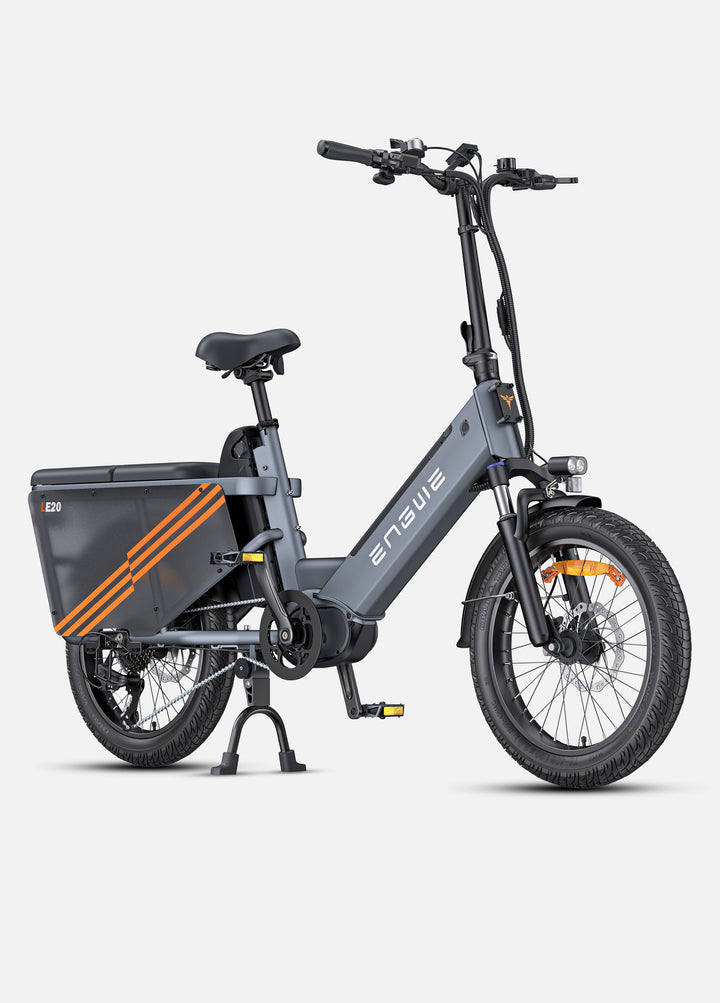
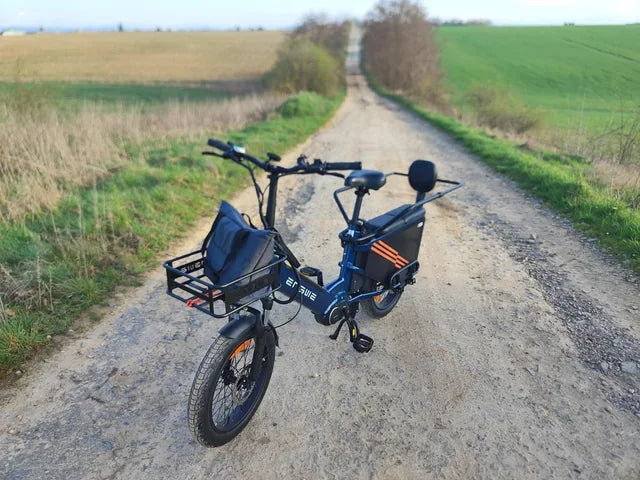
And, you can always upgrade, but the easiest and least expensive improvement is often to select an e-bike designed with a fully integrated suspension. ENGWE does well in this area, developing our e-bikes as an integrated system whereby all the components play together well. This philosophy embodies the ENGWE L20 Boost, and here we will explain why. This power and all-terrain comfort utility e-bike provides more power and range, featuring a powerful 750-watt motor with a straightforward torque sensor for a powerful feel with the added benefits of improved traction and control—and most importantly, powerful, uninterrupted support. Therefore, it includes an ergonomic hand throttle and a power-boost button for when you need an assistive push. There's also the patented Challenger frame design. The plush tires let it roll over pavement, dirt, or sand. It comes with an included front and rear rack and full-coverage fenders to stay dry in bad weather. This is affordable and green commuting at its best. Its suspension isn’t descended from a cloud; it’s an integral part of the vehicle. The bike's durable Front Fork Suspension provides 50mm of travel that has been optimized to work with its 20x4.0 inch fat tires and a lightweight frame designed for all-conditions, off-road mobility with worksite accessibility. 7-Speed Shimano gears shift quickly and easily so you can adapt to your terrain with ease.

System Synergy
The L20 Boost's fork is not just a generic piece. It is chosen and tuned to consider the bike’s weight, fat tires, and expected use so you get a suspension system that is balanced and predictable -- something an aftermarket part can’t deliver.
Hassle-Free Quality
With the ENGWE L20 Boost, you’re saved from the compatibility research, installation hassle, and time-consuming stress of an aftermarket build. You get a sure, purpose-built suspension system right from the start.
Value
Buying a full e-bike such as the L20 Boost with good stock suspension will almost always be cheaper than buying an entry-level e-bike and then adding a high-end fork down the line.
Improved Functionality
The suspension helps create a smoother ride when you have some cargo in the sturdy front basket or on the rear rack.
Those who are in the market to add a suspension fork to their current fat e-bike or upgrade want something good quality, and plenty of brands make high-quality aftermarket fat bike forks. These companies produce higher-end products that may have more adjustability and are typically made from materials intended for the type of riding they are meant for, from winter trail to aggressive singletrack. If you’re looking to upgrade, it’s important that the fork that you choose is an exact match for your e-bike when it comes to all specifications, of course (such as hub spacing like 150mm, axle type, and steerer tube). Speaking to a bike shop mechanic prior to purchase is a good idea, to ensure compatibility and correct fit.
RockShox
A juggernaut in the world of suspension, their Bluto model was one of the earliest mass-market fat bike forks and is a well-known, trusted option that offers proven performance and widespread access to service parts.
Manitou
The Mastodon model is particularly good, especially in cold temps (something a lot of other forks struggle with). Its reputation for class-leading stiffness makes this a firm favorite among aggressive riders.
Wren Sports
Known for the patented inverted suspension fork design. The Wren fork has a very high stiffness-to-weight ratio and is highly tunable, which makes it a higher-end option for folks that want the most out of their gear with a custom feel.
RST (Rapid Suspension Technology)
The RST Renegade is a popular fork for complete fat bikes and is available as an aftermarket product. It strikes a good balance between performance, adjustability, and value, and it’s become one of the most popular upgrades.
Maintenance, Upgrades, and Tuning Tips
Ultimately, budget management and the unwavering habit of regular maintenance are paramount in getting the most from your suspension fork — be it a stock or high-end off-the-shelf performer. A properly cared for, entry-level fork will always be superior to a neglected expensive one. Getting a handle on basic tuning and maintenance can save you substantial cash and make a big difference in your ride.
Save Your Bucks
Before you drop coin on an upgrade, take advantage of your existing fork. The most important of these, and really the only maintenance task that is a must-do, is to keep the fork stanchions clean and lightly lubed (the upper tubes which actuate upward when you move over a bump). Wipe them clean after each ride to keep dirt from eating up the seals.
User Tunable Skill - Setting Sag
With an air fork, setting the "sag" (or amount of travel used when sitting on the bike) is the #1 tuning step. This is the amount of compression that the fork has under your static weight. Adjust to a sag of roughly 15-25% (see the section on suspension setting with the help of a shock pump below) using a shock pump. This allows the wheel to drop into dips and compress over bumps.
When to Upspec
Don't think about doing so unless your current fork is broken, missing the critical things that you really need (like rebound control) or if you're trying to make a very drastic weight reduction in order to satisfy competitive urges.
Service Budget
Every suspension fork will require regular service (at least once every 50-100 riding hours) where the lower legs are removed, cleaned and the lubricating oil is replaced. Accounting for this long-term maintenance expense is just being a responsible steward.
Frequently Asked Questions
What’s the most important thing to consider when shopping for a fat tire e-bike fork?
Stiffness is paramount. It should have a thru-axle and/or tapered steerer tube to keep the bike rigid so that it doesn’t shimmy with all the weight of the motor and extra fat wheels being flopped all over God’s green earth. By ensuring that your fork is up to the challenge.
Do I need all that travel, after all?
For nearly all the riders I’m talking about — that is, bike path and city street casual cruisers or light trail wanderers — 50 to 80 millimeters of travel is just right for comfort. Only think about 100mm and up if you're going to be regularly dealing with very rough, technical off-road trail situations.
Can I swap out a fork by myself?
Fork installation, though achievable by experienced home mechanics with the proper tools (think crown race setter and saw guide), is a safety imperative. If you are unsure, a bike shop should be able to install it for you.
Get to grips with the type of ride experience that suits you and invest in the right suspension fork for your type of riding so you’ve got it covered, whether it’s comfort or control for whatever adventure you’re planning.