Define Your Primary Use Case
When presented with choosing a specific brand like Wooken or the entire world of electric bike opportunities, the task may seem challenging. With our guide, you will see that it is easier than it seems, as only five key dimensions separate you from the reports of the most comfortable and suitable riding experience. We aim to influence your final decision by expanding your perception and making you aware of even the smallest details that could potentially impact your overall satisfaction with the chosen vehicle.
Define your primary use case. It is the first and most important dimension of your decision. An e-bike is a tool. It would be a bad idea to buy a hammer when you need a screwdriver, and the same is true for the electric bike. Before you even consider checking out any brands, be brutally honest and ask yourself how you will be spending 90% of the time riding that bike. Do you live in a big city and need to get to a job half an hour away, or do you go out every weekend to hit the trails with your friends? Below are a few profiles that will help you identify the case.
Urban Commuting.
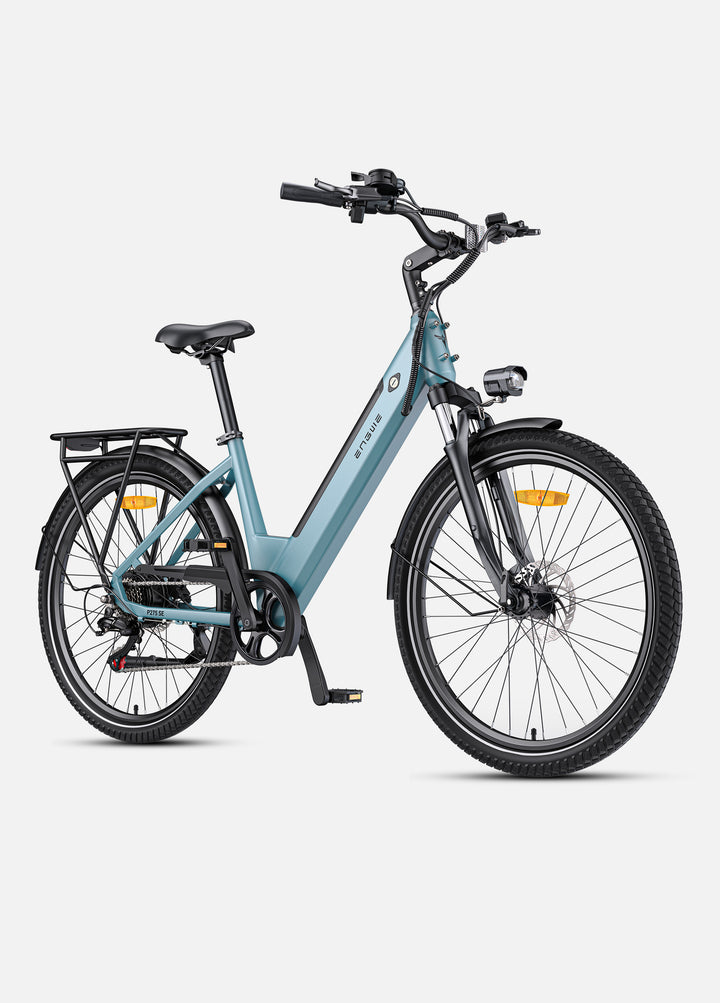
Your priorities are reliability, comfort, and practicality. The ideal features include a bike with integrated lights, fenders to avoid the splash from the front wheel, and a rear rack to throw a bag or groceries on. A step-through frame might also be a good idea if you have to stop and go all the time.
Off-Road Adventures.
Your expectations are performance and durability. Requirements include a good front suspension, or even full-suspension, knobby tires, and a very strong electric motor to make it up steep inclines.
Leisure and Fitness.
If you wish to use your bike for a relaxing ride in the park or a trip with your friends down the coastline, you need an upright angle, a nice saddle, and a power delivery system like the torque sensor. You also need to get as many miles as you can without stopping.
Utility and Cargo.
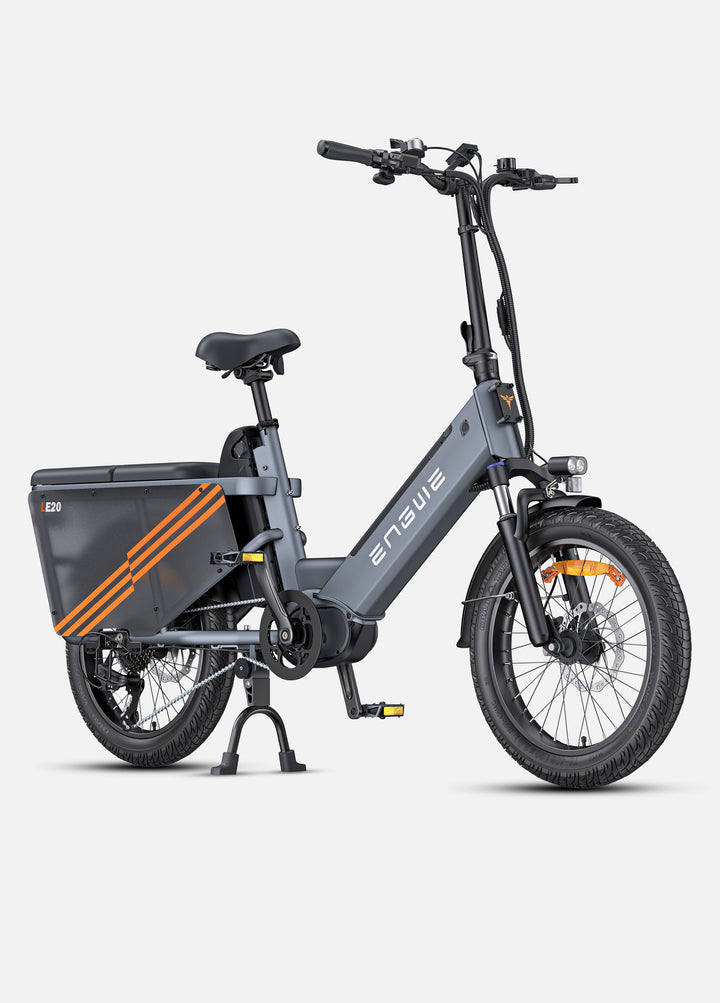
If your e-bike needs to help you carry heavy luggage and replace a car, make sure to buy one with a sturdy rack, a low center of gravity in the frame, and a motor stronger than the ones on other models.
Understand E-Bike Categories and Technology
Once you’ve determined your primary use case, the next dimension is to comprehend the basic categories and technologies that distinguish electric bikes. Not only does this provide you with the knowledge to decode the plethora of competing claims, but it also helps you find out which specs genuinely matter in your field of use. E-bikes are creations of many tendencies, so more options than just those presented by a single brand like Wooken necessitate comprehension of these basic classifications.
Commuter E-bikes
These are slick and effective, constructed for paved roads. They usually have thin tires for minimum rolling resistance and an upright riding position for a comfortable ride.
Fat Tire E-bikes
These have the outstanding feature of immense tires, normally 4.0” or more in width, which work fabulously on assorted or loose surfaces like sand, snow, or gravel. Additionally, they have a cushioned ride and are exceptionally stable.
Folding E-bikes
These are the basic answer to flexibility and transport. With restricted space or for anyone who may need a definitive “last mile” solution to combine with public transportation.
Mountain E-bikes
These are specially manufactured to travel across a variety of trails. They feature a rugged, advanced suspension frame, a dominant mid-drive engine, and rugged components.
Besides the groups listed, knowing the essential science is the secret pro advice. The motor and sensor are the most critical places for attention.
| Technology | Type 1: Hub Drive | Type 2: Mid-Drive |
|---|---|---|
| Motor | The motor is in the center of the front or back wheel. This is frequently cheaper and provides a “pulling” or "pushing" sensation. | The motor is in the crankset. It uses the bike’s gears for better leverage and peak efficiency. |
| Sensor | Cadence Sensor: The sensor delivers power from the motor when you begin to pedal. It’s comparable to an on/off switch. | Torque Sensor: The sensor measures how much effort you’re pedaling and offers a proportional amount of assistance. This results in a natural and intuitive ride. |

A Closer Look at an Alternative: ENGWE
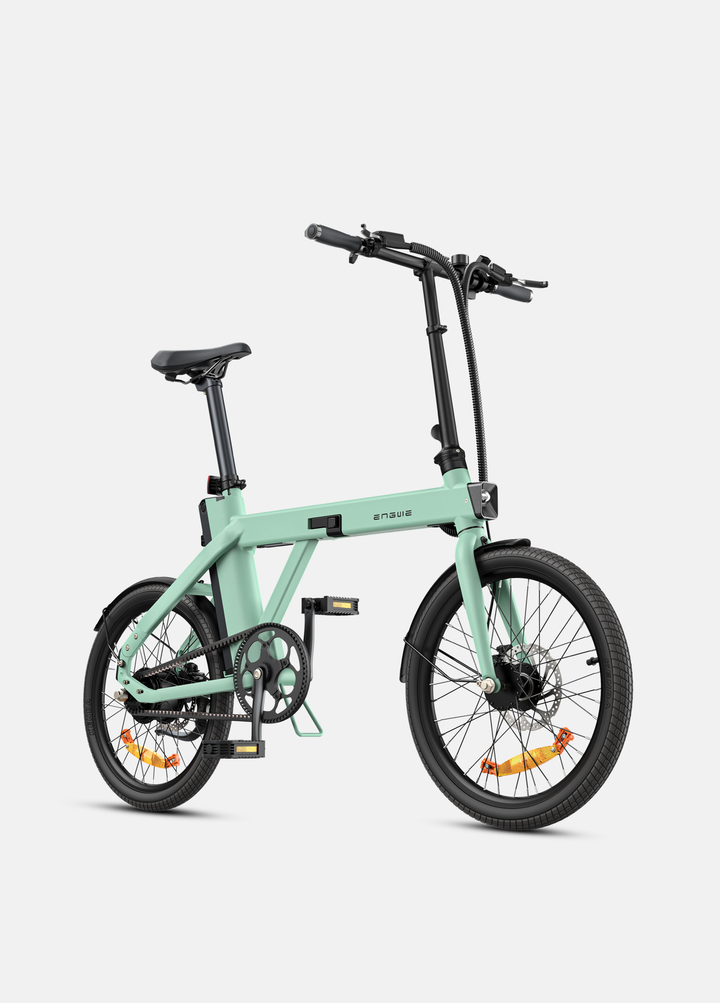
One particularly frequent one in the vast landscape of “other options” is ENGWE. There is a good reason for that. Engwe crafted an extensive and diverse ecosystem of electric bikes pretty much to cut down on the myriad choices prospective buyers have. Instead of being a jack-of-all-trades, ENGWE is a master of multiple categories, and that makes it an attractive alternative for the discerning buyer unconvinced by any other brand’s top choice. While upgrading is not always possible, their decision to implement high-end motors and batteries across the range is a top reason. Consider their ideal utility/power combo, the ENGWE L20 Boost. The 250W brushless motor is already powerful, but the Power-Boost button releases a gusty 75 Nm to take on the next hill before flattening it out simply. At the same time, a sophisticated torque sensor handles output like your pedaling input, creating an extremely smooth and responsive combination. You will hardly get tired of its 126 km of autonomy, provided by the 48V 13Ah lithium battery. The 20×4.0 fat tires and 50mm travel front fork will absorb all the irritating parts of the journey, and it even has a basket in front and a convenient rack at the rear. Their full range shows the same attention to context:
X-Series (X26, X24, X20)
The pinnacle of ENGWE’s fat tire, full-suspension lineup, these go-anywhere beasts equip powerful motors, dual long-range batteries, and a triple-suspension system to tackle some of the most rugged terrains imaginable. You won't need to ride anywhere else.
E-Series (EP-2 Pro)
One of the most iconic folding fat tire e-bikes on the market combines stupendous power and all-terrain capacity within a foldable frame to appeal to a wide range of adventurers and commuters.
L-Series (L20, L20 Boost)

Designed with utility and convenience in mind, the L-series utilizes a step-through frame design to roll perfectly under everyone. The L20 is no doubt developed for every possible terrain. The L20 Boost, however, as described, has the added torque sensor plus the power boost which make it high-tech.

Engine Pro Series
These models are folding commuting bikes with improved components, generally including hydraulic brakes at a minimum and high-power motors appealing to performance-commuters in need of outstanding portability.
P-Series & M-Series
Please refer to the official website for details.
T14
A small, light folding bike designed for short trips. Due to its small size, it is notably efficient.
Inspecting Build Quality and Components
So, as I said before, beyond brand and model, a good buyer should look at the physical build quality and quality of the materials. Therefore, you will find real long-term value here. Indeed, a cheap electric bike made from low-quality components often leads to more costly repairs down the line. Therefore, I have indicated what to look for when inspecting to ensure you are receiving a high-quality product. However, it should be noted that a suitable money-saving option is as follows: a decent frame and battery, while other components can be improved or changed later.
First, look out for a frame made of 6061 aluminum alloy. Moreover, other variations are possible here and 6061 is just one of them. However, it is durable, light, and resistant to corrosion. Furthermore, make sure to test the welding; it should be smooth and consistent, not lumpy or sloppy. Also, the drivetrains and brakes on less reputable brands need to be carefully inspected. Yet, seeing names like Shimano on the derailleur, even on budget-priced models, is a sign of quality and reliability, and ensures upgrade options. For the brakes, similarly well-known brands like Tektro provide more adequate stopping power and are easier to support. Finally, manufacturers often don't specify the lithium-ion cells building the battery pack, so ask and find out which manufacturer's cells were used.

The Post-Purchase Experience and Final Decision
And the last but not least factor is the post-purchase experience. You do not finish your relationship with the bike and the brand when you transfer the money. In fact, a great product with poor support can easily become a burden. The ecosystem of the brand is as crucial as the hardware. Big, established players dominate in this field:
Warranty and customer support
Understand the warranty length and availability for the motor, battery, and frame. Also, make sure to check online reviews on warranty claims performance.
Availability of parts
Besides particular consumable parts, like tires and brake pads, there are many specialized electronic components that are irreplaceable. Make sure to double-check the availability of any spare part you could need in the future.
Community and other resources
Big brands usually have a large community of online users that provide an extensive set of tips and tutorials. Find an owner community for the brand you are reviewing.
Customization
The possibility to swap the standard parts with any other of your liking. The comfort and look of the bike are just as important and are a large factor in long-term biking enjoyment.
E-Bike Selection Criteria
In this perspective, the most critical criterion is your primary use case. All other factors are influenced by this one. A city e-bike will not handle a heavy forest trail, and a mountain bike with heavy loads is an unreasonable solution for a fast commute.
Is a torque sensor worth paying extra for? Without a doubt. For a riding experience that feels like an extension of yourself, do not settle for less. That is, a torque sensor over a cadence sensor. It will enhance your control, improve efficiency, and make the ride feel more natural. With that being said, how do I choose between so many possible models from the same manufacturer? There are three variables: whether the frame is a step-through or a folding type, if the tires are fatter or narrower, and how much distance you need to travel. Considering your use case will help you find the ideal solution. Regardless, the greatest electric bike is the one you can’t keep from riding.