An ebike controller is very much like the "brain" of a motorized bicycle. These devices are responsible for everything from speed and torque to your e-bike's overall performance. Knowing how they operate can significantly enhance your e-bike experience if you're a rider, retailer, or manufacturer. This guide is all about figuring out what e-bike controllers are and equipping you with the necessary knowledge to make a wise decision.
What is An Ebike Controller?
An electric bicycle controller is a particular part that links the electrical components to enhance the bike's performance. The unit is a connection hub for the display, throttle, motor, pedal assistant, battery, and other sensors.
Simply put, the ebike controller is the part that makes the decisions for your ebike. They basically keep your bike's functions running smoothly. Usually, the controller for ebike is housed in a protective sealed container for safety. It is possible to mount the controllers on your bike as if they were another accessory.

Top Features to Know
-
Voltage and Current Ratings: Make sure that the battery and the motor of your e-bike are compatible.
-
Connectivity: Certain controllers might provide Bluetooth or Wi-Fi connections to make changes through a mobile app more convenient.
-
Programmability: Having the option to adjust the settings in detail could hugely change the way you ride.
Key Functions of an E-bike Controller
The major functions of an ebike motor controller include power regulation, speed control, and safety assurance. Let's explore each function in detail:
-
Power Regulation: The controller is in charge of regulating the amount of energy that is taken from the battery and sent to the motor.
-
Speed Control: It changes the motor speed depending on the rider's input, for instance, the position of the throttle or the level of pedal-assist.
-
Safety Features: Current controllers come equipped with safety features such as overcurrent protection, thermal protection, and low-voltage cutoffs to ensure the safety of the rider as well as the e-bike components.

Different Types of E-Bike Controllers
Check out the following types of ebike controllers:
Brushed DC Motor Controllers
How They Operate: These devices are meant to work with brushed DC motors that use brushes and a commutator to change the current direction in the windings. The ebike controller 48V manages the voltage and current that is given to the motor.
Pros:
-
Cost-Effectiveness: They tend to be less expensive to make, thus allowing consumers who are conscious of their budget to have access to them.
-
Simplicity: Their simple structure is what makes them very easy to understand and repair.
Cons:
-
Maintenance: Brushes are consumables; over time, they must be replaced, thus increasing the ongoing costs.
-
Noise and Heat: The friction also produces a louder operation and can lead to the motor becoming heated.
Brushless DC Motor Controllers (BLDC)
How They Operate: BLDC controllers go with brushless motors, which comprise a mix of permanent magnets and electronic commutation. The controller ebike employs algorithms to regulate the motor's three-phase electric currents.
Pros:
-
Longevity: The absence of brushes implies less wear and tear, thus the motor will last for a longer time.
-
Quiet Operation: Without the brush friction noise, the machine runs quieter, and the user is more satisfied.
Cons:
-
Complexity: More complex circuitry is needed for the electronic commutation.
-
Cost: The first investment will be more expensive because of the intricacy and quality of parts.
Square Wave Controllers
How They Operate: The controller ebike 48V produces a square or rectangular wave signal, which means the power delivery to the motor is more sudden and less smooth.
Pros:
-
Simplicity: Since the circuits are less complex, it is easier to manufacture and maintain them.
-
Affordability: The lower their production costs are, the more affordable they become.
Cons:
-
Ride Quality: The ride might seem jerky or unstable due to the less seamless power delivery.
-
Noise: The sudden delivery of power may cause the machine to make a louder noise.
Sine Wave Controllers
How They Operate: These controllers generate a sinusoidal waveform, which enables a smoother and more natural power curve, thus resulting in a more comfortable ride.
Pros:
-
Efficiency: Usually, they perform better, particularly when operating at high speeds.
-
Silent and Smooth: The sinusoidal waveform guarantees a riding experience that is quiet and smooth.
Cons:
-
Price: The increased complexity and efficiency require that the initial cost be higher.
-
Complexity: The electronics are complicated; thus, they need advanced algorithms for waveform generation.

Practical Uses in Everyday Life
Check out these uses of the ebike speed controller:
Mountain E-Bikes:
Those who desire to experience the ultimate performance of an e-bike, the mountain e-bike, such as the ENGWE Engine Pro 2.0, carry an advanced controller.
Controllers with high current ratings are a must-have for those who are going off the beaten path and up steep slopes. The ebike motor and controller will be the perfect pair to deliver the required torque and power, thus making it possible for the e-bike to take on challenging terrains while still maintaining its performance level.


Urban Commuters:
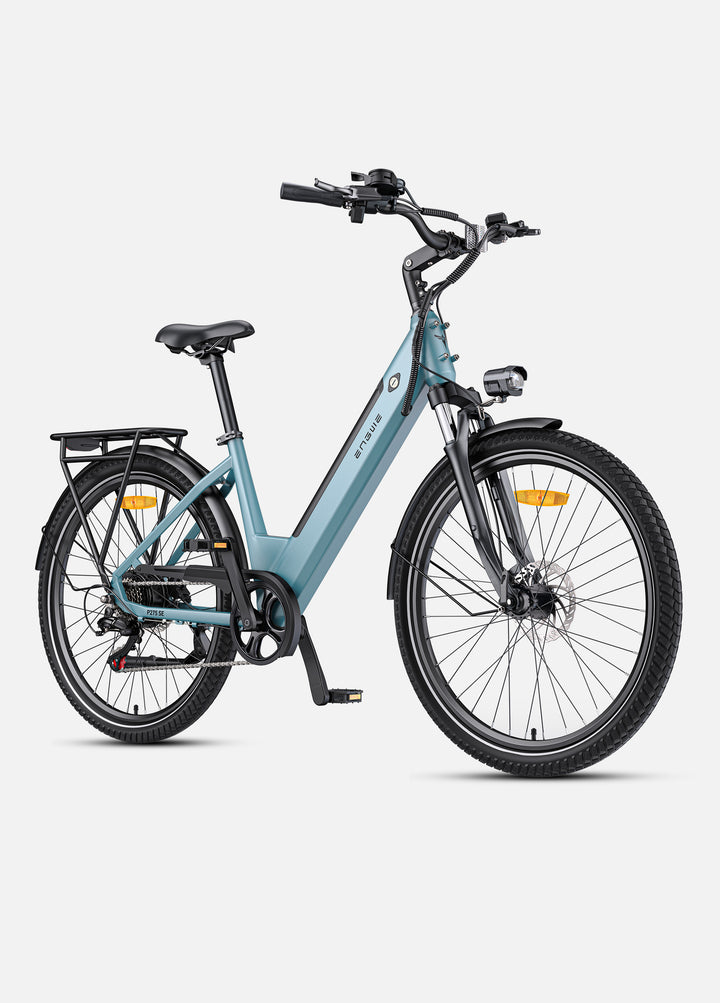
The advanced controller is a feature that the urban commuter ebike model, such as the ENGWE P275 SE, has to offer to the performance seekers.
In busy urban areas with heavy traffic, programmable controllers are a great option. This dual motor ebike controller gives users the ability to adjust speed limits, pedal assist levels, and regenerative braking settings.


Touring E-Bikes:
The new touring e-bike model, like ENGWE E26, is powered by a sophisticated controller. So, this is the e-bike to consider if you want to ride at the absolute highest level of performance.
Such units require controls able to receive data from many sensors to provide them with a great ride. In the case of a highly sophisticated 48V 1000W ebike controller in touring e-bikes, the unit normally links both torque and cadence sensors, thereby allowing a balanced and energy-efficient ride that not only extends the battery life but also ensures rider comfort.


How to Choose the Right Ebike Controller
Voltage Compatibility: 36V, 48V, or 72V?
Make sure that your controller is always compatible with the voltage of your battery and motor. The usual setups are:
-
36V: 36V ebike controller do light-duty commuting
-
48V: A 48V controller for ebike is common for the majority of mid-range e-bikes
-
72V: High-performance or off-road builds (usually not part of street-legal setups)
Things can overheat, be damaged, or even not work at all if an ebike controller 72V is used with a 48V battery or motor.
Controllers and Bafang Hub Motors Matching
Movin bikes are powered by Bafang 500W geared hub motors, which work with 48V sine wave controllers. If you are looking to upgrade your controller, make sure you always check:
-
Brushless DC motor support (BLDC)
-
Hall sensor support
-
Current limits of 18–22A
Motor Efficiency and Current Limits
If you raise the current limits, you will be able to get more torque, but your motor might overheat, or your battery will be drained faster. Generally, a 500W motor with an ebike 48V controller is operating effectively at a 20A limit, which provides a nice compromise between the power and the life of the battery.

How to Upgrade Your E-Bike Controller for Better Performance
Let's discuss how to hard reset your ebike controller as a key step in upgrading it for better performance:
When to Consider Ebike Controller Upgrade
The response of the throttle control ebike is weak, or you are making underpowered climbs.
Make sure the voltage is the same if you are putting on a battery with a higher capacity.
You would like to turn on features such as cruise control or regenerative braking.
Ensuring Bosch System Compatibility
The Bosch controller ebike is equipped with controllers and sensors that are Bosch proprietary. In case you have an ENGWE bike, the question of Bosch doesn't arise. Don't mix systems if you are not planning to do a complete rewire.
Summary
Understanding your ebike controller is essential if you want to ensure the best possible safety, performance, and efficiency of your e-bike. The controller, as the brain of your bike, regulates power, speed, and battery use, thus giving you a smooth and dependable ride. If you are enhancing your e-bike, fixing it, or simply wondering how your e-bike operates, a great deal of impact can be made by understanding the workings of your controller.
By choosing the appropriate ebike controller 48V 1000W, your riding experience gets better, and the lifespan of your e-bike is prolonged as well. Get the latest information, take good care of your controller, and make use of the e-bike's full power every time you go for a ride.
Frequently Asked Questions
Are all electric bike controllers compatible with any e-bike?
Not necessarily. Different e-bike controllers can have different voltage ranges, motor phase configurations, sensor types (hall vs. sensorless), and display communication protocols.
Is 48 volts good for an eBike?
Compared to the lower voltage batteries, a 48V controller ebike battery can deliver higher power output, improved acceleration, and better hill-climbing ability. The use of the 48V battery also results in longer range, and energy is used more efficiently, thus the rides are both faster and smoother.
What exactly does an ebike controller do?
An ebike controller is basically the brain of your electric bike. It decides which part of the battery the current will come from and sends it to the motor based on the rider's signals, for example, if the rider uses the throttle, the pedal-assist level, or the brake sensors.
How to reset ebike controller?
An e-bike controller could be reset by you indirectly or directly. A hard reset (power off, remove the battery, wait, then press the power button) or the display settings menu (hold the buttons to find "Factory Reset" or "Restore Default") can be used for the same.