The world of electric bikes is a big one, and trying to sweep your way through it can be a bit overwhelming as you sort through a stream of brands all desperate to catch your eye. Of them, Nakto has established quite a niche, especially for riders who are looking for a starting point to e-mobility without a massive wallet commitment. But is an affordable price tag the whole story? This detailed post goes beyond the thin list of products to provide a thorough Nakto e-bike review that discusses the entire user experience, the men and women behind the brand, and the key things you need to know to decide if a Nakto electric bike is the one you want to take home. We are writing this review to answer that one simple question in your mind: Is Nakto a good investment for you?
Nakto has a wide selection of products that attempt to fit the needs of a wide range of riders and purposes. Their lineup reflects this mission to make electric biking open to all. Here is a simple breakdown of their top product lines and models:
Nakto Classic Series
Nakto Pony Cargo Bike
Nakto Fashion Series
Nakto Discovery Series
Nakto Ranger Series
Nakto Santa Monica Series
Nakto Super Cruiser Series
Nakto City Stroller Series
Nakto Skylark Folding Bike
Nakto Steady OX Fat Tire Bike
Hands-On Reviews: Nakto's Top-Sellers on the Road
You first need to fully comprehend a brand by experiencing its best-selling items. We got to know three of Nakto’s top-selling models well to see how they handle on the road. The first to arrive is the Nakto Classic 26", which is a classic step-through city cruiser. From the instant I mounted the huge, cushioned saddle, the machine’s function was obvious: comfort. The position is upright and comfortable, taking the strain off your back and wrists. The pedal-assist system involved the 250W rear hub engine in a subtle, yet noticeable, push and away we moved. It’s not a shocking, high-torque boost, but a smooth, consistent help that makes hills feel smaller and headwinds go away. To me, it was the perfect sidekick for leisurely neighborhood rides, jaunts to the market (the basket is a big plus), or long, gentle trundles along dedicated bike paths. The single-speed drivetrain contributes to the simplicity of the experience, which makes it a point-and-ride bike indeed. The ride is more comfort and convenience-oriented than performance-based.
Next, we tried the Nakto Ranger, a fat-tire model for more ambitious terrain. The visual change is instant; the 4-inch-wide tires make the bike look mean and all-terrain. I test-rode it over pavement, gravel paths, and packed dirt and was impressed by the stability and cushioning it offers with those large-volume tires. They swallow small bumps and road blemishes and offer a surprisingly smooth ride. The 350W motor on this model packed a bit more oomph than the Classic, and that was a welcome thing, as these tires struggle a bit when you hit loose stuff or an incline. The 6-speed Shimano gear set is sufficient to keep you moving on hills and flats, but probably not as snappy as would be ideal. I immediately identified the bike as perfect for someone living near trails and the beach, or an area with roads in need of constant repair. It felt solid and capable, encouraging me to ride off-road the entire time, and yet it continues to come in at a truly accessible price point for a fat-tire electric bike.
And finally, we test-drove the Nakto Fashion folding e-bike. The folding process was simple enough, so while it’s not nearly as light as some other folding bikes out there, it isn’t that difficult to lift and stow in a car trunk or stuff into a big apartment closet. The ride on the 20-inch wheels was swift and responsive, ideal for darting around in urban settings. The motor supplied generous help for city riding, easily dispatching stop-and-go traffic. It was its practicality that I most liked. For a student with a large campus or a commuter in need of a last-mile solution upon leaving a train, the Fashion is an incredible value. It doesn’t have enormous range per charge or a super-smooth ride or the latest and greatest features available on a scooter, but it checks all the boxes it needs to – it is meant to solve a problem and positions itself perfectly to do that at a price that doesn’t break the bank. This was my general sentiment for all 3 models: Nakto will give you what it advertises – a practical, affordable, and fun introduction to the world of e-bikes.
Understanding the Nakto Brand: Philosophy and Ownership Experience
With a Nakto electric bicycle, it’s as important to look past the ride and grasp the philosophy of the brand as it is the ride itself – and what that will mean for you as an owner. The main thing that Nakto is after is giving exceptional value with affordability. They do this in part by judiciously choosing components and by making the right decisions on manufacturing. You will notice that while the components are functional, they won't bear the premium brand names found on more expensive bikes. The brakes are also commonly mechanical disc or V-brakes rather than hydraulic, and the motor systems usually come with a cadence sensor rather than a higher-end torque sensor. A cadence sensor only provides power once you start pedaling; a torque sensor measures how much you’re pedaling and delivers a more natural, proportional level of assistance. And this is often just fine for the typical user – the weekend rider, the budget-minded daily commuter, and the recreational cyclist. The design aims to keep the bikes as user-friendly and easy to manage as possible. This design is less intimidating for e-bike newbies or those who have no mechanical backgrounds. Another factor is assembly. Nakto bikes are generally shipped directly from the manufacturer and will require some final assembly. Typically, this means fitting the front wheel, handlebars, pedals, and seat. Although the installation is generally simple with the supplied tools and directions, it’s something to keep in mind if you’re not the best with simple mechanical operations. In the end, a Nakto is a purchase for someone who values budget-friendliness and practicality over premium amenities and superior specs. But for many, this is not just a reasonable trade-off, but the perfect one, providing an entry into an electric bike experience that you might otherwise be priced out of. The brand is effectively democratizing e-biking, and its popularity is a testament to both the need for it and how well it has been executed.

The Next Step Up: Comparing Nakto to the ENGWE P275 SE
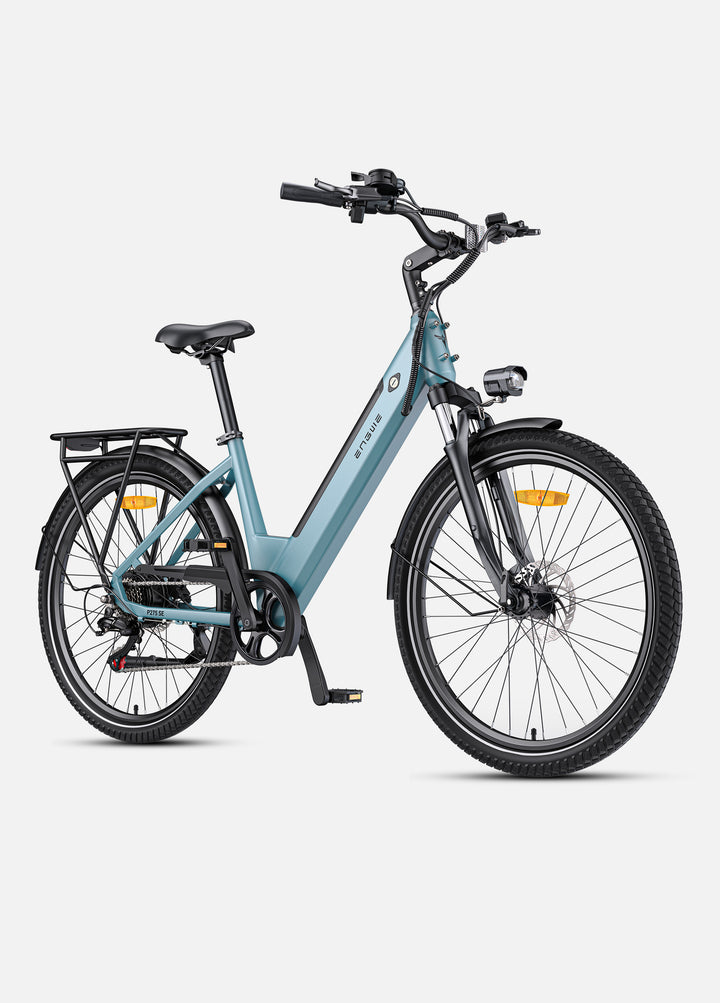
The Nakto is a great starting point for e-biking, but riders looking for a more polished, tech-heavy, premium commuting experience should be looking at ENGWE. Specifically, the ENGWE P275 SE is a major leap forward in ride quality and engineering. The key difference is the presence of an advanced torque sensor. It’s this technology that really changes the way the bike feels to ride; forget an ‘off or on’ sensation of a cadence sensor, the motor in the P275 SE responds to the pressure you put through the pedals with an uncanny level of intuition and smoothness. It is driven by ENGWE’s proprietary E-SATS (Smart Axle Torque System) and produces an instant, natural power that responds in 50 milliseconds. This means that every bit of acceleration feels like a natural extension of your pedaling effort.

The bike is founded on a lightweight 6061 aluminum alloy frame with a relaxed, Dutch-style upright geometry. It is fast, and with its 250W brushless motor, it is fully European road legal. Adding to the ride are a set of high-performance 160mm hydraulic disc brakes, providing you with greater stopping power and more modulation than you can get from any mechanical (or V-brake) option. Impressively, the P275 SE features a huge 36V 13Ah battery with a maximum range of up to 100km, meaning you can ride with ease and forget about range anxiety on longer journeys. It is features such as these - including a Shimano 7-speed shift system, built-in lights, a large LCD color display with an easily connected smart app, and included fenders and kickstand - that make the all-new, fully feature-equipped electric city bicycle for the performance and comfort-driven urban rider.

Nakto E-bike Model Comparison
| Feature | Nakto Classic 26″ | Nakto Ranger | Nakto Fashion 20″ |
|---|---|---|---|
| Motor | 250W Rear Hub | 350W Rear Hub | 250W Rear Hub |
| Battery | 36V 10Ah Lithium-Ion | 36V 10Ah Lithium-Ion | 36V 10Ah Lithium-Ion |
| Estimated Maximum Range | 20-25 Miles | 22-28 Miles | 18-20 Miles |
| Brakes | Front V-Brake, Rear Expansion Brake | Mechanical Disc Brakes | Front V-Brake, Rear Expansion Brake |
| Drivetrain | Single Speed | Shimano 6-Speed | Shimano 6-Speed |
| Tires | 26” x 1.75" City Tires | 26” x 4” Fat Tires | 20” x 1.75" City Tires |
| Frame Style | Step-Through Cruiser | High-Step Fat Bike | Folding |
| Key Feature | Basket & Rear Rack Included | All-Terrain Versatility | Compact & Lightweight |
Frequently Asked Questions (FAQs)
Maximum speed of a Nakto e-bike?
The majority of Nakto electric bicycle models are deemed Class 2 e-bikes in the States. That makes it capable of a top speed of about 20 mph (32 km/h), whether a rider is using pedal assist (PAS) or the throttle alone. The real top speed that you will achieve may vary depending on riding conditions (surface, wind, tire pressure, rider weight, slope, etc.). The motors are generally 250W, 350W, or 500W, as most of these motors are designed to be used for commuting and weekend riding but not for speed. They are designed for reliability and efficiency at legal speed limits for bike paths and city streets.
Are Nakto e-bikes easy to put together?
Nakto bikes are delivered about 85% to 95% assembled. The rest of the assembly is meant to appeal to someone who is at least somewhat mechanically inclined. Normally, they require you to attach the front wheel, handlebars, seat, and pedals. Nakto usually includes a simple tool kit for assembly. There are also plenty of video tutorials online from Nakto and other users that guide you through the process of assembly. Most users have found the assembly to take them little more than an hour or two, but if you’re totally tool-challenged, you may want to consider arranging for a local bike shop to do the final assembly to be sure everything is safe and adjusted correctly.
Q: Will the battery be 100% fully charged when I receive it?
A: It should be, but you may want to charge it before first use just to be sure.
What is the range of a Nakto battery in practice?
The range you see is always in ideal conditions: a light rider, flat ground, no wind, and using the lowest pedal assist. For Nakto bikes commonly using a 36V 10Ah or 12Ah battery, you might expect somewhere between 15 to 30 miles (24 to 48 km) per charge. The number is a function of how you ride, in reality. Frequent throttle use, riding in a high PAS level, climbing hills, and carrying loads will lower the range. On the other hand, if PAS is set low and you are pedaling a lot, you will be able to extend it quite a lot. The best way to think of the battery is it makes your everyday rides easier and longer, not as the ability to do cross-country trips like an electric car.
Can heavier riders ride on a Nakto as well?
This is an important consideration. Many Nakto bikes claim a max load capacity of about 250 lbs. Some of their stronger models have a higher load capacity rating, like the Super Cruiser or specific fat tire bikes, which could go up to 300 lbs. You should reference the precise specs for the model you are interested in and not exceed the weight limit mentioned. Going over the poundage can add more stress on the frame, motor, and brakes of your bike, which may result in a decrease in performance and a decrease in your safety. For riders who are near or exceeding the limit, you could always consider an e-bike designed to support a greater maximum weight.
Where are Nakto Bikes Made and what is their customer service like?
Nakto is a direct-to-consumer brand that designs and builds its bikes in its own factory in China. By fully vertically integrating this way, they are able to keep their prices enviably low, in fact. They cut out many of the costs of traditional retail distribution by overseeing the entire process from manufacturing to sale. Their customer service is primarily conducted online, via email and their website. Being a budget brand, the support you’d get might not be the same compared to premium brands which also have official dealer networks. But in general, they can help you if you have warranty questions, need parts, or have technical questions. There’s also a large online community of Nakto owners in forums and social media groups that can be a great source of troubleshooting and advice!
In the end, Nakto actually lives up to its claim of budget-friendly e-biking – and that’s mighty intriguing for your first electric kick in the e-booty.