The Rad Power Bikes Ecosystem and Product Lines
Rad Power Bikes has created quite a niche in the booming e-bike business and emerged as a well-known name, particularly in the North American region. For lots of people, a Rad e-bike is their first taste of electric-assisted cycling. You are probably not thinking, "What is a Rad e-bike?" but rather, "Is a Rad e-bike a good investment for me, and will it truly enhance my mobility and be my number-one stress relief?" You want an in-depth review that cuts through the marketing blitz and gives you a glimpse of what it’s actually like to own and ride one. One review that seeks to do just that is to deconstruct their product line and provide "real-world" reviews of popular models and considerations on the practical concerns you need to think about before you have hundreds of dollars and a moving van show up at your door. We’re going to get into the brand’s strengths, ecosystem, and also help you determine if the “Rad” experience fits with what you need and if this is a good brand for your dollar.
Rad Power Bikes presents a wide range of electric bikes, all designed with a particular style of rider and use case in mind. To know what model is best for you, it first helps to know what they make. Their lineup now is organized, making for easier navigation. Here's the full release of their product lines, and the models found in them:
RadRunner Series (Utility/Moped-Style)
RadRunner 3 Plus
RadRunner 2
RadRover Series (Fat Tire/All-Terrain)
RadRover 6 Plus
RadCity Series (Commuter)
RadCity 5 Plus
RadWagon Series (Cargo/Family)
RadWagon 4
RadExpand Series (Folding)
RadExpand 5
RadTrike Series (Electric Tricycle)
RadTrike
In-Depth Reviews: RadRunner 3 Plus & RadRover 6 Plus
Now, we’ve established the foundation of the review; time to hit the trails. To provide the most useful perspective for you, we’re going to concentrate on two of the most popular and representative of Rad’s stable of models: The RadRunner 3 Plus and the RadRover 6 Plus. They represent the brand’s ethos of powerful, accessible, and convenient electric transportation.
Biking on the RadRunner 3 Plus is all about utility and fun. The first thing that struck me was its unique moped-style frame. With its easy-boarding, step-through frame, you’re raring to go, whether you’re carrying a passenger or cargo on the rear. As you start pedaling, the 750W geared hub motor engages with a smooth, satisfying surge of power. It doesn’t feel jerky or unmanageable; it feels like a strong, invisible hand pushing you along. On city roads, the bike is a delight. The 20-inch fat tires make quick work of potholes and uneven pavement, and you feel a certain amount of stability and confidence that simply doesn’t exist with standard commuter bikes. The upright riding position is easy on your back and neck. And what sets the RadRunner apart is its chameleon-like adaptability. One day, it’s your daily commuter. The day after, you’re picking up your mate because you’ve kitted it out with the passenger package. Throw a front rack on it, and it is a grocery-getter to rival most cars and carry massive loads. It feels liberating; one electric bike can serve as a car replacement for many trips. Sure, the single-speed drivetrain might appear to be a drawback, but in real-world use, you won’t miss gears much, thanks in part to an extremely powerful motor and throttle in an urban setting. It allows you to focus on the road, as well as the ride.
Upgrading to the RadRover 6 Plus is the equivalent of trading an adaptable SUV for a specialist off-road truck. This is Rad’s top fat-tire adventurer, and it looks and feels the part. My eventual take? The 26 x 4-inch knobby tires own its persona and performance. On the pavement, they sing with an inexorable urgency, but it isn’t until you divert onto a gravel road, dirt track, or even a sandy beach that the real point of the thing becomes clear. The bike blasts through obstacles that would halt a lesser bike in its tracks. The front suspension fork absorbs bumps quite well, and when you factor in the voluminous tires, you get an unexpectedly smooth ride on bumpy terrain. The 750W motor is a little beam of light and acceleration on a dark road as you stomp up a nasty hill, and the pedal assist kills it on a steep, non-paved hill you’d probably struggle on with a non-electric mountain bike. The hydraulic disc brakes are both a necessity and a blessing, bringing all the stopping power and modulation you’ll need to control the weight and speed of a heavy, lugged monster like this. It has a riding position that’s not as aggressive as a sport bike, but still comfortable for long hours of exploratory riding. What strikes you on the RadRover is the sense of freedom and capability. It tempts you to go down that road you’ve long been curious about, knowing that the bike can most certainly take it. It's ideal for hikes, camping trips, or for anybody who refuses to venture into a place that doesn't have a s*%# load of hills.

The Rad Ownership Experience: What to Expect
Of course, the smart buyer is also looking at the brand, product lifecycle, and ownership experience. Rad Power Bikes has established its brand through the direct-to-consumer model, and this carries its own implications you should be clear on. First is assembly. A Rad e-bike will show up on your doorstep in a big box, mostly assembled. Instead, what you’ll be doing is attaching the handlebars, front wheel, pedals, and fenders. Rad supplies a tool kit and online videos with detailed instructions. Someone with basic mechanical ability can do it with ease in about an hour. If that doesn’t work for you, you can visit a local bike shop or try a mobile mechanic service, but that will cost you extra. Another great upshot of the Rad brand is a huge first-party accessory ecosystem. This is a significant advantage. Racks, baskets, passenger seats, phone mounts, and more are available, and all are engineered to work seamlessly with your specific model. This high degree of customization means you can build the bike for what you’ll actually be hauling around, be it kids, groceries, work junk, or whatever else. Another significant point is battery management. Rad’s batteries are among the most dependable on the market, but you’ll only get the 25 to 45 miles of advertised range if you’re riding conservatively and using pedal assist (PAS) level one. Give it a lot of throttle or keep it in the highest assist levels continuously, and you can empty the battery in no time! A great habit is to charge the battery after every long ride and to keep it inside when not in use at around 70°F to extend its life. And finally, consider how you will service and maintain it. Many of the basic tasks, such as cleaning a chain and checking tire pressure, are straightforward, but e-bike-specific problems with the motor or controller may need specialized assistance. Rad provides phone and email customer service and has a growing fleet of Rad Mobile Service vans and retail stores in some cities. For those who live elsewhere, building a relationship with a local e-bike-friendly shop is a shrewd step for future peace of mind.
How Rad Compares: A Look at the Competition
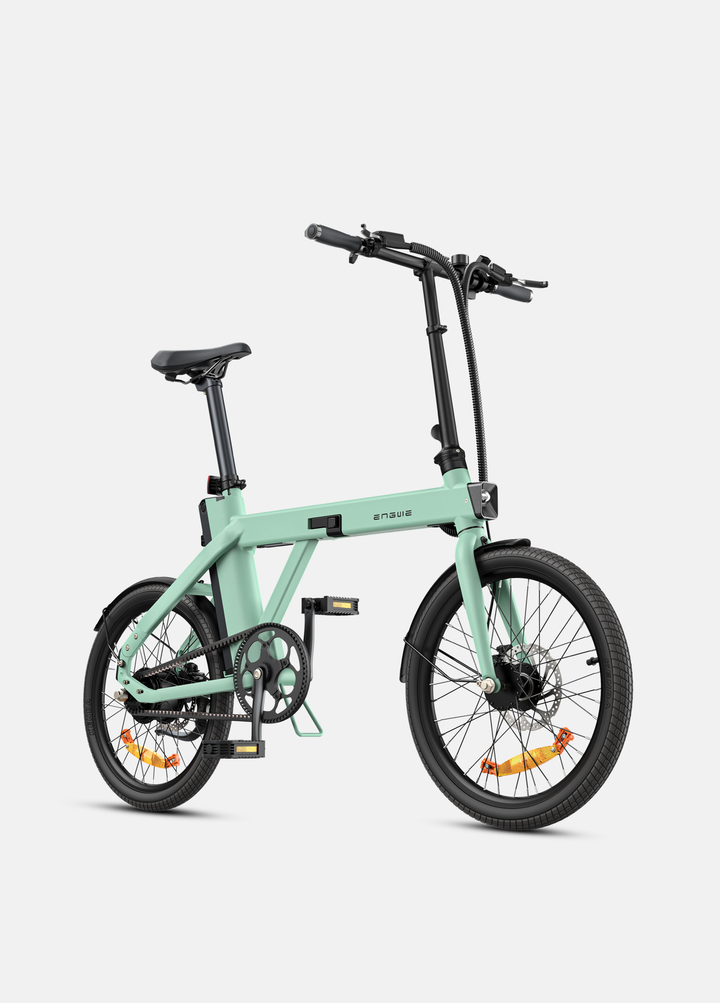
Rad Power Bikes makes a solid case, particularly to those who sit on the far left of the e-bike purchase curve, with that all-too-tempting title of “First Time Buyer,” telling them this is the one and only option worth considering. It’s worth examining the bigger picture to see what else there is. A brand that has been creating a lot of pull for their devices by taking some clever steps and offering feature-rich models is ENGWE. One model that definitely took us by surprise is the ENGWE EP-2 Boost. This folding electric bike shines by including some advanced features not available elsewhere at this price, such as rear-shock suspension. At the core is an intelligent torque sensor that gives you a much more intuitive ride versus the cadence sensors you’ll often encounter in this price range. It senses the force of your pedaling and matches the motor power in a subtle way, which gives you a natural feeling of the power amplifying your capability. The EP-2 Boost also adds a cool “Boost” feature that, when you hold it down, will increase power output from the motor and use the full 55 Nm of torque of the EP-2 system for an instant hit of power to take you flying up steep hills or away from traffic lights. This is done through a 250W motor that’s EU-approved and can carry the bike at an impressive top speed of 25 km/h, and a high-capacity 48V 13Ah battery that is removable and provides a seriously respectable maximum range of 120 km (in its most efficient mode). The bicycle is versatile, with 20x4.0 fat tires and tough one-piece wheels that can handle everything from city streets to dirt and gravel. Safety is the number one priority on this bike, with improved 180mm dual disc brakes and beefy 20x4.0-inch tires to help chew up the pavement. And, since it's a collapsible electric bike, all that convenience is wrapped up in a small package, making it commuting and apartment-storage friendly. If you’re looking for a high-tech, strong, versatile fat tire e-bike with a pro-quality ride feel, the ENGWE EP-2 Boost is a very interesting option to think about.

So you can see the differences in Rad's own line, here’s a good old parameter comparison table of all their popular models. This allows you to make a level-headed comparison between specifications to get a feel for which bike is set up for its intended use case.
| Feature | RadRunner 3 Plus | RadRover 6 Plus | RadWagon 4 |
|---|---|---|---|
| Motor | 750W Geared Hub Motor | 750W Geared Hub Motor | 750W Geared Hub Motor |
| Battery | 48V, 14Ah (672 Wh) | 48V, 14Ah (672 Wh) | 48V, 14Ah (672 Wh) |
| Range Est | 25-45 miles (40-72 km) per charge | 25-45 miles (40-72 km) per charge | 25-45 miles (40-72 km) per charge |
| Top Speed | 20 mph (32 km/h) | 20 mph (32 km/h) | 20 mph (32 km/h) |
| Total Weight Capacity | 350 lb (158 kg) | 275 lb (125 kg) | 350 lb (158 kg) |
| Tire Size | 20" x 3.3" | 26" x 4" | 22" x 3" |
| Bike Weight | 74.5 lb (33.8 kg) | 73.4 lb (33.3 kg) | 76.7 lb (34.8 kg) |
| Gearing | Single Speed | Shimano 7-Speed | Shimano 7-Speed |
| Brakes | Tektro Hydraulic Disc Brakes | Nutt Hydraulic Disc Brakes | Tektro Mechanical Disc Brakes |
| Use | Utility, Moped-Style, Customizable | All-Terrain, Trail Riding, Adventure | Cargo, Family Transport |

Answering Your Top 5 Questions
Lastly, let’s tackle five of the big things that people want to know if they are considering buying. Receiving clear answers to these can be the last piece in helping you make an informed decision.
What is the real-life range of a Rad e-bike?
The average range of 25-45 miles is pretty accurate; however, your mileage may vary a lot. The largest variables are the level of pedal assist you select (PAS), whether or not you use the throttle, rider weight, and terrain. If you ride in PAS 1 or 2 on flat ground and pedal well, you'll get over 40 miles from a single charge. But if you are throttle-happy, use PAS 5 one hundred percent of the time, and fight a lot of steep hills, you are not likely to achieve anything more than 20-25 miles. The important thing is to regard the battery as a teammate; the more you help out by pedaling, the farther it will carry you.
Are Rad e-bikes waterproof? Can I ride them in the rain?
Rad Power Bikes are water-resistant, not waterproof. This makes it possible for them to be ridden in light rain. The electronic elements, such as the motor, battery, and controller, are sealed and can be exposed to splashes and rain. You shouldn't treat it like a submarine (don't submerge it), use a pressure washer on it, or park the bike in the rain for days on end, and you'll be fine. After a wet ride, it’s a good idea to wipe down the bike — especially the chain and the electrical connections.
How does the PAS (Pedal Assist System) work?
Rad bikes mostly use cadence-based pedal assist. A sensor near the pedals detects when you are turning the cranks. The sensor activates the motor once you start pedaling. The handlebar-mounted display lets you adjust the level of assistance, usually from 1 to 5. A lower setting provides a gentle push and conserves the battery, requiring more effort from you. The highest level delivers maximum power for climbing hills. You can also always use the throttle (on most models) for pedaling-free power at any time.
What is the maintenance like in the long run?
Long-term upkeep is like that of a normal bike, with some key distinctions. Regular checks are still required: keep tires sufficiently inflated, clean and lubricate the chain, and make sure your brakes are working as they should. The e-bike-specific parts (motor, battery, controller) are mostly maintenance-free. The most important long-term task is caring for the battery by not subjecting it to extreme temperatures and not storing it fully discharged for extended periods. Battery capacity may decrease with time after a few years of intense usage, which is quite normal for a Li-ion battery.
Is a 750W e-bike motor too much for a newbie?
That sounds like a lot, but Rad bikes are meant to be very approachable. The power delivery is programmed to be smooth and predictable, not sudden or intimidating. Low pedal-assist levels deliver a mild, even boost that is natural and easy to modulate. For beginners, start in PAS 1 and slowly work your way up once you develop confidence. The throttle is good for fine control; you get as much or as little power as you ask for. The bike’s weight and stable geometry also assist in making the power feel manageable and secure, making it an excellent option for first-timers on electric bikes.
In the end, Rad Power Bikes offers a solid, fun e-bike experience as a good option for almost any rider.