1. Understanding The Laws and E-Bike Styles
The legal situation is the first thing you need to be aware of if you want your E-bike in Germany to be roadworthy. The rules mostly differ based on the type of e-bike you own. The law here is based on the distinction between "Pedelecs" and "S-Pedelecs"; this dichotomy determines your duties of care toward the bike, which will also affect mandatory inspections. It is really important for each rider to know this difference so they don’t get a fine and that they can be sure if they drive their vehicle legally or not. It’s not just about speed; it’s also about how the law thinks of your bike.
- Pedelecs (Pedal Electric Cycles): This is the most popular type of electric bike. They’re only allowed to give a little help when the rider pedals, and must cut out beyond a speed of 25km/h. The motor’s continuous rated output shouldn’t be more than 250 watts. From a legal point of view, Pedelecs are regarded as standard bicycles. That is, they do not need a license, insurance or registration plate and are not subject to mandatory periodic inspections (HU). They do, however, have to adhere to the German Road Traffic Licensing Regulations (StVZO), which require certain safety gear such as lights, reflectors and brakes.
- S-Pedelecs (Speed Pedelecs): A stronger type of e-bike. Up to 45 km/h, they can offer the assistance of motors with higher performance. They have more power, and for that reason (while being in reality motor scooters) they are classified as mopeds under German law. This classification is connected with a lot of legal requirements: there are special driving licenses for riders (DRIVING LICENCE | the license AM, which trains you only to drive scooters, while B fully qualifies you for every vehicle), insurance also corresponding to liability insurance and appropriate license plates; as well, they will have to pass regular mandatory inspections in centers like TÜV or DEKRA that can be made the same way as for a car or motorcycle.
- Illegal modifications: The most important thing for people to understand is… it is illegal to modify a legal 25 km/h Pedelec in order to be able to drive significantly faster (i.e., using tuning kits). A Pedelec illegally tuned is, for all legal purposes, an unregistered and uninsured motor vehicle. If a rider is caught, they face stiff fines – as much as €500 depending on the municipality – and will have their driver’s license suspended. And if they cause an accident while riding, then they can find themselves facing criminal charges.
2. The S-Pedelec Inspection Procedure Clarified
For owners of S-Pedelecs, the HU is a regular and serious duty. This isn’t a casual check, rather it is a formal technical appraisal to say that your vehicle is safe and legal on public roads. This is a standard test adopted by all the authorized testing facilities to make sure that safety standards are consistent. With the proper documents and a well-kept e-bike, you can have a smooth, successful experience.
- Find an authorized inspection center: You will need to have your S-Pedelec tested at a recognized testing authority (Technischer Überwachungsverein): the most popular ones in Germany are TÜV and DEKRA. Appointments are recommended.
- Necessary Paperwork: Fetch all paperwork before heading out the door. You will need the Certificate of Conformity (CoC) or vehicle registration document (Betriebserlaubnis), and your compulsory third-party insurance. Without these papers, the checkup will not take place.
-
Important Technical Inspection Points: The inspector will closely examine various key features of your S-Pedelec to ensure that they comply with the law and are safe. This includes:
- Brake System: Much like the bearings, a professional inspector checks front and rear brakes to help ensure they’re good to go the distance. Brake pads, discs and hydraulic fluid levels are also inspected.
- Lighting & Mirrors: All lights (front, rear light, brake light) must function and be StVZO type-approved. Also, he’ll make sure all “required” reflectors are present and placed correctly.
- Tires and Wheels: Tires are inspected for tread depth, cuts and any signs of damage or tire age. Wheels are checked for truing and spoke tension.
- Frame & Steering: The frame is checked for cracks, rust and damage. The front end (headset) is examined to verify the handlebars and stem are both snug as a bug in a rug.
- Drive Train and Motor: The e-scooter motor, battery, and controller are examined to see if they are installed correctly, securely fixed and not altered without authorization.

3. Get Your E-Bike Ready for Its Close Inspection
Passing inspection is not a game of chance, it is one of preparation. A good pre-inspection check at home can save you time, money and the bother of a failed test and a re-inspection. I'm talking about resolving some of the typically found fails and heading into the “official” inspection with confidence. This list includes the key areas that inspectors concentrate on, allowing you to check your electric bike is in the best condition.
-
High Priority - Brake System Deep Check: This is critical for safety.
Actionable Tip: Apply pressure to your brake levers. They shouldn't feel squishy, and they shouldn't hit the handlebar. If they do, your hydraulic brakes might need to be bled. Inspect the brake pads for wear; most have a line that serves as an indicator. If the pad material is close to the metal backing, discard them. -
Lighting + Electrical: All must work, simply no compromise here.
Actionable Tip: Turn on the lights and walk around the bike. Make sure both your head and taillight are strong and constant. Activate each brake lever separately to test for the brake light. Wipe any reflectors down so they are easily seen. -
Wheels & Tires: When you depend on the road beneath your tires to be flawless, pick the perfect tire and wheel combination for your ride.
Actionable Tip: Pump your tires up to the pressure recommended by the manufacturer (usually printed on the tire sidewall) using a tire pressure gauge. Visually inspect the bead of the tire for cuts, cracks or foreign matter. You can test tread with a 1 Euro coin: Insert the coin into the tread; if you can see the golden outer ring, it may be time to replace your tires. -
Frame And Fasteners: Make sure your e-bike is born from a strong structure.
Actionable Tip: Go around the essential bolts (mainly on the handlebars, stem, seat post and wheels), tightening and checking they’re in good order with a set of Allen keys. Wash your frame and inspect it for stress fractures, especially around weld points. - Horn/Warning Device: Bell – this must be in place and working. It should be within easy reach and capable of providing an audible signal for pedestrians or other road users.
4. Get In on the E-Bike Buying Spree With an Affordable and Loaded Ride: The ENGWE L20 3.0 Pro
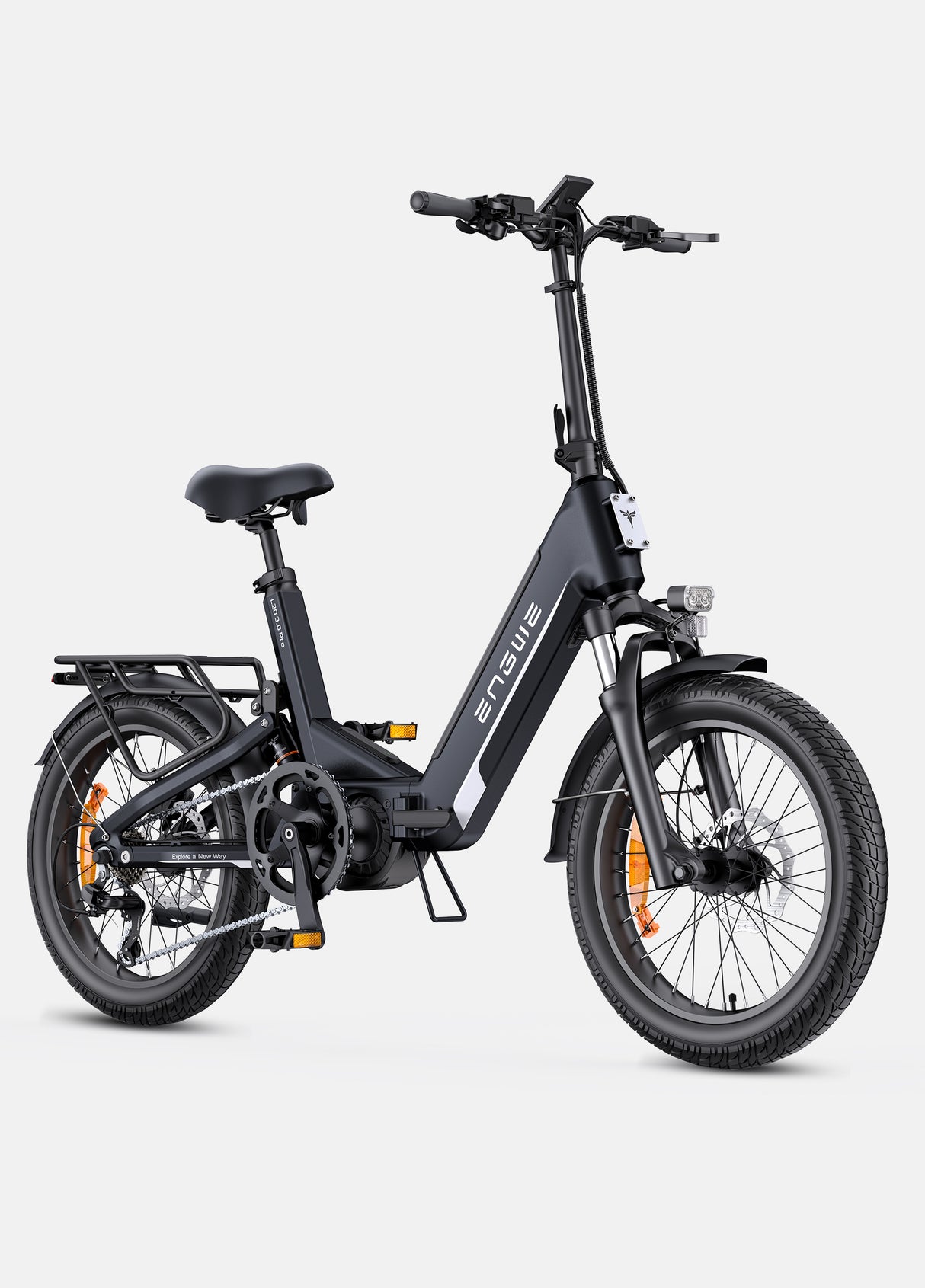
The best way to guarantee long term compliance and riding pleasure is for consumers to purchase a quality e-bike designed with safety, performance and legal considerations integrated into the initial design. ENGWE is a reputable brand dedicated to innovation and high quality e-bikes designed for the ultimate cycling experience. Their models are built to exacting specifications, and provide a great option for the quality conscious German rider. The ENGWE L20 3.0 Pro is definitely one of those models, an electric bike that offers you a hell of a lot of power and comfort for an amazing price! It’s a great fit for riders who are seeking a more compliant, yet powerful ride.

- EU-STANDARD WATER PROTECTION POWER: The L20 3.0 Pro is driven by a high quality Mivice mid-mounted motor providing the regular 250W as per EU regulations for Pedelecs, powered by an impressive 100Nm torque which gives you fast acceleration with great hill climbing ability.
- Enjoy ultimate comfort and safety: The first compact e-bike with a full-suspension system, up to 90% shock absorption for a smooth and stable ride. This is paired with dual-piston hydraulic brakes that provide you the dependable stopping power necessary for all conditions.
- Long Distance & Smart feature: Our 720Wh battery pack supports up to 160km on a single charge, AND the built-in ENGWE IoT module backs you up with top level anti-theft security: GPS tracking and real-time alert sent directly to your APP.
- Designed for Durability: Every part of this pedal-assist electric bike is designed to last, from the paint, grips and wheels to everything in between.
| Motor | Mivice X700 Mid-Drive, 48V (250W EU Standard) |
| Max Torque | 100Nm |
| Battery | 48V 15Ah (720Wh), Samsung 21700 Cells |
| Max Distance (enhanced) | 160 km average (Lab Tested) |
| Suspension | Full suspension (front hydraulic, rear) |
| Brakes | Hydraulic, Dual-Piston (180mm) |
| Tires | 20" x 3.0" Urban Hybrid (Anti-Puncture) |
| Smart features | ENGWE IOT Module (GPS, 4G and Bluetooth) |
5. Common E-Bike Models and General Compliance Issues
Though this inspection regulation (and fee) is limited to the S-Pedelec segment, all e-bike owners in Germany would be advised to make sure their electric bike is StVZO-approved as not doing so could put them on the wrong side of the law – and a €120 fine. If you’re venturing into the electric bike market for the first time, it’s a good idea to know what kind of categories are available and well-known brands which produce bikes that fit into EU standards. Make sure to always check before you buy, so that you don't get in any trouble later on down the line.
- Urban & Commuter E-Bikes: These are city e-bikes that often come with fully integrated StVZO-compliant accessories, like fenders, racks and lights. Brands like Cube and Kalkhoff are known in this field for producing more utilitarian, compliant bikes which are suitable for being used on a daily basis.
- Trekking E-Bikes: Designed for versatility and long distance comfort, these bikes are perfect for commuting or weekend rides. With manufacturers such as Haibike or Stevens, in many cases not only offering flashback systems with sturdy dark frames, high quality components and full StVZO approval which more than makes them a sure bet.
- E-Cargo Bikes: Increasingly popular for carrying goods or children. Because of their mass and height, it is so crucial that they are built for maximum safety. Leading firms in this category like Riese & Müller and Urban Arrow offer outstanding stability, braking power and rule adherence.
- What to Look Out For: Ask yourself the question if both the shop and brand actually live up to or offer you a CoC for every S-Pedelec sold. With any Pedelec, make sure that it specifically says for sale it is StVZO compliant. This is what you need in addition to the vehicle as evidence that all safety and legal requirements for use on the German roads have been met.

The three most important questions about e-bike inspections.
-
Must all electric bikes in Germany be inspected?
No. Only S-Pedelecs whose maximum output exceeds 250 watts and have a top motor-supported speed of 45 kilometers per hour are subject to the statutory requirement for a motor vehicle type approval. Standard pedelecs with assistance only up to 25 km/h are excluded. -
What are the primary reasons for failing an inspection?
The most common failures concern safety basics: non-working or not road-legal lighting, worn-out brake pads or inefficient brakes and a worn-out tire profile. -
Can I customize my e-bike within the law?
You may only install authorized parts that do not alter the legal status of your e-bike. All changes that lead to exceeding the allowed power or maximum speed (e.g., tuning a 25km/h Pedelec) are always prohibited and are a reason for loss of warranty, insurance cover, etc.
Keep the rubber side down and enjoy your compliant e-bike!