1. Performance and Ride Feel
Whatever you thought readied your mind when you decided to buy a hub motor kit has changed with the changes it has brought to your bicycle. It is incredibly responsive to the throttle, but it also upsets the bike's balance and contact with the road. The latter information is very important for the satisfaction and safety of riders. The pros are reasons that typically attract people in the first place, while the cons might be what experienced riders carefully weigh.
Hub Motor Performance Pros:
Independent Drivetrain:
The motor powers the wheel directly; it doesn’t put any additional strain on your chain, cassette, or shifters. This can result in more durable drivetrain parts than a mid-drive motor provides.
Instant Power:
A throttle provides for instant access to power even if you’re not pedaling. This makes for great kick-off jumps away from the lights or boosting without shifting gears.
Simple and reliable:
Hub motors have fewer moving components compared to other types of motors. From that internal simplicity, in many cases, one derives extremely reliable and “set-and-forget” behavior once installed.
Downsides to Hub Motor Performance:
Unsprung Weight:
The motor is integrated into the wheel assembly (wheels, brakes), which means it’s considered 'unsprung' weight. This can cause the suspension to be less sensitive, resulting in a rougher ride because the wheel has more weight and momentum when encountering things like bumps.
Handling issues:
A front hub motor can make for a heavy steering feel and may lose touch with the tarmac/trail under loose surfaces or steep ascents. A rear hub motor adds weight to the rear wheel and can feel more natural — but it could also make the bike susceptible to “fishtailing” in slippery conditions.
Inefficient on Hills:
Direct drive hub motors can be inefficient and have a tendency to overheat under extended, steep climbs as they must run at low RPMs, which are less efficient for the high power rating of an e-bike motor.
2. Installation and Maintenance
Part of the attraction to a hub motor kit is the DIY nature; however, how easy they are to install and maintain after fitting can be wildly different. Although it is a relatively straightforward process, it takes both mechanical skill and meticulous attention. Replacing a punctured tire, an easy task on a normal bike, becomes more cumbersome.
Installation and Maintenance Pros:
Simple Installation Idea:
Installing a hub motor wheel is much easier than a mid-drive motor, which needs some kind of alteration along with the removal of the crankset. That includes a wheel swap, attaching the controller and battery, and doing some wire work.
Modularity:
The system as a whole is self-contained. If your motor ever goes out, you can simply replace the wheel without having to part with the rest of the bike's major parts. This makes for easier troubleshooting or upgrading of a single device.
Simple front hub:
A front hub kit is the simplest installation. You don’t have to mess with the rear gears (i.e., cassette/freewheel), which is another reason why it’s so popular among first-time converters.
Downsides of Installation and Maintenance:
Dropout Compatibility:
This is a very important point. You’ll also need to make sure the fork (for front motors) and rear frame dropouts are at their appropriate width, and the material construction is solid, such as steel or aluminum. Do not put a high-power hub motor on carbon fiber dropouts.
Cable Management:
The kit includes all the parts: motor, battery, controller, display, throttle, and brake sensors. Routing and securing all of these wires is time-consuming at best, and can also be a messy safety issue.
Replacing a Flat Tire:
The most frustrating maintenance issue. You need to remove the motor wire — which usually comes with a thick connector that gets in your way — and somehow wrangle the nuts and torque arms before you can get the wheel off at all. It makes a 5-minute job take 20 minutes.

3. Financial Considerations and Component Selection
On the other hand, cost is typically why you would opt for a kit over a full electric bike. The initial cost of a kit may appear low, but you should plan for the whole system and know where you can save money and where not. The quality of your internal parts, namely the battery, will make or break the experience.
Advantages of Financial Considerations:
Cheaper Initial Investment:
A bare-bones hub motor kit (no battery) can cost a fraction of the price of a new entry-level electric bike.
Utilize a Bike You Already Have:
Convert the bike you already have and love. Not only does this save money, but it also means you are already comfortable with the frame fit and feel of the bike.
Incremental Upgrades:
You may begin with a lower-capacity battery or opt for a less powerful controller and then upgrade later, spreading the cost over time.
Cons and Hidden Costs:
Battery is your Biggest Cost:
A good, safe battery from a trusted manufacturer can be as expensive or more expensive than the motor kit on its own. Money-Saving Tip: Never skimp on the battery. A low-grade battery is a dangerous fire risk, performs poorly, and has an extremely limited life.
Upgrades You May Need:
This equipment could have an impact on your bike’s braking and comfort, perhaps requiring new brakes (rim to disc or mechanical to hydraulic), tires, and possibly even a fork for your safety if you’re a heavier or fast rider. These costs add up quickly.
Tools and Accessories Costs:
You might have to invest in specific tools, torque arms for safety, and accessories including battery bags or racks.
The trick is selecting the right building blocks. Here’s a chart to help battery voltage decisions make sense:
| V | Common Use Case Type | Description |
|---|---|---|
| 36V | Casual, Flat Road Commuting | A common spec battery that has a decent price and is compatible with up to 500W. |
| 48V | All-Around Performance, Hills | The happy hunting ground for lots of people. A fantastic combination of power, speed, and efficiency for 500-1000W e-bikes! |
| 52V | High Performance, Enthusiast | Will give you higher top speeds and more 'punch' with the same amperage. Requires a compatible controller. |
4. The All-in WEBEBIKE: A Custom-Made ENGWE Ebike

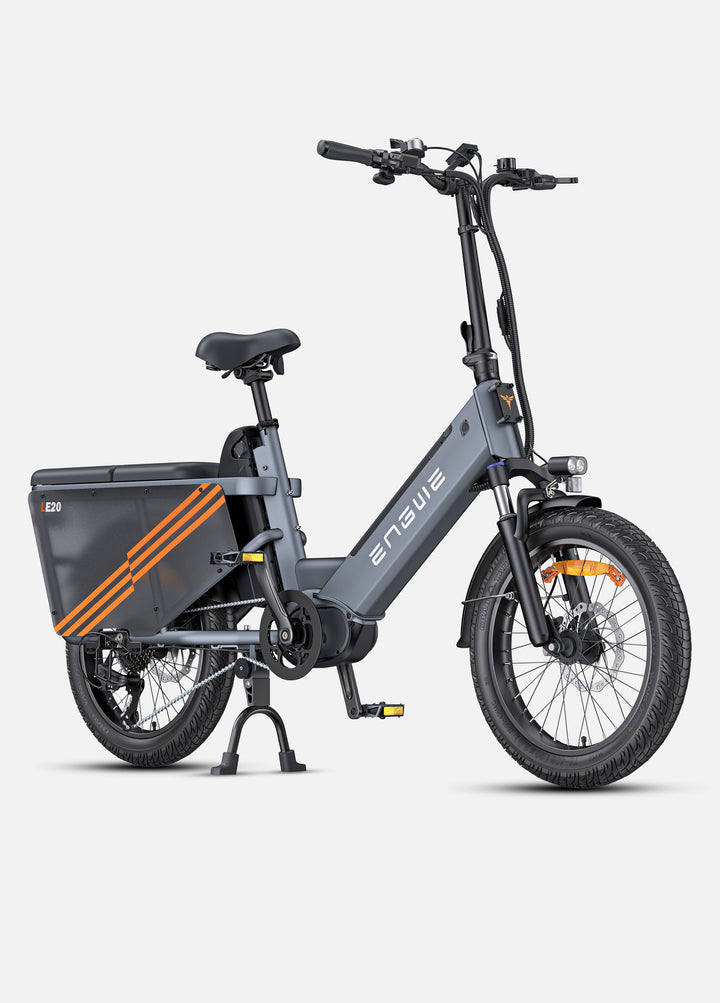
While kits allow the owner to customize, there’s no way a kit will match the seamless integration and rugged engineering of something built from scratch as an electric bike. A complete e-bike with the quality, reliability, and safety out of the box like an ENGWE M20 is a much better purchase for those who actually value a great riding experience. No more guesswork of trying and testing products to see if they work together, what you’ll need, or how much it will cost… It simply takes the guesswork out of everything. The M20 is designed from the ground up to be a motorcycle of adventure, offering a level of performance and capabilities that no conversion kit can rival.

Excellent Integrated Design:
It has a simple and delicate integrated design to reduce the redundant lines of the body. High-strength aluminum alloy frame, lightweight package, such as the horn, distance block, and single speedometer. From the placement of the battery to the cable routing, everything is considered for balance, beauty, and durability.
Unparalleled Comfort and Control:
The M20's killer feature is its dual suspension system. Its front hydraulic shock and rear air shock absorber mean double the cushioning of a typical hardtail design, for buttery-smooth rides over even the bumpiest terrain. That’s a level of comfort that I would never enjoy on a conversion bike with an ugly hub motor.
Power & Range Designed:
Motor: A powerful Brushless Motor provides 55 N.m of torque to allow for superb acceleration and power.
Battery: Opt for the optional dual-battery system (48V 26Ah total) and say goodbye to range anxiety: max range of 75km+75km.
Safety and Stability:
The bike’s oversized 20x4.0-inch triple-layer tires provide fantastic grip and stability, and are paired with disc brakes at the front and rear to give the driver excellent stopping control.
Ready to Go:
The ENGWE M20 is shipped ready to ride, straight out of the box, and includes a Shimano 7-speed drivetrain, clear LCD panel, and high-brightness LED headlight. ENGWE provides a turn-key adventure machine, with every component designed to work in perfect harmony.
5. Top Hub Motor Kit Market Trend Options and Key Manufacturers
If you’ve thought it over and the notion of a kit is still your cup of tea, storming the market is on your to-do list. The market is a large one, consisting of kits that cater to budget shoppers in need of an entry-level kit, all the way up to high-performance offerings. The right one for you will depend on what bike you have, your budget, and how you want to use it.
Most Popular Hub Motor Kit Brands:
Bafang:
As a market leader, Bafang provides a variety of reliable and powerful geared hub motors. They are generally solid and a favorite among knowledgeable DIY builders.
Voilamart / AW:
Popular on Amazon and eBay, these brands are a few of the cheapest complete kits. They are a nice place to start but can possibly use a more primitive display and controller.
Swytch:
This label takes a different direction, providing lightweight, minimalist kits with a battery that attaches to the handlebars. They're great if you want some subtle pop without too much additional heft.
Key Criteria for Production
Geared Hub vs. Direct Drive Hub:
Geared hubs are typically smaller, lighter, and provide more torque for climbing hills. Direct drive hubs are cheaper, more durable, quieter, and can offer regenerative braking, yet are heavier and less efficient at low speeds.
Motor Wattage:
For a light workout on flat terrain, 250-500W is more than enough. For climbing hills or carrying anything over 200 lbs, you'll definitely want to go with a 750-1000W model. Check your local rules for motor wattage restrictions.
Wheel Size / Lacing:
Our Frame Mount System is also available for different wheel sizes (26”, 27.5”, 700c) and lacing patterns. A pre-built wheel is simplest, but you can also purchase a hub and have it laced by a professional bike shop into your existing rim for a stronger, better result.
So in short, is a front or rear hub motor better?
It depends on your priorities. A front hub motor is easier to install and helps balance your weight, but could lack traction. A rear hub motor offers better traction and a more natural push, but is harder to install and repair flats.
Do you really need a torque arm?
Absolutely. A crucial safety item: For any motor 250W+, I consider torque arms critical. It stops the motor axle from spinning out and obliterating your bike's dropouts, which can result in serious injury.
Will any bike work with a hub motor kit?
No. You’ll need to confirm that your bike’s frame, specifically the fork and rear dropouts, are sturdy enough (think steel or aluminum) and have the right spacing to accommodate the motor axle.
And in the end, it’s a matter of weighing budget and technical comfort with your experience on the bike.