Understanding UK E-Bike Laws and Core Components
Converting your standard bicycle into an electric bike is an inspiring project. This all-inclusive guide breaks down the critical factors, from grasping the law and selecting core components to comparing the pros and cons of a kit versus a custom-built eBike. We will look at the key aspects of this process to ensure your converted electric bike has strength, reliability, and full UK road legality.
The first, and perhaps the most important step is to acknowledge the legal framework of a conversion kit and its basic parts. For a UK electric bike to be classed as road-legal and not require registration, tax or a licence, the motor must comply with the Electrically Assisted Pedal Cycles (EAPC) regulations. Failure to do so can classify your bike as an unlicensed motor vehicle. So your selected kit should satisfy these particular conditions. At the start of your search, concentrate on these in order to make a legal and happy conversion.
EAPC Legal Requirements Checklist:
- Power Output: The motor cannot develop more than 250 Watts continuous.
- Assistance Speed Limit: The electric assistance no longer comes into play at a speed of 25 km/h.
- Pedal Assist System (PAS): The engine only pushes you forward when pedalling. A "twist-and-go" throttle is allowed to help you up to 6 km/h (that's walking pace, in case you do not know) without the need to pedal.
- Manufacturer Labelling: The kit's drive unit must be clearly labelled stating that the output is 250W.
Key Features in a Normal Package:
- Motor: The engine of your eBike, available in rear hub, front hub or mid-drive configurations.
- Battery and Charger: The next thing that matters a lot in the e-Bike is its power source, which will decide your range.
- Controller: The eBike's brain, controlling the flow of energy from the battery to the motor.
- Display/Control Unit: The dashboard which displays speed and battery life and lets you control the amount of assistance.
- Sensors: A sensor (cadence or torque) which senses when the pedals move to start the motor.
- Wiring Loom: All electronic components (such as sensors, coils, and injectors) plug in securely to the wiring loom.
Choosing the Right Motor: Hub vs. Mid-Drive
The motor is the most significant decision you will have to make, as it determines the speed of the bike, how leanly it will handle, and what sort of work installing it will entail. There are 3 main types of motors for 250W conversion kits, with each having certain factors in their favour. Knowing these differences is important, because they guide what kind of kit rides in a fashion that matches your riding style, terrain conditions, and tolerance for technical difficulty. A commuter in the city has almost no relationship to a hill-climbing enthusiast, and this is reflected by the appropriate motor. A mid-drive will give you the most natural ride, making use of the bike’s gears for an efficient and enjoyable ride, while hub motors are generally easier to maintain and cheaper.
Front Hub Motors:
- Pros: Easiest installation (usually just swapping out the front wheel); for a bike with a rear battery, the weight distribution is good.
- Cons: It can sometimes feel as if it's pulling you forward and might slide on very steep or sandy surfaces.
- Best For: Flat urban commuting and a no-nonsense, affordable conversion.
Rear Hub Motors:
- Pros: Feels more like the sensation of a traditional “push,” better traction than a front hub, and compatible with a greater variety of bicycles.
- Cons: A bit more complex to install (involving the bike’s gears, cassette/freewheel), and may require some levering to remove the tyre.
- Good For: All-purpose riding; those who want a more natural feeling of propulsion outside the front-hub system.
Mid-Drive Motors:
- Pros: Puts the power through your bike’s drivetrain for impressive hill-climbing ability, feels very natural and balanced in terms of ride feel, and is highly efficient.
- Cons: Priciest choice, installation is the most involved and might necessitate special tools like a crank puller.
- Who it’s for: People who live in hillier areas, plan to use the bike off-road, or just want a snappier overall performance.
| Feature | Front Hub Motor | Rear Hub Motor | Mid-Drive Motor |
|---|---|---|---|
| Installation Complexity | Easy | Medium | Hard |
| Hill Climbing | Does the Job | Works Well | Superior |
| Weight Distribution | Ok | Rear-heavy | Great (Low & Centered) |
| Natural Ride Feel | Low | Medium | High |

Kit vs. Pre-Built: The ENGWE L20 3.0 Pro Advantage
Though a kit provides a customisable solution, the technical obstacles, component compatibility, and possible warranty problems can be formidable obstructions. For a fast, smooth, and high-performance ride with complete compatibility and professional build features, one of our purpose-built electric bikes is the way to go. ENGWE takes the guesswork out, returning a complete set of well-conceived systems to deliver maximum power, performance, and convenience for all types of riders from day one. Take their L20 3.0 Pro for example — a template of contemporary eBike engineering well beyond anything you’ll find in a plain old DIY kit.
Why Choose the ENGWE L20 3.0 Pro over other electric mountain bikes in its range?
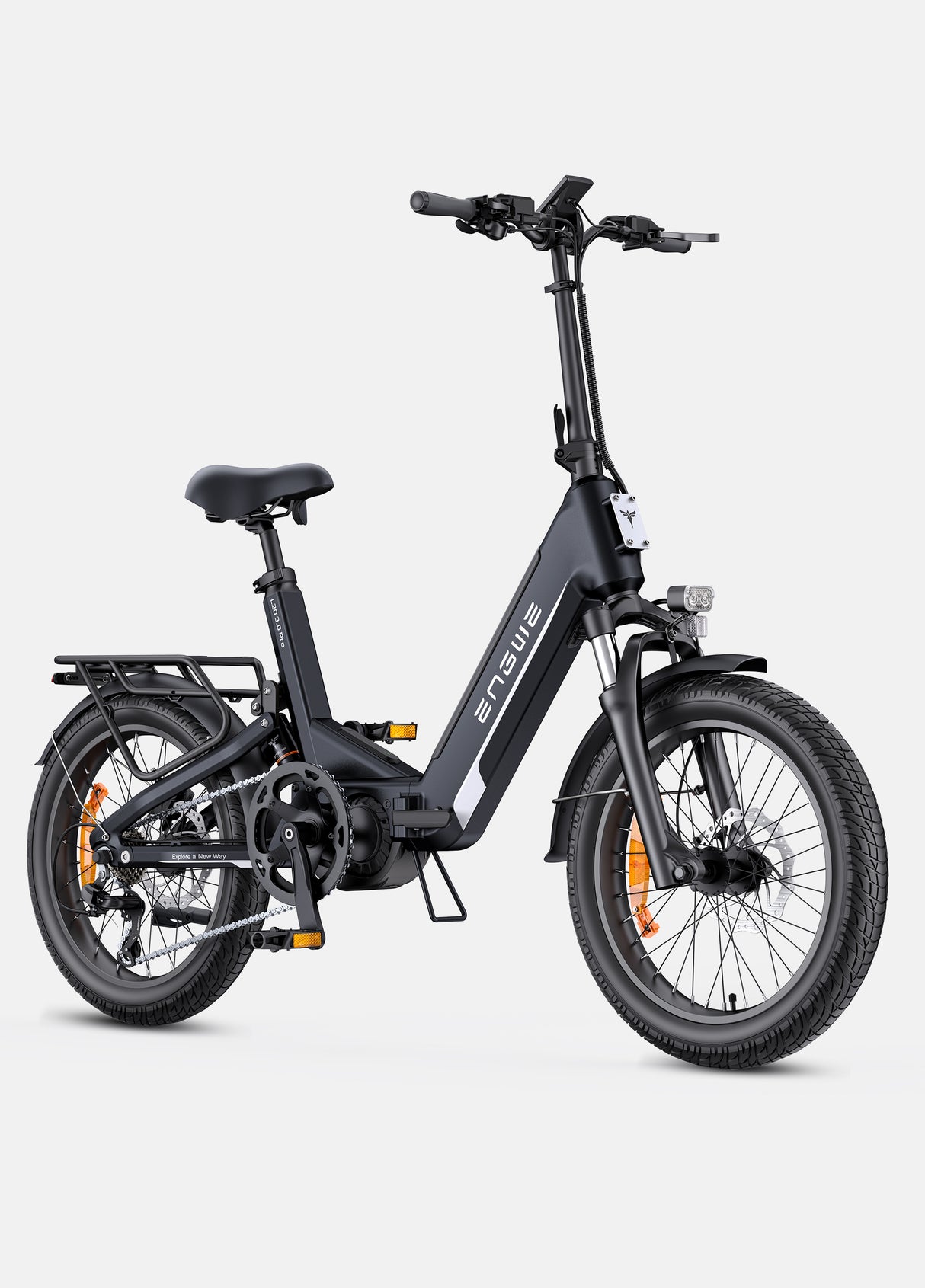
- Powerful Motor: Mivice X700 250W mid-drive motor uses 100Nm of torque for excellent hill-climbing capabilities and accelerating performance.
- Unprecedented Range and Fast Charging: A huge 720Wh SAMSUNG battery will give you a stunning range of up to 160km, and with fast charging (8A), you can go faster and further.
- Unparalleled Comfort: The first compact eBike with a full suspension system absorbs over 90% of all terrain vibrations for an unparalleled comfortable ride across the city.
- Smart Advanced Technology: The built-in ENGWE IoT module advances to provide a crazy anti-theft function by GPS tracking, data collection, and monitoring by app. Yet, it is a helpful peace-of-mind feature.
- Premium Integrated Components: Each and every component, from the torque sensor to the hydraulic brakes, puncture-resistant tires and more, is precision-designed to be used together.

The Heart and Brain: Your Battery and Controller
Your eBike conversion is made up of a battery and controller which are the lifeblood and brain, respectively. Having an excellent engine will do you no good if the powertrain that feeds it is inconsistent and poorly managed. Your maximum range is determined by the battery capacity, which is measured in Watt-hours (Wh). It is easily determined by multiplying the Voltage (V) and Amp-hours (Ah). The higher the Wh figure, the further you can travel on a single charge. The controller, for its part, takes the input from the pedal sensor and delivers a linear amount of power to the motor. This is also why you should invest in a good battery with cells from Samsung or Panasonic, which have top-quality control.
Important Battery Notes:
- Wh (Watt-hours Capacity): 500 Wh is a really good place to start for any commuter, with a realistic range of 30-50 miles depending on terrain and assistance level.
- Mounting Style: Ideal weight distribution is achieved with Downtube ("shark" style) positioned batteries. Rear rack batteries are simpler to accommodate but can give the bike a rear-heavy feel.
- Quality Cells: Choose batteries with high-quality cells from reputable brands like Samsung or Panasonic to ensure better performance and longevity compared to cheaper, unbranded alternatives.
Key Features of the Controller:
- Controller Type: Sine-wave controllers are more sophisticated; they make the motor quieter and give more precise control.
- Amperage (A): The controller’s max amperage rating establishes the amount of acceleration and hill-climbing power it can send to the motor.
- Compatibility: The voltage of the controller you buy has to be the same as your battery uses (for example, 36V cannot be switched with 48V).

Installation, Costs, and Final Considerations
Last but not least, be sure to take the practical ease of installation and cost into consideration before pulling the trigger. Although a number of kits are made specifically for easy at-home installation, such as most kits that don't require advanced mid-drive motor knowledge and tools. Make sure you always watch several install videos of your specific kit online before purchasing so that you can gauge the difficulty. When it comes to cost, don’t forget the potential extras — new brake levers with motor cut-off sensors or specialty tools. For those ready to start a conversion, there are a number of brands that have specifically built up good testimonials for making solid and UK-legal kits.
Installing & Estimating Tips:
- Tooling: You’ll likely need a crank puller and bottom bracket tool if you do mid-drive installations.
- Hidden Costs: Account for potential extras such as new cables, wire management zip ties, and torque arms for powerful hub motors on aluminum frames.
- Time: A first-time install will take you from 3 to 6 hours.
Conversion Kit Brands to Consider:
- Bafang: Well-known for their ultra-reliable and powerful BBS01B 250W mid-drive motor, the global leader is a firm favourite of DIY builders. They also make a decent quality hub motor.
- Swytch: An expert in ultra-slim, ultra-light front-hub conversion kits. Their system is known for a straightforward mounting process and a small, removable battery pack that resembles a compact handlebar bag.
- Pendix: A high-end mid-drive system offering from Germany, popular among cyclists who demand the best in performance and aesthetics; both beautiful and reliable, but the price is on the higher side.
Frequently Asked Questions:
Q1: Will switching over my ride change how it rides?
A: Yes, 7-10 kg of additional weight from the kit will make the bike feel different in terms of balance and handling. A mid-drive motor or downtube battery is ideal, which will give you the best balanced/natural feel.
Q2: Can I pedal my bike manually without electric power if I take out the battery?
A: Absolutely. With any eBike kit, you can still ride the bike unpowered just like a normal bike; however, there will be more weight to push.
Q3: Are torque sensors more efficient than cadence sensors?
A: A torque sensor measures how hard you are pedalling and provides this information to the motor so it can deliver a proportional level of assistance. Whether you are pushing hard or just pedalling softly, the assistance will be smooth and predictable, much like the natural power delivery of an athlete, while a cadence sensor only senses whether or not you’re pedalling.
Whether you install a DIY kit or purchase a complete electric bike, upgrading your current bike and escaping the limitations of tradition opens up an entirely different world of cycling freedom and fun.