E-bikes can be a brilliant way to get children outside, moving, and confident on two wheels, but safety has to come first. A kids ebike isn’t just a faster version of a pedal bike; it adds weight, power, and responsibility.
That’s why parents should see the first months of riding as a learning journey rather than instant freedom. Start slowly, keep rides short, and focus on control before distance.
With the right model, the right environment, and consistent guidance, a kids ebike becomes more than just a toy.
This guide explains how to choose, set up, and supervise a kids ebike so it’s genuinely safe and enjoyable. Also reviewed four models that suit different ages and riding goals.
What “Safe” Looks Like for Young Riders
Safety rests on three things: fit, speed control, and environment.
- Fit: A kids ebike with pedals that’s too heavy or tall is risky. Your child should straddle the top tube with both feet flat, reach the bars without locking elbows, and cover the brake levers comfortably.
- Speed control: Look for bikes with assist caps, beginner modes, or app limits. If the bike allows you to set a max assist speed, do it. Early rides should use the lowest support level until braking and balance are automatic.
- Environment: Start in car-free spaces: empty car parks, quiet cul-de-sacs, or park paths. Graduating to bike lanes only when signaling, scanning, and stopping are second nature.
Ask yourself the practical question most parents use: are ebikes safe for kids here, today?

Minimum Gear and Setup that Actually Helps
- Helmet that fits (level on the head, two-finger rule under the strap).
- Gloves, elbow and knee pads for the first month; they build confidence.
- Lights and reflectors even for daytime riding.
- Bell or electronic horn so kids learn to communicate before they swerve.
- Mirrors on the bars help new riders check behind without wobbling.
- Tire pressure set to the sidewall range; under-inflation causes sluggish handling.
- Brake lever reach adjusted for small hands; most levers have an easy set screw.
Tip: Build a 60-second pre-ride check tires, brakes, battery latch, axle quick-releases, lights. Do it together until your rider can lead the routine.
Age, Readiness, and Local Rules
Maturity matters more than birthdays, but laws still apply. Local bike shops often offer quick fit checks, lever-reach adjustments, and tire-pressure guidance and lights; use that service before the first ride. Many regions set a minimum road-use age around early teens.
A cautious child with good bike control can step up sooner than a thrill seeker who still skips hand signals. If you’re buying an electric bike for teenager, commuting to school or practice, prioritize predictable handling and brakes over top speed.
For young riders, some brands offer electric bikes for 10 year olds with smaller wheels and gentler tuning. Older kids may prefer an ebike for teens with longer range and stronger frames. Some models are marketed as a childrens electric bicycle, signalling low standover and calmer power delivery.

Skills Progression Parents Can Coach
- Power-off practice Ride without motor first: practise balance, smooth starts, controlled stops, and quick emergency braking.
- First rides with assist (low setting only) Use lowest assist: straight rides, stop inside chalk box, repeat until stopping becomes natural.
- Controlled turning under power Wide figure-eights, gradually tighter. Brake before corners, eyes forward, keep balance steady through turns.
- Road awareness basics Teach hand signals, shoulder checks, lane position. Practise on quiet streets until skills feel automatic.
- Route rehearsal Ride school route together on weekends first, highlight crossings, tricky junctions, safe stopping places.
Reward smooth braking and awareness, not speed.
Motor, Battery, and Brakes: What Matters for Kids
- Hub vs mid-drive: Hubs are simpler and often fine for flat routes. Mid-drives feel more natural on hills and distribute weight better—useful once rides get longer.
- Assist modes: A torque sensor rewards steady pedaling and discourages sudden bursts.
- Battery size: 300–400 Wh is ample for family rides. Bigger packs add weight that small riders notice.
- Brakes: Hydraulic discs with short-reach levers are ideal. Mechanical discs work, but check cable stretch monthly.
- Tires: Wider rubber (2.0–2.4in) adds stability and grip, especially on mixed paths.
Carrying Younger Passengers, Safely
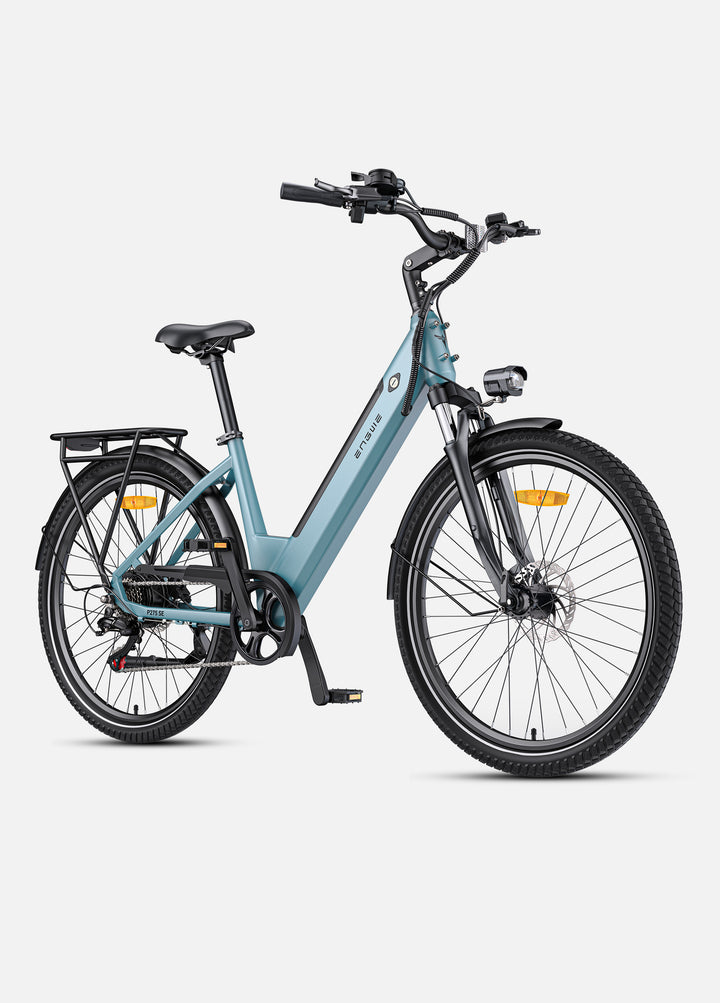
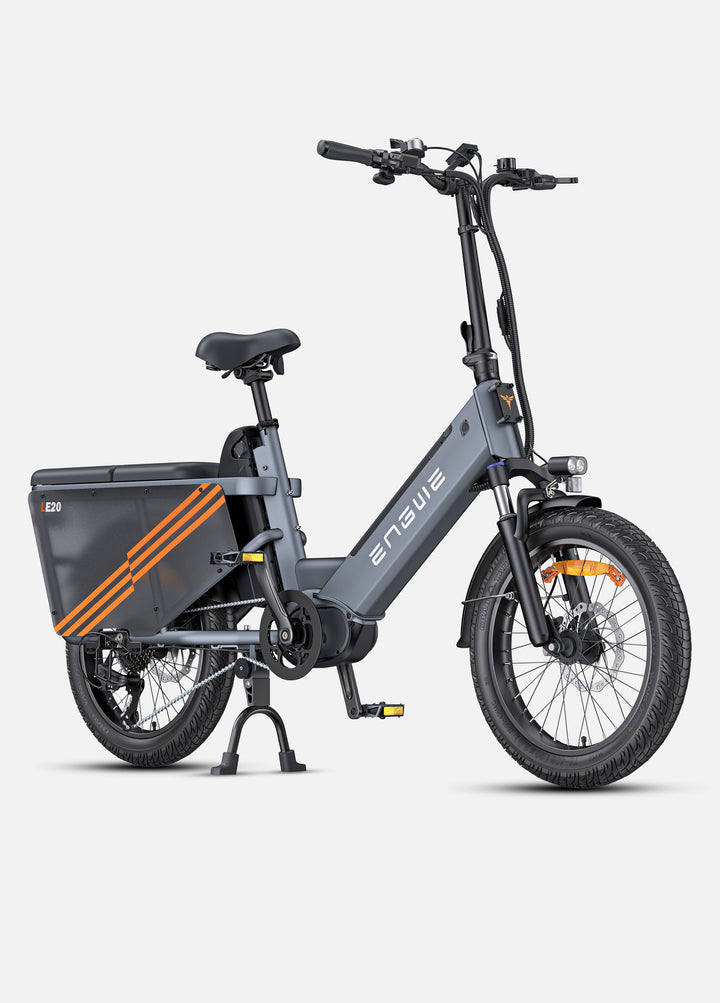
If you’re transporting a toddler rather than letting them ride, look for an ebike with kid seat, rated for your child’s weight. Prioritise frames with low standover, strong rear racks, and brakes that don’t fade on descents.
Remember: The best ebike for hauling kids isn’t automatically the best for carrying them day-to-day if storage space is tight; folding frames can make school runs far simpler. For younger passengers, an ebike with kid carrier can be the more practical and family-friendly solution.

Four E-Bikes Worth a Parent’s Attention
Below are four models that suit different families. Two come from ENGWE, good value, city-friendly options followed by two trail-ready kids’ e-MTBs for riders who want dirt, not just pavements.
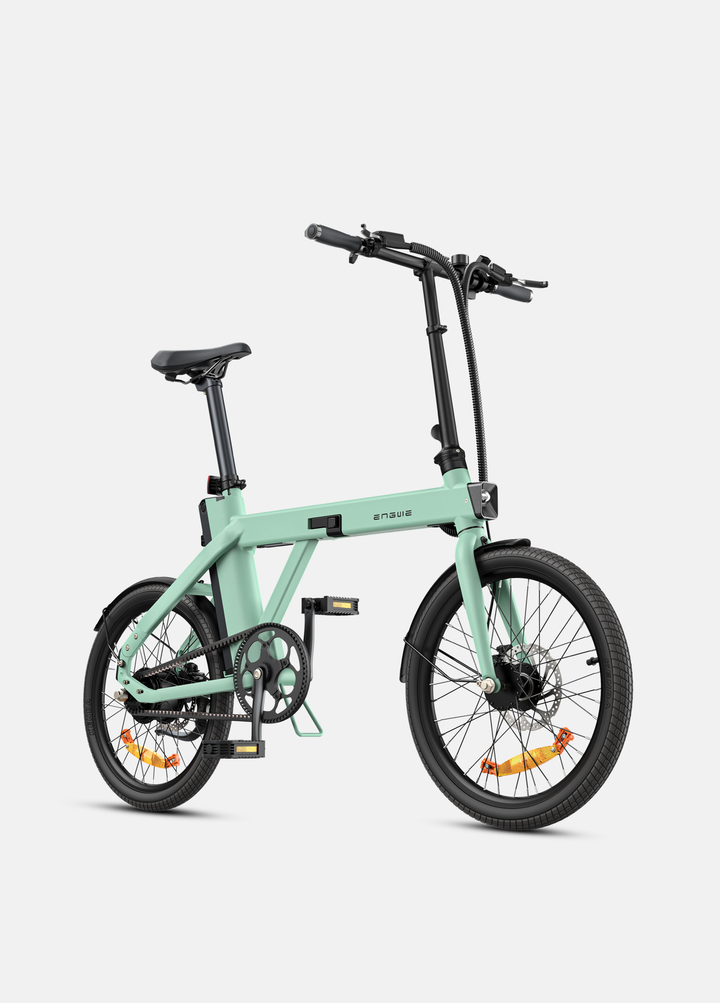
ENGWE P20 — Lightweight Folder for City Families
Where it fits: older children and teens riding to school or between activities.
Why it works: at about 18.5 kg, the ENGWE P20 is manageable; it folds in seconds and uses a torque sensor with a quiet carbon belt. That combination keeps maintenance low and power delivery predictable. Hydraulic brakes and puncture-resistant tyres add a safety margin, and the claimed range is generous for weekly routines.
Parent perspective: store it under a desk or in a hallway, lock the battery, and cap assist for the first month. For compact, urban use, it’s an easy pick for the best ebike for kids short-list.

ENGWE T14 — Approachable Mini Folder for Small Spaces
Where it fits: younger or smaller riders who need comfort and a low step.
Why it works: ENGWE T14 comes with multiple suspension points, smooth rough paths; the fold helps flats and lifts; pricing is friendly. Add a rack and you can configure it for light errands.
Parent perspective: start with the mildest assist and keep rides local while confidence builds.

Woom UP 6 — Light, Child-Tuned Trail Partner
Where it fits: children roughly 10+ who want real off-road rides.
Why it works: low weight, a supportive (not overpowering) drive unit, and kid-specific touchpoints. Brakes and fork are sized for smaller hands and lighter riders, which matters more than raw motor numbers. For an electric bike for teens who love hills, it feels natural rather than pushy.
Parent perspective: it keeps effort in the ride, so kids still finish feeling like they pedalled, just farther.

Specialized Turbo Levo SL Kids — Serious Kit for Serious Trails
Where it fits: young riders stepping into technical terrain with experienced parents.
Why it works: quality suspension, strong brakes, and app-tunable support. You can dial assistance to match skill and gradually raise the ceiling. It’s not a cargo solution—don’t expect it to be the best ebike for carrying kids but for progression on real trails it’s outstanding.
Parent perspective: invest only if your child will use the capability; otherwise you’re paying for performance they won’t tap.

Setting Limits that Stick
- Speed: cap assist to neighbourhood pace; raise only after a month of clean riding.
- Routes: pre-approve streets; no headphones; daylight only at first.
- Group rules: single file, call out hazards, stop at every junction even if empty.
- Storage: inside is safer; use a frame lock plus a quality chain outdoors.
- Accountability: log rides together in an app; make safety checks part of the routine.
Tips for Safe E-Bike Riding
Safety doesn't stop at purchasing the correct bicycle. Parents should practice a few, simple but impactful, behaviors to employ habits of safe riding:
- Examine for each ride - Look at brakes, tires, and battery levels
- Select safe routes - Parks, trails, and local, quiet street
- Instruct road awareness - children should understand to stop at intersections and give way to pedestrians.
- Set boundaries – Limit ride times and areas until confidence builds.
- Model safe behavior – Show them what responsible riding looks like.
For very young children, parents might prefer using an ebike with kid carrier attachment. This way, kids still enjoy the ride while remaining under direct adult control.

Conclusion
So, are e-bikes safe for kids? With the correct model, careful supervision, and the right equipment, yes! A kids ebike can offer outdoor opportunities, improve healthy habits, and be a bonding experience for families while giving kids a sense of independence and responsibility.
While there are many brands and models available, ENGWE provides great prices and practical designs. The ENGWE P20 and ENGWE T14 are great choices for budget-conscious families who want assurance that their kids are safe. Woom and Specialized offer great high-performance options for adventurous kids.
A bit of preparation beforehand can make your child's first ride on an e-bike both thrilling and safe, and a memory for years to come!