Cycling becomes enjoyable when you have the stamina and experience to tackle different surfaces. For beginners, climbing hills and tackling rough trails on a traditional bike can be a real challenge, as a simple headwind can make you feel exhausted. E-bikes solve this problem once and for all. While anyone can ride ebikes, they are particularly helpful for beginner riders due to their pedal assistance feature.
That said, not many beginners know how to ride an electric bike. These bikes feature advanced technology, and starting without proper knowledge can be complicated. In this guide, we explain everything you should know about ebikes before going on your first ride.
Understanding How Electric Bikes Work
An ebike combines human power and electric power. It has three main parts, including a battery, motor, and sensor for pedal assist.
The battery stores power, and its capacity determines an electric bike's potential range. A smaller capacity means low range, while a bigger capacity means long range.
The motor uses the battery power to push the bike forward. It is often located in the bike's hub or cranks.
The sensor is the brain and comes in two types. A cadence sensor provides static assistance when the pedals spin, while a torque sensor measures how hard you pedal and matches the motor's power to your effort for natural and intuitive rides. This is why Electric Bicycles With Torque Sensors are often preferred by riders who want smoother, more responsive performance that closely mimics natural cycling.

Preparing Before Your First Ride
Preparation ensures a good first experience. So, perform a pre-ride check or the "M-Check." It comes from the inspection path resembling the letter "M".
Start from the front wheel and check tyre pressure. After you are done with these checks, look at the battery. It should have enough charge and lock securely into its mount.
Also, adjust the saddle height and keep your handlebars at a comfortable position. This prevents strain on your body during the rides. Choose your first route carefully. Pick a quiet space like an empty car park or a calm residential street to learn without traffic pressure.
Step-by-Step Guide to Riding an Electric Bike
Start without any electric assist. Pedal gently and familiarise yourself with the gears as well.
Once you are rolling, introduce the power. Select the lowest assist level, PAS 1, on the display. You will feel a gentle push similar to a helpful hand on your back. Ride in a straight line and feel how the power influences steering. Next, practice stopping by applying the brakes smoothly.
If your bike has a throttle, practice using it. Apply gentle pressure to move the bike without pedalling. This is a useful feature for starting on a hill. Focus on learning smooth inputs because jerky movements feel unstable.
Best Electric Bike For Beginners
The right bike builds confidence and matches your ambition. Here are some best e bikes for beginners wondering how to ride an electric bike:
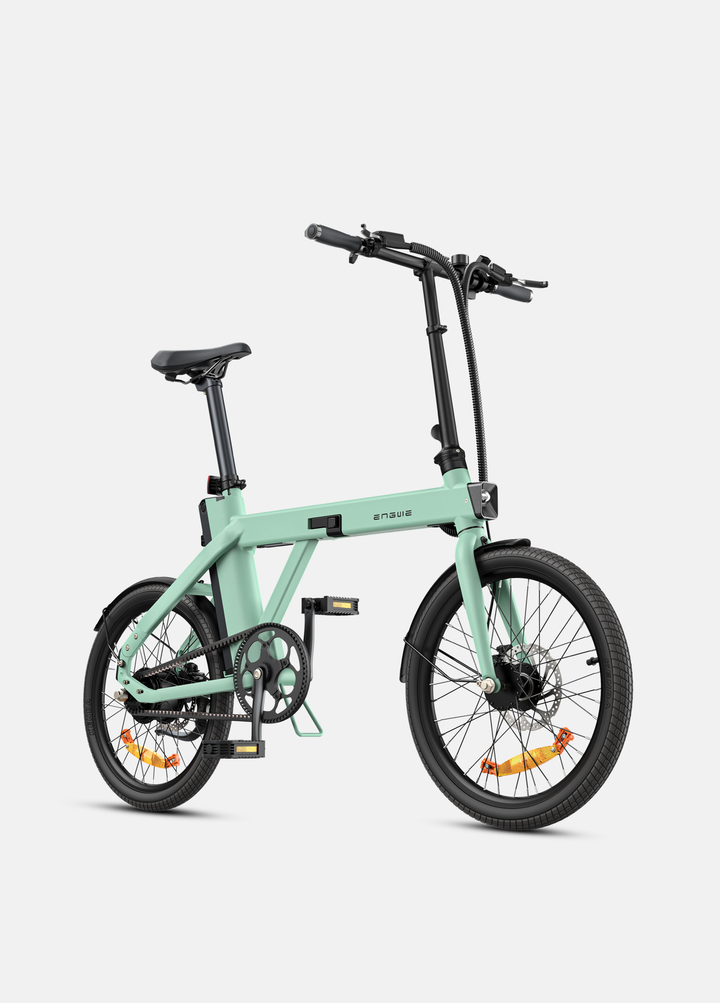
ENGWE P20
It suits urban beginners with a folding frame and 18.5kg weight, offering easy handling and storage. However, ENGWE P20's most useful feature for beginners is its drivetrain. It uses a belt drive instead of a chain. Belts need almost no maintenance, as there is no need for grease or regular adjustments.
Similarly, the torque sensor makes the ride responsive, with the motor responding to your pedalling pressure like a natural extension of your strength.

ENGWE E26
ENGWE E26 is for rocky paths and trails. Its dual suspension absorbs bumps, while the 4" fat tyres provide stability over rough ground to help new riders build confidence.
E26 is heavy at 34.5kg. However, this weight gives it a planted feel on descents. The 48V16Ah battery offers up to 140 km range, while its Shimano 7-speed gears can handle varied terrain. Choose ENGWE E26 if you want comfort and capability over portability.

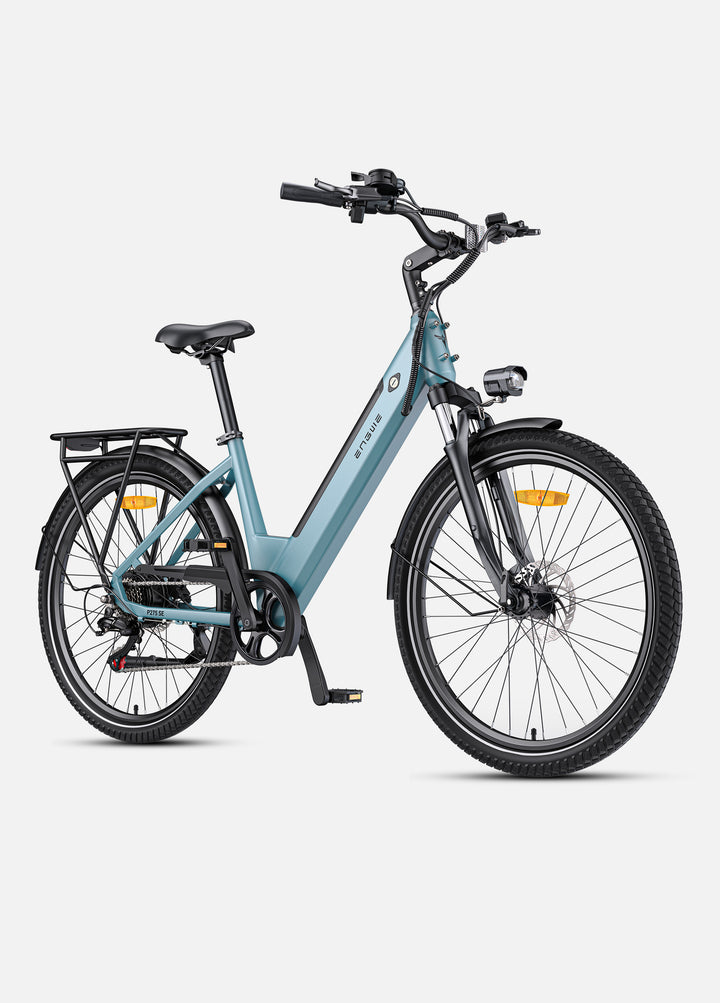
ENGWE P275 SE
ENGWE P275 SE is a dedicated electric commuter bike with 27.5x1.95" tyres offering smooth rides on urban surfaces. It also features a smart torque sensor for responsive pedal assistance.
However, its pedal assistance level significantly affects its range. For instance, PAS 1 offers up to 100 km range while PAS 5 only offers about 65km.
Lastly, integrated lights and a removable battery make it a practical choice for beginners to ride at night or store it for the long term.

Safety Tips for New eBike Riders
- Electric bikes have longer stopping distances due to their faster speed. You should apply the brakes earlier to avoid collisions.
- Visibility is your best defence at night. Always use your lights in the dark and dress in bright or reflective clothing. Make yourself visible.
- Ebikes are quiet and many pedestrians do not hear you coming. Use your bell to warn them.
- Finally, riders should assume drivers do not see them. Ride with the idea that you are a defensive biker. So, scan the road ahead and anticipate problems to stay safe.
How to Maintain and Extend Your eBike’s Life
If you have just bought an eBike, you will want to keep it in great shape. Here is how to keep your eBike running smoothly:
- A charge between 20% and 80% helps preserve battery life.
- For bikes with a metal chain, regular chain lubrication helps prevent chain wear.
- Replace worn brake pads immediately to stay safe.
Summary
For beginner riders wanting to learn how to ride an electric bike, an important thing is to understand their bikes' capabilities. This understanding comes from riding regularly in a safe space with no traffic pressure. Once you fully master your bike's function, it becomes a platform for freedom. You can enjoy long city rides and climb steep hills without tiring yourself out. You stop thinking about technology and start enjoying the convenience. So, explore your options with ENGWE and choose a model that best meets your needs.
FAQs
How do torque and cadence sensors differ from each other?
A cadence sensor provides static power, which can feel jerky. A torque sensor measures the force you apply to the pedals and delivers power accordingly. If you pedal softly, you get gentle assistance. If you push hard, the motor gives a strong boost.
How accurate are the range estimates provided by manufacturers?
Manufacturer estimates are achieved in perfect lab conditions. Real-world range is always lower due to many factors. The biggest factor is the assist level. For instance, using PAS 5 will cut the range by half compared to PAS 1.
How difficult is it to handle an ebike's weight?
The weight is most noticeable when the bike is still. It becomes irrelevant once you start riding. The motor easily overcomes inertia, and acceleration feels effortless. The bike also feels planted on the road and absorbs more bumps.