When you are new to electric bikes, it may seem confusing to learn about the various ebike classes, particularly the Class 1 ebike. This is the most popular category throughout the world, and it provides a smooth pedal assist even without a throttle and a safe top speed limit.
Commuting, working out or enjoying the trails, a class 1 electric bike provides the right amount of power and control. We will also deconstruct the meaning of a class 1 ebike, its comparison with class 2 and class 3 models, and why it usually represents the best solution to the everyday rider.
What Is a Class 1 Ebike?
The most popular and the least complicated type of electric bicycle is a Class 1 ebike. It relies solely on pedal assist, which implies that the motor only powers when you are pedalling. When you cease to peddle, the assist shuts off.
Most of the regional laws state that the class 1 ebike speed is 25 km/h (15.5 mph) in the EU and 20 mph (32 km/h) in the U.S. The fact that these limits make the class 1 electric bike legal on the standard bike lanes, city streets, and most shared paths where the faster classes are prohibited makes this possible.
Class 1 e-bike definition:
A pedal-assist e-bike with a maximum motor-assisted speed of 20 mph (or 25 km/h) and no throttle control.
When you come to the market and are wondering, “what is a class 1 ebike?” you should consider it the most natural-feeling type. It is also as easy to ride like a normal bicycle, except that it is easier to ride up the hill or with the wind.

E-bike Classes Explained: 1, 2, and 3
E-bikes are commonly grouped into three categories. Understanding ebike class 1 2 3 systems helps you choose one that fits your riding style and your local regulations.
|
E-bike Class |
Top Speed (Assist) |
Throttle |
Where You Can Ride |
|
Class 1 |
20 mph (32 km/h) |
No |
Bike lanes, trails, city roads |
|
Class 2 |
20 mph (32 km/h) |
Yes |
Same as Class 1 but may face local throttle restrictions |
|
Class 3 |
28 mph (45 km/h) |
Optional |
Roads and paved bike lanes (helmet often required) |
Each type suits different riders:
- Class 1 ebike: Ideal for beginners, commuters, and eco-friendly city riders.
- Class 2 ebike: Great for casual riders who want throttle control.
- Class 3 ebike: For experienced cyclists who want speed for longer commutes.
Class 1 vs Class 2 E-bike: The Key Difference
The main distinction in class 1 vs class 2 ebike comparison is throttle control.
- A class 1 electric bike assists only when you pedal.
- A class 2 ebike has a throttle — you can accelerate without pedalling.
That makes Class 2 slightly more convenient, but in some European cities, throttles are restricted. If you prefer a more traditional, fitness-friendly feel, stick with a class 1 ebike for sale model.

Class 1 vs Class 3 E-bike
The difference between the class 1 vs class 3 ebike mainly concerns the speed. A model of class 3 is capable of helping up to 28 mph (45 km/h), but can be limited by the multi-use path or trail.
Class 1 ebikes, however, remain in a less dangerous, more universally legal range. A good number of riders like the fact that they are able to ride without making any special registration, insurance and also without a license.

How Fast Does a Class 1 E-bike Go?
The U.S. and Europe have a speed limit of 20 mph (32 km/h) and 25 km/h (15.5 mph), respectively, for class 1 ebike speed. Beyond this speed, you can continue to pedal with your own legs, but the motor ceases to help.
This balance makes the ebike class 1 category affordable to most riders, quick enough to commute with, but slow enough to ride on common trails and to take the whole family.

Why Choose a Class 1 E-bike?
A class 1 ebike is a choice that will result in simplicity, legality, and safety. Assuming that you are a beginner to electric bicycles, the class 1 electric bike will be a great place to start. Here’s why many commuters and casual riders prefer it
- Street-legal almost everywhere — no license or registration needed
- Natural pedaling feel — smooth, intuitive power delivery
- Low maintenance — fewer electronic controls
- Fitness benefits — pedal assist still requires effort
- Ideal for cities and trails — compliant with most bike path laws
Examples of Class 1 E-bikes
Here are a few top-rated models representing the best of the class 1 ebike category — designed for comfort, reliability, and compliance.
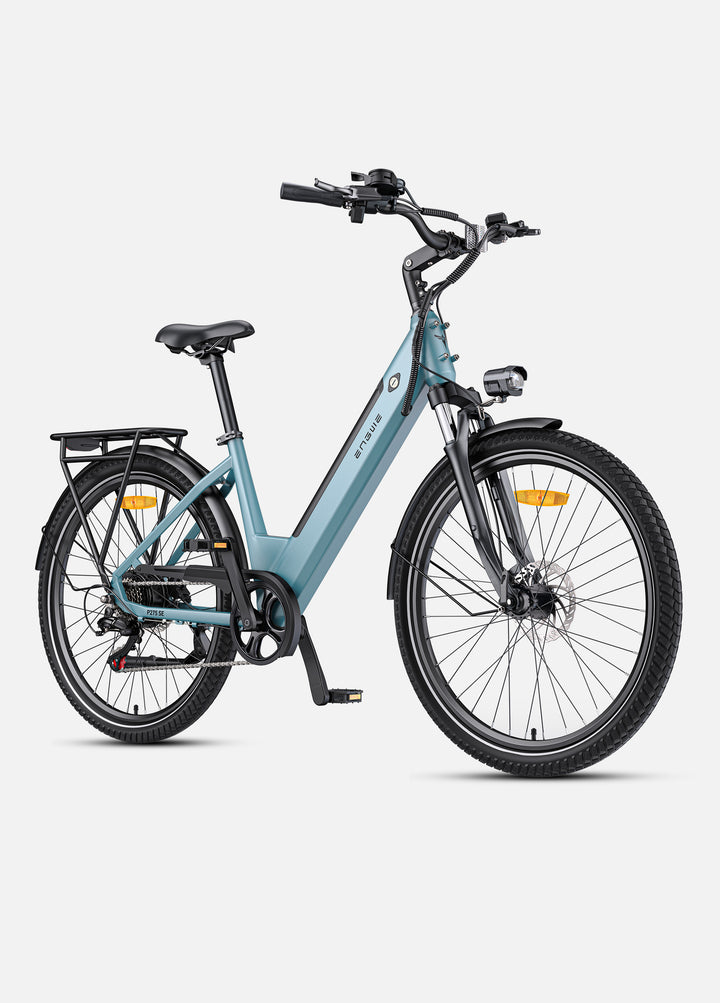
ENGWE P275 SE — Smooth, Smart, and City-Ready
The ENGWE P275 SE is a smooth pedal assist, throttleless, and is classified under the category of class 1 electric bike. It is a great representation of the manner in which an engwe electric bike may incorporate intelligent help, low noise, and zero throttle, an actual best class 1 ebike for urban commuters.
Highlights:
- 250W motor with 42 Nm torque
- Torque sensor for instant response
- 100 km range per charge
- Belt drive and hydraulic brakes

Trek Verve+ 2 — Reliable and Comfort-Oriented
One of the favorite e-bikes for adult riders is this Class 1 Trek step-through model, which features a strong Bosch motor and an upright riding position.

Specialized Turbo Vado SL — Lightweight Commuter Favorite
A lightweight Class 1 e-bike. With its clean look and mid-drive motor, it is a great solution suitable for premium users: fitness riders or long-distance commuters.

Buying Tips: Choosing the Best Class 1 E-bike
Consider these essential elements when picking your Class 1 e-bike before you buy:
- Motor Type: Torque-sensing mid-drive systems deliver a smoother ride than hub motors.
- Battery Range: Aim for 70-120 km if you’re making the commute daily.
- Frame Style: Step-through frames for urban riding; step-over frames for sportier riding.
- Weight: Lightweight to carry and easier to store.
- Warranty & Service: Reputable brands like ENGWE, Trek, and Specialized can be trusted, and they provide long-term support.

E-bike Classes and Legal Notes
Each country or state has different laws regarding e-bikes. In the EU and most countries, a Class 1 electric bike (max 250W, max 25 km/h) is treated as an ordinary bicycle and does not need registration to use.
States in the U.S. have a three-tier system, with riders needing to be 14-16 years old in some areas, and helmets required for Class 3. Always check the regulations regarding e-bike classes in your region before deciding to buy one, to ensure you won’t have any issue riding it on the road.

Who Should Buy a Class 1 E-bike?
A Class 1 e-bike is right for:
- Commuters who go through traffic or bike lanes.
- Fitness riders who want light electric help.
- Senior citizens and older folks needing a little extra boost to get around.
- Urban adventurers with an appreciation for quiet, smooth assistance.
- Upgrading from a regular bicycle; you’ll find Class 1 e-bikes intuitive and stable.
Conclusion
A Class 1 e-bike perfectly blends together human and electric power. It’s easy, it’s productive, and it’s legal in almost every single location on the planet. It is where you should start if you are new to e-bikes.
It doesn’t matter if you are thrifty, like with ENGWE Ebikes, or tough & rowdy, such as Trek and Specialized—the top-sellers for the best Class 1 e-bikes have a quiet, good-range sweet spot and fulfill confidence in each ride.
So whether it’s replacing the train to work, commuting through the city, or just having some good old fun, a Class 1 electric bike will provide that freedom while you are pedaling and let you do it without sweating, courtesy of its own electric power.
Frequently Asked Questions
What is a Class 1 e-bike?
A pedal-assist e-bike without a throttle or higher than 20 mph (32 km/h) assist. It is the most popular and legal class in the world.
What is the top speed of a Class 1 e-bike?
A Class 1 e-bike helps up to a speed of 25 km/h in the EU or 20 miles per hour, then it's onto humans, pedaling it out manually.
What is the difference between Class 1 and Class 2 e-bikes?
Class 1 is pedal-assist only, and Class 2 has a throttle for motor-only propulsion.
Is a Class 1 e-bike good for beginners?
Absolutely. For new riders or those getting back in the saddle, these bikes are easy to use and reasonably quick.