Entering the world of electric bikes is both an exciting and intimidating process, and if you’ve found yourself here searching for Falcon, you've most probably narrowed down your search to the brand. You aren't just looking for a basic overview of the product—you want that in-depth analysis that you can only get from an American-made e-bike review, especially one about an exotic piece of 2-wheel Ferrari design like a Falcon e-bike. It is with extreme attention to detail that this review has been fashioned to be your ultimate recommendations guide. We'll also go beyond the marketing claims and provide you with real-world analysis, user experience breakdowns, and a critical analysis of the issues you should consider before you buy. Our mission is to provide you with all of the information that you need to answer those questions you have as well as those that you may not yet have, so that the choices you make are ones made with as much of the information you can in hand so that you know you will have the best possible information you could have to make a truly informed and confident decision.
An Overview of Falcon E-Bikes
We will look at particular models soon; however, first, let me give an overview of the features that Falcon provides. The brand has organized everything into categories to serve different kinds of riders, so there's a possible match for different lifestyles. Here’s what's in their current lineup, with their models at a glance:
Falcon Commuter Series
Falcon C1 Urban Glide
Falcon C3 Metro Plus
Falcon C5 City Express
Falcon Adventure Series
Falcon A5 Trailblazer
Falcon A7 Apex Pro
Falcon Folding Series
Falcon F1 Swift
Falcon F3 Compact
Falcon Fat Tire Series
Falcon T1 Tundra
Falcon T3 Sandstorm
Real-World Performance: C3 Metro Plus vs. A5 Trailblazer
And now for what really matters: how well do these bikes actually work? We’ve put two of Falcon’s top sellers through our testing wringer – the C3 Metro Plus from its commuter range and the A5 Trailblazer from the Adventure Series – so that you can get a feel of what the brand is about. With the C3 Metro Plus, the initial reaction is built-for-duty urban efficiency. The ride position is nice and upright, minimizing stresses on the back and wrists and making an obvious nod to the potential need for daily use. The hub motor kicks in gradually, but with enough of a jolt for some satisfying punch off the line at traffic lights. It has five levels of pedal assist, but on levels two and three, we felt a perfect amount of subtle boost that didn’t drain the battery too quickly on city rides and made a 10-mile slog feel surprisingly easy. The back rack that comes with it is solid, and I easily added a pannier bag with a laptop and groceries to it and experienced no wobble. The mechanical disc brakes are not bad too; stopping is very effective for the city. The battery drains down respectably; we always hit the advertised amount when riding on low assist levels and flat ground. The impression left by the C3 Metro Plus is certainly one of dependability and usefulness – this is a brute of a bike built to tackle city life.
Now the A5 Trailblazer is a different story, a play/explore/recreation thing. The frame does have an aggressive geometry and feels like you're on a bottom-bracketed, race-ready speed machine. The most visible difference is the suspension fork, which does a pretty good job at soaking up the bumps from gravel tracks and light trails, preventing all that punishment from traveling up your arms and into your body. The motor on the A5 feels more jacked-up; it delivers power in a more deliberate way, and that’s a huge boon for me when climbing hills. If the C3 will drive you with a bit of a purr, the A5's brap has a full-throated whir that announces its sportier purpose. The wider, knobbier tires provide fantastic traction on loose dirt and wet leaves – superior traction compared to the slicker tires on its commuter cousin. We put the A5 to the test on a difficult forest loop with plenty of ups and downs and found that the gears gave a good range that didn’t leave us spinning out of control on the flat or struggling to grind through the pedaling on the climbs. As might be anticipated, the battery drain was greater in this location because of the increased power usage, but the trail riding was still intoxicatingly thrilling. The A5 Trailblazer feels like a tough and competent bike, an altitude machine that fills me with the confidence to jump off the road and see where it takes me. As a weekend warrior’s do-all electric bike, it shines.

Beyond the Ride: The Falcon Ecosystem
Other than the physicality of one ride, a well-considered purchase choice is a consideration of the brand. What does it mean for investing in the Falcon ecosystem in the long term? For one thing, construction and materials are definitely a strong suit here. Clean welds throughout the Falcon frame are designed to inspire confidence and assure longevity. Graphics aren't just skin deep on the Falcon Ivy either—its frame has comfort geometry, designed to allow the rider to feel at home while on the move. They exclusively use 6061 aluminum alloy, which is the industry standard for a reason—it has an ideal strength-to-weight ratio, great corrosion resistance, and a classic look. The parts are usually sourced from known entry-level to mid-range manufacturers, such as shifters, brakes, etc., so maintenance and replacing is easier. After-sales support and warranty is another important field. Falcon offers a standard warranty on its frame, motor, and battery, which is good to see. But your mileage will vary when it comes to customer service, so it’s probably better to buy from a dealer with a good local reputation for this kind of support. Lastly, consider the community and availability of parts. Falcon has a bit of a diehard cult following, a tight-knit online owner community that provides excellent help with troubleshooting and modding ideas. They’re also built with non-proprietary components for a lot of parts, so finding replacements like brake pads, chains, and tires at any local bike shop is simple, which we can’t say for most other bikes and we love that for long-term ownership and maintenance.
An Alternative to Consider: The ENGWE P275 SE
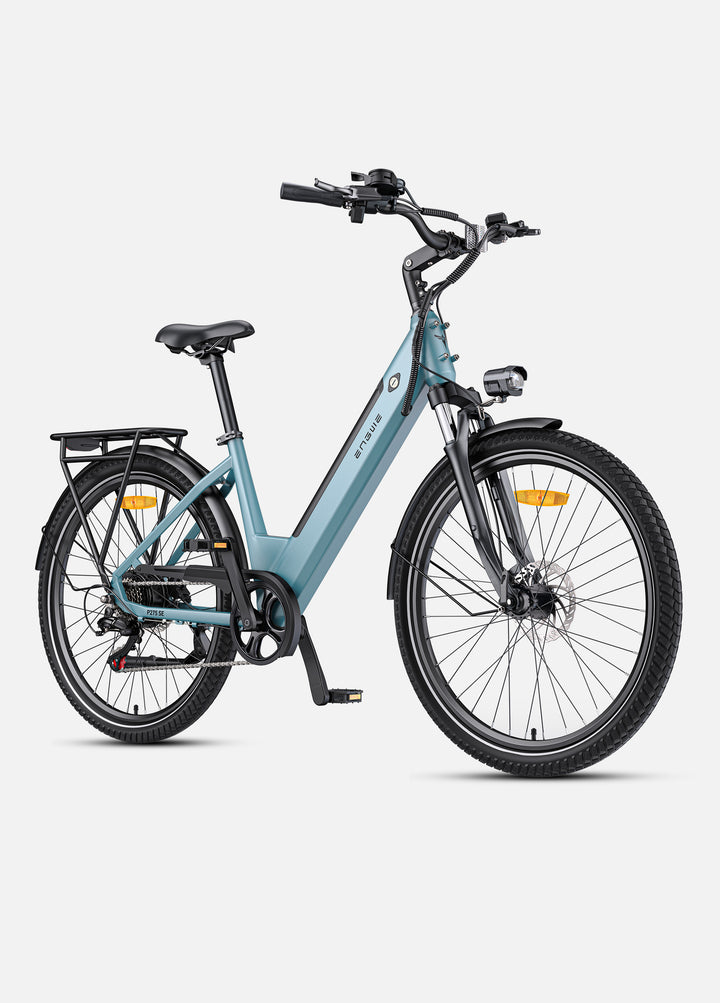
While Falcon offers a decent array of choices, especially for anyone who needs their vehicle to be as useful as it is rugged, the electric bike sector is packed with new and clever ideas. For those riders who prefer the most intuitive, advanced, and high-tech riding experience, it’s worth seeing what brands like ENGWE bring into the world. The ENGWE P275 SE, for instance, embodies a different philosophy that is aimed at the merge of the rider and the bike. ENGWE has absolutely killed it on this bike, and that is seen as soon as you come to rest your plentiful weight on the advanced sensor. This sensor reads your real-world wattage output with amazing accuracy and fast response – only 50 microseconds – delivering power that feels like a natural extension of your legs. The result is a super smooth, responsive ride without the abrupt jerks or delays of less sophisticated systems. The P275 SE is equipped with a 250-watt brushless motor that is both efficient and near-silent while delivering enough power to easily pack 100 km of range under optimal conditions with its 13Ah removable 36V battery, meaning you can relax and focus on the journey, not the charge, while out on a long commute or weekend adventure. It is designed with comfort in mind with its Dutch-style configuration, and comfort is enhanced with its upright riding position supported by an ergonomic saddle and adjustable handlebar. You’re well supported by powerful front and rear hydraulic disc brakes that provide great stopping power and modulation in any conditions. With a concentration on being clean, sleek, smart, and above all comfortable, and all with the aid of an app, the ENGWE P275 SE is the ultimate possible alternative for the distinguished urban commuter who demands the absolute peak of contemporary e-bike technology.

To further illustrate this, you’ll find a detailed comparison chart between popular models from Falcon’s own range below. This chart should help you, as this way you will be able to see at a glance which equipment both models come with and for what purpose it is advantageous.
| Feature | Falcon C3 Metro Plus | Falcon A5 Trailblazer | Falcon F1 Swift |
|---|---|---|---|
| Motor Type | 500W Rear Hub Motor | 750W Rear Hub Motor (More Torque) | 350W Rear Hub Motor |
| Battery | 48V 12.5Ah | 48V 14Ah | 36V 10Ah |
| Estimated Maximum Range | ≤ 45 miles | ≤ 55 miles | ≤ 30 miles |
| Brake System | Mechanical Disk Brake | Hydraulic Disk Brake | Mechanical Disk Brake |
| Suspension | None | Front Suspension Fork | None |
| Tires | 26″ x 1.95″ Commuter Tires | 27.5″ x 2.2″ All-Terrain Tires | 20″ x 1.75″ Compact Tires |
| Frame Material | 6061 Aluminum Alloy (Reinforced) | 6061 Aluminum Alloy | 6061 Aluminum Alloy (Folding) |
| Key Feature | Included Rear Rack and Fenders | Upgraded Motor and Suspension | Compact Folding Design |

Frequently Asked Questions (FAQ)
For that reason, and to make things a bit easier for you, we’ve collected 5 of the most commonly asked questions prospective Falcon e-bike buyers have.
How far can a Falcon e-bike go?
The promised maximum range is always calculated under optimal conditions: a lightweight rider, flat terrain, the lowest pedal assist level, and no wind. In the real world, you can expect to get 70-80% of that maximum range. What will decrease your range: more aggressive pedal assist levels, many start/stops, hilly terrain, heavier cargo, a headwind, and low tire pressure. For a 45-mile bike, expect 30-35 miles of mixed-use commute riding (which is still typically plenty for the average commute—worth giving it a try!).
How easy of a time will I have getting it up and running?
Falcon e-bikes typically come 85% pre-assembled. You are responsible for attaching the front wheel, handlebars, pedals, and saddle. The required tools are generally supplied in the box (together with a user's guide). It’s a 30-minute to 1-hour job and requires only rudimentary mechanical skills. We strongly suggest that, if available, you watch an official assembly video for the particular model that you buy on YouTube because some things are just understood better when you can see them versus reading them. If you are not comfortable doing this, any good bike shop will be able to fully assemble and safety-check your bike for a nominal charge.
Is it okay to ride my Falcon electric bike in the rain?
Yes, you may, but be careful. Falcon e-bikes typically have an IP rating (such as IPX4 or IPX5) that means they are water-resistant, not waterproof. This makes them splash-proof, rain-proof, and safe to use on moist roads. But you never want to dunk the bike and should avoid using a high-pressure jet wash on it, as this might force water into the delicate electronic bits like the motor, battery, and controller and damage them for good. It’s a good idea to wipe the bike down with a dry rag after a wet riding day.
What are the regular maintenance checks for a Falcon e-bike?
With a few essential additions, the maintenance is similar to how it would be on a normal bike. Most people don’t know this, but you need to monitor your tire pressure, check brake pads for wear, and as always, keep your chain clean and lubricated. With the electronics, the big thing is to pay attention to the battery: avoid letting it discharge completely, store it in a cool, dry place (don’t leave it in the freezing garage), and avoid leaving it on the charger for days after it’s already charged. We recommend a once-a-year, full professional tune-up at a bike shop to check bearings, true the wheels, and otherwise adjust shifting and brakes.
Where do I service or get parts for my Falcon e-bike?
One of the things Falcon has going for it is a large number of industry-standard components. There are a few other consumables (brake pads, chains, tires, tubes) that you can get at any bike shop. In the case of the battery, controller, and display, you’ll have to reach out to Falcon’s customer service or an authorized dealer. If your bike is still under warranty, you should always reach out to the manufacturer first. On out-of-warranty repairs, an expanding network of independent e-bike repair shops can identify and correct hub motor issues on most systems.
At the end of the day, if you opt for a Falcon e-bike, you are choosing a solid, practical, and powerful piece of kit that offers excellent value and unlocks a world of adventure and efficiency.