Is an Oraimo E-Bike a Good Investment? A Comprehensive Review
Setting off on a hunt for the perfect e-bike can be exhilarating, but also incredibly overwhelming, with all these new brands and models popping up every day. You are probably reading this because you have seen oraimo. And oraimo, as you have probably guessed or know, is a consumer electronics brand now showing interest in e-mobility. Your question may be a direct but profound one: Is an oraimo e-bike a good investment? We’re here to cut through the noise and provide you with a straight-to-the-point, detailed review. We’ll take a comprehensive look at all of their electric bike models, get into the nitty-gritty performance details of their best-selling models, and help you understand if an oraimo e-bike is the best option for your daily rides and weekend escapes.
Oraimo's E-Bike Lineup and Hands-On Reviews
Oraimo has designed its electric bike range, arranged in different series, to serve different rider needs and experiences. Getting to know their full lineup is part of the task in order to potentially find a product that fits your unique needs. Here are all of their current models:
Monster Series
Monster 100
Monster 200
City Cruiser Series
Knight M10
Challenger C10
Here, our hands-on review concentrates on oraimo’s best-selling models so you have a real sense of what they are. First up is the Monster 100, bursting with presence on its brute of a frame and chunky fat tires. From the time you mount it until you park it, the bike feels large and planted. The ride is perhaps the most impressive thing about it: Those big tires are great at soaking up imperfections in the road, from potholes to gravel paths, and give you a cushioned and confidence-inspiring feeling on the bike. Power delivery through that rear hub motor is instant and punchy. You get a delightful burst of speed (for a folder, anyway) when you engage the pedal assist system (PAS) – it feels as if you are caught in some invisible wind and are coasting. The riding position was pretty upright and comfortable, even for medium-length trips. The mechanical disc brakes felt strong and provided ample stopping power in most cases in an urban environment, albeit they need a harder pull than their hydraulic siblings. The user interface is very simple; it uses a basic display with just speed, battery, and assist level, that’s all. It’s very easy to use and there is not much to learn. The Monster 100 seems to be a playful and brawny partner for someone who just wants a bike that meets their urban needs and isn’t bashful about getting noticed. Where it succeeds above all else is pure comfort and stability thanks to its fat-tire build, in which every ride feels safe.
We then decided to put to the test oraimo’s interpretation of an ideal city commuter, the Challenger C10. The feel is different immediately. The Challenger C10 definitely feels lighter and quicker than the Monster line. The narrower tires and more classic frame geometry are built for speed and handling in the tighter environment of the city. It's nimble and it feels intuitive to weave through traffic and make tight turns. The step-through frame is a huge bonus for urban riding, especially if you’re often starting and stopping at stoplights, and the included rack means you can use it for grocery runs. The motor gives a good, smooth kick, not much, but enough to get up to speed and handle moderate hills, which is fine for what it is designed for. It features useful accessories such as fenders and a rear rack, another reminder of its commuter-oriented design. You can likely leave your backpack behind for work or a trip to the grocery store without having to buy these crucial add-ons. The design of the Challenger C10 as a whole is characterized by its practicality and ease of use. It’s a humble, dependable workhorse for working your way around town, and the main reason to choose it is its accessible design and commuter-friendly elements.

How to Choose the Right E-Bike for You
Whether you are considering one specific electric bike or have not made up your mind just yet, zoom out to consider the following: some of the most important big-picture elements to consider when determining which e-bike is right for you. With that bigger picture in mind, your purchase will be more in line with your real life and expectations. For a start, let’s identify your core use case. Are you a daily commuter with a specific distance to cover, a weekend explorer who loves long scenic rides, or do you need a versatile bike that can handle errands and cruising around town? The answer to this question will help lead you toward the correct frame style and feature set. For example, the Monster series’s ruggedness is great if you ride off-road a fair bit, but it may be overkill if you never ride anything but smooth bike paths (if you fit that description, the lighter Challenger C10 would waste less of your effort). Second, look at the battery and motor details. A brand’s advertised max range is always under the most ideal conditions — level 1 pedal assist, a flat surface, and a rider that weighs as much as a feather. In reality, you can expect about 60-70% of that maximum in mixed-use real-world conditions. Think about how much you ride each day and whether you have easy access to charging at home or work. The power of the motor will determine how well the bike tackles hills and how quickly it accelerates. If you are a rider in a hilly area, the torque/wattage rating may be important for you. Durability and comfort are also key. Check out the welds on the frame and the heft of components such as the kickstand and pedals, as well as the ergonomics of the saddle and handlebars. What separates a pleasant ride from a nauseating one, or a delightful experience from a laborious chore, are factors like an amply-cushioned saddle and an adjustable handlebar stem. Lastly, think about the post-purchase experience - assembly, maintenance, and customer support. The majority of e-bikes in this category are sent directly to consumers and may be delivered partially assembled. Consider how good your mechanical skills are, or what you’d have to pay to have a bike mechanic make sure everything is adjusted safely and properly.
High-Performance Alternative: The ENGWE P275 SE
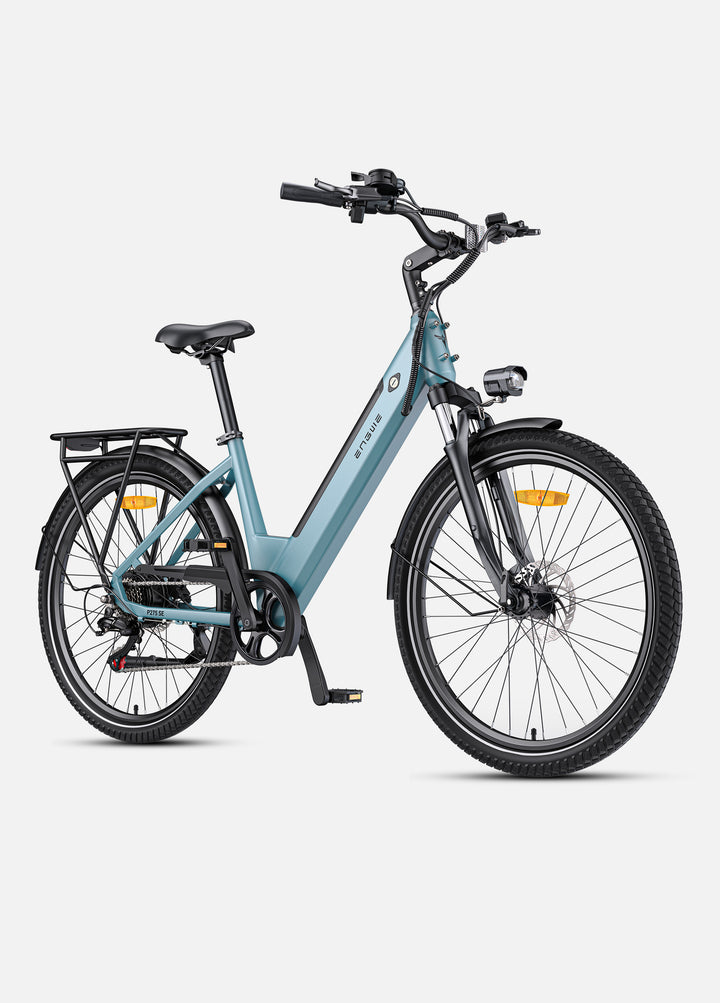
Though oraimo has a good entry-level model, riders with an interest in a more polished and tech-rich commute might well end up comparing the entry-level models to specialized e-bike brands that prioritize high-end components, as well as a more natural-feeling ride. For this serious buyer, the ENGWE P275 SE is a remarkable alternative. It is totally developed with the urban rider in mind and comes with a powerful 250W brushless motor matched to a smooth torque sensor. This is a game-changer — while most cadence sensors on lower-end bikes simply record how fast you pedal and give you power that isn't truly matched to your effort, a torque sensor measures how hard you're pedaling and gives you power that precisely mirrors your effort. The ride feels buttery smooth and natural, simply an extension of yourself.

With a removable 36V 13Ah lithium-ion battery, the bike has a maximum range of 100km, relieving all range anxiety even for the longest of commutes. Increased protection and power in wet and dry conditions come from the high-power 160mm front and rear hydraulic disc brakes. The ENGWE P275 SE so flawlessly combines the digital with the mechanical, thanks to smart app connectivity, that you’ll get instant access to your ride data and planned navigation on the crystal-clear LCD color monitor. Boasting a lightweight, full chromoly steel frame, the commuter is a classic Dutch-style bike with a striking pop of color; functional features like fenders and a chain guard come standard, making it the best commuter bike for those who value style, comfort, and extraordinary value.

Frequently Asked Questions (FAQ)
oraimo E-Bike Models: Specs Comparison
| Feature | oraimo Monster 100 | oraimo Monster 200 | oraimo Knight M10 | oraimo Challenger C10 |
|---|---|---|---|---|
| Model Highlight | All-Terrain Fun | Premium All-Terrain | City Commuter | Urban Utility |
| Motor | 350W Brushless Hub Motor | 500W Brushless Hub Motor | 350W Brushless Hub Motor | 350W Brushless Hub Motor |
| Battery size | 36V 12.5Ah (450Wh) | 48V 10Ah (480Wh) | 36V 10.4Ah (374.4Wh) | 36V 10Ah (360Wh) |
| Max Range | 70 km | 80 km | 65 km | 60 km |
| Brakes | Mechanical Disc Brakes | Mechanical Disc Brakes | Mechanical Disc Brakes | Mechanical Disc Brakes |
| TIRE TYPE | 20″ x 4.0″ Fat Tires | 20″ x 4.0″ Fat Tires | 26″ x 1.95″ City Tires | 26″ x 1.95″ City Tires |
| Frame Style | Step-Over, Foldable | Step-Over, Foldable | Step-Over | Step-Through |
| Key Benefit | Smooth, cushioned ride | Extra power on hills | Nimble enough for city streets | Easy access and usefulness |
Are oraimo e-bikes hard to put together?
Oraimo electric bikes, like most direct-to-consumer electric bike retailers, arrive partially assembled in a large box. You'll usually need to fit the front wheel, handlebars, pedals, and saddle. Oraimo includes the necessary tools and a user manual. It takes about an hour to install for anyone with rudimentary mechanical abilities. But if you have any doubts regarding your mechanical skills to properly tighten the bolts and align the parts (mainly the brakes), then I would suggest that you have a bike mechanic do the final build and a safety check. This will make sure your bike is safe and needs no adjustments out of the box.
How far can an oraimo e-bike go?
Real-world range is affected by a number of factors: your weight, the terrain (hills will drain the battery much faster), the level of pedal assist you’re using, wind resistance, and tire pressure. So if you buy a bike that is advertised to have a range of up to 70 km, in typical mixed-use riding at low-to-mid assist levels, that range would be more like 42-49 km. That is generally more than adequate for commuting each day or for training rides.
Can oraimo e-bikes be used on steep hills?
This, of course, depends on the model and the steepness of the hill. A 500W motor, in something like the Monster 200, will offer noticeably more help in getting up hills than the 350W models. For the small hills most often found on city streets, the 350W motors in the Monster 100, Knight M10, and Challenger C10 will probably suffice, especially when you add your own pedal power in a lower gear. But for very long or very steep hills, you'll still have to do a lot of work.
Can I use an oraimo pedal-assisted electric bike in the rain?
Oraimo e-bikes are water-resistant, not waterproof, as are most of today’s modern e-bikes. They tend to be fine in light rain and when riding on wet roads. The electrical parts, including the motor and battery, are protected from splashes. While you won't want to ride through heavy rain or deep puddles or use a pressure washer to clean them, you should be fine. It never hurts to towel the bike down with a dry cloth after a wet ride to prevent corrosion.
Where can I service my oraimo e-bike or get a replacement part?
This is a real concern for every direct-to-consumer brand. For basic maintenance like brake adjustments, gear tuning, or fixing a flat, most good local bike shops can help so long as the parts are generic (no brand-specific integrated handlebars or proprietary brake calipers). For oraimo-proprietary electronic parts such as the battery, motor, and controller, you will need to reach out to oraimo's customer service. At the time of purchase, it’s a good idea to ask about their warranty and what spare parts are available for the long haul.
Look closely and you will see that oraimo has delivered a robust entry-level offering that’s accessible for first-time electric bike riders.