Discovering Confidence with Kona E-Bikes
You don’t just want to see specs and components when you start researching your new e-bike. You are searching for confidence. You want to determine whether a brand has the lineage, the engineering talent, and the rider-first design philosophy to produce a machine that won’t simply move you from point A to point B, but will bring you pleasure, reliability, and a hit of adventure every time you ride it. The name Kona evokes deep cycling lore and has been a hallowed moniker in the mountain bike realm for generations, and Kona has made a definitive move into the world of e-bikes. In this review, we’re planning to take you past the veil of marketing that is being pumped out en masse to educate you on Kona’s e-bike offerings, taking a look at what they’re good for and then finally, whether or not a Kona e-bike is the answer for your cycling future.
Kona has clearly committed to electric bikes with a well-rounded line that hits on many different types of cycling. Every model is a bespoke design; they are applying years of frame-building experience combined with the power and range of modern pedal-assist systems. Below is the entire range of Kona’s e-bike selection:
Remote Series (e-MTB)
- Remote 160
- Remote 130
- El Kahuna
Libre Series (e-Gravel/Adventure)
- Libre EL
Dew Series (e-Commuter/Urban)
- Dew HD
- Dew-E
- Ecoco
Rove Series (e-All Road/Light Adventure)
- Rove HD
Kona E-Bikes on the Road and Trail
We’ll check out what it’s like to ride a few popular Kona electric bike models in the real world. This is where the spec sheet dissolves and the birth of a bike really takes place. Here, we're going to look at three separate models that demonstrate just how wide the breadth of Kona's experience is: the hard-as-nails trail-conquering Remote 160; the fully pragmatic commuting stance of the Dew HD; and the freedom-finding all-road explorer, the Libre EL.
The Kona Remote 160
From the minute you throw a leg over this e-MTB, you stop thinking that you're riding an electric bike and start thinking you're riding Kona's legendary Process trail bikes after they've been to a dirty little coffee shop that's tucked in the red light district. The geometry is set up for aggressive descending with a slack head angle and long reach that gives you loads of confidence when things get steep and technical on the trail. The biggest thing about it, however, is the Shimano EP8 motor. The power delivery is surprisingly natural on the climbs - it doesn't surge or feel forced. Instead, it’s like you have superhuman legs, powering up technical, root-strewn ascents that would be a laborious hike up on a standard bike. 160mm of front and rear suspension swallows bumps ranging from small trail chatter to big, square-edged rammers, keeping the wheels stuck to the ground for better traction and control. This is not just a bike that gets you up the hill quicker; it's a tool to rewrite what's achievable on a mountain ride, encouraging you to take on harder lines and travel further than before.
The Kona Dew HD
Next, we head into the city with the Kona Dew HD. This bike is an example of great design on a functional level. The initial palette is one of ease and mastery. The upright riding position provides excellent views of traffic, and the swept-back handlebars put less strain on your wrists and back. It’s a solid ride, and thanks to the dependable Shimano E6100 motor system, it is planted and strong. On the pull away from a stoplight, the assistance is smooth and immediate – it helps to propel you quickly and safely up to the speed of traffic. You will not feel as if you are climbing the steepest hill in the city; you will arrive at your destination without being out of breath and glistening. What I liked and was surprised to see were some smart touches: full-coverage fenders will keep you dry when you get caught racing back from grocery shopping or your after-work meeting, there is an integrated rear rack that is ready for full panniers of groceries or work essentials, and there are powerful hydraulic disc brakes to trust in all weather conditions. The Dew HD is the clear choice for those who go faster than the average rider from one point to the next, yet still get their groceries on a bike once a week.
The Kona Libre EL
Lastly, the Kona Libre EL embodies the modern-day definition of adventure. At its core, this is a gravel bike, but the “EL” for electric fundamentally changes its potential. My feeling on the Libre EL was total freedom. Match the gravel-tailored Shimano GRX drivetrain with the E7000 motor, and your dreams have come true. The motor is so subtle you feel like you are riding your bike and never disconnected from the ride, but also so powerful it flattens soul-destroying headwinds and converts long, temporary ascents into manageable slopes. This way, you can easily widen your scale. A 50-mile ride can feel like a 30-mile ride, enticing you to connect those dirt roads and trails you’ve always been curious about. The bike is wonderful on mixed terrain, feeling fast and efficient when you ride pavement, but stable and confidence-inspiring when the ground turns to loose gravel or packed dirt. The emotion you get is not that you’re cheating; it’s that you’re empowered, able to get out there for more exploring than you know how to handle directly outside your door.

The Kona Ecosystem: More Than Just a Bike
Considering an e-bike is a big decision, and your options go far beyond a brand’s performance specs. You are purchasing into a brand’s ecosystem, and here is where Kona really excels, with a peace of mind that can be as valuable as the bike in the long run. One of Kona's major pluses is its time-tested track record. They aren’t a fly-by-night startup chasing fads; they’re a vanguard cycling company who crafts timeless frames, proven by covering their original owners with a lifetime frame warranty. This is a clear indication of their trust in their materials and build quality. In addition, Kona will only associate with industry leaders in motor and battery technology such as Shimano and Bosch. This decision is crucial. That means that you’re not just getting a drive system that is powerful and dependable; you’re getting backed by a worldwide service network. Should you ever have a problem, any Shimano or Bosch-certified e-bike technician will be able to diagnose and service your bike, a huge advantage over proprietary offerings from lesser-known brands. This dedication to proven technology also applies to the components, with proven Shimano, SRAM, and RockShox items working to maintain performance, with parts that are readily available for when replacement is required. One other thing that makes a difference is the Kona dealer network. When you buy a Kona, it comes with the support of a local bike shop for professional assembly, proper sizing, and their ongoing maintenance. That human dimension — the freedom to inquire, the availability of a professional tune-up, and the access to a relationship with experts — is invaluable and is easily lost in the race to the bottom of the direct-to-consumer market. Kona bikes are made for cyclists by cyclists, choosing everything from the sizing to components based on what they like to ride, and in doing so, not even the added weight of a motor can hinder the feeling of what a great bike is like.
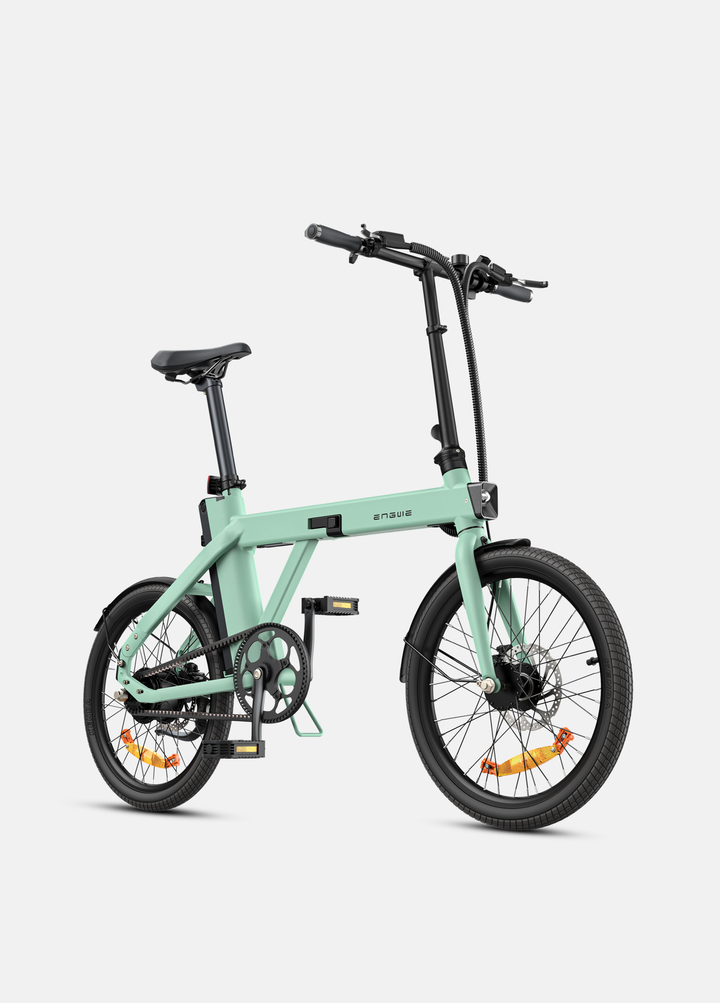
While Kona's dealer-serviced, high-end component package strategy fits the needs of the dedicated cyclist brilliantly, other brands offer a different approach, particularly for riders who are chasing value, all-terrain ability, and unique features like folding for ultimate urban living. The ENGWE EP-2 Boost is one of those, a compact electric bike that’s portable, yet practical and powerful. Compliant with the strict EU standards, it boasts a 250W brushless motor and an innovative “Boost” button that delivers a boost of 55Nm of torque, allowing you to power up even the steepest hill. What sets it apart in this range is the torque sensor integrated into the design, which makes for a very natural and ultra-smooth power assist that responds directly to your pedaling and makes for a much more intuitive ride. Built as a real-life all-terrain bike, it features massive 20 x 4.0-inch fat tires and a front suspension fork that take the edge off the bumps and turns on all types of surfaces, from paved to unpaved gravel, cement, and dirt roads. Perhaps the biggest upside for many is its clever foldable frame, which makes it easy to store in an apartment, office, or the back of a car. The fully detachable 48V 13Ah lithium battery means that not only do you have an extra-long maximum range of up to 120km in the lowest assist mode, but you can also easily bring the battery with you for charging. Additional practicality is added through the inclusion of 180mm dual disc brakes, Shimano’s 7-speed transmission, and the contents of the box, including a rear rack and fenders.


Kona E-Bike Comparison and FAQs
Kona E-Bike Model Comparison
| Feature | Kona Remote 160 | Kona Dew HD | Kona Libre EL |
|---|---|---|---|
| Use | Aggressive Enduro/All-Mountain E-MTB | Urban and Utility | Gravel & Adventure & Bikepacking |
| Motor System | Shimano EP8 | Shimano E6100 | Shimano E7000 |
| Battery Capacity | 630Wh (Fully Integrated) | 504Wh (Semi-Integrated) | 504Wh (Internal) |
| Frame Material | Kona 6061 Aluminum Butted | Kona 6061 Aluminum Butted | Kona 6061 Aluminum Butted |
| Suspension | 160mm Front / 160mm Rear | 100mm Front Fork | Rigid Carbon Fork |
| Key Feature | Mountain-bred geometry and 160mm of front and rear travel. | Comes complete with fenders, rack, and lights for the daily grind. | Drop handlebars and gravel-specific components for adventure riding. |
Kona E-Bike FAQS: What are Users Asking to Know?
Is Kona really a good brand for electric bikes, or are they just a mountain bike company slapping motors on frames?
This is a very valid question and the answer is YES, Kona is a good brand for electric bikes! It is actually thanks to their rich history in designing non-electric bicycles that they are so strong. At an advanced level, they know geometry, kinematics, and material science. Instead of slapping a motor onto a preexisting frame, they are designing the e-bike frames around the weight and forces of the electric drive system from the ground up. As a result, you have bikes that ride how they should, balancing rider comfort, control, and the endless fun on dirt you've always associated with Kona. They’re tapping all of that R&D to ensure their e-bikes still feel like authentic Kona bikes, not just electric machines in their lineup.
What are the motor systems in Kona e-bikes and why does it matter?
In the vast majority of cases, Kona only employs motors and batteries from arguably the two most established power-train suppliers of the modern day: Shimano and Bosch. The consumer stands to gain in a very big way. Known as 'the best,' these ECUs excel in power, drivability, and part-throttle assistance. Shimano’s motors, including the EP8, are known for being lightweight, powerful, and providing a very natural ride feel. Bosch systems are known for their powerful performance and long-lasting service life. This is so important in terms of serviceability and support. With some brands, proprietary computer interfaces mean a limited number of dealers can perform a diagnostic on the motor. With Shimano or Bosch, however, almost any bike shop worldwide can diagnose and service the bike, leaving you free to have a motor serviced even if you are on the other side of the world.
How is the warranty on a Kona electric bike?
Kona has an amazing warranty; it's very nice to see a company stand behind their product. Kona warrants to the original owner that factory Kona bicycles are free of non-conformities in material and workmanship for the lifetime of the frame from the date of purchase. This is a big deal that safeguards your main investment. The electrical components like the motor, battery, or display are subject to the warranty of the component manufacturer (e.g., a 2-year warranty for Bosch or Shimano). This two-tiered warranty system covers both your bicycle frame construction and your e-bike’s high-tech electronics.
Kona e-bikes seem heavy. How bad is the weight over bumpy pavement?
Yes, all electric bikes are heavier than non-electric bikes, thanks primarily to the weight of the battery (3kg-4kg) and the motor (2-3kg). Great e-bike design, though, is about managing that weight. Kona has that covered by keeping the motor and battery as low and centered as they will go in the frame. This low center of gravity (COG) means the bike feels a lot more stable and planted than I would have expected. You will feel the weight if you have to carry the bike up a flight of stairs, but not as a negative on the road or trail. Indeed, on high-speed descents, that extra heft can add a feeling of planted security to the ride, boosting confidence further.
Why would I want to buy a Kona from a dealer since I can get a cheaper brand online?
Direct-to-consumer is cool, and it’s certainly good value, but purchasing a Kona through an authorized dealer affords you significant value beyond the initial transaction. First is professional assembly and safety. E-bikes are intricate machines, and getting one built by a true professional means everything on it will be torqued properly and working safely. Second is proper fit. A dealer will ensure that you’re in the correct size frame and make final micro-adjustments to the saddle and handlebar position, all of which are essential for comfort and performance on long rides. Third, and I think most crucially, is aftercare. Your local dealer is also your partner for tune-ups, warranty claims, software updates, and when you need to go in for troubleshooting or a question down the road. This bond and confidence in expert service are an important part of the owner's experience.
What you're purchasing is a part of a legacy of performance, thoughtful design, and a heck of a lot of cycling mojo.