Phase 1: Remote Investigation
Purchasing a used electric bike from an individual seller can be a great way to obtain a good quality ride without having to pay the brand-new cost. But there are risks in this market, from depleted batteries to covered-up mechanical failures. But no need to worry – we’ve got you covered: This guide will give you a thorough system of checks involved in getting your e-bike checked and make sure none of the essentials has been overlooked and that you’ll be glad each time you head out on your safe and valuable ride.
Your investigation before purchasing is the most critical to avoid bad deals and potential fraud. Before you even consider going to look at the bike, you will have done a proper job of due diligence from home. This first step is all about collecting information, in determining the legitimacy and real worth of the bike. Hurrying through this stage frequently causes you to overpay for a host of issues. Have some knowledge before you put yourself in a face-to-face situation with the seller.
What to Ask the Seller:
- What is the bike’s model year and when was it bought new?
- How many miles or kilometers are on the odometer?
- How has the battery been stored, especially during winter? (The battery should be kept indoors at a partial charge).
- Can you supply a proof of purchase (original receipt)?
- Has the bike ever been involved in an accident or had any major parts replaced?
- Why is the e-bike being sold?
Prove Ownership and Prevent Theft:
E-bikes are stolen a lot. Protecting yourself is non-negotiable.
- Ask the seller for the bike’s serial number before checking it out. It is typically stamped into the bottom bracket, head tube, or rear dropout.
- Look the serial number up on national and international bike registration databases, such as Bike Index and Project 529. A seller who is hesitant to provide it is a huge red flag.
Check Market Value:
Always check and never accept the seller's price blindfolded.
- Find the bike's Manufacturer's Suggested Retail Price (MSRP) when it was new.
- Search online marketplaces to see what the same or similar models are currently selling for.
- Factor in depreciation. An e-bike depreciates most of its value in the first year, mostly because that’s where the battery is depreciating too.
Phase 2: In-Person Mechanical Inspection
The next level of research is to start getting mechanical and looking at the structure. The electric parts are key, but as with anything else, if the base bike wasn’t good or is unsafe, it’ll be expensive to repair. Concentrate on the frame—the bones of the bike—and the essential components that make it go and stop. Take a flashlight so you can see into all the nooks and crannies, especially around the welds.
Frame and Fork Inspection:
This test is pass-or-fail. A damaged frame is a non-starter.
- Look over the frame with a fine-tooth comb, especially around the head tube, bottom bracket, and seat tube welds for any hairline cracks, deep dents, or bends.
- Inspect the fork for bent or crushed points where an impact may have occurred.
- Pay extra attention to the folding mechanism if you are interested in folding bikes. Make sure you can lock it down and there is no undue play or wear.
Wheels, Tires, and Brakes:
Wheels and tires are essential when it comes to safety as well as ride quality.
- Pick up each wheel and spin it. It should rotate smoothly without wobbling left to right or jumping up and down.
- Check the tread on the tires. Check for cracks in the sidewalls that show dry rot.
- Squeeze the brake levers. They should be firm, not spongy. Inspect the calipers and lines of hydraulic brakes for leaks.
- Check the wear on brake pads and check the brake rotors (discs) for deep grooves or warpage.
Drivetrain and Suspension:
This decides how smooth the bike will be to pedal and ride.
- Inspect the chain for rust and use a chain-wear tool, if you have one. An overstretched chain just causes the more expensive cassette and chainrings to wear down faster.
- Shift through every gear. The derailleur should shift precisely to each gear as you move around the gears with no hesitation or skipping.
- If the bike is outfitted with suspension, push down hard on both the handlebars and seat to compress the front fork and rear shock. They should compress evenly and return quietly without any funky noises.

Phase 3: Electrical System and Powertrain Check
The third dimension is assessing the e-bike’s spirit: the electric powertrain. The battery, motor, and controller are the costliest components of any electric bike and determine both its performance and your long-term satisfaction with the product. A bike that looks good but has a dying battery is a money pit in the making. You will want to be methodical and check every motion and electrical component.
Battery:
This is the largest and most expensive component to judge.
- Ask the seller how many charge cycles of use the battery has had, if they know.
- Check the battery case for cracks, swelling, or any other damage.
- Test to make sure the key can lock and unlock the battery from the frame.
- Power on the system and see the battery level indicator located in the display. Ask if it was charged for the meeting. A battery that fades prematurely during a short test ride bodes ill.
- Recognize that battery capacity decreases with time. Remember and keep in mind that a three-year-old battery may well be on borrowed time, perhaps running as low as 60-70% of its new capacity, which will equate to barely any miles.
Motor:
The motor will supply you with smooth and steady power.
- Check the motor, whether it’s a hub motor on the wheel or a mid-drive at the cranks, for cracks or damage to its housing.
- While test riding, listen if you hear grinding, clicking, or a loud whirring noise - this could indicate worn internal gears or bearings.
Display, Controller & Wiring:
This is the brain of the e-bike.
- Go ahead and turn the bike on and off a few times.
- Push every button on the display or remote. Cycle through all the pedal-assist levels to verify that they enable and adjust the motor’s output.
- If the bike has a throttle, give it a try to ensure it delivers smooth power.
- Inspect all wiring for signs of wear or damage, especially at the points where it enters the motor and controller.
Phase 4: The Test Ride, Negotiation, and Final Decision
Finally, the test ride and negotiation complete the setup. Now you get to see them all functioning together for the first time and leave with a decision. Never purchase an e-bike without trying it first. In practice, the test ride will make clear what a static examination cannot. Use the results of your overall inspection process to haggle for a fair price.
The Test Ride Checklist:
Take it for an extended test ride, for at least 10-15 minutes and preferably on a mix of surfaces if you can.
- Ride it with the power off, like a regular bicycle, to feel the direct handling and hear any mechanical noises.
- Power up and test all pedal assist levels. Max the throttle to experience the hard and fast power delivery.
- Try the brakes in a safe, open area. They ought to slow you down immediately in a controlled fashion, without making any squeal or shudder.
- Ride over a small series of humps to check suspension and listen for any creaks from the frame or components.
- Pay attention to the motor. It should be a continuous, silky hum — no grinding or clicking allowed!
Negotiate a Deal and Close:
Leverage everything you learned to pay the lowest price.
- Note any problems you observed, like worn tires, a frayed cable, or scratches on the frame. Leverage these as polite bargaining points for a price discount.
- Cite the market research you did. If the asking price is substantially higher than the norm, you can make a reasonable offer based on what you know to be a reasonable price.
- Once you settle on a price, draw up and sign a basic bill of sale. It must have the date, price, model name, serial number, as well as the full names and signatures of the buyer and seller. This is your proof of purchase.
An Alternative: The Benefits of Buying New (and Q&A)

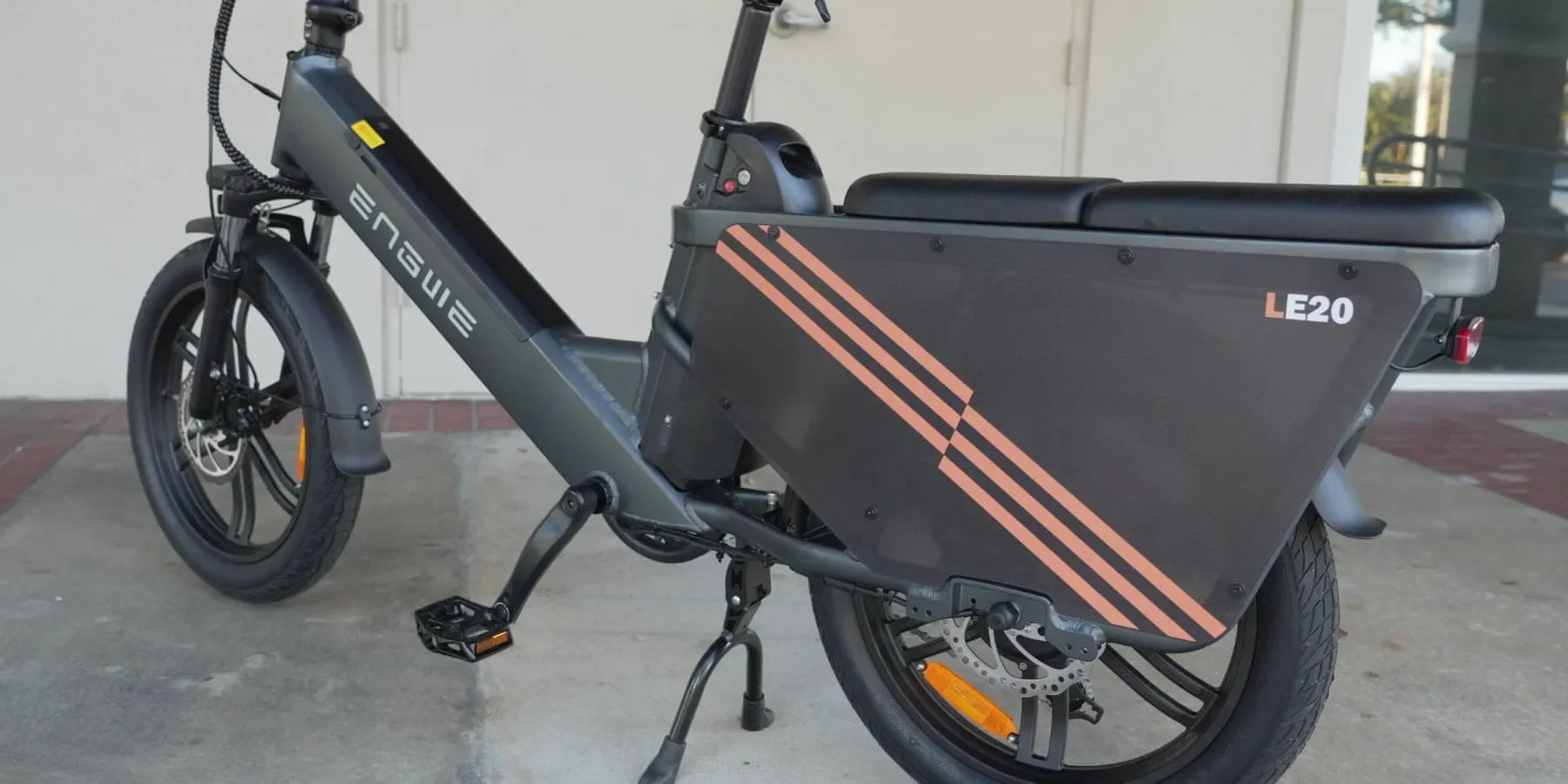
There are deals to be had in the used market, but the potential of a degraded battery or hidden issues can cost you. For peace of mind and current technology, investing in a new high-quality Electric Bike with the latest in Electronics from a trusted brand such as ENGWE is usually the way to go. A new bike comes with a full warranty, a clean bill of battery health, and the most recent features minus all the vagaries of a secondhand purchase. For example, the ENGWE Engine Pro 3.0 Boost is an excellent one that offers superb performance. The result is a powerful, intelligent, full-suspension folding e-bike that’s perfect for urban commuters and trail riders alike. It’s powerful thanks to the mighty 90Nm motor, and climbing even the steepest hills is no problem at all – in fact, it’s a blast! Add to this already great set of features the ultra-sensitive torque sensor that allows you to control exactly how much power you want with every single pedal stroke. A whopping 130km range from the premium Samsung cell battery combined with a super-fast 2-hour charge means that range anxiety is a thing of the past. With advanced smart features such as GPS route tracking and keyless unlocking via the ENGWE App, you are getting extra security and convenience that couldn't be found with many used e-bikes.
| Specification | ENGWE Engine Pro 3.0 Boost |
|---|---|
| Motor Torque | 90Nm |
| Battery | 48V 15Ah (720Wh) w/ Samsung Cells |
| Max Range | 130 KM |
| Sensor | Torque Sensor |
| Suspension | Full Suspension (Front Hydraulic & Rear Mechanical) |
| Brakes | Dual-Piston Hydraulic Brakes (180mm Rotors) |
| Tires | 20” x 4.0” Anti-Puncture Urban Hybrid City Tread Tires |
| Smart Features | ENGWE IoT Module (GPS, 4G, Bluetooth), App Control |
| Frame | Foldable Magnesium Alloy Frame |

What's the #1 red flag to watch out for when purchasing a used e-bike?
The largest red flag would be if a seller can’t or won’t supply both the original proof of purchase and the bike’s serial number. This is generally a sign that the bike could be stolen, and you should just walk away.
How much range degradation should I be expecting out of a used battery?
Budget on a reduction in capacity of for example 10-20% per year, depending on use and treatment. A three-year-old battery might offer 50-70% of the original range, so be sure to account for a possible replacement cost in your budget.
What are the challenges in finding a replacement battery for an older e-bike?
It can be extremely challenging and costly, particularly for obscure or secondary brands. As always, be sure to look up what a replacement battery for the model you're interested in costs and if it’s readily available before you make any purchase.
If you follow these steps, you will be well prepared to make an educated choice and a good deal on a dependable used electric bike.