The Powertrain: Your Hill-Conquering Engine
It's tough to pick the right e-bike that can conquer steep climbs and also function as a trusty commuter in the 2-4k budget range. You want a combination of brute force, stamina and features you’ll actually use. This guide will help you cut through the clutter, slicing your decision into five key dimensions. And we'll take a look at the most important tech for climbing hills, key features that make you want to ride your bike every day, as well as giving up some tips and tricks in order to help you spend your money wisely.
The e-bike’s powertrain is the first, and arguably most important, dimension through which hills are conquered. It's not just the size of the motor; it's also motor type, torque, and the sensor that tells it when to start pitching in. For difficult terrain, a mid-drive motor is the way to go as it takes advantage of the bike's gears for maximum torque, however big hub motors are equally good. Torque (in terms of Nm) is what you’re really going to want to pay attention to/prioritize. For hills and inclines, you'll want a motor with at least 60 Nm of torque, though up to 70 Nm if you require that steadfast lift on those grade-y ascents. Right along there, is the kind of sensor. A torque sensor reacts to how hard you’re pedaling and offers a proportional, natural-feeling assist, invaluable for controlled climbing. A more basic cadence sensor simply knows whether you are pedaling or not, and applies a fixed amount of power, which can be jerky and less organic-feeling when you’re attacking a hill.
Motor Type: Mid-Drive motors have an efficiency benefit over standard hub motors on hills and inclines due to utilizing the bike's gearing. High-torque hub motors offer a strong, and usually cheaper, alternative.
Torque (Nm): This is your climbing power. Look for e-bikes with 60-80Nm of torque which will ensure hills are no longer an issue.
Sensor: A torque sensor is highly recommended for smooth and responsive riding, as you have more control over where your power kicks in- which is especially helpful when getting started on a hill.
Pro Tip: Try out a small hill starting from a complete stop. That will quickly show you what the motor’s low-end torque elasticity and sensor’s responsiveness are like.
A Powerful All-Terrain Contender: The ENGWE EP-2 3.0 Boost
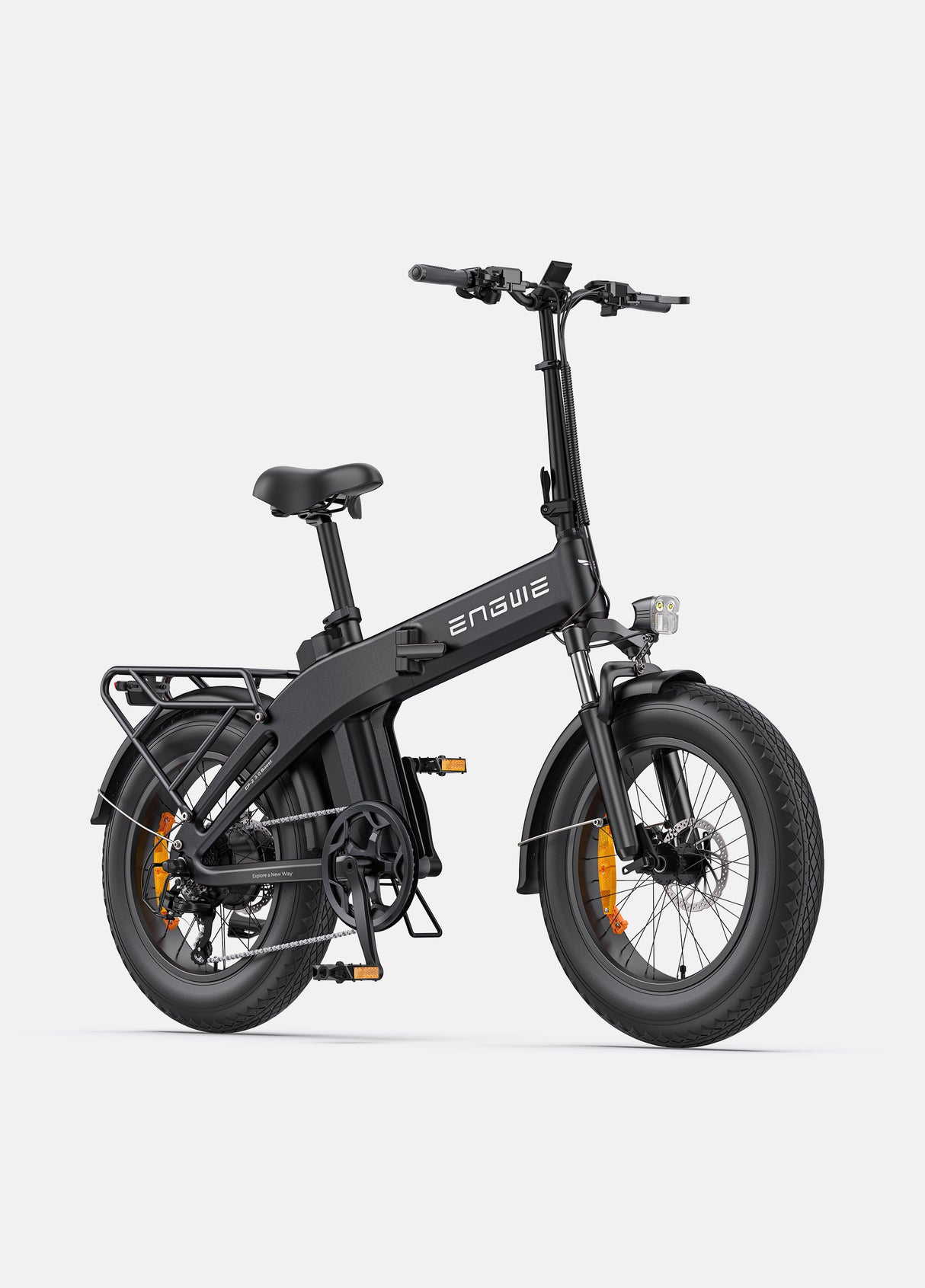
Looking for a great combination of power, all-terrain performance and smart design, ENGWE is not to be missed. Specifically designed with performance in mind, the ENGWE EP-2 3.0 Boost is ideal for those looking to cover all types of terrain – from hills, to city riding. The powerful and robust 75Nm Boost motor accelerates well, taking on virtually any gradient. The real difference-maker, however, is the new torque sensor– it’s incredibly smooth and integrated so that it feels like there isn’t anything helping you ride along... until it adds up to a big advantage. For daily use safety and ease should always be taken into consideration. This e-bike includes robust hydraulic disc brakes for better stopping power, and massive 4.0-inch fat tires that soak up bumps and provide added traction on any surface, from paved streets to snowy trails. With the long-range battery, fast charger you spend more time riding and less time plugged-in which will easily fit your fun filled life!

Top Hill Climbing Performance: The motor with 75 Nm in the Boost Mode, which maintains a maximum torque up to 20km/h of assisted speed.
Realistic Riding Experience: It offers you a real riding experience by simulating the position on your road or mountain bike.
All-Terrain Versatility: Equipped with 20” x 4.0” fat tire, handles city potholes or off-road trails in the same manner.
Daily Practicality: Supports portable battery expansion, includes 120km range removable lithium battery and a fast 3.5 hour charger, folds quickly for easy storage, and connects to a smart App.

Battery and Range: Fuel for Your Commute
For an electric bike to earn the title of a daily driver, I need its battery and range to be reliable. The e-bike’s “gas tank” is comprised of Watt-hours (Wh), the product achieved by multiplying Voltage (V) of your battery with its Amp-hours (Ah). For your budget aim for nothing less than a 600Wh battery, so that you’ll have sufficient range to not only get to work with ease, but also enough reserve power to take an unexpected detour home or tackle more hills without any stress. As with all maximum range claims, take them with a big pinch of salt - that is probably on flat ground at the lowest assist level and with a small lightweight rider. A good rule of thumb is to expect 50 – 70% of the claimed max range when using your bike where there are hills and for mixed daily use. A removable battery is a must for convenience on a daily basis. This enables you to take the battery inside your home or office for charging, leaving the entire bike at home. You also get to pay attention on the Output of the Charger – A 3A or 4A charger may speed you up quite faster as opposed to a regular 2A charger and get you back on the road quicker.
Compute Watt-hours (Wh): Find the V and Ah listings. You have 624Wh of capacity with which to work, a good enough amount for most daily rides.
Estimate Range realistically: Consider your weight, typical terrain and preferred level of assistance. On a commute of 20 miles with some hills, something like a bike with up to 60 claimed miles should be safe.
Longer Lifespan: Do not over-discharge the battery, never exceed 120% of intended service life. You may want to try not to use up too much of your battery on a daily basis, keeping it in the range of 20 percent and 80 percent. Keep it inside in a cool environment.
CONVENIENCE FIRST: The battery should be removable and use a fast charger (3A or higher) for everyday convenience of charge-when-needed (vs. where it's docked and you hope it has charge).
Build, Comfort, and Safety: The Daily Driver Details
The bike’s build and level of comfort, on top, of course, of its safety features that make it a joy to use every day. A bike that can make it up the hill has to be able to get you down safely, and for that you need hydraulic disc brakes. They provide much better braking performance and control than standard rim brakes, especially when the surface is wet. For comfort on your daily commutes, especially if they include subpar roads, a front suspension is necessary for cushioning bumps. A suspension seatpost can also improve ride feel. The practicality of the bike (or absence thereof) will also have a big effect on how usable you find it day-to-day. Search for models with, or that have mounting locations for, required add-ons.
Brake: Hydraulic disc brakes are a must. The additional safety and control, especially while descending steep downhills, is worth it.
Suspension: A front suspension fork is necessary if you want a comfortable ride in the city. Big tires also offer natural cushioning in a big way.
Frame and Ergonomics: Make sure the frame is right for your height. A comfortable saddle and adjustable stem can save your ride — especially on multi-hour treks.
Accessories integrated: A daily use bike should already come complete with:
- Fenders: So you can stay clean and dry on the road.
- Rear Rack: To haul groceries, your work bag or other cargo.
- Integrated Lights: Be seen and be safe with lights wired to the main rechargeable battery-never even think about charging your bike lights.

Considering the Competition and Final Tips
ENGWE is compelling but at 2-4k there are a number of other strong contenders to think about with varying strengths. For some brands, they’re looking to streamline and integrate (looking at you Apple!) while others are more concerned with raw power or value. Considering these options will help you find the pair that fits your needs, whether that’s aesthetic considerations such as how a certain motor looks or what brand name it carries under the cowl, or more mechanical concerns like which style frame is just right for you. That being said, it would be smart to look into brand reputation in the long-run (who has good customer service and can get parts if/when you need them). Here are a few other common examples of electric bikes in this category:
| Feature | Commuter-Bike | All-Road Explorer Bike | Value Power Bike |
|---|---|---|---|
| Motor Type | Efficient Hub Motor | Torque-Sensing Mid-Drive | Powerful Hub Motor |
| Battery (Avg. Wh) | 500-650Wh | 650-750Wh | 700-900Wh |
| Key Strength | Good looks, all-in-one features | Excellent road feel, efficiency | High torque, grindy power mode |
| Best For | Urban commuting, slight hills | Steep hills and long rides | Power mode or carrying heavy loads |
Aventon: Frequently commended for their borderline bro-ification (think aggressive “Urban Outfitters” aesthetic), as well as integrated batteries, and quite the overwhelming dealer network, they’re good for riders who appreciate a sleek look and tech support close at hand.
Rad Power Bikes: These bikes are equipped with powerful chain-ring motors and sturdy, utilitarian designs that deliver great value and hauling capacity.
Ride1Up: A value focused e-bike brand with an eye for specs, often providing value based off the curb appeal of a model competing with bigger brands in some regards.
What is more important to hills: motor watts or torque?
Torque (Nm) is more important. Torque is the twisting force that moves you away from a stop and yanks you up the hill. Wattage is more about maintaining velocity. When hill climbing, prefer the high torque.
Do you need a torque sensor, and is it worth it to spend more?
Absolutely. And for riding on changing terrain, like hills, a torque sensor allows for a far more naturalistic and controlled ride experience. It makes the bike feel like a supercharged version of who you are — not like riding a scooter with pedals.
How do fat tires perform in commuting on pavement?
Yes, modern fat tires are really fast on pavement and provide a massive comfort advantage as they soak up bumps and potholes. They’re stable and they work with almost any surface you’ll find.
Your perfect electric bike is one that gives you the power to tackle hills, easily turn long commutes into quick trips and maintain a pace up your favorite road or trail.