Understanding E-Bike Laws and Speed Regulations
Electric bikes, or e-bikes, are taking off as a new form of personal transport that offers exercise and efficiency in equal measure. But with that power, too, come questions of speed and regulation. Just how fast can an e-bike go, and more importantly, what speed is it legally allowed to travel on your roads and trails? In this guide, we’ll delve deep into the laws for electric bikes and all available classes of e-bikes as well as details like real-world speed, and how to ride in ways that make your bike adventure as exhilarating — and compliant with the law — as possible.
The legal speed of an electric bike is not a single number; it depends on what your local government says. Transportation authorities around the world have set laws that separate e-bikes from higher power vehicles such as mopeds. Knowing your local laws is the first and most important step towards riding responsibly.
United States Structure
There are three classes in the federal system, which most states have also adopted. E-bikes are normally divided into three classes. An e-bike can be no more powerful than 1000W. Class 1 and 2 e-bikes limit motor assist to a maximum of 20 mph. But state and local municipalities have the final say, at times implementing lower speed limits or limited access to e-bikes on certain multi-use paths.
European Union Standard
This mainly applies to "Pedelecs” (Category L1e-A). These bikes have a motor that doesn’t exceed 250W, and the assistance has to stop past 25 km/h (15.5 mph). They are also handled legally as regular bicycles. Faster models, known as Speed Pedelecs (L1e-B) can provide assistance up to 45 km/h (28 mph), but are not mere bicycles and therefore may only be ridden by persons aged at least 16 with a moped license.
Regulations in Other Regions
Countries like the U.K. and Australia have closely matched the EU’s 250W, 25 km/h Pedelec standard for an e-bike to be classified as a bicycle. When it's more than those, the vehicle is often deemed a different legal type with more stringent standards.
The Three Classes of E-Bikes Explained
To figure out speed laws, you have to find out what kind of e-bike it is, which will tell you exactly where and how fast you’re allowed to ride. The most standard, which was developed in the United States, brings clarity for shopping and regulation by classifying bikes according to how the motor is activated and what its maximum assisted speed will be.
Class 1: Pedal-Assist
This type of e-bike is motorized only when the rider pedals. Motor help must discontinue at 20 mph (32 km/h) for this bicycle model. Although they rely on human power to operate, Class 1 e-bikes get the most buy-in and can be allowed in many of the same bike lanes and paths that regular bikes use.
Class 2: Throttle-on-Demand
This class also has a maximum motor-assisted speed of 20 mph (32 km/h), but can include a throttle that allows the rider to activate the motor without pedaling. This feature offers an added push from a stop, but some trail networks may limit throttle-capable bikes.
Class 3: Speed-Pedelec
This is the fastest class of e-bike and is treated as a bike. There is no throttle on the bikes; they are pedal-assist only, although they have motors that can assist up to 28 miles per hour (45 kilometers per hour). Class 3, the fastest of the classes, are more likely to be heavily restricted, banned entirely from multi-use paths and usually have a minimum age requirement.
Unclassified E-Bikes
Generally, electric bicycles with motors greater than 750W (or 250W in the EU), or capable of providing motor assistance above 28 mph, are considered “out-of-class” vehicles and legally categorized as a moped or motorcycle that must be licensed and registered.

Our Recommendation: The ENGWE L20 Boost

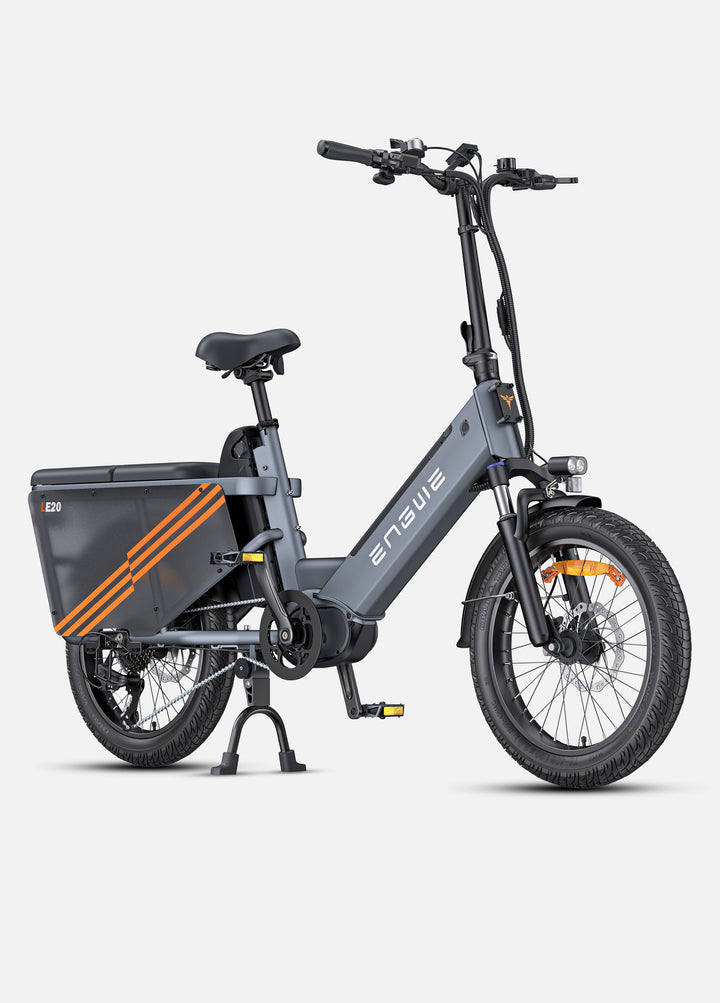
Selecting the perfect e-bike means matching its capabilities to your requirements while operating within legal parameters. For those riders who are looking to balance power, utility and compliance with eco-friendliness can go for an ENGWE. We recommend the ENGWE L20 Boost, a versatile and efficient model that has been engineered to perfection. For that it stands out by delivering power when needed, and legal efficient riding all day every day. Its intelligent design keeps you comfortable and in control, with a powerful motor and advanced sensor technology which deliver an uncompromised riding experience.

On-Demand Power
The L20 Boost includes a revolutionary power-boost button, unleashing the full 75Nm of torque. This is an important weapon for climbing very steep hills or leaving traffic in the dust; power at your fingertips.
Simplicity of Riding
It comes with the most advanced torque sensor. It can sense your pedalling pressure and join in, matching it twofold to double that of your own pedal power making for an intuitive, virtually silent and very natural feeling ride which boosts you up hills and away from lights as though you were possessed.
Long Range and Useful
Featuring a large-capacity removable 48V13Ah battery, you can enjoy a range of up to 126km on pedal-assist mode so that destination anxiety is never at the back of your mind. It’s also equipped with a robust front basket and rear rack, so you’re ready to commute, head to the store or really go for a weekend adventure.
All-Terrain Confidence
The 20x4.0-inch fat tires roll over stable terrains such as cities, asphalt, and dirt track. Its front suspension absorbs bumps for a comfortable ride on any terrain.
| Specification | ENGWE L20 Boost Description |
|---|---|
| Motor | 250W Brushless Motor (Support) |
| Max Torque | 75 N.m (Power-Boost only) |
| Battery | 48V13Ah Li-ion |
| Max Distance | 126 km (PAS Mode) |
| Sensor | Torque Sensor |
| Suspension | Front suspension, 50mm travel |
| Brakes | 160mm Mechanical Disc Brake |
| Tires | 20x4.0-inch Fat Tires |
Real-World Factors Affecting Your E-Bike's Speed
The legal speed limit is only one factor; there are all sorts of real-world variables at play that can determine how fast your e-bike will actually travel. Knowing these variables can help you make the most of your ride as well as manage your expectations when preparing for a ride. How best to harness these factors in practice is the key to unlocking your electric bike’s full potential.
Rider Input and Fitness
A pedal-assist e-bike relies on you to do most of the work; your speed is directly related to how much effort you put in. The more effort you put in, the faster you will go — especially after accelerating past the motor’s assistance cut-off speed. Your fitness level is a major part of being able to ride faster.
Terrain and Wind
You will of course slow down when riding uphill, as the motor is working against gravity and your legs are also. On the flip side, you can go very fast on downhills. Wind also plays a huge role — in a great headwind, you can have resistance on the bike and a lower effective pace, while with tailwinds giving you a push.
Total Load (Rider + Cargo)
The total load that the motor has to move, not just for acceleration but top speed. A heavier rider or a loaded bike will require more power to get going, and may have a slightly lower top assisted speed, especially when climbing.
Tire Type and Pressure
Pro Tip: One of the best ways to increase speed and efficiency is by keeping your tires inflated properly. Less than full tires produce more rolling resistance — slowing you down and sapping the battery. Inspect your tire pressure once a week to make sure it’s within the range specified by the manufacturer.
Battery Level
An e-bike’s motor works best when fully juiced. You will see a reduction in power and acceleration as the battery's voltage drops, particularly when it is below 25% charged.

Safety and Frequently Asked Questions
It's exciting to try to ride as fast as you can, but safety is a must. Running an e-bike at higher speeds demands more attentiveness, correct gear and adherence to safety guidelines. By following these simple rules you can ensure the safety of yourself and everyone around during any ride.
Safety First Gear
This product should always be used with a certified skate, bicycle or scooter helmet and other protective gear (knee pads, wrist guards, elbow pads). It’s the single most important piece of safety equipment. Also wear gloves for better handling and protection, as well as bright or reflective clothes to make yourself more visible to drivers, in particular–at first light, twilight or night.
Mastering Your Brakes
E-bikes are heavier, faster and require more room to stop than traditional pedal bikes. To know how your bike reacts, brake on grass or another open spot safely. Practice using your front and rear brakes evenly to prevent skidding.
Pre-Ride Safety Check
Perform a number of safety checks prior to each ride.
Key Steps: Test your brakes. Make sure that your tires are fully pumped. Ensure that the battery is locked securely in its position. Maintain your chain - Clean and lube to keep the drivetrain smooth.
Riding Etiquette and Awareness
Follow all traffic laws, inclusive of speed limits and stop signs. On multi-use paths, give a courtesy notice when passing pedestrians and slower bikers by ringing your bell or saying “on your left.” You should always defensively position yourself and think ahead about the actions of others.
What if my e-bike can exceed the legal limit?
Many e-bikes can be physically tampered with or “unlocked” to surpass their factory speed limits, but it typically voids the warranty and, more importantly, may reclassify your e-bike as a motor vehicle without a license, rendering it illegal for use on public roads or bike paths.
Doesn’t a Class 3 e-bike just do 28 miles an hour?
No, the maximum speed assistance from the motor will assist a rider is 28 mph. The rider still has to pedal, hard in fact, to achieve and maintain that speed – especially on flat terrain or facing into a headwind.
Is it more difficult to manage an e-bike riding at high speeds?
It’s true that the higher your speed, the less time you have to react and the longer it takes to stop. It is so important to ride to the conditions and well within your comfort and handling capabilities.
Knowing these particularities is the guarantee that your electric bike ride is not only quick but also healthy and legal.