Looking for something with a bit more zip in your electric bike? That urge to get past the commonplace speed limiter is a shared desire, no doubt, but navigating through both legal and technical terrain can be complicated. This guide is your roadmap. Below, we’ll walk you through five separate legal and effective levels to safely get a little more speed out of your vehicle, turning that casual ride into something way more fun. These are not tricks to learn, but methods that emphasize efficiency, technique, and smart choices in order for you to have more speed without becoming a scofflaw.
1. Maximizing Mechanical Advantage and Minimizing Drag
Before you lay a hand on any electronics, doing some DIY upskilling is the fastest and cheapest way to increase the speed of your Electric Bike. Each bit of friction you remove translates directly into free speed, which means the motor and your legs can more effectively do their jobs. This dimension is all about making your bike as slick and streamlined as it can be. The little things add up here for a big change.
Tire Pressure and Choice:
This is THE one mechanical change that makes the biggest difference. When your tires are underinflated, you get more contact between the tire and the ground and a lot more rolling resistance.
Takeaway Action:
Look for the recommended PSI (Pounds per Square Inch) range of your tire on the sidewall. You’ll want to pressurize them towards the higher end of this range if you’re sticking to tarmac. This minimizes friction.
Pro Tip:
Shell out for a floor pump with a built-in gauge, and you’ll enjoy the precision readings it provides. Check your pressure weekly.
Tires:
If you're running knobby off-road tires and generally riding on pavement, swapping to a smoother or slicker road tire will seriously reduce rolling resistance and give you 1-2 mph just with that change alone.
| Rider Weight | Road/Pavement PSI | Mixed Terrain PSI |
|---|---|---|
| 120-150 lbs | 50-60 PSI | 40-50 PSI |
| 150-180 lbs | 60-70 PSI | 50-60 PSI |
| 180-220 lbs | 70–80 PSI | 60–70 PSI |
Drivetrain Maintenance
A dirty, unlubed chain is a power thief. It creates friction and fails to mesh properly with the gears.
Maintenance:
Degrease your chain and cassette every 100 to 150 miles.
Lubricate:
Lube it up with your lube of choice for your conditions (wet/dry) after you're done cleaning the chain. Wipe off the excess to avoid attracting dirt.
Brakes:
Adjust – Make sure your brake pads do not rub the rotor or rim when not activated. The tiniest amount of drag creates a constant resistance that makes it hard for you to go fast and wears out your brake pads quickly.
2. Enhancing Aerodynamics and Riding Technique
Your body is the main cause of wind resistance on an e-bike; it can be responsible for as much as 80 percent of total aerodynamic drag. Changing the way you ride and your body positioning on the bike has a huge impact on speed – particularly when riding at higher speeds (15+ mph) where wind resistance really matters. This dimension is free; it requires only a bit of practice and attentiveness.
Get Down:
The more you can lower your frontal profile, the less wind resistance you have to push through.
The Tuck:
Lean your torso toward the handlebars. This need not be an aggressive, racing tuck; just by bending your elbows and leaning over, you will gain out-and-out speed.
Your Clothing Makes a Difference:
Loose, baggy clothes can act like a parachute. Go with tighter-fitting clothing when you're trying to avoid drag on a windy day or when you really want to get that speed up.
Strategic Gear and Cadence Management:
Use your gears to help the motor do its work.
High Cadence
Aim for a steady pedaling rate that's on the higher side (80-90 rev/min). This keeps the motor in its optimal power band, providing a lot of support with little effort. Don't get slowed down by being in the lowest gear.
Expect Hills:
Drop into an easier gear before you need it when you start to climb a hill, instead of halfway up. This keeps your momentum and cadence, aiding you in maintaining speed.
Intelligent Route Planning
The road you decide to take will have a large bearing on your average speed.
Headwind Dodging:
If you can, plan your route so that when you're riding your fastest segments, it's with a tailwind. Use buildings or natural features as windbreaks.
Momentum Matters:
Opt for routes with fewer stop signs or traffic lights. Each time you have to stop, you have to fight your way back up to speed. A ride is easier when the route can flow.

3. Legally Modifying E-Bike Settings and Classifications
Most e-bikes have a lot of untapped potential in their display settings. Before you make any changes, you need to understand the legal framework. In the United States, e-bikes are generally classified as Class 1 (features pedal-assist with a maximum of 20 mph), Class 2 (throttle up to 20 mph), and Class 3 (pedal-assist up to 28 mph). Changing your bike to make it faster could potentially classify it as an unlicensed Off-Highway Vehicle (OHV) by exceeding those parameters.
Legal Disclaimer: Be sure to check your local and state regulations. The idea is to get the best (legal) performance possible out of your bike within its classification, NOT to de-restrict it into an unlicensed motorbike.
Entering the Controller P-Settings:
Many e-bike displays have an advanced settings menu called “P-settings”.
How to get in:
It often means holding a combination of buttons (for example, '+' and '-' at the same time). Refer to your manual or look online for instructions on how to do this.
What You’ll See:
In this menu, you will likely see a speed limit setting. Some brands set this *below* the legal maximum. You may be able to modify this legally up to the 20 mph or 28 mph legal maximum for your bike's class.
Wheel Size Calibration:
This is a critical setting, designed to adjust for wheel size. This value is then used by the bike’s computer to determine your speed.
The Problem: If your wheel size is set to the wrong setting (for example, you have a 27.5" wheel, and your display is set to 26"), then not only will your speedometer be inaccurate, but the motor could also cut off power before reaching the legal speed limit.
The Fix: Locate the setting and make sure it matches what’s written on your tire sidewall. This easy fix can immediately add the top-end speed you've been looking for.
4. The Foundation: Selecting a Performance E-Bike
It’s hard to ride faster if all you’ve got is a bike that wasn’t built for it. The above tips can improve any e-bike, but a good-quality, high-performance, and responsive model is going to be a much better starting point. That’s where a brand such as ENGWE shines, as their products come out of the box with performance features. Their models are created to give you a fun and functional ride straight from the box.
Meet the ENGWE Engine Pro 2.0:
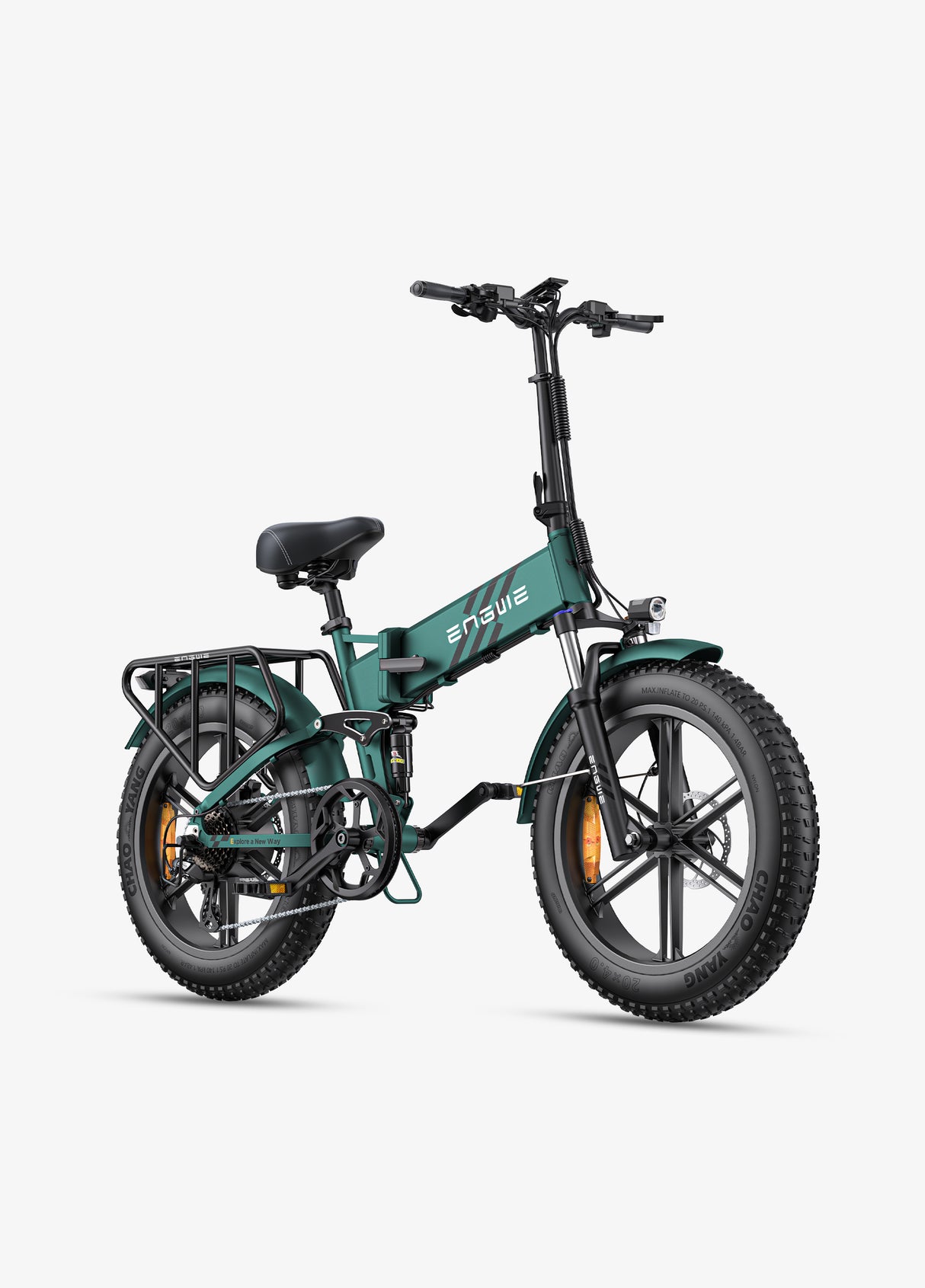
It's a fine example of a bike that is designed for high-quality performance. It’s not just a question of brute force; it’s also about the way that power is applied and maintained.

Strong Motor Kick:
A high-torque motor with 75Nm of torque doesn't just add top speed; it also gets you there much quicker and helps maintain high speed on steep inclines where other bikes would struggle.
MORE ADVANCED SENSOR:
Compared to a basic cadence sensor, such as the magnet-type pedal-assist sensor on other e-bikes, our torque sensor knows how hard you are pedaling and provides the precise assist you need. This leads to an extremely intuitive response, free of any delay, that feels like the bike is an extension of your own body.
Efficient Drivetrain:
The new Shimano 8-speed drivetrain provides smooth gear shifting and includes an integrated speed sensor to help accurately calculate your range and remaining battery.
Powerful Battery:
Not only does this high-capacity 16Ah battery provide a healthy 110 kilometers of range, but it's also resistant to voltage sag under load. This allows it to provide the motor with uninterrupted power, so you can keep running at your best for longer.
All-Terrain Performance:
The full suspension system and extra-fat 4.0" tires allow you to take on tough obstacles with the greatest of ease, providing the best coverage in all terrain.

5. Smart Upgrades and Other Performance Models
Once you've fine-tuned your bike's mechanics, it's time to think about strategic upgrades. This involves investing in hardware that will improve power delivery, drop some weight, and ultimately create a more efficient package. It is also worth considering other brands in the market that focus on performance when designing their models, so you’ve got options if you’re seeking to buy a new electric bike.
Battery Health and Voltage:
The battery is the heart of your e-bike.
Maintain Good Health:
A well-maintained battery contributes to efficient power use. Don’t leave it fully charged or fully drained for long periods. Keep it in a cool, dry place.
Voltage Sag:
Over time, as a battery ages or is under heavy load, its voltage can temporarily drop (or "sag"). This sends less electricity to the motor and can make you slower. This can be mitigated with a new, high-capacity battery.
Drivetrain Component Upgrades:
Besides maintaining your parts, there's the option of upgrading them as well.
Cassette and Chain:
A lighter cassette or a higher-grade (less friction-creating) chain can save some rotational weight and be more efficient.
Derailleur:
A high-performance derailleur provides crisper, faster shifting. It helps ensure that you're always in the right gear when you need it.
Check out some other performance e-bike options:
While ENGWE strikes a great balance between power and value, there are many other manufacturers famous for building high-performance electric bikes. If you are shopping around, be sure to check out:
- Specialized (specifically their Turbo series)
- Trek Bikes
- Cannondale
- Rad Power Bikes (for strong hub motors)
- Aventon
Frequently Asked Questions
Q1: Is it illegal to disable my e-bike’s speed limiter entirely?
A: In most jurisdictions, yes. Unlocking the speed limit for public roads, paths, or trails will convert your e-bike into an unlicensed motor vehicle, and you’ll lose the legal right to ride it in these areas.
Q2: If I get a more powerful motor, does my bike become faster on its own?
A: Not necessarily. A higher-wattage motor will give you better acceleration and climbing ability, but top speed is generally determined more by the electronic controller’s limit than the motor.
Q3: What is the most cost-effective free way to gain speed?
A: Keeping your tires inflated to the right pressure. It costs nothing, takes two minutes, and makes an immediate, discernible difference to your rolling resistance and top speed.
By combining these methods, you can push the speed limitations and improve your riding experience, all legally and safely.