The 5 Factors for Perfect Fat Tire E-Bike Pressure
The perfect tire pressure for your fat tire electric bike isn’t a single magic number but is designed to make your ride more comfortable and give you the best performance based on you. Ideal PSI (Pounds per Square Inch) is going to depend on your weight, what terrain you are tackling, and what your goals are for performance. This guide will break down the five critical aspects you need to take into consideration in order to hone in on the perfect pressure for a safer, more comfortable, and efficient trip.
Factor 1: Your Total Weight
The first thing (and probably the most important factor) is the absolute weight your e-bike is carrying. That means you, your clothing, and anything you’re carrying on it. A higher load will require higher pressure to get optimal support of the tire structure and avoid too much deformation that could make it less responsive (and also damage your rim). Conversely, a lighter rider can use less pressure to still get good protection and sidewall support while improving comfort. It’s a basic balancing act that sets the stage for all other tweaks.
-
Set Your Baseline:
As an average, a general-purpose rider (a person who weighs around 170 lbs/77 kg) will usually be able to start at 20 PSI. This is a good starting point from which to fine-tune. -
Rider Weight:
A good rule of thumb is to add or subtract 1 PSI for every 15-20 lbs (7-9 kg) you weigh above or below the average. A 220 lb rider would probably ride around 23 PSI and a 130 lb rider would start at about 17-18 PSI. -
Include Cargo:
Remember the weight of your gear! If you’re hauling a heavy backpack, groceries in panniers, or camping gear on the bike, add an additional 2-4 PSI to adjust. This keeps the rear tire from “squatting” and, in addition, helps stabilize the bike. -
Follow the Maximum PSI Rule:
Important Safety Note: Always be sure to look at your tire’s sidewall for the maximum recommended pressure. Do not overinflate beyond the maximum PSI, which may cause a tire blowout.
Factor 2: Riding Terrain
Speed and grip are always a trade-off depending on your riding surface. The objective is to get your tire pressure right for the terrain to optimize both comfort and performance. Higher pressure also works great on smooth, hard surfaces. It minimizes energy that goes into tire flex (rolling resistance). Sticky dirt, washboard surfaces—these all require less pressure so that the tire becomes a part of the trail surface, floating over debris and holding onto your line. Adjusting your pressure for every ride is a superpower skill that makes riding an e-bike so much better.
-
Paved roads and bike paths:
On the smooth blacktop, shoot for the higher end of your pressure range – between 20 and 30 PSI. This reduces rolling resistance, which means you go faster while getting the most out of your battery. The ride should be firm and responsive. -
Gravel and Hard-Packed Dirt:
On these mixed surfaces, you will run an intermediate pressure of 15-22 PSI. It’s got a nice mix of firmness and softness, enough to transfer power efficiently without being too squishy and absorbing vibration or losing grip in loose corners. -
Sand, Snow, or Deep Mud:
This is what fat tire bikes were made for. You want to pressure down to roughly between 5-15 PSI. This effectively multiplies the surface area of the tire on the trail, which spreads your weight over a wider surface area and allows you to float on top of the soft stuff rather than sinking in. -
Technical Roots and Rocks Trails:
For demanding off-road trails with roots and rocks, lower the tire pressure to 12-18 PSI for added traction while effectively serving as an additional layer of suspension across rough terrain and helping the tire to conform over obstacles so you have more control.
Factor 3: Your E-Bike and Tire Hardware

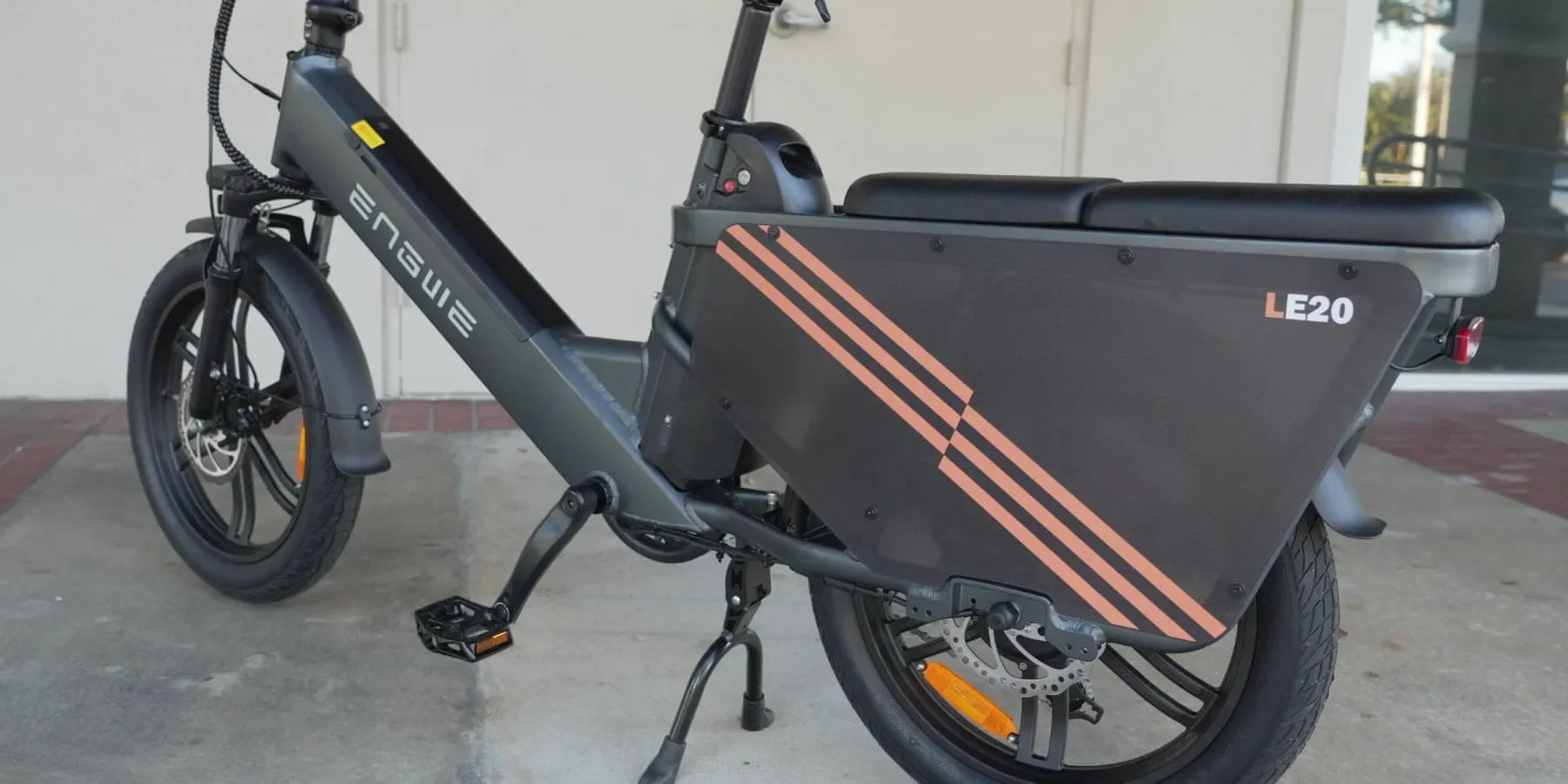
Factors like the design of your fat tires and the e-bike you mount them on will be crucial. Premium quality hardware makes it possible to safely explore a wider range of tire pressures. One such great brand that uses high-quality components so you can enjoy the best-in-class riding is ENGWE. Their ENGWE M20 is an excellent e-bike for doing that. And modeled on a sleek, motorcycle design, it’s made for riders who want performance no matter the surface.

-
Better Tire Structure:
The M20 is packed with triple-structure 20x4.0 fat tires. This tough build is engineered specifically to withstand the challenges of diverse terrain and provide excellent performance over a wide range of pressures, from low pressure when off-road to high pressure on pavement. -
Full-Suspension System:
Tire pressure is only part of comfort. Dual suspension helps you ride with anything but the race on your mind, and front and back hydraulic shocks make this bike even more insane. This feature pairs with the fat tires to offer twice the shock absorption of a standard riding system, resulting in an ultra-smooth ride over even the bumpiest terrain. -
Powerful and Reliable Performance:
The M20’s brushless motor provides 55 Nm of torque, enough to get you up any hill. It’s a performance supported by dependable 160mm front & rear disc brakes, enabling you to control your speed with confidence. -
Built for Adventure:
The high-brightness LED headlight, lightweight Aluminum Alloy Frame, Shimano 7-Speed Drivetrain, and optional dual-battery system with a max 75km+75km range mean the ENGWE M20 is built from the ground up for every adventure, whether you're a weekend explorer or daily city rider.
Factor 4: Your Riding Style and Goals
Once you get beyond where you ride, how you ride is a big factor. Do you want to be fast and efficient riding to work, or are you after a comfortable, premium ride? Refer to your own personal preference and performance goals for your exact tune-up PSI adjustments. Consider your tire pressure the tuning dial for your e-bike’s personality: A few PSI can absolutely transform the way your ride feels, turning a snappy speedster into an easygoing cruiser. The only way to know what works for you is through trial and error within a safe range.
-
For Maximum Speed and Battery Range:
If efficiency is your focus, then run pressure on the top end of what’s suitable for you. The harder the tire, the less it resists rolling, which generally means you’re putting less of a load on your motor to maintain speed. That equates directly to a longer range and faster top speed. -
For Maximum Comfort:
If you want the smoothest ride possible, aim for less pressure. The tire will function as a sheer volume shock absorber, reducing those small ripples and cracks in the road and vibrations from reaching you. It's particularly effective on bikes with no or insufficient suspension. -
For Tech Handling and Grip:
When the trail is technical, less pressure is more. The softer tire will follow the literal contours of the ground and conform to more of it to create a larger contact patch. This allows the between-tread space to evacuate dirt faster too, increasing grip under braking or cornering. -
A point to note:
Running "too low" with your pressure (especially on sharp-edged rock terrains) can create a “pinch flat.” This happens when the tire compresses so much on impact that it pinches the inner tube between the obstacle and the wheel rim, resulting in a puncture reminiscent of a snakebite.

Factor 5: Tools and a Proper Measurement Process
You can’t manage your tire pressure correctly without the proper tools and expertise. Guessing with a little squeeze of the tire is completely inaccurate and foolish. If you invest in a few basic tools, you will be able to set the perfect pressure every time and get better overall performance and safety out of your ride. This proactive approach not only gives you a better riding experience, but it will also extend the life of your tires and tubes, which saves you money over time.
Essential Tools:
- A Floor Pump with an integrated, easy-to-read pressure gauge is most crucial for home use.
- A Digital Pressure Gauge is a very good low-cost investment for utmost accuracy.
- A Portable Mini-Pump is necessary to make an adjustment or a fix on the trail.
Other Notable Fat Tire Brands:
When it comes to integrated bike build quality, ENGWE certainly sets a very high standard. Other top-notch producers of fat bike tires include companies like Kenda, Maxxis, and Schwalbe, among several others.
Process of Measuring:
- Pressure should always be checked when the tires are cold.
- Push the gauge or pump head firmly onto the valve stem.
- Read the current PSI.
- Fill or release air to reach your desired PSI.
- Make sure to check both the front and rear tires, which may require different pressures.
| Word | Definition | Effect On Ride |
|---|---|---|
| PSI (Pounds per Square Inch) | The unit of measurement used for measuring the pressure inside your tire. | The definitive standard for pressure measurement, determining the tire's firmness and overall ride feel. |
| Rolling Resistance | The resistance naturally presented by the rolling of tires over a surface. | Lower at high PSI (efficient), higher at low PSI (inefficient). |
| Contact Patch | The surface of the tire's tread that meets the ground at any given time. | Bigger at low PSI (more traction), smaller at high PSI (less resistance). |
| Sidewall | The lateral portion of the tire between the wheel rim and tread. | Supports the load; check the sidewall for your manufacturer’s max PSI. |
Frequently Asked Questions:
-
Q1: How often should I check my fat tire e-bike’s pressure?
A: It is best to check it before every ride. Tires lose a little air naturally over time, and a damaged tire can rob you of precious grip, so giving them a quick check is well worth it. -
Q2: What’s the worst mistake riders make regarding tire pressure?
A: The most common mistake is ignoring it or over-inflating beyond the maximum PSI printed on the side of your tire. Both can result in poor performance and unsafe conditions. -
Q3: Is it okay to have different pressures in my front and rear tires?
A: Yes, and it is a common practice. Since more of your body weight tends to be loaded on the rear tire, running 2-4 PSI higher in the rear than the front can result in a well-balanced ride with good steering traction and rear-end support.
Playing around with these parameters can maximize the performance of your fat tire e-bike.