Choosing between riding in a bike and running depends on your fitness goals; it will all be determined by your fitness objectives, the condition of your joints, and the kind of exercise experience you like. The two activities are strong cardio-training workouts, yet each of them has distinct physical advantages.
There are individuals who like the lower intensity movement of cycling, and there are those who like the ease and vigor of running. Knowing the benefits of each will enable you to decide which type of work will be more beneficial in the long term for your health and performance.
Both are good to enhance endurance and are calorie-burning, but the response of the muscles, joints, and the whole body is very different. In the following, you will get the practical comparison that will assist you in selecting the most effective variant in terms of power, endurance, and daily life health.
Health Benefits of Riding in a Bike
One of the biggest benefits of cycling it exerts very little strain on the joints and is therefore an activity that can be enjoyed by anyone who is new to the sport, or those who are already elderly, and those who have suffered injuries due to impact. When you are riding in a bike, your knees and ankles move more easily than the slamming effect of exercising.
Routine cycling is also good for strengthening the heart, core, and leg endurance. The question many riders pose is What does riding a Bike do to your Body? and the answer to this question is quite a lot. Cycling gives full-body enhancement with minimal impact on straining to the body, unlike high-impact sports, due to increased lung capacity.
Additional health benefits from biking include:
-
Better heart and lung functioning.
-
Improved blood circulation and metabolism.
-
Stronger quadriceps, butt, calf, and core muscles.
-
Less stress and better cognition.

Health Benefits of Running
Running has been popular because it increases the heart rate very fast and gives powerful bones through regular impact. It is an easy exercise, and one can just lace up and do it, which is flexible for individuals who want to do easy exercises.
Running is fast and develops great aerobic stamina. It is, however, not the best choice for everyone because of the pounding on the joints that it causes. People with knee or hip sensitivities often find riding in a bike a better long-term alternative.

Calories Burned: Riding a Bike vs. Running
The two activities are compared by many individuals in terms of calories produced. Although running is usually more calorie-intensive than cycling due to its strenuous energy expenditure, cycling can fill the competition in terms of speed, resistance, and conditions.
The calories burned in riding a bike can average 300–600 calories per hour, depending on the intensity, terrain, and weight of the person cycling. Typically, running consumes 500 to 900 calories per hour at moderate levels up to intense levels.
But since cycling can be maintained longer, overall calories burnt can even come to equilibrium.

Riding a Bike in Rain: Is It Safe and Healthy?
You might be interested to know about riding a bike in rain and how it is compared to running in bad weather. When the precautions are taken, it is usually safe to ride. Wet roads require traveling at a lower speed, using good braking space and sightseeing equipment, yet many commuters comfortably handle riding a bike in the rain with waterproof clothing and fenders.
It is also possible to run in the rain, but on a slippery or uneven surface, which puts more stress on the joints. Bikers have the advantage of reduced impact, but they should be concerned with traction and balance.

Is Biking Good for You Compared to Running?
Many people ask, “Is biking good for you?” Absolutely. Biking improves the health of the heart, builds the larger leg muscles, and helps in endurance without a high chance of strain-related injuries. This makes riding in a bike a long-term sustainable exercise for most fitness abilities.
Running is very good when one desires a severe burning of calories, enhancement of bone density, and cardiovascular training within a minimal time. Yet its effects can impose frequency or long-term consistency upon certain individuals. What you have to do is choose what your body reacts to most.

Which Is Better: Riding in a Bike or Running?
There is no universal goodness or badness in either activity, but each of them shines in its own light:
Choose Riding in a Bike if you want:
-
Moving activities that do not strain your joints.
-
Prolonged continuous exercises that strengthen endurance.
-
An entertaining game that can be used to commute and have leisure.
-
A healthy exercise routine with a lower risk of injury.
Choose Running if you want:
-
Increased energy is expended at a shorter rate.
-
Impact strengthening of the bones.
-
Basic equipment needs and convenient availability.
-
A quick means of increasing the heart rate and aerobic power.
Ultimately, the best exercise is one that is enjoyable, so doing what you really like to do and regardless of whether you are riding your bike in the beautiful country roads or jogging in the running track, is a good exercise.

Suggested E-Bikes for Fitness-Focused Riding
For riders who prefer riding in a bike as the primary type of exercise, the right e-bike will help them enjoy training daily and make it sustainable. Easy to carry frames, high-performance motors, and ergonomic geometry can ensure that your heart rate is high without putting undue strain on your joints. Three of them are listed below, and they can be integrated into the riding regimens of those who are fitness-conscious.
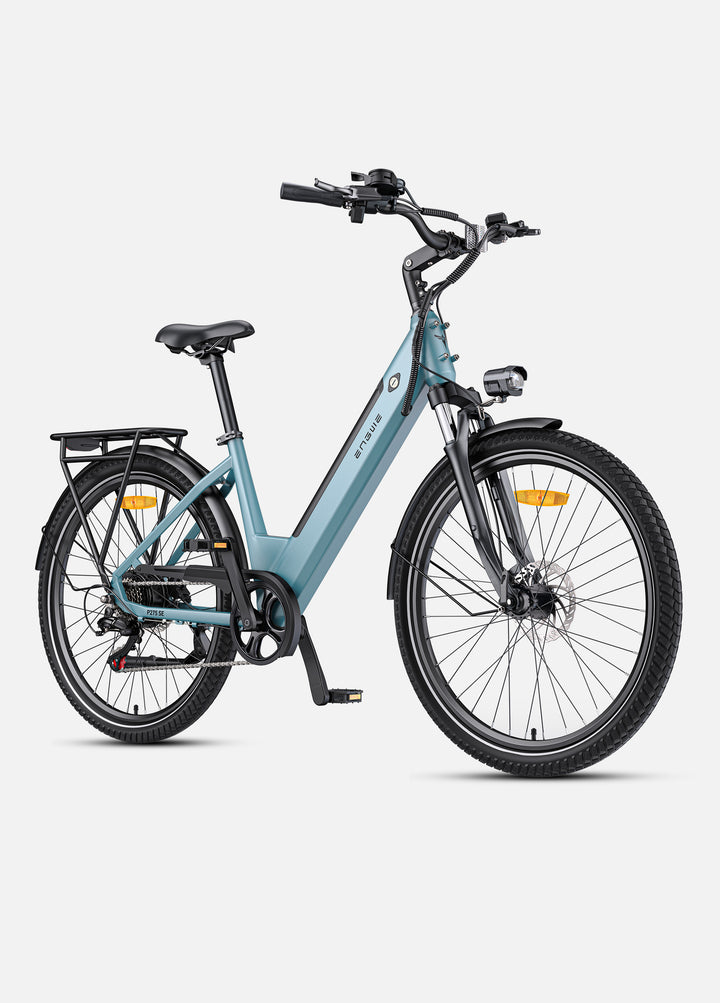
ENGWE P275 ST — Smooth, Efficient Fitness Riding
The ENGWE P275 ST is designed to travel longer distances with its 250W mid-drive motor, torque sensor, and extremely effective drivetrain. It assists the riders in need of regular cardio workouts, rhythmic control of cadence, and a lightweight sensation during fitness rides.
It has a comfortable step-through design and a long range that makes regular cycling a viable substitute for running.


ENGWE E26 — Comfort-Oriented Fitness Cruiser
ENGWE E26 can provide riders who would like to get comfortable and yet receive endurance advantages. The fat tires with dual suspension reduce the impact on joints and provide a stable geometry of the bike.
Its 250W smooth motor and long-range capabilities allow it to be used during longer aerobic exercises, in recoveries, or during lower intensity fat-burning exercises, and still provide sufficient resistance to be exercised effectively.


Specialized Turbo Vado SL — Premium Lightweight Competitor
The Turbo Vado SL is an e-bike with particular attention to fitness due to its very light frame and a natural pedal feel. Its low-power support enables the riders to take their cardio workout to the next level, and it is therefore adaptable to the riders who desire an exercise-oriented ride that is reminiscent of a normal road bike.
These biking alternatives give a better rationale to use cycling instead of running as a form of everyday physical activity, particularly for riders who want low-impact exercise, flexibility, and long-term regular fitness.

Conclusion
Biking and running are equally effective in achieving fitness, but they are appropriate for different bodies and objectives. Cycling provides a less impactful, more endurance workout, which enhances muscle power and heart condition, not straining the joints.
Running is more calorie-burning and aerobically conditioning but needs more rest. The exercise that one can do regularly is the most effective exercise, and cycling is the activity of choice by many riders in terms of long-term health and exercise.
Frequently Asked Questions
Is biking good for you?
Yes. Biking is also great because it exercises the heart muscles, gives the muscles stamina, and the muscles of the joints. It works the legs, boosts circulation, and helps long-term fitness without being as hard as running. Riding in a bike is a workout that many use throughout the day because it does not put much stress on the knees and makes the practice consistent.
What does riding a bike do for your body?
Biking enhances the strength of the lower body, cardiovascular fitness, and weight control due to a consistent calorie burn. It uses big body parts such as quads, glutes, and calves, and also minimizes pressure on joints.
Biking is another good exercise that improves balance, mobility, and lung capacity, and hence is beneficial to any level of fitness.
How many calories are burned in riding a bike?
The amount of calories used in riding a bike varies with speed, terrain, and effort. Moderate cycling has an average burning rate of 300-600 calories/hour, and vigorous cycling may exceed 700. Electric bikes do not stop burning calories since the riders keep pedaling, particularly when they are on a hill or in a more challenging setting.
Is riding a bike in the rain safe?
It is safe to ride a bike in the rain when one has the right precautions. Poor visibility and slick roads pose themselves at lower speeds, increased braking consciousness, and the right tires. Fenders and waterproof clothes enhance comfort. Other riders will still ride in light rain as long as they can have enough traction and visibility.
Is biking or running better for weight loss?
Running is more calorie-dense, but biking makes it possible to spend a longer time on the workouts and not damage the joints. A lot of individuals lose weight more when they are cycling since they are able to maintain fitness.
Biking is also a good exercise that promotes daily activity and minimizes the risk of injury as opposed to high-impact running.