Electric bikes fall into largely two camps: those built to be electric from the ground up, and those who take a favorite traditional bike and a conversion kit to go electric. For years, conversion kits have referred to complex installations that included new wheels with hub motors, complicated wiring or massive mid-drive units that changed the bike’s basic balance and physics. Now Skarper has stepped into this with not a new product, but a whole new category. It’s an e-bike conversion system that claims a simple, clip-on, clip-off concept can turn almost any disc-brake bike into a capable e-bike in seconds. In this Skarper Rider Review, we’re going to take an in-depth look into the capabilities of the Skarper system and figure out whether it’s really going to cut it for you as the next big thing in friction-drive solutions if you’ve come to love your existing bike too much to let it go.
A New Category of E-Bike Conversion
The Skarper brand has one and very innovative main product: as a total system. Keep things simple and straightforward, and make sure that customers have everything they need to complete the conversion.
Skarper DiscDrive Conversion System
(Comprising of main drive unit, battery and charger)
Skarper-Exclusive Rear Rotor
(proprietary brake rotor that replaces the stock bike's rear rotor and is necessary)
Installation and Riding Feel
We put our hands on the Skarper DiscDrive system right from the installation, and that’s part of its charm. The only fiddly bit is the need to replace your existing rear brake disc with Skarper’s own “DiscDrive” rotor. This was a simple job for someone who knows a little about how to maintain a bike and all it needed was a normal rotor tool. Magical things start to happen once the special rotor takes over. The main Skarper unit, a slick, self-contained module that contains the motor and the battery, clicks into place with a pleasingly secure, but simple, mechanism. It really is no exaggeration to claim a “clip-on”- a few seconds of attachment and detachment. It’s a unique sensation on the road. Instead of the sudden, occasionally jerky shove of a strong hub motor or the natural-feeling torque of a mid-drive, the Skarper offers a silky, linear application of power. While you pedal, a sensor senses your pedaling effort and activates the motor, which turns a small roller that directly drives a special disc rotor. The effect feels less like a powerful shove and more like a constant helping hand, turning hills into speed bumps and headwinds into mild nuisances. We were struck by how quiet the system was, with just a low, sci-fi hum that we didn’t find obtrusive to the ambient sounds of a ride. Its power seems most useful for maintaining pace and tackling gradual uphills - ideal for commuters or leisure riders wanting to ease the effort without really altering their cycling experience. Feeling the motor when lifting the bike is a trade-off to swallow, but it’s a low, centered-over-the-rear-axle mass, so handling isn’t greatly hindered once you’re on it. It rode solidly, and felt as though it were all of one piece, a credit to the intelligent engineering.

Practical Considerations for Buyers
On top of how it rides initially, potential buyers also have practicalities they must consider when deciding whether the Skarper system is for them. The primary factor is compatibility. You have to have disc brakes on your bike for this as the whole system is made to attach to it. Also the frame must have clearance around its rear dropout brake caliper so that unit can mount without fouling. Skarper has built it to work with the widest range of bikes, but make sure to verify that your bike will accommodate it. A further consideration is the combination unit aspect. Its quick-release feature is a big plus for security (you can take it with you into a cafe or office) and for riders who want to switch between a standard and electric bike at the drop of a hat, but it does mean you can’t remove the battery separately for charging. You will need to take the entire drive unit inside to charge it. For apartment residents, this is in fact even better than having to carry a whole bike indoors. The performance of the system in all weather is another important factor. Traditional tire-rubbing friction drives have always been notorious for slipping in the wet. Skarper ingeniously counteracts this by rotating the metal disc rotor – you get a much more dependable, and uniform grip in wet conditions, a key plus that separates it from its predecessors. And last, a use case. The Skarper system is particularly good at providing assistance to the standard manual bike, without cluttering up the bike ride and messing up the way it looks. It's the perfect smart bike for someone who loves their current set of wheels but craves an electric boost on their commute to work or up that killer hill. It is for the rider who desires flexibility more than any other thing.
Skarper vs. Dedicated E-Bikes: The ENGWE Alternative
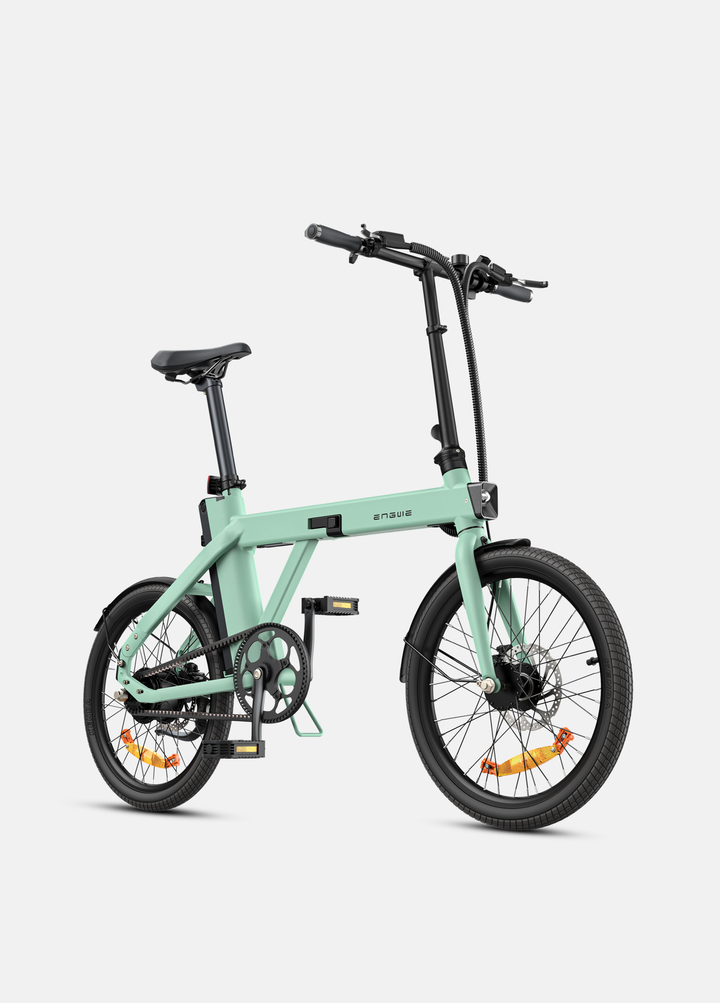
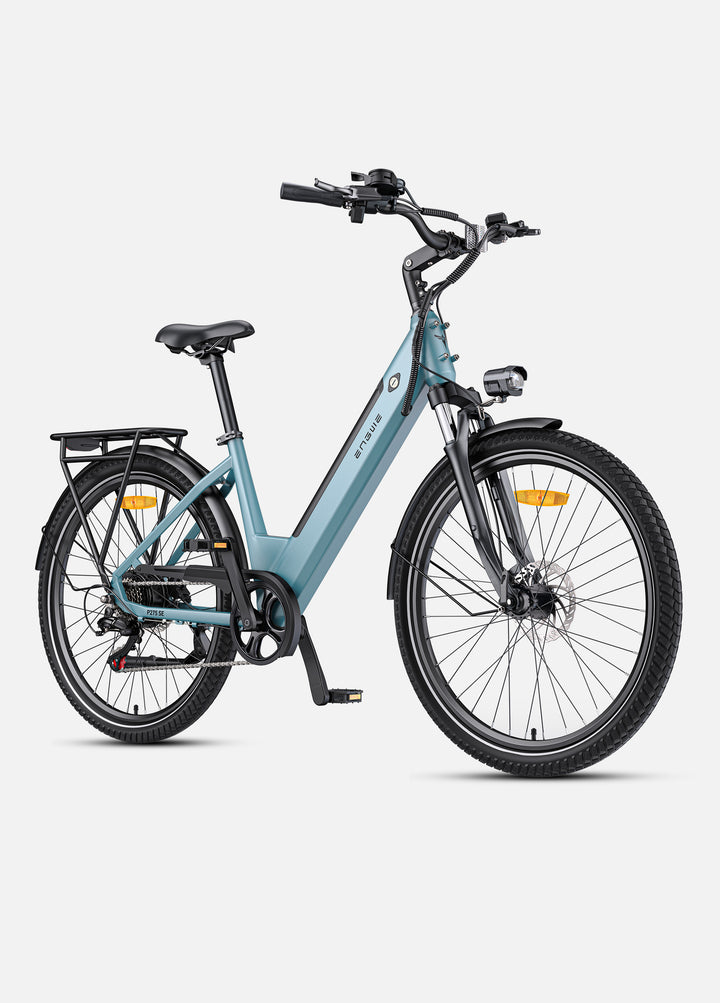
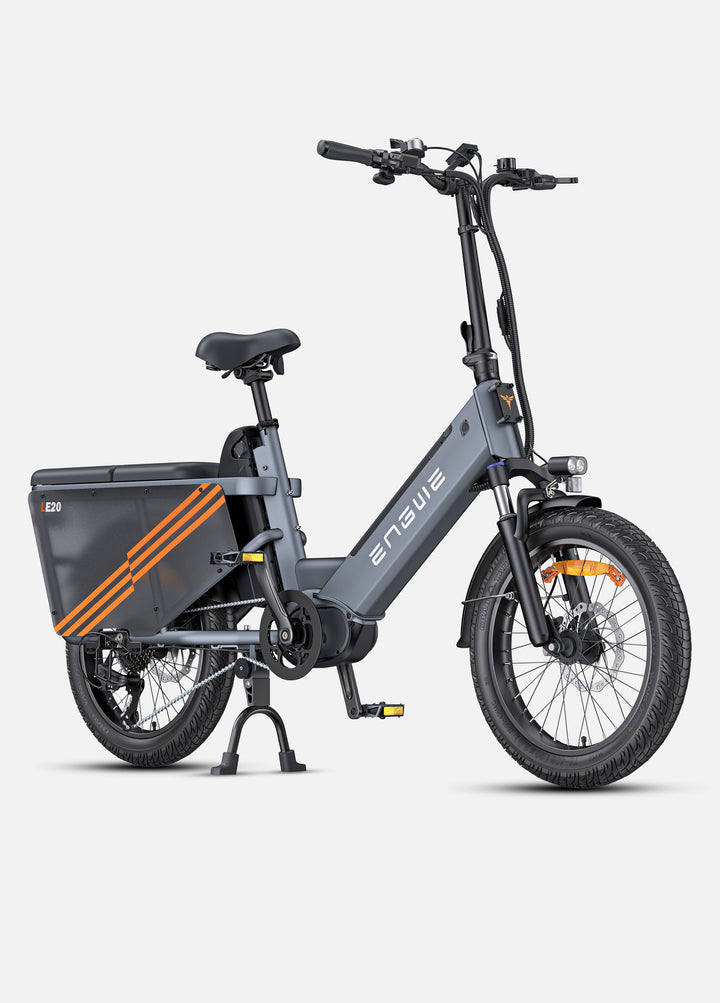
Although the Skarper kit is as versatile as it is, there are riders that would rather not have to deal with shoe-horning it into a frame and, instead, prefer the simplicity and engineering ingenuity of a bike that was born electric from day one. For these individuals one of the ENGWE range offers an interesting alternative, especially with a model like the P275 SE City E-Bike. This electric bike is designed from the ground up as a unified system. It comes with a 250W brushless motor controlled by a smart advanced torque sensor. This sensor is the secret behind its orgasmically slick performance, whizzing its wheels into action from pedal pressure in just 50 milliseconds, that’s a totally intuitive and natural ride without the stutter. The range is a staggering up to 100 km assisted by the electric turn of its 36V 13Ah detachable lithium battery taking range anxiety out of the equation no matter how long your daily commute or your weekend exploration. Safety and control feature high on the list, taking the form of both powerful front and rear hydraulic disc brakes to get you stopped in all conditions. The bike has a clear LCD color display that syncs up to a smart app, displaying your speed, distance and navigation off the bat.

Another of its design cornerstones is comfort, this comes in the form of a Dutch-style upright riding position, ergonomic swallow handlebar and shock-absorbing saddle. This ebike is practical, with front and rear fenders, a chain guard, a kickstand and a sturdy front basket with a 20 kg capacity. Key components, such as the Shimano 7-speed transmission and the high-stability 27.5-inch city tires, ensure a premium electric bike feel straight from the box.
Skarper DiscDrive System Parameter Breakdown
| Feature | Technology / Fact | Impact on Rider |
|---|---|---|
| Drive System | Patented Clip-On Friction Drive | Turns any appropriate disc-brake bike into an e-bike in seconds. Provides perfect switching between e-bike drive and standard drive. |
| Motor | 250W Brushless Motor (inside main unit) | Road legal power to help on hills and get started from rest. Delivers smooth, not aggressive, power. |
| Power Transmission | Motorized spinner wheel drives second roller through custom designed disc rotor. | Uniquely designed power train delivers reliable performance in wet conditions, an advantage over tire-based friction systems. Ensures consistent power. |
| Battery | Built-In Lithium-Ion [in main unit] | Sleek, all-in-one design. For charging, the whole unit has to be taken off the bike. Increases security by taking the “engine” with you. |
| System Weight | ca. 3.3 kgs | Very little additional weight in total to the overall bike configuration. Centre of Gravity is low and towards the centre of the bike, to retain light and agile handling. |
| Install | User installs rear brake rotor and mounts | The setup is quick and easy for the vast majority of users. Easy daily use – just snap on, snap off in seconds. |
| Compatibility | Requires disc brakes and a bike with enough clearance in the seat stay — this is not a universal fit. | While it does not fit every bicycle ever made, it does fit most, but check measurements before ordering! |
| Key Feature | Detachable and Portable | That is the heart of the matter. You can have one Skarper unit split between all your bikes (with a proprietary rotor each) or pack it away without a fuss. |

5 Skarper E-Bike System FAQs Answered
What is it that the Skarper drive system does exactly and how is it different than other products?
The Skarper is a form of friction drive, but not for nothing. A high grip roller is rotated by the 250W (Watt) electric motor contained in the main unit. Mounted to your bike, this roller makes tight contact with the edge of the special proprietary disc brake rotor that you've installed. An onboard suite of sensors (including an accelerometer and a gyroscope), notes when you begin pedaling, as well as how fast you want to go. It then imparts power to the rotor via the roller, which in turn rotates the rear wheel. It’s an upgrade over the hub motors (that replace the center of your wheel), mid-drive motors (that power the crankset), and old-school friction drives (that pushed up against the tire itself, often slipping in the rain) of old. With Skarper's "DiscDrive" attachment the coupling point is significantly stronger and weather resistant.
Would the Skarper system cause harm or too much wear on my bike frame or brake?
That is an understandable concern and the Skarper has developed the Guardmaster II to counter this problem. The unit is fixed to the non-drive side chainstay on a non-permanent, non-destructive, secure clamp which won't damage your frame's paint work or structure. The proprietary disc rotor, not your frame or brake caliper, should be the contact point. This rotor is made out specifically and has been hardened to take the additional load from the drive roller. Like a regular brake rotor, it will wear down over time due to braking, but it’s a wear-and-replace item. It imposes no additional load on your true old-school braking system (caliper and pads) because one force (drive) is distinct from the other (braking).
Does the Skarper system hold up in a downpour or on a muddy trail?
This is where the Skarper system really comes into its own ahead of its friction-driving ancestors. Conventional friction drives which act on the tread of a tyre are notorious for their unreliability in the wet due to the water barrier which causes the roller to lose grip. By relocating the drive interface from the rubber tyre to a metal disc rotor, the Skarper guarantees a much more secure and uniform contact. The metal-on-composite-roller can slip on water much less easily. It may not be great for deep mud where the mechanism could become clogged up, but for commuting on the road and light trail use in the rain it’s a solid performer and a vast improvement over older versions.
How hard/easy is the Skarper thing for a complete beginner at bike maintenance to install?
The Skarper unit can be attached and removed quickly on a daily basis with ease you don't even need the simplest of tools or experience. It’s as smooth as snapping something into place. Then you do actually need to do something physical to set it up (just once, though): fit a new rear brake rotor. Said switch requires removing your rear wheel and employing a special tool (a cassette lockring tool or a 6-bolt Torx key, depending on what brand of hub you have) to exchange the standard rotor for the Skarper DiscDrive rotor. While many cyclists will get this very fast, a noob who’s not confident may want to just pay a nearby bike shop to do this initial 15-minute installation for a small fee to make sure it’s 100% perfect!
Can you save money over a 'complete' dedicated electric bike?
This ultimately depends on the users. If you have a high end bike that you love and it fits you perfectly and you similarly do not want to replace it, this thing is incredibly valuable. “All the stuff that goes into making bikes notorious to park — which is to say, locks, and locks specifically — add all that back to the e-bike so that the e-bike is as 'trouble to park' as the bike,” he says. It also provides the advantage of having one “motor” (two, actually, if you count the wheels) you can share, potentially, between multiple bikes, or remove without too much fuss for unassisted rides. But if you’re building from new, or you prefer a bike where every aspect has been designed and optimized to work as an electric bike — with integrated wiring, a purpose-built frame to host a battery, and often included accessories like lights and pannier racks — a dedicated electric bike from a company like ENGWE can provide a more integrated (and sometimes more powerful) experience for a similar (or even lower) overall cost. The trade-off is between flexibility and integration.
In the end Skarper, achieves what it says it will, allowing you to easily electrify nearly any bike in the world, in a highly adaptive and innovative way.