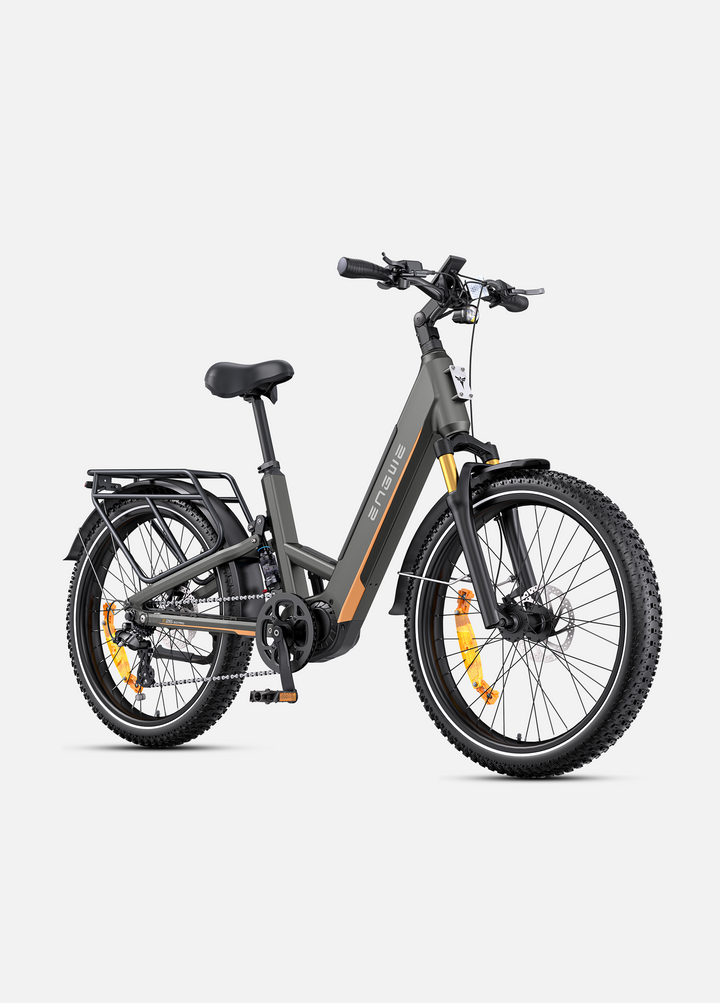
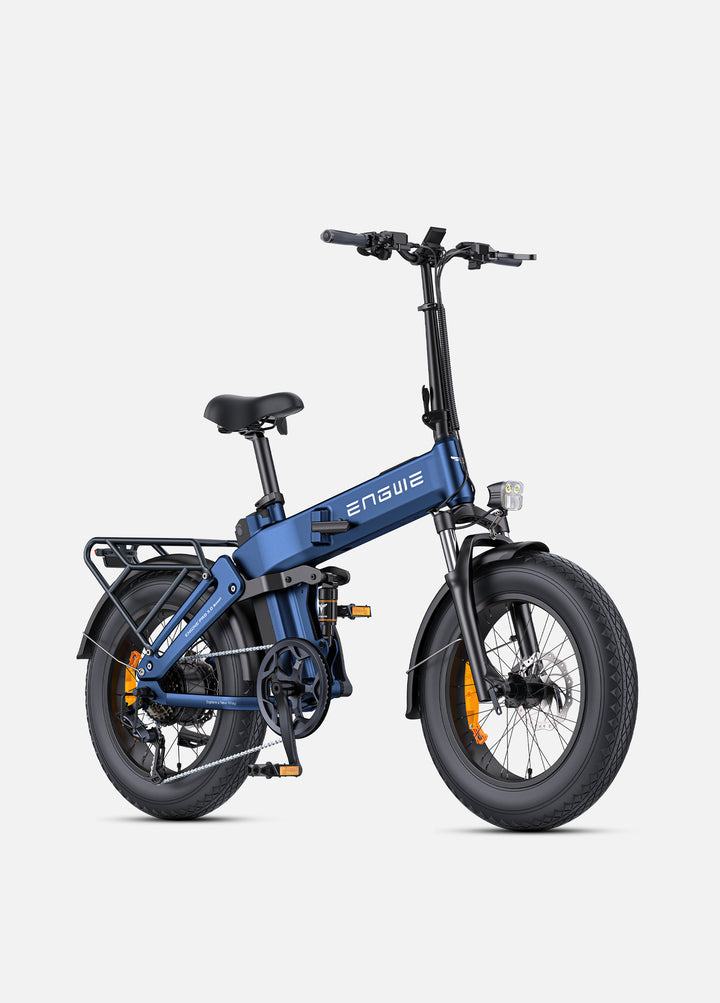
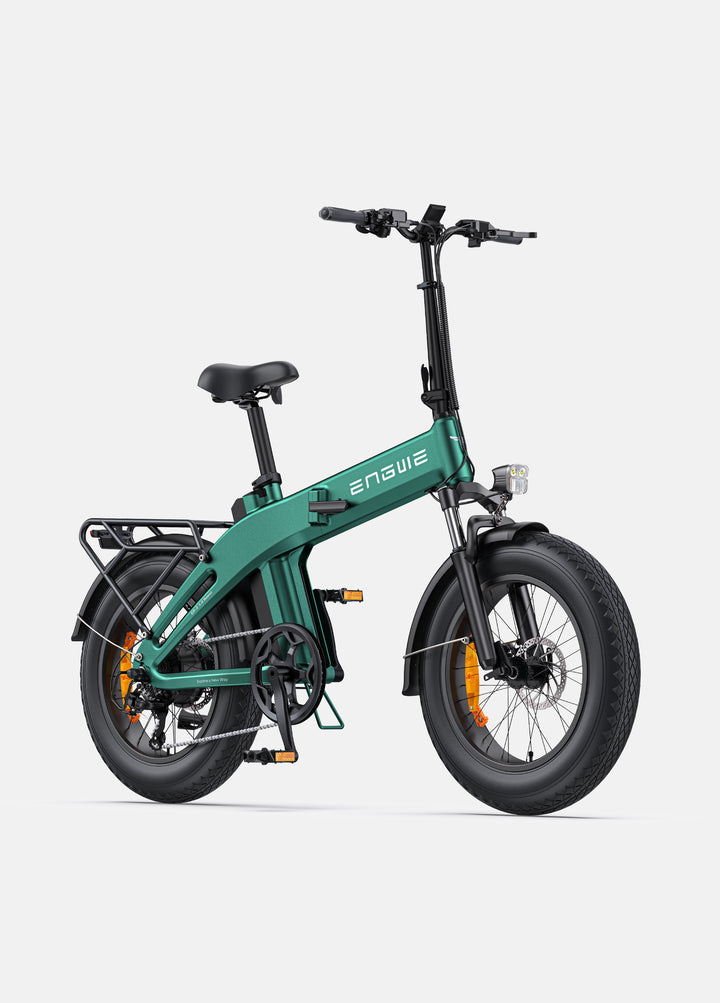
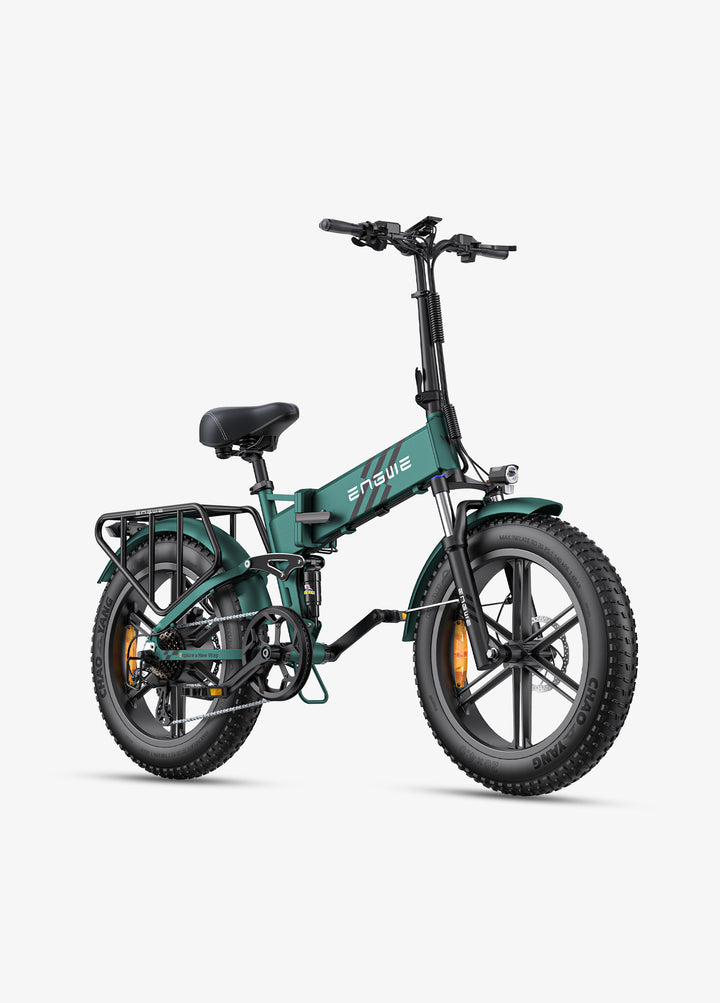
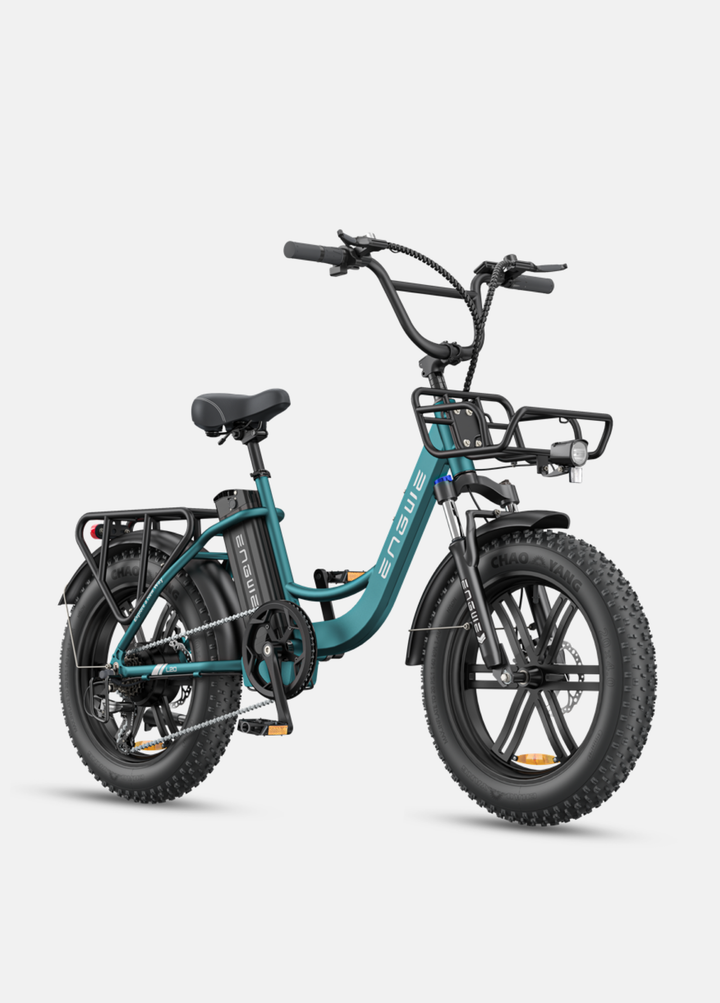
Sandy coastal paths could suddenly transform into soft ground areas where regular narrow tires might fail to work well. A fat tire electric bike would offer the benefit of having a larger surface contact area to help with handling on appropriate sand.
Nevertheless, the presence of wide tires does not necessarily mean that cycling on the beach will be easy. Several factors such as sand depth, tire pressure, motor reaction, battery capacity, suspension, rider expertise, and local regulations need to be taken into account.

Fat Tire Electric Bikes for Coastal Exploration
Selecting the best fat tire electric bike hinges on what one values most between suspension, foldability, torque, mileage, or just plain fun riding. Electric fat tire bikes have diverse ways of approaching wide-tire capability in varied terrains.
ENGWE M20 – For Full-Suspension Coastal Exploration
ENGWE M20 features a combination of a moped frame design together with wide tires and full suspension.
The use of full suspension on the ENGWE M20 comes in handy when there is a change in terrain along the way, i.e., when moving from smooth terrain to rough terrain. It is important to note that the ENGWE M20 is a full suspension fat tire electric bike.
- Torque: 55Nm
- Tires: 20 × 4.0-inch fat tires
- Design: Moped-style e-bike
- Suspension: Full suspension


ENGWE Engine Pro 2.0 – For Folding Adventure Riding
ENGWE Engine Pro 2.0 has been designed using a folding frame along with an adventure frame that can be useful for those who want to have a bike with the capability of riding on different terrains but do not want to keep a big frame with them all the time.
This folding fat tire electric bike has a torque-sensing feature that gives assistance based on the rider's commands.
- Torque: 75Nm
- Sensor: Torque sensor
- Tires: 20 × 4.0-inch tires
- Assisted speed: 25km/h


ENGWE EP-2 3.0 Boost – For Responsive All-Terrain Assistance
The ENGWE EP-2 3.0 Boost is concerned with responsiveness and efficient ride management. The Boost feature helps provide extra assistance when needed, while the torque sensor provides varying assistance depending on the rider's needs.
Other features include hydraulic brakes and intelligent smartphone control via an application. Long-range performance and fast charging make this bicycle ideal for recreational riding.
- Boost power: 75Nm
- Range: Up to 120km
- Charging: 3.5 hours
- Motor: EU-legal 250W


Aventon Aventure.3 – For Full-Size Fat-Tire Riding
The Aventon Aventure.3 takes an approach that is more akin to a full-size all-terrain electric bike, utilizing wide tires and a standard bicycle frame design instead of a foldable bike style.
There may be some buyers of this electric bike with fat tires who have a preference for fat tires for their ability to provide a solid ride stance and handle versatile terrains.
- Category: All-terrain e-bike
- Format: Full-size frame
- Tire style: Fat tire
- Primary focus: Mixed-surface riding

Rad Power Bikes Radster Trail – For Everyday All-Terrain Versatility
A Radster Trail is yet another outside-branded bike to consider for those who would like to ride a bike with wide tires but do not wish to go down the moped route.
This bike is designed for trails and can therefore work well both on regular roads and varying terrains. When looking for the best electric fat tire bike, it makes a good choice.
- Category: Electric trail bike
- Design: Conventional bicycle frame
- Use: Urban and recreational riding
- Focus: Mixed-terrain versatility

Why Fat Tires Can Help on Sandy Coastlines
The e bike fat tire has more contact surface for the weight carried by the bike and rider than some narrow tire designs. On suitable sand, this can help prevent tires from sinking as easily and possibly provide more stability. There is certainly a lot of difference in performance between hard, wet sand and soft, dry sand.
Proper tire pressure is also important when it comes to making sure that the contact surface and bike handling characteristics are optimal. Instead of using the lowest possible tire pressures, one needs to adhere to both manufacturer and tire suggestions. Low tire pressure can result in handling and tire problems.
A 20 inch fat-tire electric bike gives another way around this problem by using smaller wheels in conjunction with fat tires. The size of the wheels must be considered together with all other aspects of the bicycle.

Folding, Speed, and Terrain Capability
A fat tire electric folding bike can come in handy when you need a bike to store easily or fit into an adequate mode of transport after its usage. Similarly, a fat tire folding electric bike can offer wider tires without having to worry about the storage space occupied by the bike in its fully assembled form.
It all comes down to speed when looking for the best, fastest fat tire electric bike. However, the person seeking the fastest fat tire electric bike should not believe that the bike's speed would determine whether it is suitable for riding in sand.
The same thing applies to a fat tire electric dirt bike. The two types of bikes may have many differences and cannot be treated as one type of vehicle.

Choosing an Electric Fat Tire Bike for the Beach
Before embarking on your ride with the electric fat tire bike in the coastal zone, check whether bikes and electric-assisted bikes are allowed there. Restrictions may vary from beach to beach and protected area to park.
After establishing that you are allowed to take the ride, think about the surface quality. The electric bike fat tire set-up, which will feel nice on solid sand, may behave differently on soft and dry sand. Increased battery consumption may be expected on surfaces, which cause increased rolling resistance.
Sand, salt, and moisture should also be taken into account. The coastal environment may speed up the process of corrosion, so take care of cleaning and maintenance according to the instructions. Do not assume that water resistance ratings make the electric components ready to go in saltwater.

Conclusion
The use of a fat tire electric bike can be helpful in the case of appropriate coastal rides since the fat tires offer a totally different contact pattern compared to ordinary bicycles. However, suspension, torque control, distance, braking, tire pressure, and the riding skills of the rider also significantly influence performance.
In any case, whether opting for a folding one, a full-suspension bike, or simply a wide-tire one, make sure that you get a bike that will suit your real conditions of riding. Additionally, coastal riding regulations need to be considered.
Frequently Asked Questions
Are Fat Tire Electric Bikes Better for Sand?
Are Fat Tire Electric Bikes Better for Sand?
People who ask themselves if fat-tire electric bikes work better should bear in mind that the performance depends not only on the tire width but also on the particular surface in question. Fat tires can be useful on appropriate soft terrain, but there are still other factors.
Can a Folding Fat-Tire E-Bike Handle Coastal Routes?
Can a Folding Fat-Tire E-Bike Handle Coastal Routes?
The electric fat tire folding bike can function quite effectively on the appropriate coastal trails as long as the tires, motor, brake systems, and intended purpose fit the situation. The only benefit of having a folding bike is to make storage easier.
Is More Motor Power Better for Beach Riding?
Is More Motor Power Better for Beach Riding?
Not always. Good assistance may come in handy on difficult surfaces, but too much acceleration on slippery surfaces will diminish control. Proper delivery of power, proper tire pressure, braking, and riding skills are just as crucial.
What Should I Check Before Riding an E-Bike on a Beach?
What Should I Check Before Riding an E-Bike on a Beach?
Ensure that e-bikes can be ridden, ensure the appropriate surface and weather conditions, and ensure that you have enough battery backup. Once riding over sand and salt, be sure to follow the recommended cleaning and maintenance guidelines.