A Deep Dive into the Jackrabbit's Design and Purpose
The Jackrabbit electric bike is a unique player in the micro-mobility space, often blurring the lines between a scooter and a bicycle. To determine if it's 'good,' we must look beyond a simple yes or no. This analysis dives into its design, performance, model variations, and how it compares to the broader e-bike market, helping you decide if this minimalist, pedal-free vehicle is the right fit for your specific transportation needs.
First, to understand if a Jackrabbit is good for you, we must analyze its core design philosophy and intended audience. It is not a traditional electric bike but a specialized micro-mobility vehicle. Its value is entirely dependent on whether your needs align with its unique purpose. It excels for a specific type of rider who prioritizes portability and simplicity over range and power. Think of it less as a bicycle and more as a seated, stable alternative to a standing electric scooter.
Target User Profile:
The ideal Jackrabbit owner is an urban commuter traveling short distances, a student navigating a large campus, an RV or boat owner needing a vehicle for quick errands from their site, or anyone looking for a "last-mile" solution to bridge the gap from a parking lot or transit station to their final destination.
Core Design Principles:
The Jackrabbit is built on minimalism. By removing the pedals, chain, and gears, it achieves an incredibly lightweight and simple design. This reduces the number of potential maintenance points and makes it less intimidating for non-cyclists. Its small 20-inch wheels and a low center of gravity contribute to its approachable and stable feel at low speeds.
Key Use Cases:
Its primary function is for short, flat-terrain trips. It is perfect for zipping to a local coffee shop, getting across a sprawling corporate campus, or exploring a new area from a parked car. It is not designed for long-distance touring, grocery hauling, or tackling steep hills. Understanding this specialization is the first step in evaluating its quality.
Performance and Real-World Usability
Performance and real-world usability are critical dimensions where the Jackrabbit's minimalist design presents both advantages and limitations. Its performance metrics are modest compared to full-sized electric bikes, which is a deliberate trade-off for its ultra-light and compact form factor. The experience is best described as nimble and convenient within its operational comfort zone.
Speed and Acceleration:
The Jackrabbit is powered by a 300W rear hub motor, providing enough power to reach a top speed of 20 mph (32 km/h). The acceleration is smooth and controlled by a simple thumb throttle, making it easy for beginners to handle. It feels zippy and quick for its size but will not deliver the powerful torque needed for rapid acceleration up steep inclines.
Battery Range and Charging:
Equipped with a small, swappable 4.2Ah battery, the official range is up to 10 miles (16 km). In real-world conditions with varied terrain and rider weight, you should expect slightly less. Here is a key user tip: To maximize range, avoid aggressive acceleration and maintain a steady speed. The small battery size means a quick charging time of around 2-3 hours, and its swappable nature allows users to carry a spare for double the range.
Handling and Ride Comfort:
The 20-inch fat tires provide a surprisingly stable and cushioned ride, absorbing minor bumps and cracks in the pavement. The bike's light weight (around 24 lbs / 11 kg) makes it incredibly easy to maneuver in tight spaces and through crowds. However, the lack of suspension means larger bumps will be felt.
Braking System:
It features a single, reliable rear mechanical disc brake. For a vehicle of its weight and top speed, this provides adequate stopping power for safe operation in its intended urban environments.

Jackrabbit Models, Colors, and Customization
The Jackrabbit brand has focused on perfecting a single core concept rather than diversifying into a wide array of different e-bike types. This dedication to their niche means the "lineup" is essentially variations and evolutions of one central model. Understanding these offerings is key to selecting the right package for your needs. The primary model available is the Jackrabbit 2.0, which represents the culmination of their design refinements, improving upon the original concept with better components and user-focused features. The company's strategy is to offer this excellent core model and then allow customers to customize it with colors and accessory packages to suit their specific lifestyle, making it a highly personalized micro-mobility solution.
The Core Model: Jackrabbit 2.0:
This is the flagship product. It embodies the brand's philosophy of being the lightest and most portable electric bike on the market. It weighs just 24 pounds and can be folded down in seconds to a slim profile, making it easy to carry onto a bus, store in a car trunk, or tuck under a desk. It features the 300-watt hub motor, a top speed of 20 mph, and the user-swappable battery system. The frame is constructed from lightweight aluminum, and it comes standard with the rear disc brake and 20-inch all-terrain fat tires. The lack of pedals is its defining feature, making it a pure throttle-controlled ride.
Color Options:
Personalization is a significant factor for many buyers. The Jackrabbit 2.0 is typically available in a range of appealing colors, such as Midnight Black, Summit White, and Monterey Blue. While this does not affect performance, it allows riders to choose a style that reflects their personality, an important consideration for a vehicle that often becomes a daily accessory.
Accessory Bundles:
This is where the true customization happens. To enhance the utility of the Jackrabbit 2.0, the company offers curated bundles.
The Commuter Bundle:
This is a popular option that often includes essential add-ons like front and rear fenders to protect from splashes, a spare battery to double the effective range, and sometimes a fast charger.
The Adventure Bundle:
This might include a durable travel bag for protecting the Jackrabbit during transport and a phone mount for navigation.
A La Carte Accessories:
Users can also purchase items individually, including kickstands, handlebar-mounted bags, water bottle holders, and security locks, allowing for a fully customized build.
A Note on Previous Models:
While the Jackrabbit 2.0 is the current focus, you may find the original Jackrabbit 1.0 on the second-hand market. It shares the same core concept but may have slight differences in components or battery efficiency. Pro Tip for Buyers: When considering a used model, always inquire about the battery's health and charge cycles, as this is the most critical component affecting performance and range.
| Feature | Jackrabbit 2.0 Specification |
|---|---|
| Motor | 300W Brushless Hub Motor |
| Top Speed | 20 mph (32 km/h) |
| Battery | 36V 4.2Ah Swappable Lithium-Ion |
| Max Range | Up to 10 miles (16 km) |
| Weight | ~24 lbs (11 kg) |
| Tires | 20 x 2.5 inch All-Terrain Tires |
| Brakes | Rear Mechanical Disc Brake |
| Frame | 6061 Aluminum |
Market Comparison and A Superior Alternative: The ENGWE L20 Boost
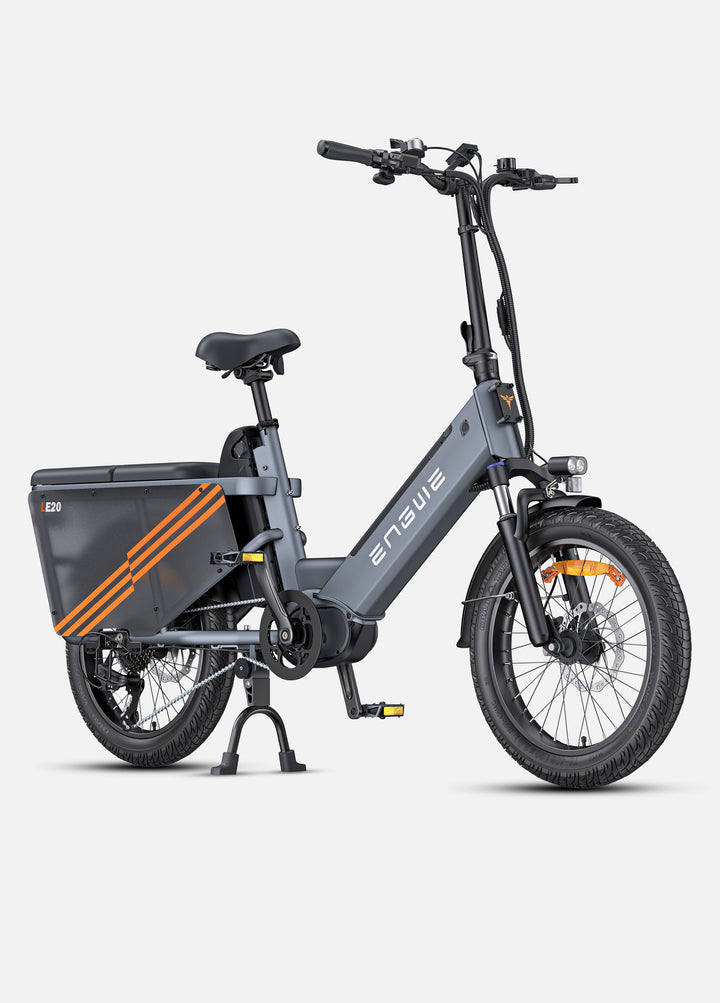
When considering a Jackrabbit, it is vital to understand its place within the broader electric bike landscape. E-bikes are not a one-size-fits-all product; they are categorized by their design and purpose. While the Jackrabbit carves out its own micro-mobility niche, many riders find they need more power, versatility, and range. For those users, exploring other e-bike categories is essential. This is where a brand like ENGWE excels, offering powerful and feature-rich alternatives. We highly recommend considering the ENGWE L20 Boost, a premier model for riders who demand more from their electric bike.
Understanding E-Bike Categories:
The market includes Commuter e-bikes for efficiency, Mountain e-bikes for off-road trails, and versatile Fat Tire e-bikes for all-terrain capability. The ENGWE L20 Boost falls into the powerful Utility and Fat Tire category.
Introducing a Superior Alternative: The ENGWE L20 Boost:

ENGWE is a leader in crafting high-performance, reliable, and comfortable e-bikes. The L20 Boost is a perfect example of engineering that prioritizes user experience and capability far beyond what micro-mobility vehicles can offer.
Unmatched Power and Torque:
It features a robust 250W brushless motor, but its secret weapon is a Power-Boost Button that unleashes a massive 75 N.m of torque. This makes climbing steep hills and accelerating with a load feel effortless.
Exceptional Long-Range Riding:
The L20 Boost is equipped with a high-capacity 48V13Ah Lithium-Ion battery, delivering an astonishing maximum range of up to 126 km in Pedal Assist Mode. This allows for multi-day adventures or entire weeks of commuting on a single charge.
Intuitive and Efficient Riding with a Torque Sensor:
Unlike basic cadence sensors, the advanced torque sensor matches the motor's output to your pedaling pressure. This results in an incredibly smooth, natural, and responsive ride that feels like an extension of your own power, while also improving battery efficiency.
True All-Terrain Capability:
With its rugged 20x4.0 fat tires and a front suspension fork with 50mm of travel, the ENGWE L20 Boost glides over bumps, gravel, and trails, providing a confident and comfortable ride on virtually any surface.
Ultimate Built-in Utility:
It is designed for practicality with a sturdy front basket (10 kg capacity) and a durable rear rack (25 kg capacity), making it perfect for groceries, work equipment, or adventure gear.


The Jackrabbit Ownership Experience
The final dimension to consider is the overall ownership experience, which includes maintenance, portability, and long-term value. The Jackrabbit’s simple design translates to a straightforward ownership experience, which is a significant part of its appeal. Its portability is arguably its single greatest strength and a primary reason for purchase.
Maintenance and Longevity:
With no chain, gears, or pedals, the Jackrabbit has very few moving parts to maintain. Regular care involves checking tire pressure, ensuring the brake is properly adjusted, and keeping the battery charged. Pro Tip for battery health: To prolong the life of your battery, avoid storing it fully charged or fully depleted for long periods. Aim for a storage charge of around 50-80%.
Unrivaled Portability and Storage:
Weighing only 24 lbs and folding down quickly, it is a champion of portability. It can be easily carried up stairs, stored in a small apartment closet, placed in the trunk of a car, or taken on public transportation without hassle. This "grab-and-go" convenience is something larger, heavier e-bikes cannot offer.
Cost of Ownership:
While the initial purchase is one part of the equation, the long-term costs are low. The main consumable is the battery, which will eventually need replacement after several hundred charge cycles. Otherwise, brake pads and tires are the only other parts that will see regular wear. Money-saving tip: Buying a spare battery upfront, often in a bundle, can be more cost-effective than purchasing one separately later on.
Community and Support:
As a unique product, it has a dedicated community of users who share tips and modifications. The company also provides customer support for troubleshooting and replacement parts, ensuring owners are not left without help.
Is the Jackrabbit legal to ride on the sidewalk?
This depends heavily on local city and state laws. Generally, vehicles capable of 20 mph are treated as Class 2 e-bikes or e-scooters and are restricted to bike lanes and roads, not sidewalks. Always check your local regulations.
Can you pedal a Jackrabbit if the battery dies?
No. The Jackrabbit has no pedals, chain, or drivetrain. If the battery is depleted, you must push it or carry it. This is a critical factor to consider for your planned travel distances.
How does the Jackrabbit handle hills?
It can manage gradual, short inclines thanks to its motor. However, it will struggle on long or steep hills due to the small motor size and single-speed nature. It is designed primarily for flat-terrain environments.
In conclusion, the Jackrabbit is an excellent and highly specialized vehicle for its intended purpose, but for riders seeking true all-around capability and power, more robust alternatives provide a far more comprehensive solution.