The Legal Framework for E-Bike Tuning
Achieving extra performance from your e-bike can revolutionize your ride, and there’s a whole world of free speed, provided you can achieve the balance between legality, safety, and the thrill of the open road. Many riders want to increase the performance of their bikes without extensive modifications or outrightly breaking the law. This full comprehensive guide serves as a roadmap for achieving precisely where you want to be, delved into five critical aspects of the e-bike tuning process, starting with understanding the rules and the ability to make simple mechanical adjustments, before moving into software changes and the need for a high-quality and powerful basis for all the rest of your future journey. The first and vital dimension of an e-bike tuner is the factor of the legal framework under which you operate. After all, it would eventually do no good for you to improve your e-bike’s performance only to be fined, have it confiscated, or be held responsible for damages in an accident. Generally, e-bikes of all classifications are divided into classes with which maximum speed and output power can be used. Therefore, before attempting any changes, you must check your local classification as rules can vary significantly between countries and even state-level boundaries. Hence, the biggest mistake to avoid for any self-respecting tuner is missing the point of local laws and instead making sure that your investment will stay within all the boundaries of what you can legally use.
| E-Bike Class | Top Assisted Speed | Motor Operation |
|---|---|---|
| Class 1 | 20 mph (US) / 25 km/h (EU) | Pedal-assist only (no throttle) |
| Class 2 | 20 mph (US) | Pedal-assist and throttle-powered |
| Class 3 | 28 mph (US) | Pedal-assist only, speedometer required |
Obey Local and State Laws
National categories are the base. Your specific city, state or province may have laws about where different classes of e-bikes can and can not be ridden (for example: on bike paths, trails and roads). Always check the local laws first.
What is Private vs. Public Land?
By law, speed limiters are only in effect for travel on public roads and paths. If you were only riding on private land, such regulations may not be an issue and you could let loose on your bike.
Insurance and Liability
In case of an accident, illegal modifications to your e-bike can put you in a precarious situation legally and financially.
Achieving "Free Speed" with Mechanical Efficiencies
The quickest — and sometimes cheapest — way to achieve “free speed” is with mechanical efficiencies. These modifications don’t involve any root/hack and are compatible with cheap parts, but they definitely can make a difference in your electric bike’s performance & speed. It’s simple: a well-maintained bike revolves with less resistance, causing the motor and your legs to work more efficiently driving you forward. This is about basic, very haptic jobs that every rider can carry out in order to make sure his or her e-bike remains at its best. These little efforts add up to one fast, smooth and enjoyable ride all the while costing you nothing at all.
Tire Pressure Perfection
This one's free speed. At least once a week, check your tire pressure. The optimal PSI range is listed on the sidewall of the tire. You will also want to increase your PSI when riding surface roads or pavement; inflate closer to the higher end of the range. This decreases the flat spot on the tire and also reduces rolling resistance. For off-road or loose conditions, a lower pressure offers better traction and grip (though it will also increase rolling resistance on flatter terrain).
Efficiency of the drivetrain
A clean and well-oiled drivetrain contributes to a more efficient power transmission. Soak a rag in degreaser and scrub your chain, cassette and chainring to get the old grit off. Use only high-quality bicycle chain lubricant and wipe off the excess to avoid further dirt accumulation. Verify that your gears shift like butter. A derailleur that is badly indexed creates sticking and loss of power.
Reduce Brake Drag
A set of draggy brakes (or even one brake) rubbing a rotor is just like riding with the parking brake partially engaged. Give your wheels a quick spin and listen for scraping noise. If your brake blocks have been set correctly but still aren't hitting the rim properly then all you need to do is loosen the 2 bolts that hold the brake caliper on to the frame, squeeze that corresponding brake lever hard and re-tighten those 2 screws while still holding the lever. This sometimes lines the caliper up exactly with the rotor.

Software Tuning: Modifying Controller Settings
For the more tech-savvy, a popular tuning method is to modify your e-bike's controller settings through its display. Most e-bikes also have a secret “advanced settings” menu, which lets you adjust key parameters. This is also where you can frequently directly de-restrict the top speed of your e-bike. But this falls into a legal gray zone. Altering these limits can lead to the reclassification of an e-bike, rendering it illegal to use on public roads. But such amendments should be made understanding the risks and unlocked speeds used responsibly—ideally, only on private property. As always, write down the initial setting of all parameters before changing any and test to ensure that the reset process will be decided as desired.
How to Access the Advanced Menu
This varies by brand. This is usually done by pressing/holding a set of two keys (such as ‘+’ and ‘-‘) on your display when powering on the bike. A little research with "advanced settings" + [your display model] will typically turn up the correct technique.
Setting the Speed Limit (P08)
Some controllers include a parameter, frequently named 'P08,' that determines maximum speed. On road-going bikes, this is the level already set to the top legal speed (20 or 28mph). In many cases you can even run this number higher and get the most out of the motor.
Changing Wheel Diameter (P07)
A few systems determine speed by the diameter of a user-defined wheel. With a little bit of reduction in this setting on the controller you can fool the system to think that the wheel size is smaller and hence read a lower speed than actual. This is potentially enabling the motor to assist beyond the initial set cutout speed. Be aware that this will throw off your speedometer and odometer.
Adjusting PAS Level Power
Advanced menus will in some cases have the ability to adjust the power at which each PAS level is delivered as a percentage. You can adjust these to give you a more sensitive startup or greater power at lower assist levels.
Strategic Component Upgrades for Peak Performance
Yes, all the methods above are budget options that can be an effective upgrade, but buying specific components to strategically upgrade some of its performance parts can really boost overall and specific game types. This aspect of the build concentrates on replacing stock components for those that enhance performance, save weight, increase efficiency and add control. Swapping out parts is a great way to personalize your e-bike’s performance for the type of riding you do. With lighter and more efficient parts, the motor has less work to do, potentially enabling faster acceleration and a higher top speed — particularly when climbing hills or fighting headwinds. This one is for the rider who's looking to amp up what his electric bike can do.
Performance Tires
The tires your bike comes with are typically made for longevity, not speed. Opt for lower rolling resistance; brands such as Schwalbe and Continental have dedicated e-bike tires with specialized compounds and tread patterns optimized for efficiency on pavement. Think about weight: reducing rotational mass or losing less weight should help you feel the difference.
Better Drivetrain
Having a better drivetrain means more gear options and smoother shifting when under load. If you change your cassette to a cassette with a wider range (from an 11-28T to an 11-34T) it can help you be spinning at high speed, meaning in higher cadence even when being faster than the motor passes the natural assist limit. Brands like Shimano and SRAM are occupation drivers.
Brakesystem Expertise
You cannot accelerate without having some sort of stopping power. With mechanical disc brakes, it’s tougher to find the control and stopping power than if equipped with a hydraulic setup for greater accuracy and modulation, requiring your hands feel less pain regardless of how fast you go.

The Foundation: Start with a High-Performance E-Bike
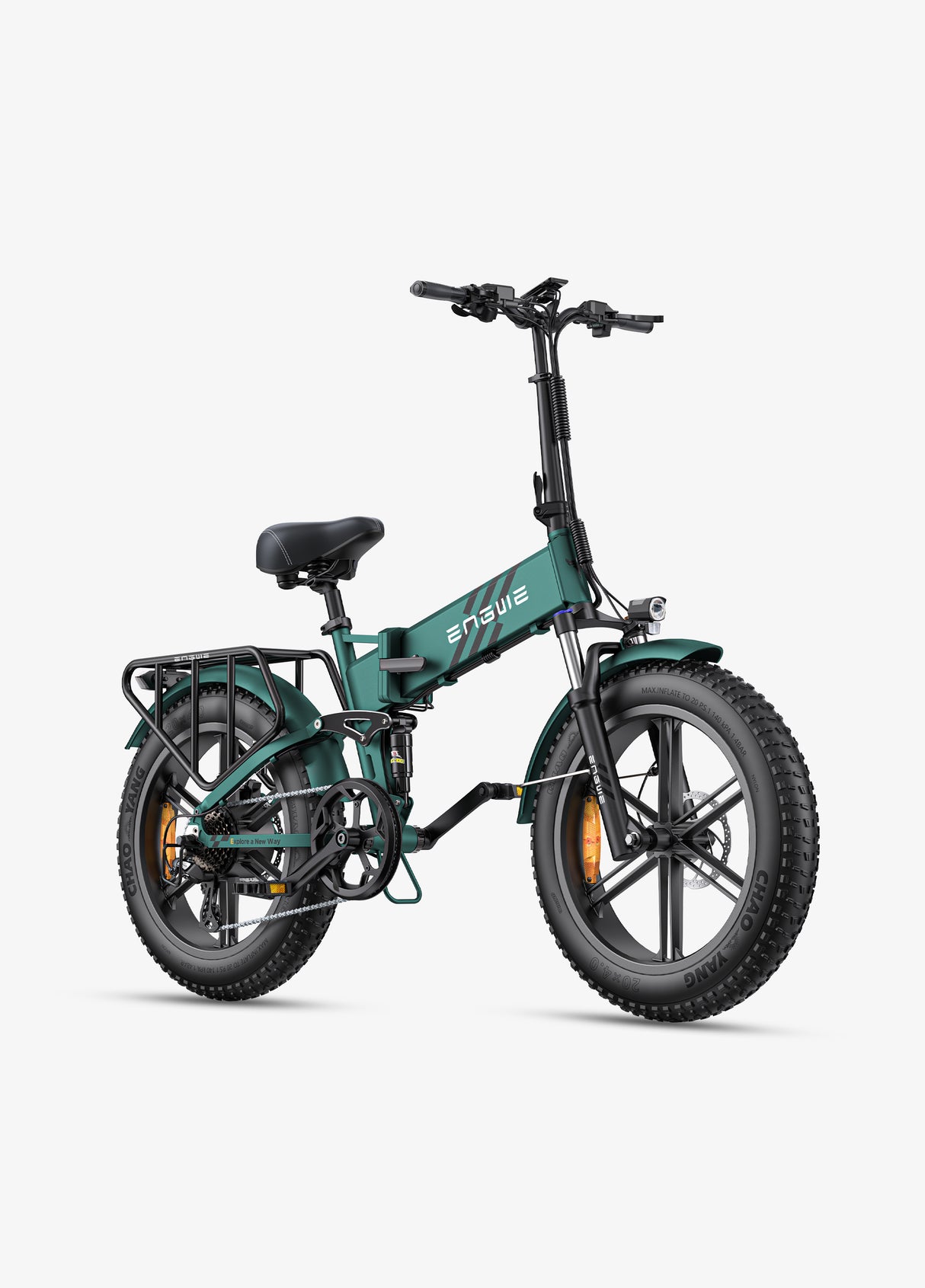
The best way to ensure great performance is to begin with an electric bike that’s made for it. Nothing beats a strong motor, sensitive sensor and quality frame as the foundation for tuning. This is where ENGWE shines, designing bikes that are great performers and solid options without any add-on parts necessary. Rather than struggling to coax performance from a lesser bike, you can guarantee already having the essential components for blistering speed and all-terrain dominance when you choose a platform like the ENGWE Engine Pro 2.0. This is the enthusiast’s choice, at an advantageous base spec which shouldn’t need a whole load of fettling to give you thrills.

Powerhouse Motor and Sensor
ENGWE Engine Pro 2.0 has a high capacity motor that provides great power (75 Nm) - significantly reducing performance and battery fading. This is not simply for speed, but also for conquering steep hills and acceleration without effort. The deluxe torque sensor enables a delay-free power transmission when the pedal hits the sensors, in order to provide a more natural and better responsive riding feel than cadence sensors.
Ultracomfort and Control
Full front & rear suspension make for a smooth ride, absorbing up to 87% of road shock. No more feeling beat up and tired after a long set of rough trails or chasing down segment PRs. 20" x 4.0" all-terrain FAT tires provide a long contact patch and with the low pressure about 8 psi ride smooth and provide you excellent grip on any surface; such as sandy beaches, snow, and flat roads.
High-Quality, Dependable Construction
The bike comes with a responsive 160 mm hydraulic disc brakes system that delivers controlled braking in all terrain conditions for powerful and reliable performance. The Shimano Altus 8-speed drivetrain provides accurate and reliable shifting for a wide range of terrain.
Made for Adventures
Reaches the length of 110 km-long mileage! In consideration of night sports or long distances, brighter LED headlamps with higher brightness are installed for added safety. The entire frame folds down in just 10 seconds for easy storage when not in use and is the perfect travel companion.
How can you increase speed for free?
The one most simple and cost effective way is adjusting your tire pressure. Blow up your tires to the higher end of the recommended tire pressure spectrum for road riding, and bam! All other things being equal and leaving no price to pay or technical skill needed, your bike is faster.
Are there warranty issues relating to modifying my e-bike's controller?
Almost certainly. Messing with the electronic controller or motor settings is typically against the manufacturer’s policy, and may void your warranty. Don't forget your warranty policy while installing any kind of software.
Is it illegal to de-restrict my e-bike?
It’s illegal the first time you ride it on a public road or path where motor vehicle laws are in effect. A modified e-bike over the legal definition of an electric bicycle becomes an unregistered motor vehicle in the eyes of the law.
And, in the end, a properly-maintained and legally-compliant e-bike is the most fun — and sustainable — speed there could be.