Knowing the life expectancy for your electric bike fat tires is important to ensure safety, performance, and planning your budget. There is not a single answer, but in general, a fat tire will last between 1000 and 3000 miles. But this number is based on a collection of things—tire quality, riding terrain, rider habits, and maintenance. This guide will delve into the five key factors that will really govern how long your e-bike fat tires will keep on going!
1. The Baseline and Essential Influences
The life of an e-bike fat tire has never been measured in years, but rather miles or km cycled! The rubber compound deteriorates due to friction, and environmental influence also acts over time. Having a rule of thumb is a good place to start, but knowing the variables keeps you in charge of your tires' lifespan. A couple of primary givens set a baseline for wear and tear before you even factor in maintenance or riding style.
-
Average Mileage Expectation:
The average rider who frequently rides a mix of paved, non-technical trails and some light off-road use can expect to get between 1000-3000 miles (1600-4800 km) out of a good quality fat tire.
-
Quality of Tire Compound:
Softer, stickier rubber compounds are common on high-performance tires and will wear down faster than harder, longer-lasting compounds used in commuting tires.
-
Rear vs. Front Tire Wear:
The rear tire on most e-bikes, especially those with rear hub motors, will wear down much faster. It takes more of the rider's weight and receives the direct concentration of motor torque, causing rapid wear.
-
Environmental Degradation:
Rubber is constantly degrading when it's not in service. Rubber becomes brittle from sun exposure, ozone exposure, or temperature extremes and may crack over time, which is commonly known as dry rot, greatly diminishing the service life of the tire.
2. Your Riding Style and Terrain: The Way You Ride is the Most Important Aspect
Tire wear is most heavily influenced by your riding style and where you ride. It’s even possible that a tire could wear out in less than 800 miles if ridden hard over rough terrain, or last more than 3,000 miles if ridden carefully on smooth pavement. Getting the hang of your riding style is not only a direct way to increase the life of your tires but also to save money.
Terrain Impact:
-
Pavement and Hard-Packed Trails: Riding on these surfaces will be smoothest, with the least amount of wear.
-
Gravel and Rocky Trails: Abrasive and sharp surfaces multiply the wear rate and the risk of cuts or punctures.
-
Sand and Snow: These surfaces, while offering more resistance, can still fling abrasive particles against your tires, slowly causing wear over time.
Riding Technique:
-
Stop-and-Go Pounding: Hard, sudden braking coupled with skidding is a great way to burn rubber off the tire. Practice smooth, gradual braking.
-
Acceleration: Extreme acceleration, especially from a stop using a strong motor, puts an immense amount of stress on the tread of the rear tire.
-
Cornering: When riders lean their bikes and carve deeply into turns at high speed, they put a lot of lateral force on the tire’s shoulder knobs, which can lead to them wearing down prematurely.
-
Load & Weight: The heavier the e-bike's total weight (bike + rider + cargo), the greater the force pressing the tires onto the ground. The increased friction from the added weight more rapidly wears out the tread.
3. The Foundation: Begin with a Premium E-bike and Tires

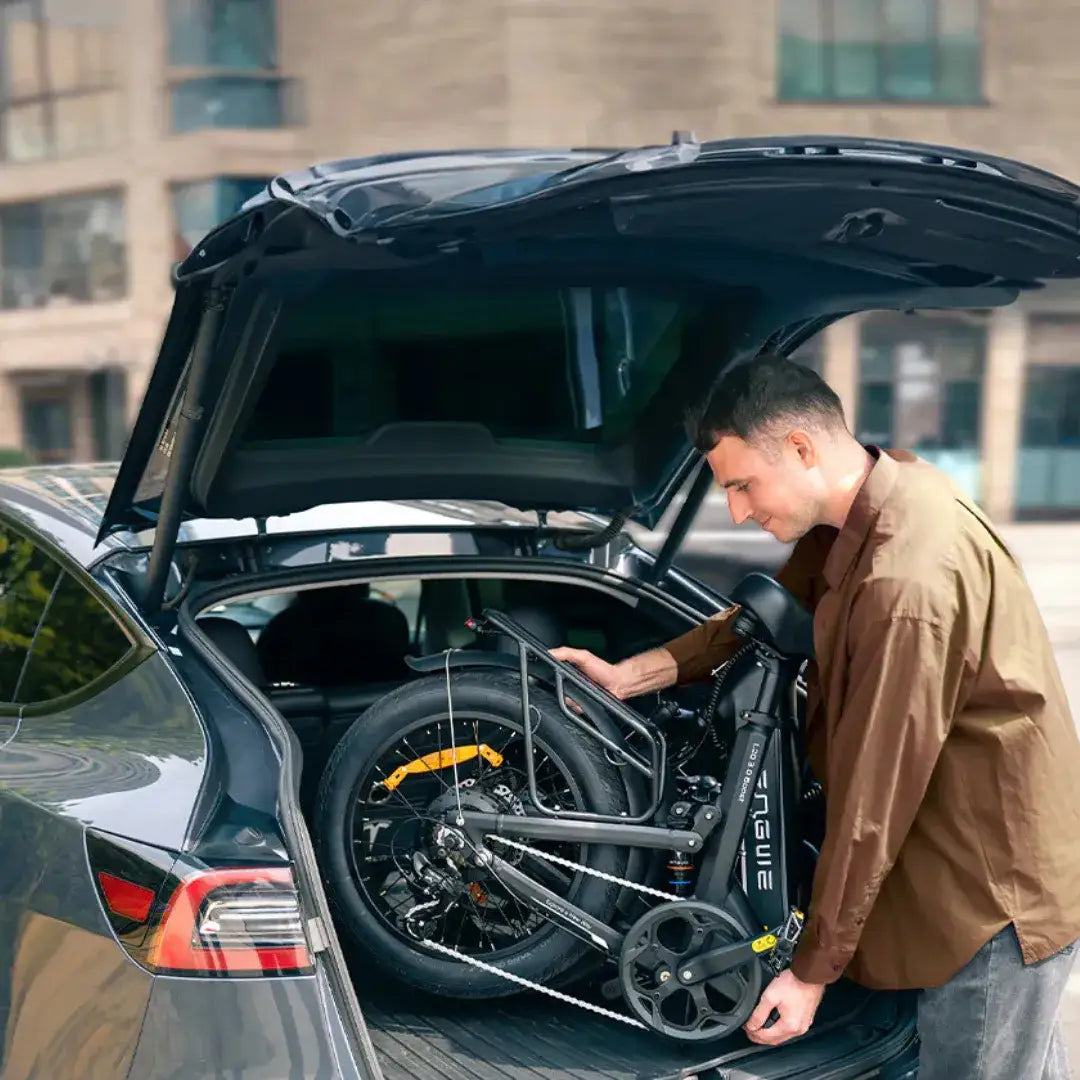
A serious electric bike will be designed from the ground up for long life. A properly engineered e-bike takes into consideration the entire system and is outfitted with components that were specifically designed to withstand the high forces of power-assisted riding. A perfect example of this attitude is the ENGWE M20, an action-packed electric bicycle characterized by strength and performance. The design starts with an awesome base, and that’s its fantastic tires.
-
Quality Tires:
The M20 is built with giant 20x4.0 triple-layer fat tires. This multi-ply construction is engineered with an anti-puncture design which will increase the longevity of the tire in comparison to most single-ply tires. More time on your bike, and less time dealing with flats.

-
Advanced Shock Absorber-Suspension System:
The M20 features a dual suspension system with a hydraulic front shock and an air rear shock. This setup not only serves to add comfort but it also assists in keeping those tires glued to the ground when the going gets rough. This uninterrupted contact eliminates bouncing and sliding that can cause greater, more irregular wear, providing a longer and more predictable life.
-
Power and Braking:
Utilizing a powerful drive motor, combined with a 7-speed Shimano derailleur and a high-capacity lithium-ion battery, gives you excellent control. This control can prevent the jarring, rocket-like takeoffs that wear out rubber, helping you put power down effectively.
-
Adventure Starts With The Bike:
A quality e-bike is sturdy enough for trail riding and can also be a great choice for a commuter. This built-in strength means everything, including the tires, is working within specification, which is crucial in achieving maximum lifespan. Then there is the available dual-battery setup to make it even more long-legged.
4. Taking Care of Tire Business: Your Guide to Getting the Most from Tires
Maintenance is not an option; it’s something you ABSOLUTELY HAVE TO do in order to maximize your e-bike fat tires' lifespan. Simple, routine checks and maintenance can extend the life of your tires two-fold or more—not to mention save you a bunch of money while keeping sidewall blowouts at bay. These are both things that any rider can easily do.
| Task | How Often? | Benefit for Tire Lifespan |
|---|---|---|
| Inspect Tires | Before every ride or weekly | Prevents sidewall damage and increases tread life by catching issues early. |
| Clean Your Tires | After muddy/dirty rides | Removes abrasive debris and makes it easier to spot damage. |
| Look Over the Tire | Weekly | Allows you to find and remove embedded glass, thorns, or small cuts before they cause a flat. |
| Tire Rotation | Every 500-700 miles | Evens out tread wear between the front and rear tires, extending the life of the pair. |
-
The Golden Rule of Inflation:
Make sure tire pressure is correct. This is by far the most important thing to do. Fat tires ride at low pressures (5-30 PSI), and when they’re even a few PSI under-inflated, the sidewall flexes too much, creating heat and eventually cracking prematurely. Be accurate; use a good digital pressure gauge. The recommended PSI is also printed on the tire’s sidewall.
-
Wear Evenly with Rotation:
The rear tire tends to wear out faster than the front, but you can prevent this by rotating them. If your tires have a non-directional tread pattern, swap the front and rear tires every 500-700 miles. This enables the tires to wear more evenly so you can replace them as a pair.

5. Deciphering the End: Signs It's Time for a Replacement
Knowing when it’s time for new tires is more than just a matter of performance; it's a matter of safety. Operating on worn-down tires can dramatically increase the risk of a blowout, and that’s a recipe for disaster, particularly when you’re traveling at higher speeds on an e-bike. Don't attempt to get extra miles out of your tires; know when to replace them.
-
Tread Wear Indicators:
Most tires have small holes or bars molded into the tread. When the tread wears down to where these indicators are even with the surface, it's time for a new one. If your tire has no such signs, replace it when the central tread pattern is gone and the tire looks rounded-off or flat.
-
Cracks and Dry Rot:
Check the sidewalls and between the tread blocks. If you detect cracks of any kind, regardless of how tiny they are, the rubber is no longer safe. This tire is dangerous and you need to change it now—it could blow out with no warning whatsoever.
-
Recurring Punctures:
If you are regularly getting flats, it could be a sign that the tire casing is too worn out to protect the tube.
-
Exposed Threads:
Check the tire for any worn spots where the fabric threads (the tire’s casing) are visible. This is a critical indicator that the tire is completely worn out.
-
Bulge or Deformity:
Any bulges are a result of irregularities in the tire's casing structure. Stop riding immediately and replace the tire and inner tube.
Frequently Asked Questions
Q1: How can I avoid getting flats in my fat bike tubes?
A: Using tire liners or sealant is a great way to prevent small punctures from thorns or glass. While not a complete solution, it's cheap insurance that can significantly improve the durability and longevity of your tire and tube system.
Q2: Why did the original tires on my new e-bike wear out so quickly?
A: Manufacturers often outfit new bikes with softer, general-use tires for better grip out of the box. A quality aftermarket tire designed with durability in mind will get you much further down the road.
Q3: How does heat impact my tire pressure?
A: It has a significant impact. The pressure goes down in the cold and up in warm weather. That’s why it is critical to check your tire pressure whenever there are drastic temperature changes to make sure that it falls within the proper range.
In the end, proactive maintenance and sensible riding are your two best tools for maximizing the lifespan of your e-bike’s fat tires.