Riding up hills rapidly uses up a cyclist's energy when they ride a route for long stretches, with loose and uneven surfaces. An efficient e mountain bicycle is designed with motors to help cyclists conserve their energy during tough inclines.
The performance of an electric bike on slopes is not dependent on just strength. Many factors affect the performance of an electric bike while climbing, including torque production, motor placement, gearing, traction, suspension, batteries, and rider skills.

E Mountain Bicycle Options for Hills and All-Terrain Riding
The four examples below offer different approaches to climbing and rough terrain cycling. From fat tire all-terrain bikes to mid-drive mountain bikes, each represents a good illustration of how motorization, suspension, and geometry help with strenuous rides.
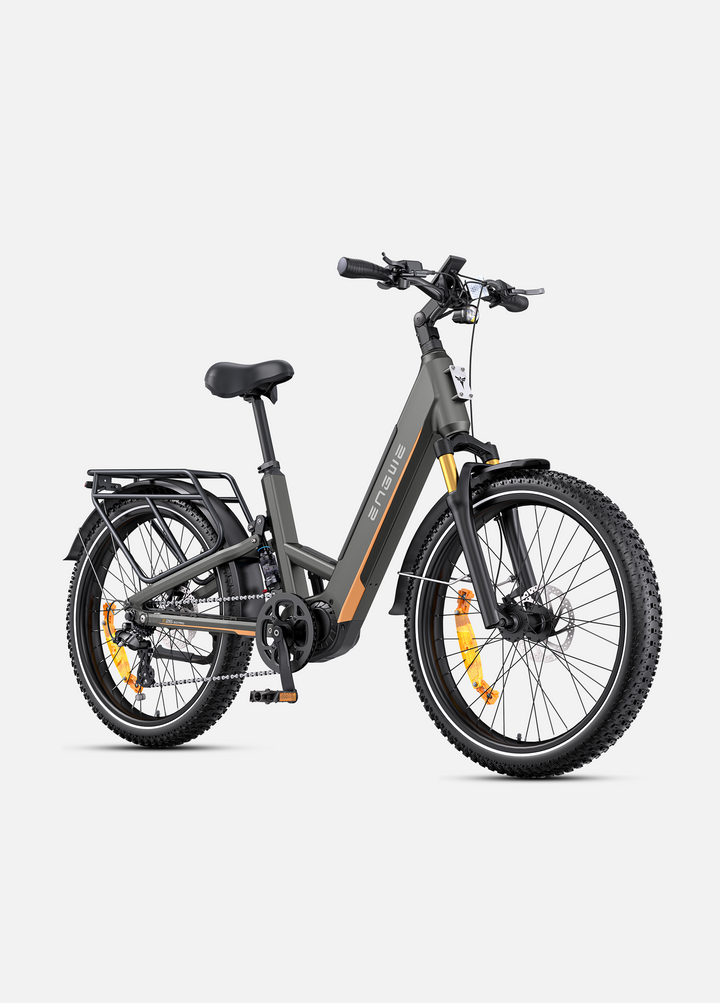
ENGWE E26
The ENGWE E26 features a 250W brushless engine and has 70Nm of torque, which is beneficial to cyclists because they get an effective boost when there are hills and various terrains to deal with on the way. The 26×4 inches tires and dual suspension make the bike more stable and ensure that the bumps in the terrain are cushioned.
The 48V 16Ah battery allows cyclists to cover up to 140 km on a single charge. For riders wanting an ENGWE ebike that balances climbing assistance with long-distance capability, the ENGWE E26 offers a practical all-terrain setup.


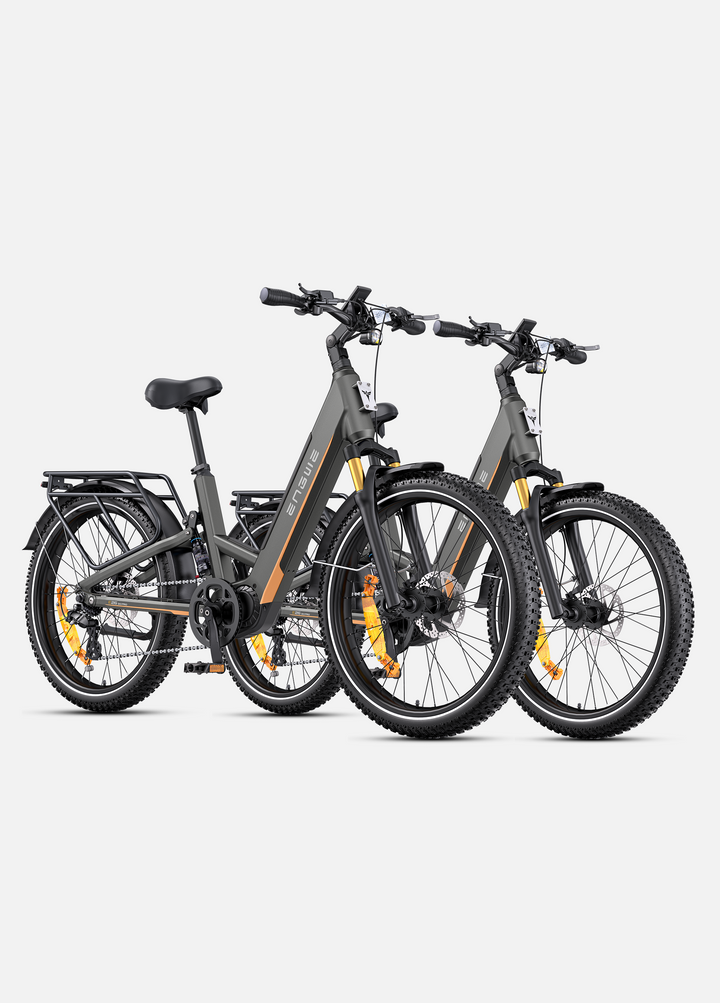
ENGWE E26 3.0 Pro
The ENGWE E26 3.0 Pro adopts a performance-oriented approach with a 250W mid-drive engine generating 100 Nm of torque. The assistance provided by the drivetrain is especially important when dealing with inclined paths and various terrain changes.
The full suspension of the model utilizes a 4-bar linkage frame that allows for better control on irregular terrain, as well as a smart riding system providing an advanced riding experience. With up to 135 km of listed range, this ENGWE electric bike is built for extended all-terrain exploration.


Haibike ALLTRAIL 6
This Haibike ALLTRAIL 6 trail full suspension electric mountain bike is an all-terrain bike made for cyclists who need to combine the ability to climb with more difficult downhill.
The Bosch Performance Line CX delivers a power output of 85Nm, powered by the 800Wh battery pack. RockShox suspension system offers 130 mm of travel front and rear, and four-piston hydraulic disc brakes make sure that riding in different terrains remains safe.

CUBE Reaction Hybrid Pro 800
The CUBE Reaction Hybrid Pro 800 is an ideal choice for those interested in a hardtail bike frame powered by the Bosch Performance Line CX motor.
The 800Wh PowerTube battery makes it possible to ride longer trips, and the RockShox Recon Silver air fork ensures 120mm of front suspension travel. Shimano four-piston hydraulic disc brakes and Schwalbe tires with a 2.6-inch width provide better control.

What Helps an Electric Mountain Bike Climb Steep Hills?
While an electric mountain bike can make riding easier when there is a need to climb, there are some parts that will affect how successfully assistance is transmitted to the wheel. Torque is important as it ensures that the bike will perform well when gradients become steeper or when extra support is needed at lower speeds.
Another factor to consider is gearing. Using a higher gear makes it possible for the rider to continue spinning the pedals easily while providing a good working environment for the motor. This is especially true in the case of a mid-drive e bike mountain bike.
Tires must also have enough grip. Wheelspin may occur due to loose gravel, wet surfaces, roots, and muddy surfaces, despite having sufficient assistance from the motor.

Full Suspension or Hardtail for Mountain Riding?
Both bikes can work efficiently, but it all depends on the terrain and the riding style. The full-suspension e mountain bike is a bike that absorbs shock from both wheels. On the other hand, the hardtail bike is a bike that has front suspension with a rigid rear frame.
- Full Suspension: More appropriate for bumpy paths, tree roots, drops, and steep terrain.
- Hardtail: Suitable for riding on forest roads, gravel paths, and smooth trails.
- Riding Comfort: The rear suspension helps to dampen the ride on difficult terrain.
- Maintenance: Hardtails require less maintenance than full suspensions.
- Climbing: Both types can climb easily if fitted with proper gears and a motor.

How to Choose an E Mountain Bicycle for Longer Climbs
In selecting an e mountain bicycle, begin by focusing on the type of terrain that you will be riding in most frequently. Uphill, difficult and downhill, technical terrain, as well as terrain that combines both road and trail, will have different requirements for motor, battery life, suspension, tires, and brakes.
The capacity of the battery is a particularly crucial factor on hilly trails, where greater amounts of assistance require more energy expenditure. Range figures from the manufacturer provide a good indicator, but gradient, weight of the rider, temperature, surface conditions, tyre pressure, and assistance level can all be factors in the actual range.
Top rated electric bikes are valuable in providing a starting point when selecting a model to investigate, but the fit of the rider and his requirements for usage should not be ignored. Similarly, anyone comparing the best e bikes UK should take these factors into consideration.

Conclusion
A powerful e mountain bicycle will make steep ascents much easier while still saving your energy for the remainder of the journey. Torque, gearing, tire traction, suspension, and even battery power play an important part in determining climb capabilities, so motor wattage must never be considered in isolation.
What you need will depend on your riding environment. The best match between the motor system, suspension system, range, and handling of your bike with your environment can make steep climbs more fun.
Frequently Asked Questions
How Much Torque Is Useful for an Electric Mountain Bike?
How Much Torque Is Useful for an Electric Mountain Bike?
Torque needs are determined by gradient, weight of the rider, terrain, gears, and type of ride. More torque may give better performance on steeper gradients, although good gearing and controlled delivery of power are also very important.
Is Full Suspension Better for Steep Mountain Trails?
Is Full Suspension Better for Steep Mountain Trails?
A full suspension will enhance both comfort and tire grip on bumpy terrain, while hardtails are still important for smoother trails and forest trails; hence, the best decision depends on the terrain and riding preference.
Does Climbing Reduce E-Bike Battery Range?
Does Climbing Reduce E-Bike Battery Range?
Yes. Longer or steeper ascents will demand more power input from the motor and will use up battery power faster. The rider’s body weight, degree of motor assist, temperature, tire pressure, terrain, and elevation gain are all factors that affect the range.
What Should I Check Before Riding an E-Mountain Bike Uphill?
What Should I Check Before Riding an E-Mountain Bike Uphill?
Inspect the tire pressure and condition, battery status, braking systems, drivetrain, suspension settings, and the chosen route. Choose the right gear before entering the steep slope and use gentle pedaling assistance to help maintain traction.