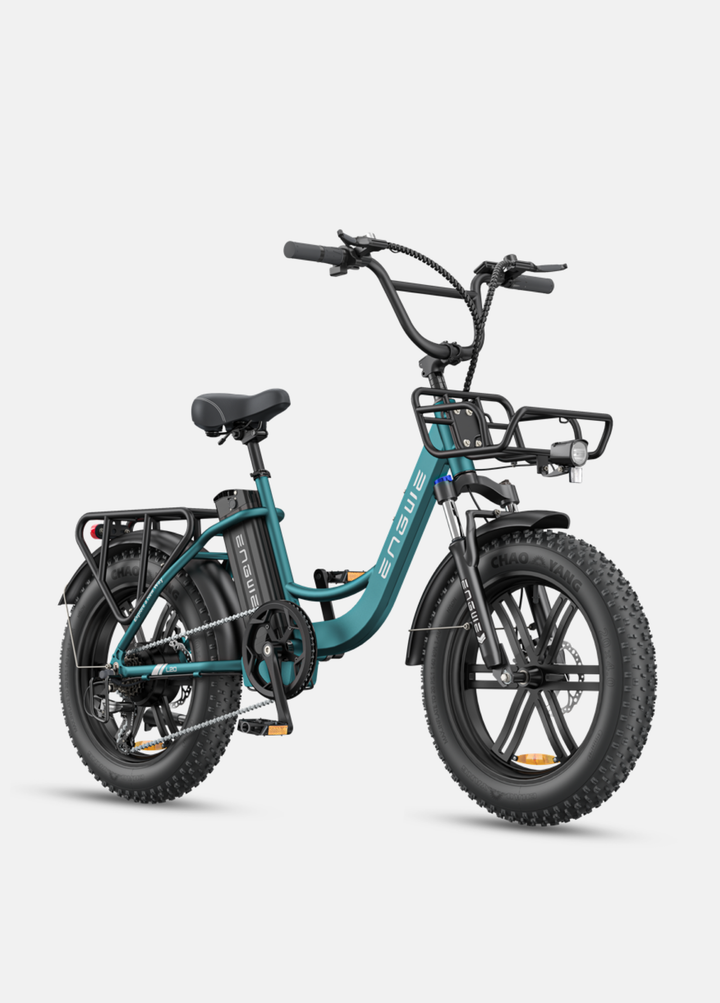
Rough surfaces, dirt trails, forestry tracks, and mountain terrain will make higher demands on your e-bike than paved roads. Suspension, brakes, traction, power delivery, and the geometry of the frame all contribute to the way your bike behaves under such conditions.
Selecting a full suspension ebike will go beyond just considering the motors. The following eight examples demonstrate several ways to tackle this issue.

E-Bikes for Suspension and Trail Performance
Prior to making a decision, think about where the bike will be spending most of its time. The folding fat-tire bike is used for something other than the e-MTB with long-travel suspension. The following options cover everything from compact mixed-terrain riding to more demanding trail use.
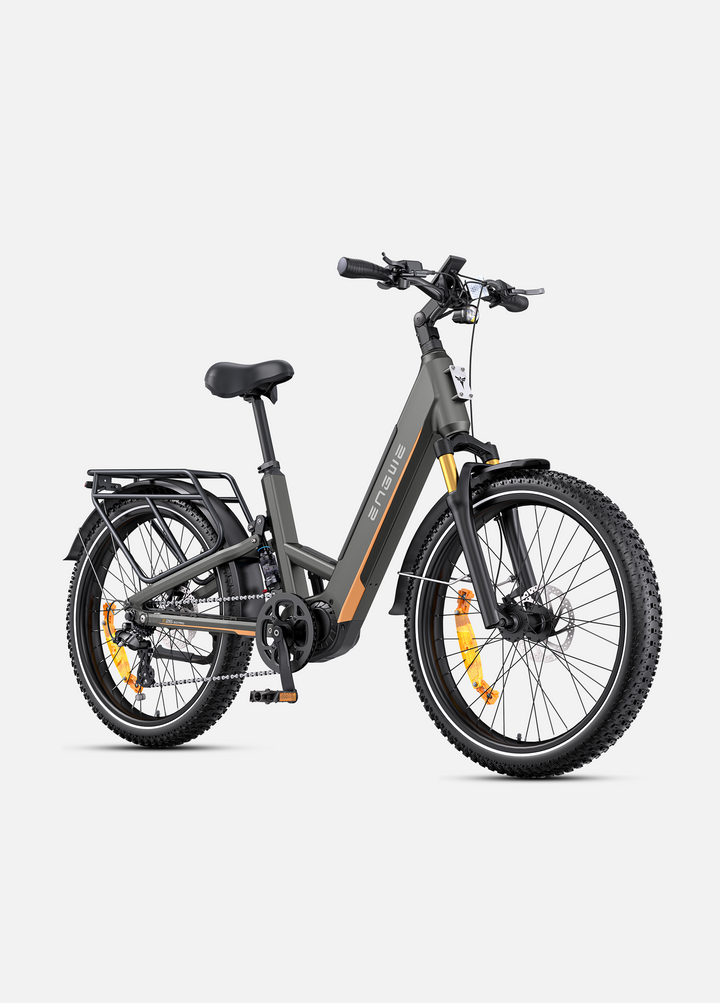
1. ENGWE E26 3.0 Pro
The ENGWE E26 3.0 Pro bike is a combination of a 250W mid-motor with 100 Nm of torque along with a complete suspension system, which includes a 4-bar linkage frame.
The e-bike also comes with a smart riding system, with the maximum range being 135 km. The intended user group for this ENGWE ebike is riders who prefer climbs in addition to suspension on varied terrain.


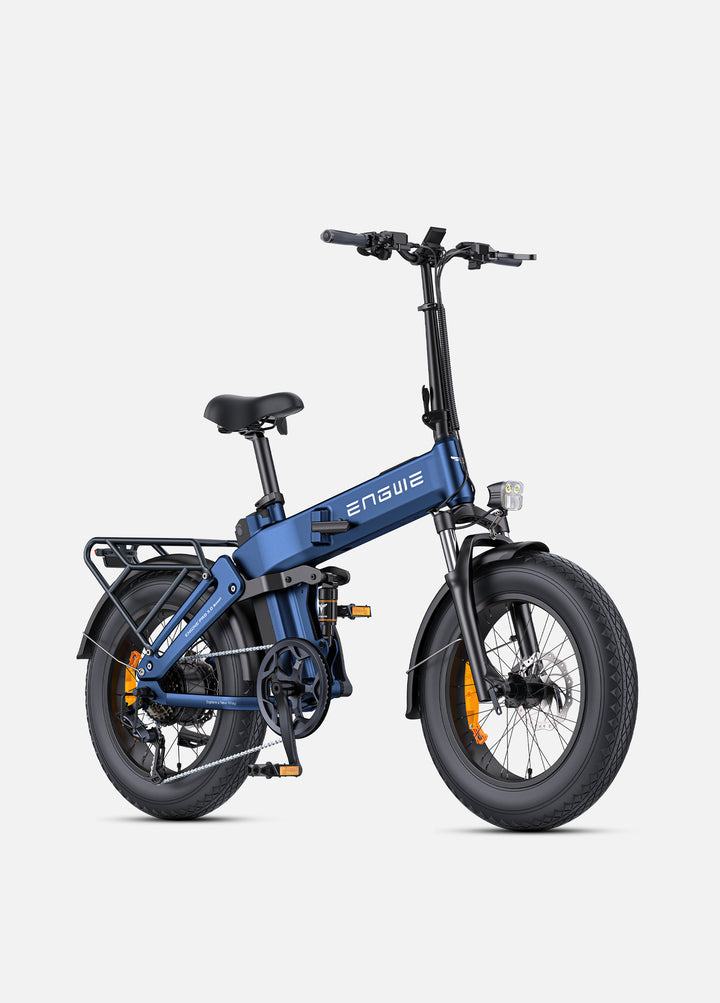
2. ENGWE Engine Pro 3.0 Boost
The ENGWE Engine Pro 3.0 Boost model includes a collapsible frame made from a magnesium alloy, along with front and rear suspension systems. The 250W motor provides a maximum torque of 90Nm, while the 720Wh removable battery gives a stated range of up to 130 km.
It also features 20 x 4.0 inches tires, hydraulic brakes, and an 8A charger. This ENGWE electric bike offers a useful balance between compact storage and mixed-terrain capability.


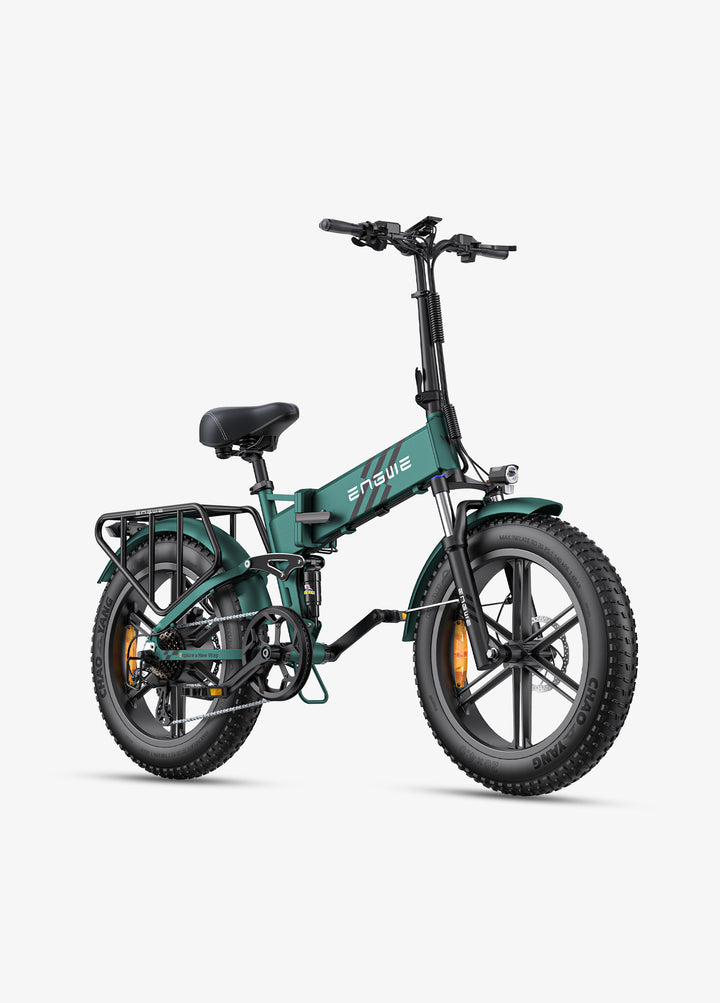
3. ENGWE M20
The ENGWE M20 comes with a frame design inspired by mopeds and is fitted with a full suspension mechanism and 20 × 4.0-inch fat tires. In its international model, the bike has a 250W brushless engine that can output 55Nm of torque; there is the option of having single or dual battery packs.
The dual-battery pack model can offer an estimated range of 150 km. Riders considering a full suspension fat tire ebike may appreciate its wider tires and comfort-focused setup for recreational mixed-surface riding.


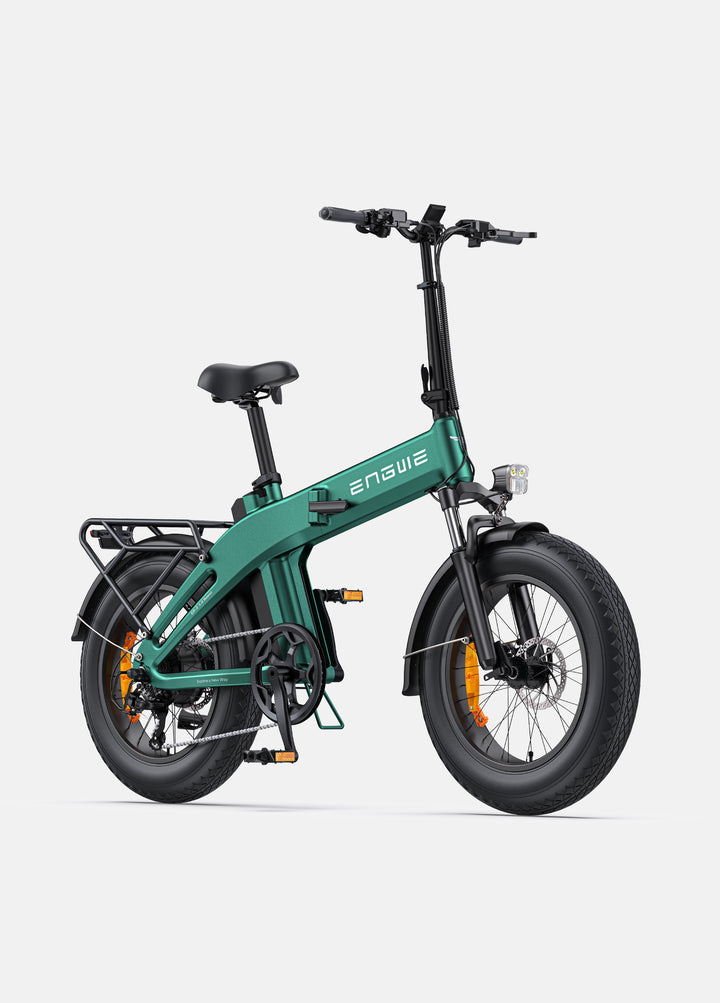
4. ENGWE EP-2 3.0 Boost
The ENGWE EP-2 3.0 Boost is different in that it features a foldable step-through magnesium alloy frame and an adjustable hydraulic front fork.
This bike comes with a 250W electric motor that provides 75Nm of boost torque. The torque sensor, hydraulic braking, app control, and the ability to cover 120km per charge can be considered some of its other benefits. It is worth comparing for riders who value folding convenience but do not require rear suspension.


5. CUBE Stereo Hybrid ONE22 SLX 800
The CUBE Stereo Hybrid ONE22 SLX 800 is a specialized trail e-MTB powered by a Bosch motor and equipped with an 800Wh battery.
The CUBE Stereo Hybrid ONE22 SLX 800 comes in full-suspension geometry compatible with 120mm suspension. Riders searching for a full suspension mountain ebike may find this type of setup more suitable.

6. Specialized Turbo Levo 4 Pro
Specialized Turbo Levo 4 Pro bike is designed to ride with full power on the tracks. It is powered by a Specialized 3.1 motor, which produces torque of 105Nm and 840 Wh of battery power.
Apart from this, the Specialized Turbo Levo 4 Pro comes with 160 mm of travel at the front and 150mm of travel at the rear and is built around a carbon frame. This best full suspension ebike performance e-bike is clearly superior to the rest of the bikes.

7. Trek Rail+ Gen 5
The Trek Rail + Gen 5 has been engineered for longer-travel electric mountain biking. The bike has been designed with 160 mm of travel in the front and rear, as well as 29” wheels in the front and 27.5” wheels in the rear, along with an 800 Wh battery.
The most recent platform is capable of delivering 120Nm of torque based on how it is set up. This ebike with full suspension is aimed more clearly at demanding trail and enduro riding than everyday commuting.

8. Canyon Spectral:ON
The Canyon Spectral: ON is fitted with an 800Wh battery and Shimano EP-series assist for 85Nm of torque output.
This e-bike has a trail-oriented platform that features a 160mm fork and 155mm of rear wheel travel, as well as a dual-wheel system for agile handling performance. Those shopping for the best ebike full suspension models for off-road riding might appreciate these specs.

Suspension, Tires, and Trail Control
When evaluating a full suspension ebike, one should consider its components in concert rather than simply looking at the power of the motor. Suspension, tires, brakes, geometry, and positioning all contribute to predictability on bumpy terrain.
- Suspension design: Search results for ebike full suspension can include everything from compact fat-tire bikes to dedicated mountain models. Compare front and rear travel, adjustability, and the terrain the suspension is designed to handle.
- Fat tires: A fat tire full suspension ebike can provide added cushioning and a larger tire footprint on loose surfaces. Wider tires can also increase weight and rolling resistance.
- Suspension systems: A search for ebike full suspension could range from small fat-tire bikes to big mountain bikes. Consider the front and rear suspension travel as well as their adjustability and the types of terrain they are made to work in.
- Fat tires: The addition of a fat tire full suspension ebike could give extra shock absorption. However, the larger tires mean more weight and more rolling resistance.
- Frame geometry: Angles and rider positioning become more critical as trail steepness or difficulty increases. A trail-specific frame is often used for a purpose different from that of a comfort commuter.
- Brakes: A motor-assisted and downhill riding setup requires better braking performance. All parameters (rotor size, hydraulic brakes, tire grip, rider skills) need to be considered in combination.
No suspension system makes every route suitable for every rider. Trail difficulty, surface conditions, rider experience, and the manufacturer’s intended-use guidance remain important.

Power, Speed, and Long-Term Value
The motor setting affects the performance of the e-bike; however, a higher amount of motor is not always desirable. A dual motor full suspension ebike provides better performance in tough conditions, but more motors can lead to an extra load, increased energy use, and complications in construction.
Class 3 full suspension ebike belongs to a different legal category when Class 3 regulations are introduced. It is necessary for riders to be aware of the speed limit and other regulations that do not necessarily depend on the bike's performance.
Context is required for pricing. While the cheapest full suspension ebike will reduce costs upfront, things such as the quality of suspension, braking, battery capacity, and maintenance might factor into long-term value. Comparing the entire package is more meaningful than comparing the price only.
This is also true when searching for fat tire ebike full suspension. Fat tires and suspension may provide better comfort on certain surfaces; however, this is contingent on your intended style of cycling.
Conclusion
However, one should select a full suspension ebike with a proper balance between all these aspects, including motor, suspension, brakes, tires, geometry, and control of the bike. Indeed, the technical mountain e-bike differs from the folding one intended to be used in any conditions.
Today’s full suspension ebikes vary greatly according to their uses, so the best bike may be selected only after considering the terrain, storage options, your experience, and the distance you are going to ride. Do not compare just torque, battery capacity, or speed.
Frequently Asked Questions
Is full suspension good for commuting?
Is full suspension good for commuting?
It might make you more comfortable when riding on rough roads, gravel, and potholes. But people who ride mostly on asphalt surfaces could be happier without rear suspension.
Would fat tires on an e-bike be more suitable for trails?
Would fat tires on an e-bike be more suitable for trails?
Yes. Fat tire e-bikes can give you some extra cushion and traction because of increased contact surface area. But tire tread, pressure, bike weight, terrain, and rider ability are also important factors.
Will high torque improve off-road performance in an e-bike?
Will high torque improve off-road performance in an e-bike?
Not necessarily. Torque helps with acceleration and ascending, but suspension, gearing, tires, braking, frame design, and even rider skill matter too.
Will a low-cost bike be the best deal overall?
Will a low-cost bike be the best deal overall?
No. Purchase price is not the only consideration. Battery quality, suspension components, braking capability, warranty coverage, accessibility to services, and part replacement cost can all play a role.