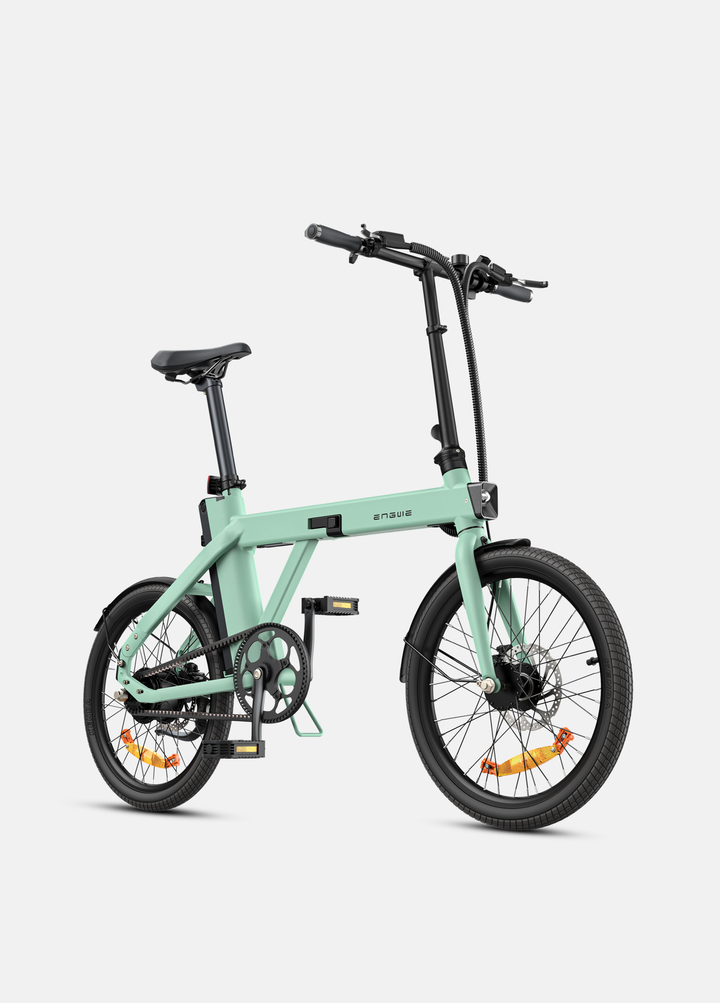
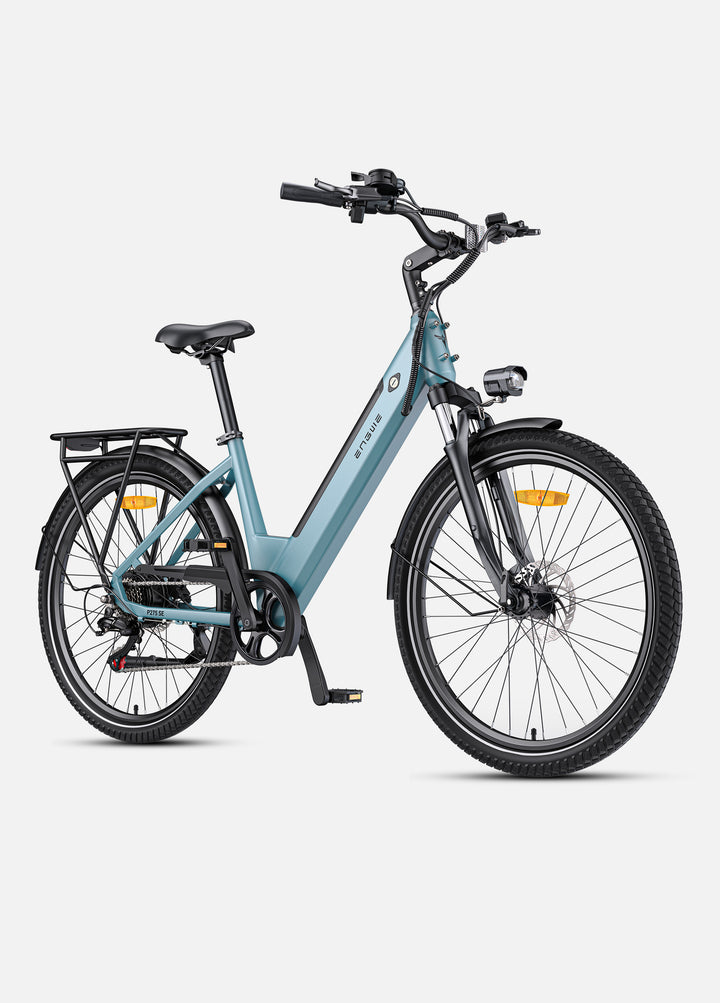
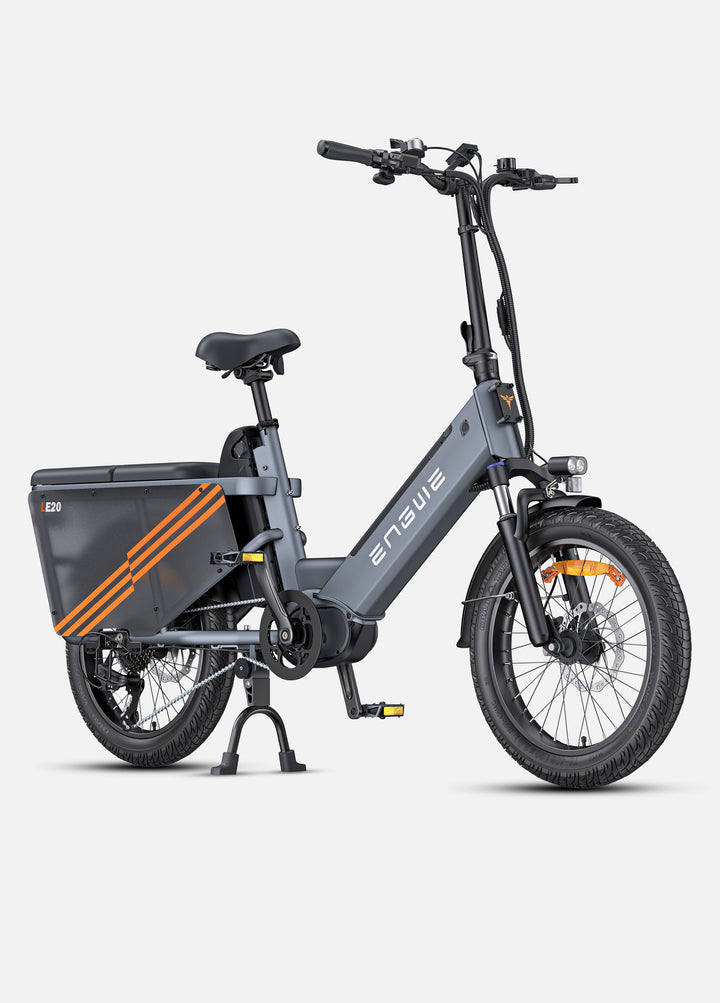
Folding electric bikes top your list of dream rides. The thrill of combining a bike ride with a train journey, or simply keeping your bike in a tiny apartment closet, is very tempting. But there's one big question: can it handle the hills? You live in a city with steep streets or dream of exploring hilly countryside, and you worry that a small bike will leave you struggling on the climbs.
Let's clear this up: a well-chosen folding ebike for steep hills is not a weak choice; it's a powerful and smart solution. This guide will help you get through the essential technology part, determine your personal needs, and find the perfect climbing bike.
Understanding the Folding Electric Bicycle
An electric folding bike is basically an electric bike that has been designed with a foldable frame; hence, its storage is simple. The feature makes an electric folding bike a highly movable unit and hence very fitting for commuting, traveling, and storing in a small area.
Foldable e-bikes usually come with a chassis quite similar, if not identical, to that of a regular e-bike, with a range of speeds suitable for different types of terrain. The best foldable ebike is fitted with robust braking components, e.g., disc brakes, that guarantee the rider's safety in any situation, particularly during downhill rides.

What Makes a Bike Perfect for Hill Climbing?
This is what separates top electric bicycles from those that literally take off up hills:
Motor Power and Torque
Your e-bike motor is the engine of your climb. However, not every motor operates similarly.
-
Motor Power (Watts): You can expect to see "nominal" and "peak" power figures. During lengthy uphill rides, the nominal power figure actually gives you a better indication of the motor's performance.
-
Motor Torque (Newton-meters, Nm): When climbing really steep hills, a higher torque figure is more important than the motor wattage figure. Try to get a motor that delivers a minimum of 60Nm of torque; for really hard hills, 70Nm plus is the way to go.
-
Motor Type: The two main types you will find on adult folding ebike are mid-drive and hub-drive. Both have their pros and cons when it comes to hill climbing.
|
Motor Type |
Performance of Hill Climbing |
Price and Accessibility on Folders |
|
|
|
Excellent. Employs the bike's gears for optimal torque and power usage. It's natural, like having super-powered legs. |
They are rarely seen on folding bikes, and mostly on the higher-end ones. |
Its construction is more complicated since it is part of the mid drive folding ebike pedal area. |
|
|
Good to Excellent. Mainly found on folders. A very powerful rear hub motor (such as 750W) with high torque is capable of climbing very well. |
Very common and less expensive than the rest. It is the standard for most folding e-bikes. |
It's simpler and easier to fix because it's a complete unit in the wheel. |
Battery Amps and Voltage
The battery is not only the factor of your range. It is also a vital element of the power system.
-
Voltage (V): Consider voltage as the water hose's pressure. Particularly during the high demand of a lengthy climb, a higher voltage system (such as 48V or 52V) can transfer power to the motor more effectively and with less stress. Long, steep hills may cause issues for a 36V system.
-
Amp-Hours (Ah): This represents the size of your "fuel tank." It determines how long your battery can continue to provide that level of power. A higher Ah rating allows you to climb more hills before needing to recharge because climbing hills requires a lot of energy.
For those who plan on tackling steep and/or several hills, we recommend starting with a battery like the ENGWE L20 3.0 Pro Battery of no less than 48V, and 14Ah.

Mastering Gearing: Your Secret Weapon for Climbing Success
Regular bike gears should not be overlooked. Gears are still a necessity when it comes to climbing very steep hills even on a powerful and lightweight folding ebike. With a greater variety of gears, you can get the optimum pedaling speed, thus, maximizing the advantage of the motor instead of going against it.
In this way, you can assist the motor in doing its job more efficiently, which ultimately results in battery saving and the motor not overheating on long climbs.
Essential Control and Safety Tips for Confident Riding
What is lifted has to be dropped eventually:
Brakes: Going down a steep hill on a heavy folding ebike fat tire puts enormous stress on your brakes. Therefore, we highly recommend hydraulic disc brakes because they provide significantly better stopping power, better control, and more reliability with less hand effort compared to mechanical disc brakes.

Tires: Broader tires with a well-designed tread pattern have more contact area with the ground, resulting in better grip. This is crucial for preventing wheel slip when you are unleashing a lot of power on a steep, loose, or wet surface. Tires that are at least 2.4 inches wide will give you more confidence.
Frame: A bike's frame basically decides how you sit during a ride and also how stable the bike is. If a frame is designed well, it will be very stable and you can predict how it will behave even if you are standing and giving it your best on a hill.
How to Choose the Perfect Hill-Climbing Bike?
When you answer these five questions, you'll be able to visualize your ideal folding ebikes for adults that can handle steep hills.
What's Your Ultimate Hill Challenge?
Is it a single, steep 15% grade city block that you face every day or do you plan to go through long, round mountain roads of 7% grade? The first scenario requires burst power (peak watts and high torque), while the second requires steady power and the motor and battery having good heat control.
Pro Tip: During long, gentle ascents, a mid-drive motor or a top-notch hub motor that manages heat well is essential to avoid deterioration of the performance, as highlighted in folding ebike reviews.
What's Your Total Weight Load?
Be truthful with yourself about your weight and the additional load you typically carry; be it a laptop inside a backpack, a week's groceries, or camping gear. The more weight is added, the more power (torque) you will require to get going and maintain your speed uphill.
Pro Tip: When the total load exceeds 220 lbs (100 kg), a 70Nm torque e-bike or more really helps a lot on hills with inclines greater than 10%.
Portability vs. Power: Which Matters More for Your Ride?
Are you planning folding the bike every day so that you can carry it up a few flights of stairs, or just occasionally when you need to put it in your car trunk? More powerful motors and larger batteries add quite a lot of weight, which in turn, results in a direct trade-off with portability. A 66 lb fat tire folding ebike like ENGWE EP-2 Boost is quite feasible for some people; a 80 lb bike is definitely quite a heavy lift.


Pro Tip: If you are lifting the bike frequently, you may want to try lifting something that weighs about the same (such as a big bag of dog food) so you really know what you can handle. 5-10 lbs difference is quite significant.
Throttle vs. Pedal Assist: Which Riding Style Suits You Best?
Which would you prefer: pressing a throttle and letting the motor take over, or enjoying the feeling of exercise and having a pedal-assist system that enhances your effort? A powerful hub motor of ebike folding is absolutely a fantastic option if you continuously use the throttle for hills. If you are more into a natural pedaling feel, get a bike that features a better torque sensor.
Pro Tip: A torque sensor measures your pedal force and adjusts the power assist accordingly, which results in a very natural ride. A cadence sensor just detects that you are pedaling and allows a preset level of motor assistance, which can be a bit more abrupt.
What's Your Budget Reality?
High-torque motors and high-capacity batteries from reputable brands (Samsung, LG, or Panasonic) combined with hydraulic disc brakes are some of the main contributors to a higher cost. A higher price is generally a guarantee of better performance, more reliability, and safer hill rides. Decide on a reasonable budget, but keep in mind that little money on a motor or brakes can make your experience unsafe and less enjoyable.
Pro Tip: The proper balance of the best folding fat tire ebike like ENGWE Engine Pro 3.0 Boost for hills is usually in the vicinity of the $1,500 threshold and upwards.


Which Folding Ebike Features Boost Hill Climbing Performance?
Key features that help hill climbing become effective are:
-
Torque Sensor: The motor power is adjusted based on the pedaling effort to ensure natural assistance.
-
Multi-Speed Gears: A Shimano or similar 7-21 speed gear system will allow you to maintain your cadence on steep inclines.
-
Suspension: Rough terrain is smoothed by front or complete suspension, preserving traction.
-
Fat Tires: On loose or uneven conditions, wider tires (3" to 4") provide more grip.
-
Lightweight Frame: Simpler to move or carry when power support is limited.

Conclusion
When selecting a folding ebike suitable for climbing steep hills, one should pay close attention to the main features such as motor power, battery capacity, gearing system, and the general build quality. Besides, consider models that come with a strong battery to keep the power going over longer climbs without the risk of overheating.
Reading electric bike reviews will give you detailed information on the best models in terms of performance, durability, and user satisfaction. ENGWE, a brand well-known for its top-quality folding ebikes that not only handle steep hills but are also perfect for daily commutes, is a great example of the best folding ebike 2025.
Frequently Asked Questions
Are folding bikes good for hills?
A lightest folding ebike can manage hills, but it's more difficult than a regular bike because of poor gearing and hinge flex. However, if the wheels are properly geared, smaller wheels can actually aid; for smoother climbing, seek for multi-speed models, e-folding cycles, or upgrade gearing.
What's the minimum motor torque I need for steep hills on a folding e-bike?
For very steep slopes, you should consider a minimum of 60Nm of torque, however, 70Nm or even more is perfect for tough terrains. More torque means you will have the turning power to get uphill from a standstill and keep your speed on ascents.
Why is battery voltage important for hill climbing?
Higher voltage systems (48V or 52V) are capable of delivering power to the motor in a more efficient way and with less stress, particularly at the times when the power demand is the highest such as during long climbs. A 36V system might have a hard time on extended, steep grades when compared to higher voltage alternatives.
Do I really need hydraulic disc brakes for hill climbing?
Absolutely, hydraulic disc brakes play a key role in safety while going uphill or downhill on a heavy fold up ebike. They deliver greater stopping power, enhanced control, and increased reliability over mechanical brakes, which is highly important when you go downhill fast and you have to control your speed.