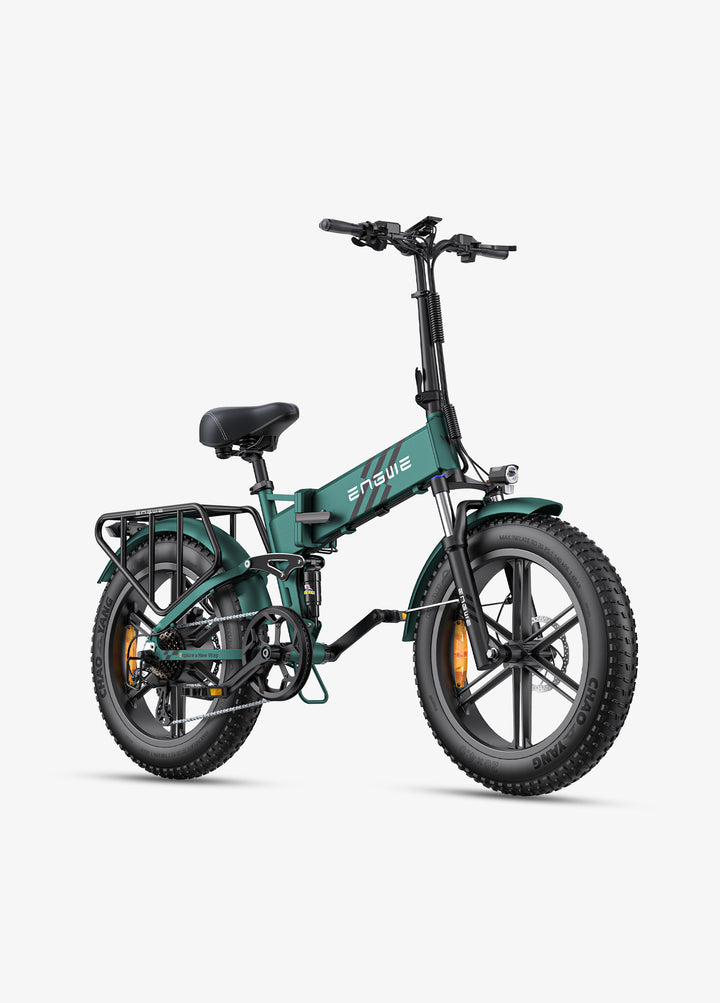
Rugged climbs, rough terrains, and mountainous trails pose a tough challenge for both the rider and the cycle. The proper suspension system would help cushion continuous shocks, and adequate tires, brakes, and motor support will be required to navigate tough routes.
When purchasing a full suspension ebike, you need to combine front and rear suspension to enhance comfort and handling while riding in rugged terrain. In selecting an appropriate model for your mountain biking, look at the nature of the terrain, battery mileage, torque, and riding positions.

Full Suspension E-Bikes for Mountain Adventures
Some types of trails require specific suspension levels, tire widths, and motor support. The following are some of the models that can be used by people looking to experience trails in the mountains.
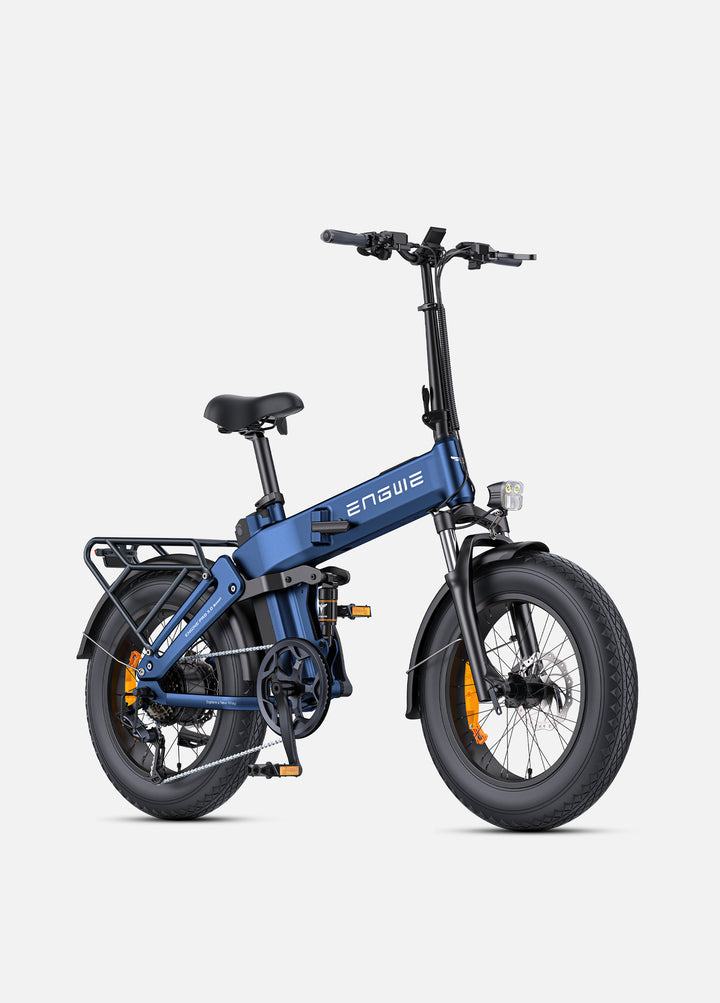
ENGWE EP-2 3.0 Boost
ENGWE EP-2 3.0 Boost is the universal fat tire e-bike that would be appropriate for an individual who wants an e-bike that will allow them to travel through various terrains outdoors. The bike features a 250 W brushless motor that can provide torque of 55 Nm, and it has fat tires of 20×4.0 inches.
This EU-certified model assists riders at speeds up to 25 km/hr. It has the greatest mileage range of up to 120 km. The best choice of this e-bike would be for those who want to ride ENGWE e-bike trails.


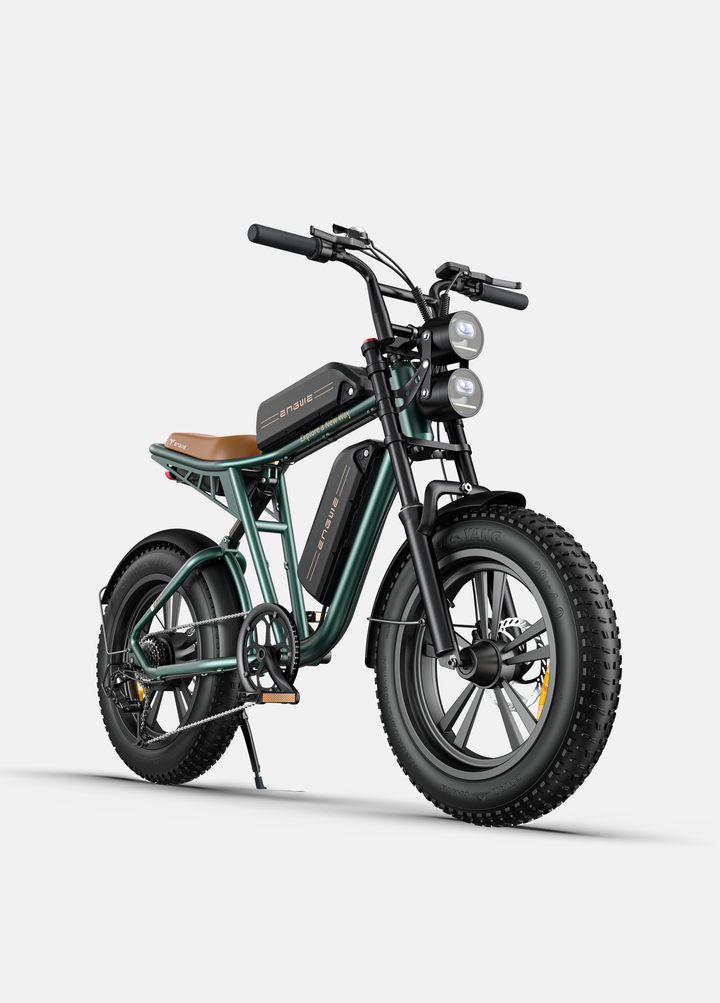
ENGWE M20
The ENGWE M20 electric scooter comes with a moped body design along with complete suspension to accommodate people who prioritize comfort when riding on rough terrain. It has a 250W brushless motor that delivers 55Nm of torque and has 20×4.0-inch fat tires.
The 25km/h speed limit set by EU laws makes it good for controlled riding, while the suspension helps cope with bumps on the way. This is an appropriate ENGWE ebike for leisure cyclists who prefer to have something special to explore the outdoors, but very technical mountain paths need proper assessment of this bike.


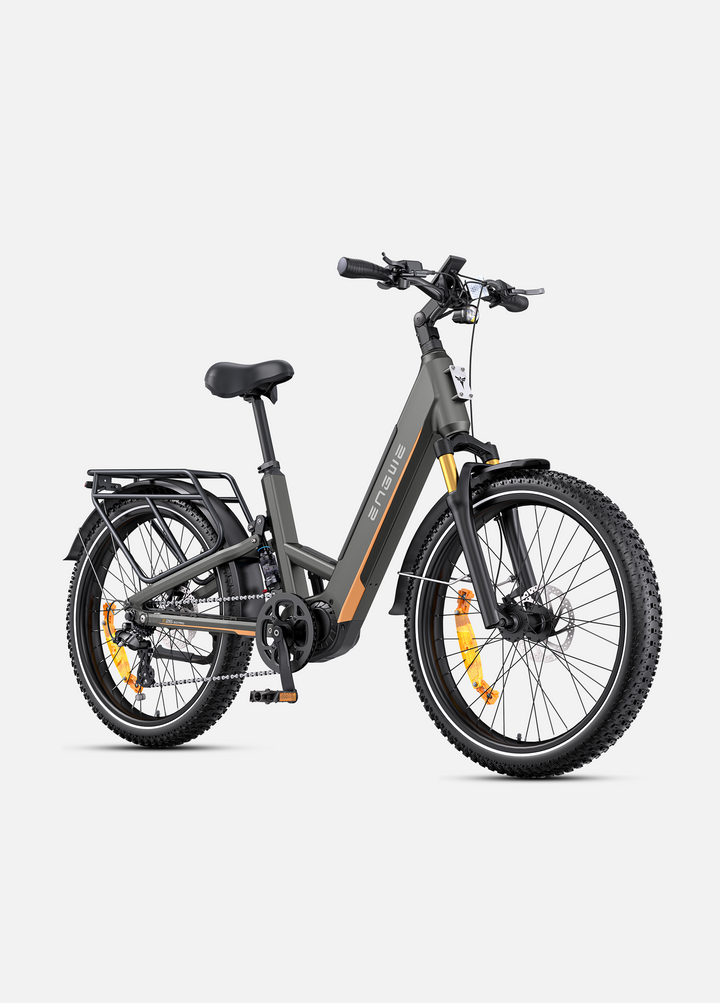
ENGWE M1
ENGWE M1 is an e-bike based on EU standards which has a moped-like design and is made to be functional in different terrains. It has a 48V 250W brushless motor, which provides 65 Nm of torque, and 20×4.0-inch fat tyres.
With the 160 mm hydraulic disc brake, the rider can have controlled braking. Also, the motor assistance control is through the speed sensor. The full suspension fat tire ebike design is attractive for those looking for comfort in wide tires for fun and commuting. Select trails appropriate for this bike design.


YT DECOY CORE 2
The YT DECOY CORE 2 has been created for people who consider handling capabilities for their mountain bike on tough trails to be the most important. Trail-oriented geometry along with full-suspension front and rear makes the bike suitable for riding in rough conditions.
In contrast to utility bikes with fat tires, an electric mountain bike will be more suitable for those who ride on such trails often.

Polygon Siskiu T7E
Polygon Siskiu T7E is yet another mountain bike that is worth considering for those seeking something different from usual routes. The full-suspension system is designed to cope with continuous shocks and ensure rider control over difficult surfaces.
Mountain bicycle and trail-specific equipment make this bike model better suited for recreation than an ordinary urban e-bike. In any case, when choosing, do not forget to take into account the specifics of construction, suspension stroke, battery layout, and other components.

How Full Suspension Helps on Steep Mountain Trails
The full suspension ebike comes with front and rear suspension that helps in soaking up any shock that is produced by obstacles such as rocks, ruts, and roots. This will help in keeping the tires in contact with the trail.
It all depends on the kind of terrain and design of the bicycle:
- Traction: The presence of suspension will assist the wheels in following the ground, and thus assist in maintaining traction when climbing up and down.
- Control: The right kind of suspension will assist in maintaining control during bumps that repeat themselves.
- Comfort: Both front and rear suspension will assist in cushioning the rider from bumps.
- Choice of tires: Wide tires will offer more cushioning because of the larger contact patch on loose terrain.
A full suspension mountain ebike is usually more appropriate for technical trails compared to an e-bike that is designed mainly for riding in cities. On the other hand, a fat tire full suspension ebike might be appropriate for various types of terrain because of its wider tire path.
There are several factors to take into account when evaluating full suspension ebikes. These factors include the suspension travel, geometry of the frame, brake type, and the overall weight of the bicycle. Suspension will never compensate for bad riding techniques.

Choosing the Right Setup for Your Riding Style
The best full suspension ebike depends on what terrain you cycle most on because forest trails that flow, steep and rocky paths, and loose gravel paths will have different needs.
While contrasting the ebike full suspension with the hardtail, one should look at the frequency at which the user encounters rough terrain. Rear suspension will enhance the riding experience by improving stability and comfort, while a simple suspension will make maintenance easy.
Other factors deserve attention, too:
- Battery range: Rough and climbing terrain is going to use up more power compared to smooth terrain.
- Motors: Torque will definitely help in negotiating difficult terrain, although the technique and gearing are still going to matter a lot.
- Brakes: It is very essential to have a good braking system while descending and negotiating rough terrain.
- Tires: The fat tire ebike with a full suspension system is definitely going to work better in rough terrain, while the mountain bike tires are definitely going to work better on technical terrain.
- Cost: If you are looking for the cheapest full suspension ebike, here are some factors to keep in mind.
An optimal search for the best ebike full suspension would result in finding different kinds of e-bikes. The design of a dual motor full suspension ebike means additional assistance regarding the power source but also means additional weight. In addition, a class 3 full suspension ebike is a specific speed of an e-bike depending on regional requirements.
When it comes to the rider who needs an ebike with full suspension, the choice should be made according to surface, personal preferences, and budget.

Conclusion
A full suspension ebike is an ideal way to make mountain routes easier through the use of a combination of front and rear suspension along with appropriate tires, brakes, and motor support. Your choice will depend on the nature of the terrain that you cycle on as well as the technicality involved.
Consider the total specifications, intended usage, and maintenance of the bikes before deciding on one. Matching your e-bike to your riding ability and regular trails can help you tackle mountain adventures with greater comfort and control.
Frequently Asked Questions
What Is a Full Suspension Ebike?
What Is a Full Suspension Ebike?
A fully suspended electric bicycle has suspension in both the front and the rear parts. The advantage of this system is that it helps to absorb shocks from rough terrain.
Is Full Suspension Better for Mountain Climbing?
Is Full Suspension Better for Mountain Climbing?
Suspension will aid in the retention of traction while climbing up on uneven surfaces where the rear wheel must track over the rocks and roots. This all depends on the type of suspension, frame design, tires, and techniques.
Are Fat-Tire E-Bikes Suitable for Mountain Trails?
Are Fat-Tire E-Bikes Suitable for Mountain Trails?
Fat tires ebike can help you get a good contact surface when riding on loose gravel, dirt, and similar types of terrain. However, the width of the tyres does not guarantee the best performance in the mountains.
What Should I Check Before Buying a Full-Suspension E-Bike?
What Should I Check Before Buying a Full-Suspension E-Bike?
The following items must be checked: suspension travel, motor assist, battery capacity, braking system, tyre set-up, geometry of the frame, and suitability to the terrain. You should ensure that your bike will suit your riding style and trails.