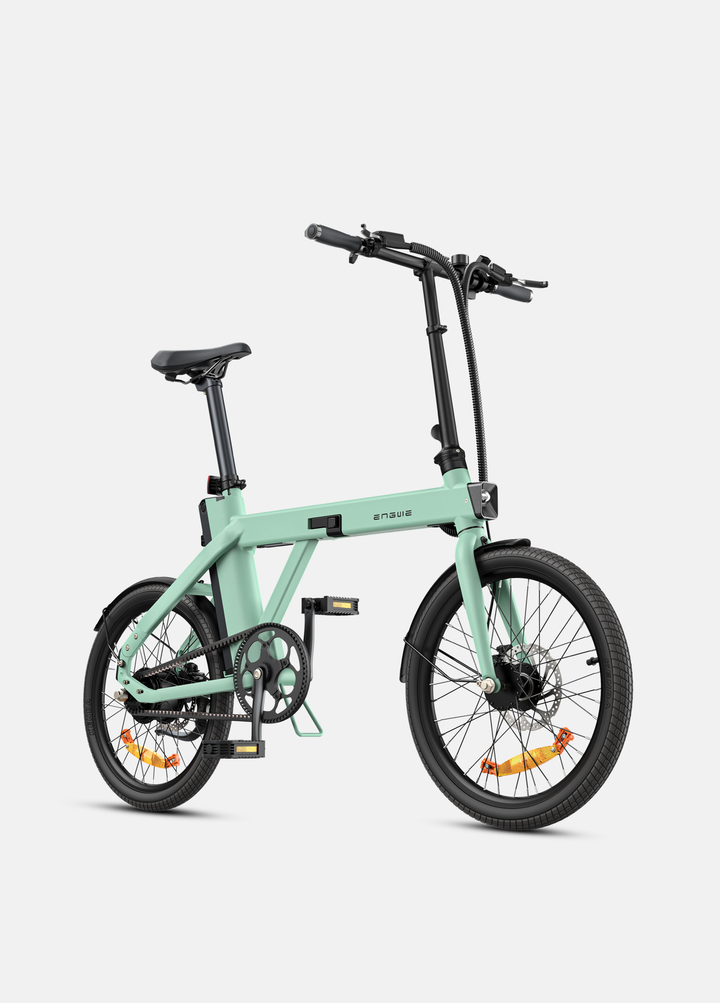
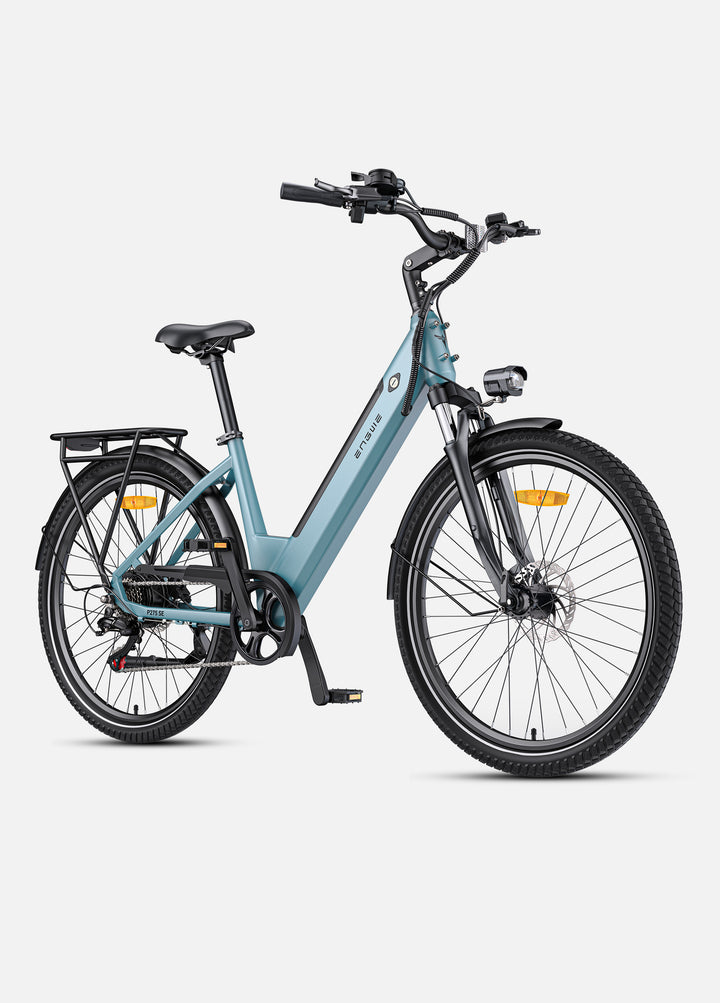
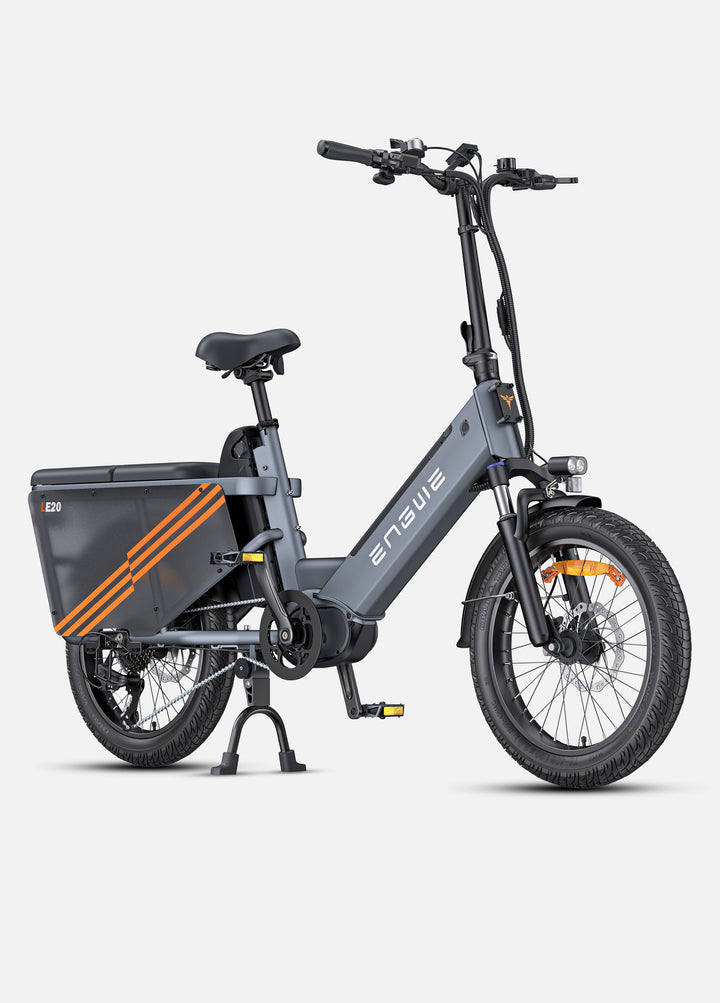
Hello and welcome to the world of electric bikes! For your first experiment with these magnificent inventions, you should consider the introduction level of the famous Tata brand. Here is the user’s guide to Tata’s e-bikes aimed at beginners, which includes an overview of different types of e-bikes, main components, a comprehensive list of available models, and maintenance pro-tips. This guide should empower you to make an educated decision, propose one of the models in the lineup of your dreams, and start your electric journey. Firstly, you should consider the types of e-bikes available on the market and choose one that is a perfect ride for you.
1. Understanding E-bike Types
City & Commuter E-bikes:
These are the workhorses of the urban jungle. Built for efficiency and comfort on well-paved streets, they are ideal for your daily commute, shopping trips, or casual strolls through the park. They generally offer a more relaxed, upright riding position with accessories such as racks for groceries or fenders to prevent the splash of dirty roadway. The focus is on dependability and simplicity with these models.
Mountain E-bikes (E-MTBs):
If dirt routes, uphill rides, and rough terrain are the norm, the E-MTB is the way to go. These bikes are meant to be much more robust, with tough frames, a front suspension fork to soak up hits, and large tires with knobbly tread – and all that additional elevation that makes tackling steep climbs so much simpler. It makes mountain biking more enjoyable and available to a broader range of riders with varying levels of fitness.
Fat Tire E-bikes:
While not as prevalent in every product line, fat tire bikes are all about flexibility. Stability and grip are unmatched due to their oversized tires, which help them navigate environments as distinct as snowy trails and soft, sandy beaches. They offer a smooth journey and an imposing profile, making them an intriguing alternative for thrill-seeking riders.
2. Decoding Primary E-bike Components
Learning the primary electric bike elements will assist you in making informed decisions about different models and what you’re purchasing. As a result, these parts work to create the powered help that makes e-bikes so special. You should concentrate on the quality of these elements to locate a high-quality ride that will endure.
The motor, which is the heart of the e-bike. The motors of most Tata e-bikes are Brushless Direct Current (BLDC) hub motors mounted in the center of the rear wheel. It boosts your journey: the higher the power, typically measured in Watts, around 250W for road-legal e-bikes, the greater support you will get, especially when climbing hills.
The battery serves as the fuel tank. Its capacity in Amp-hours (Ah) or Watt-hours (Wh) indicates how far it can go on a single charge. In essence, the larger the number, the better. Lithium-Ion batteries will supply you with the most outstanding balance of weight, capacity, and lifespan.
Brakes and drivetrain. The brake system must be reliable. Disc brakes, both mechanical and hydraulic, are considerably more efficient than conventional V-brakes, particularly in the rain. A well-designed Shimano gear mechanism acts out the supplied parts for this.
Your command control is the Display and Controller. An LED panel or LCD screen gives you important information such as how much battery is remaining, how fast you are going, and your volume of pedal assistance. Additionally, this helps you to alter the amount of motor energy consumption to change the climatic condition.

3. The Complete Tata Stryder E-bike Lineup
Tata’s e-bike models sold under the Stryder brand are intended to make green and accessible transport a reality. Nonetheless, they are more focused on pragmatism, affordability, and dependability, catering to a customer base that is primarily made up of daily commuters and leisure riders. Following that, they build distinct models targeting specific users, from those who must cross towns and cities on a daily basis to others exploring trails over the weekends. These are the top brands from Tata’s e-bike sales in the market today, as well as a comprehensive analysis of each one of them: while debating their ability to cope with a diverse range of conditions, they represent a good consideration for purchase due to their superb performance.
Stryder Zeeta Plus
The prototypical city commuter, the Zeeta Plus is a solid beginner e-bike for anyone from students to office-goers who need to navigate busy metropolitan streets. Its chief traits are minimal hassle and a preference for comfort and straightforwardness; the latter is paired with a step-through frame that some lineups provide to aid in dismounting and remounting. For the typical e-bike person, the journey is predictable and non-startling, with a suitable degree of assistance provided to ensure that daily travel remains a pleasurable rather than a punitive chore.
Ideal User: The most frequent daily travelers, city residents, and casual riders, in summary.
Key Features:
- Motor: Powerful 250W BLDC Rear Hub Motor
- Battery: Frame-mounted 36V Lithium-Ion battery
- Brakes: Reliable disc brakes, both on the front and back
- Range: Suitable for most daily commute outings
- Frame: Sturdy Steel
- Display: LED. Assist levels available: Economy
Stryder Voltic 1.7
The Voltic 1.7 is the more powerful and long-range commuter e-bike. It is made for riders with lengthier everyday commutes or those who need stronger execution. The larger battery allows for significantly greater range on a single charge, which helps relieve range anxiety. It has a solid, capable design that makes it an excellent choice for commuters who want to replace their car or scooter for city travel.
Ideal User: Will fit long-distance commuters and committed e-bike riders.
Key Features: Blends a reliable 250W BLDC Rear Hub Motor, a High-capacity 48V Lithium-Ion battery, a Fork Suspension, Sturdy frame, and Hydraulic brakes make up Stryder Voltic 1.7.
Stryder Contino ETB-100
The Contino ETB-100 is Tata’s E-MTB for the aspirers who dream of becoming a trail rider one day. It serves as an entry-level E-MTB, capable of everything that an E-bike can offer, with a mountain bike’s robustness. It is ideal for weekend off-road rides, exploring light trail paths in the forest, or even taking a rugged city road with so much ease. The front suspension and the wider tires secure the required comfort and control upon hitting the road with no pavement between the wheels.
Ideal User: Recreational mountain biker, adventure lover, varied terrains rider.
Key Highlights: a 250W BLDC Rear Hub Motor to get the climbing torque power; a 36V Lithium-Ion battery, ideally sealed and sometimes even removable; ample range to cover trail riding for a few hours; lightweight alloy made mountain bike geometry frame; a front suspension and lockout fork set for on and off-road use; knobby tires.
The feature comparison of the Stryder Zeeta Plus, Stryder Voltic 1.7, and Stryder Contino ETB-100 are given below.
| Features | Stryder Zeeta Plus | Stryder Voltic 1.7 | Stryder Contino ETB-100 |
|---|---|---|---|
| Primary Use | City Commuting | Long-Range Commute | Recreational MTB |
| Motor | 250W BLDC Hub | 250W BLDC Hub | 250W BLDC Hub |
| Battery Volt. | 36V | 48V | 36V |
| Brakes | Dual Disc Brakes | Dual Disc Brakes | Dual Disc Brakes |
| Suspension | Rigid | Front Suspension | Front Suspension |
4. A premium alternative for the adventurous rider: the ENGWE M20

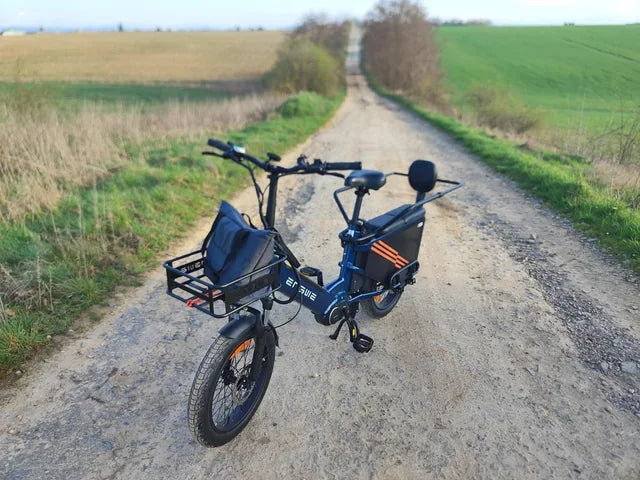
While Tata vehicles are great for daily commutes and excursions across picturesque light trails, some riders need more power, range, and all-terrain capability. The ENGWE M20 is the ultimate choice for that. Although it resembles an electric bike, in reality, the M20 is an adventure machine developed following the motorcycle design philosophy, for those riders who want to conquer any landscape in style and comfort. The M20 is a premium-grade product with a range of features that set it apart. The primary standout feature of the M20 is its dual suspension system – the vehicle is equipped with a front hydraulic shock and a rear air shock absorber that provide twice as much absorption as a regular e-bike. Essentially, this means that you can easily ride off beaten paths or even on potholes with little concern for your spinal health. Feel free to check the option for additional travel extension – the M20 offers a dual-battery mode. Paired 48V 13Ah Lithium-Ion batteries provide a maximum distance of 75km + 75km when you ride on pedal assist – in other words, you are not limited by the charger’s coverage area. With 20×4.0 triple-layer fat tires, the M20 maintains stable contact with the ground on sand, snow, and mud, providing unbeatable stability thanks to the four inches of tire thickness. An assumed payback period – within 2 years after the purchase the difference with a fuel-driven range will pay for itself.

5. Owning Your E-bike: Maintenance & Smart Tips
Basic maintenance – done regularly – can prevent costly repairs to ensure your new electric bike runs smoothly for many more years. Follow these steps to protect your investment and keep your rides enjoyable and safe.
Battery health is paramount:
Your battery, being the most expensive component, should ideally be kept between 20% and 80% charged. Do not keep it on the charger overnight continuously after it is full, and store it indoors at room temperature away from extreme heat or cold.
Keep it clean:
Regularly wipe down your bike’s frame and components with a damp cloth to ensure that dirt and grime aren’t wearing down parts. Important – do not use a high-pressure jet washer, as this can force water into sensitive electrical components such as the motor and battery housing.
Check tire pressure weekly:
Riding on properly inflated tires is essential as it will improve your bike’s efficiency, lower its chances of getting a puncture, and feel so much better to handle. The recommended pressure is usually written on the sidewall of your tire.
Lubricate the chain:
A dry, squeaky chain creates friction, which makes pedaling harder and wears your drivetrain out faster. Apply a quality bicycle chain lubricant every few weeks or more, especially when you ride in damp conditions, and wipe off excess drip to ensure dirt won’t stick.
Inspect your brakes:
Give your brake levers a quick squeeze before each ride to ensure they feel firm and responsive. Additionally, inspect the brake pads occasionally and replace them before they have worn down low.
Frequently Asked Questions
How much do Tata e-bikes usually go?
The range depends on the model, battery capacity, and riding conditions, but you will achieve at least 30km to 60km on a single charge with pedal power.
Are E-bikes from Tata hard to maintain?
No, they are quite easy to look after and take care of. It will most likely be around the same as with a regular bike – the chain, brakes, and tires, plus the little steps to ensure the battery’s health and longevity.
Can I ride one in the rain?
Yes, these bikes are water-resistant, making them safe to use in light rain. However, you may need to avoid submerging any electrical components in deep puddles or using an e-bike in a heavy storm.
Now that you have learned all of this, you are a little bit readier to get into the electrified cycling universe.