Basic Tuning and Cheap Upgrades
The idea of stretching your e-bike to its limits is an exciting one. Whether you need to cut your commute time or just want to get that extra boost at higher speeds, the unleashed potential of your e-bike is within reach. This ultimate guide will help take you through the five basic facets of upgrading your e-bike for speed. We’ll get you hands-on with everything from small zero-cost modifications all the way up to major hardware upgrades and reworks, so that when go-time arrives you will know exactly what it takes to be super fast and safe. So to start, let’s look at basic tuning and cheap upgrades. Here are the easiest and cheapest ways to get more pace without laying a finger on any electronics. THIS SIMPLE TRUTH is often forgotten (and that's a shame), bypassing some easy performance gains. You also get the added benefit of increased efficiency as you are no longer fighting against outdated components, allowing you to do more with higher top speeds or better battery life. This is an ideal starter package for any rider who wants to pimp their bike at a cheaper cost. Focus on these key areas:
Optimal tire pressure:
This is the first and most basic free speed upgrade. Under-inflated tires cause a lot of rolling resistance which makes your motor and legs work harder. To figure out how much to pump each tire up, look at the sidewall of your tires for the recommended PSI (Pounds Per Square Inch) range and inflate them to the top end of that range for on-road use. This significantly reduces the contact area with the road.
Drivetrain Care:
Clean your chain, cassette, and chainring to maintain a precision piece of moving mechanical equipment. There’s no denying the fact that a dirty, gritty drivetrain can suck out some of those precious watts you work so hard for. Keep your chain clean by degreasing it on a regular basis and re-lubricating with a good lubricant, such as a bicycle-specific product. That not only makes you faster but it also prolongs the life of your components.
Lose Weight:
Take a critical look at your electric bike to see if it is carrying any unnecessary add-ons. Heavy racks, panniers, or junk slow you down because your motor has to pull it. Lose a couple of pounds and you’re accelerating and maintaining speed better, especially on hills.
Aerodynamic Position:
Your body provides wind resistance, the largest part of the noise. Dropping your handlebars or riding more tucked in can really reduce your aerodynamic drag. At higher speeds, this is exacerbated, and the super-fast ride we experience would be impossible without it.
Unlocking Your E-Bike's Digital Brain
Now, let’s jump into the digital brain of your electric bike: the controller and its settings. To keep riders from going too fast for their own (or others’) good, many e-bikes come with electronic restrictions. Unlocking these settings can sometimes reveal hidden performance and speed that comes from the hardware you own. But there is a HUGE DISCLAIMER: any modifications to such characteristics might cancel your warranty and turn your e-bike into an illegal vehicle on public roads, depending on the country you live in. Just make sure to do research on local laws before you dive in. If you’re willing to assume the risk, here’s what to watch for:
Accessing the Hidden Menu:
Most e-bike displays have a hidden settings menu. You would usually do this with some combination of buttons (e.g., push the + and - buttons at the same time) while you turn ON the system. Refer to your e-bike’s manual or online forums for how the procedure is done on your specific model.
Speed Limit Adjustment:
If the e-bike is capable of more speed, it can be adjusted via a parameter setting, typically within the advanced settings labeled as "P-settings". This is often programmed to a predefined value like 20 mph or 25 km/h. Raising this number to the maximum may immediately bump up your e-bike’s assisted top speed.
Increasing Power/Current Output:
Some controllers also allow you to increase the maximum current sent to the motor. Even a little more can make an appreciable difference in acceleration and torque when climbing hills, which helps you quickly reach top speed. Be very circumspect, as if you set this too high, your controller, motor, or battery may overheat, so be careful.
Wheel Size Configuration:
Verify the wheel size setting in your controller's menu is set to the actual size of the wheel. Otherwise, the speedometer will read wrong, and the top end could be governed or capped incorrectly.

Core Component Upgrades for Maximum Power
If you want a more fundamental improvement, changing the components at the heart of your e-bike is always going to be preferable. This means swapping out the key components of your electric bike’s powertrain. An integrated part upgrade can significantly increase acceleration and top speed, but it's important to make sure all parts are compatible. A good motor can be mismatched with a cheap controller and a bad battery, and the system will perform poorly or fail. Below are some of the key parts enthusiasts upgrade from — and suggested values for those components:
High-Performance Controller:
The controller is the e-bike's brain. Finding a higher voltage/amperage controller to replace your existing one is generally the highest impact upgrade. It enables much more power to be delivered to your original motor and is a must-have if you want to change the motor.
Strong Hub- or Mid-Drive Motor:
Replacing your stock motor with a higher-wattage one is the quickest path to a faster ride. Some people find hub motors to be easier to install, while mid-drive systems are more efficient and climb better by using the bike’s gears. Shop with reliable brand names for dependability and quality.
Higher Voltage Battery:
Higher voltage increases motor RPM and maximum speed with all other factors remaining equal (more efficient than higher battery capacity). You'll need to make sure your controller and motor can take the higher voltage, or you could burn something up.
The Turn-Key Solution: The ENGWE EP-2 3.0 Boost
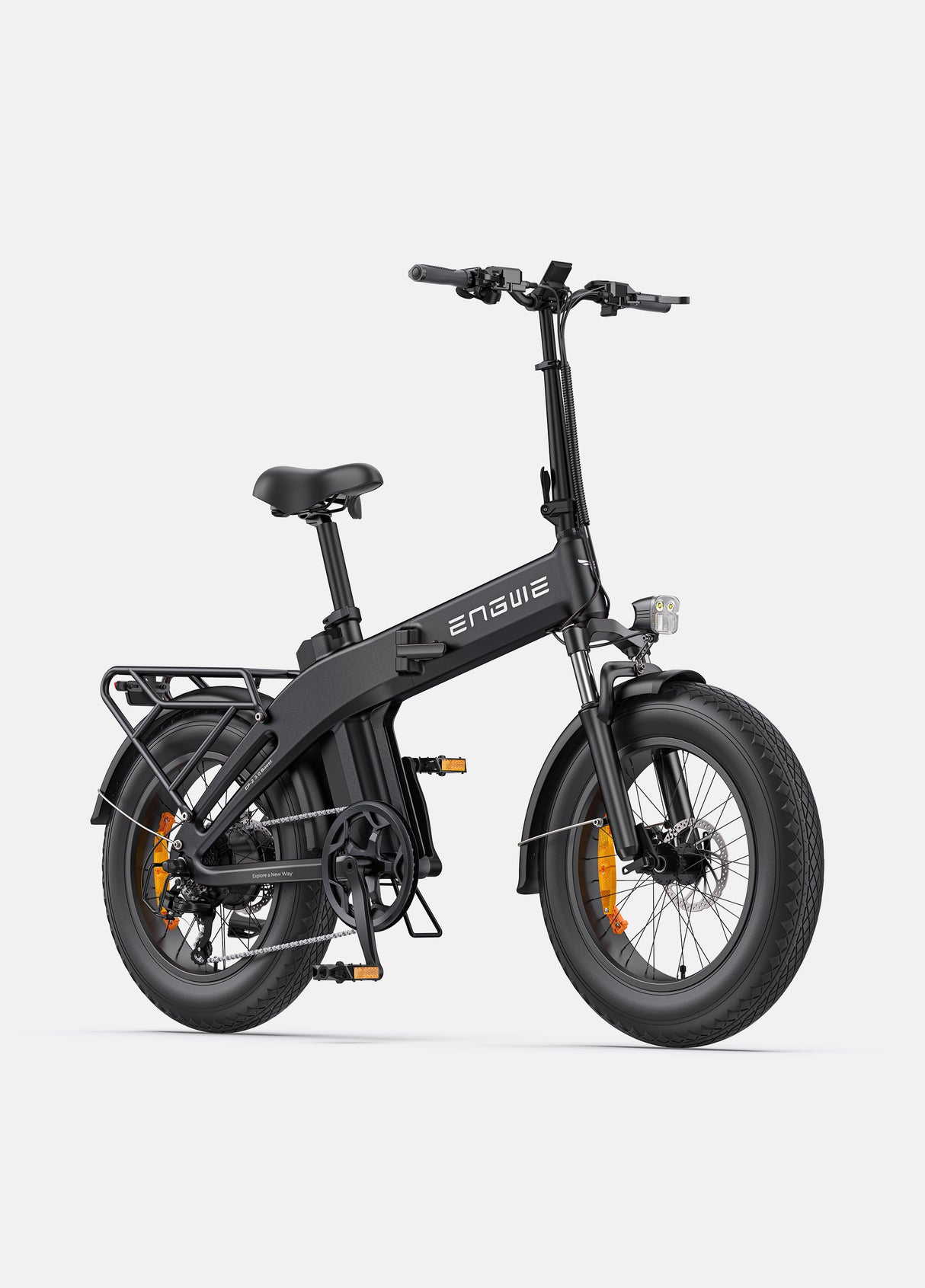
While modding your own performance-boosting components can be gratifying, it's not a sure win, with compatibility hassles and responsibility for wiring and reliability hot on its heels. An alternative and frequently superior option is to buy a full-suspension e-bike built from the ground up to fly. That's where brands like ENGWE shine, delivering powerful and well-thought-out e-bikes that are exhilarating to ride straight away. The ENGWE EP-2 3.0 Boost is precisely such a machine: a combination of adventure and a high-speed bike. It eliminates the guesswork of DIY upgrades by furnishing a perfectly matched system. It delivers powerful acceleration with its 75Nm motor and a higher-end speed of up to 25 km/h, making for withering acceleration! And combined with the most advanced torque sensor, power is supplied smoothly while ensuring the conversion rate reaches at least 92%, making sure no power is wasted. Safety is the name of the game, so there are powerful hydraulic disc brakes providing near-perfect stopping power when traveling at high speed. Boasting huge 20 x 4.0 all-terrain fat tires, it smashes every surface in its path – from the city to trails and everywhere in between. The long-range 120km battery and speedy 3.5-hour charge time make for more ride time and less downtime - the ultimate turn-key solution for those who require super-fast performance without all that pesky waiting around.


Essential Supporting Upgrades for Safety and Control
And last but not least, do not forget the vital support items that make your rocket ride fast and steer better too! Raising the speed limit on your e-bike puts more stress on its frame, brakes, and suspension. Failure to recognize these factors will spell doom. A faster bicycle would need a rigid base to control the higher forces and energy. You can turn with more confidence to hold your line, and when you find yourself traveling too fast and need to stop on a dime, you’ll be able to better control the loss of traction.
Braking System Update:
This is mandatory. The faster you are going, the more kinetic energy has to be dealt with when you stop. If you have a mechanical disc bike, upgrading to a hydraulic system will give you much more stopping power and modulation.
| Brake Type | Power | Feel/Modulation | Maintenance |
|---|---|---|---|
| Mechanical Disc | OK at Best | Not as Responsive | Regular cable tuning required |
| Hydraulic Disc | Excellent | Very responsive & precise | Less frequent, requires bleeding |
Suspension & Tires:
A high-quality suspension fork will smooth out the rough roads and allow you to keep your tires on the ground for better control at high speed. Also, a good set of tires with the right tread pattern and puncture resistance are obviously important for grip and reliability.
Frame Integrity Check:
Be sure to check over your bike frame closely at the welds and dropouts (where the wheel attaches) for any cracking or stress before making any significant upgrades in power. Not every frame is designed to deal with the torque that a meaty motor will throw at it.
Frequently Asked Questions
Q1: Is it legal to make my electric bike faster?
A: The laws differ widely from place to place. In most places, e-bikes are restricted in their speed and power when ridden on public roads. Going faster than this may cause your e-bike to be reclassified as a moped or motorcycle, which means it must have license plates and the operator must be licensed. Always check your local regulations.
Q2: Does upgrading my e-bike void the warranty?
A: Almost certainly, yes. Tinkering with the computerized speed governor or replacing critical parts such as the motor, controller, and battery will generally void your manufacturer's warranty.
Q3: What is the single best upgrade I can do for a major speed increase?
A: The simplest and cheapest process is usually derestricting the controller. For a real performance boost, increasing the battery voltage and using a corresponding controller for your e-bike will offer the biggest improvement in speed.
Enjoy the ride of an exciting new upgrade journey responsibly.