Once you find the perfect fat tire electric bike, your riding experience can be completely transformed—but when everything just seems to make sense, how do you decide between the terminologies used for suspensions? Knowing the distinction between hardtail, dual suspension, and full suspension is the most crucial to buying a bike, especially when it comes to things of adventure. This guide will demystify the most important of these features and empower you to make informed decisions when you choose a bike that’s right for your riding style, terrain, and personal comfort preferences.
1. Definitions of the Base Suspension Types and Explanation of their Mechanical Operations
Fundamentally, suspension on an e-bike is there to soak up what the trail throws at you, ultimately enhancing comfort and control. On a fat tire e-bike, where the big tires are already naturally doing some level of cushioning work, the mechanical suspension plays an even more specialized role. The differences at the core are what you need to know in order to make your decision. These are what your decision comes down to.
Hardtail Suspension
This is the plain and simple type of suspension. A hardtail e-bike has a suspension fork on the front to soak up bumps, but the rear of the frame is solid (a “hard tail”).
Parts: Composed of one suspension unit (the front fork) with springs inside it—they are usually coil or air—and a damper.
Function: The front fork collapses to absorb bumps from obstacles your front wheel will have hit, keeping the wheel on the ground better and your steering under control, and unloads shock into your handlebars and finally, across those great big bone-pumping things at the ends of your arms.
Rider Experience: Delivers an immediate, intuitive, and optimal feel - especially while pedaling on smooth terrain, eliminating energy-sucking suspension bob. It is typically lighter and easier to service.
Full Suspension (and Dual Suspension)
For ultimate control and comfort, this is what you are after. A full suspension electric bike features both a front fork and a rear shock that's built right into the frame. The “Full Suspension” or “Dual Suspension” labels have been bandied about in the market when referring to such a frame layout.
Parts: This system is formed by a front suspension fork and a rear shock absorber attached to the frame through an articulated mechanism of pivots and linkages.
Functionality: These two mechanisms act together. The front fork absorbs hits to the front wheel, while the rear shock works to soak up the rough stuff so the rest of your bike doesn’t have to. The rear suspension—for control through rocks, roots, and ruts—is key. It provides all-day comfort without sacrificing performance. The bike geometry creates a light, nimble ride in technical terrain, helping fight fatigue over hours of riding. An aluminum chassis keeps things lightweight and efficient, providing sharp handling. While systems were advanced enough already, they are even more impressive today. Much consideration went into enabling modifications for taller riders as well as increased ground clearance to be competitive in enduro-style races. All that tech helps keep fatigue at bay because it reduces the center of gravity, helping riders maintain their energy. A more capable suspension system translates into better compliance and the ability to cross ruts, which makes a huge difference.
Ride Feel: Provides a much smoother, more “plush" ride. It smooths even the roughest of rides and offers greater traction, as well as better handling over rough terrain - whether that means technical singletrack, a bumpy cattle grid, or loose gravel.
2. Terrain Applicability and Best Uses
Where you intend to ride is what would dictate the type of suspension you require. Matching the riding conditions to your bike's capacity is what makes it applicable and keeps you safe and having fun. Please think of your general riding environment to select the correct system.
Best For: Hardtail Fat Tire E-bikes are:
- Gravel Roads and Fire Trails: They excel on long segments of non-paved yet not-too-rough roads.
- Light to Medium Singletrack: Ideal for flowing singletracks where rock gardens and drops are few.
- City and Mixed Surfaces Ride: Great for pot-holed city streets, curbs, and park paths. You can ride a trail no problem but don’t want the weight or cost of rear suspension.
- Beach and Snow Riding: On looser surfaces, such as sand or snow, the main benefit of a fat tire bicycle is its easier flotation on top of the surface than a normal-tire bike; in these conditions, sometimes (but not always) simplicity and lighter weight can be an advantage.
Pro Tip: If you want to have the most comfortable ride on a hardtail you can, concentrate on your riding. Pedal slightly out of the saddle, with your knees and elbows bent as you approach a rough section. This in turn allows your body to be the natural suspension, taking on impacts the stiff rear frame cannot.
Where Full Suspension Fat Tire E-bikes Perform Best:
- Technical and Rocky Trails: These are their environment. The rear wheel stays glued to the ground for climbing traction and soaks up hammer-blow hits from rocks and roots on descents.
- Fast Downhill Sections: It is hard to stay calm and tracking down challenging terrains at high speeds without increased control and stability.
- All-Day Comfort: For those who battle back pain or would like to experience all-day comfort on the most unforgiving of surfaces, full suspension is unrivaled.
- Exploratory Off-Roading: If you’re planning to dive into the unknown on off-road terrain, full suspension e-bikes provide the confidence and capability to tackle anything in your way.
Knowledge Point: One of the most important adjustable features of your bike, when you have full suspension, is something called “sag.” This is how much your suspension compresses under your weight at rest. Proper sag (typically 20-30% of total suspension stroke) is crucial for the best performance. Check your bike’s manual for specific instructions; typically, it’s a matter of adjusting the air pressure in the shocks, and it is one easy step that makes all the difference.
3. The Best Full Suspension Electric Fat E-Bike: The ENGWE M20

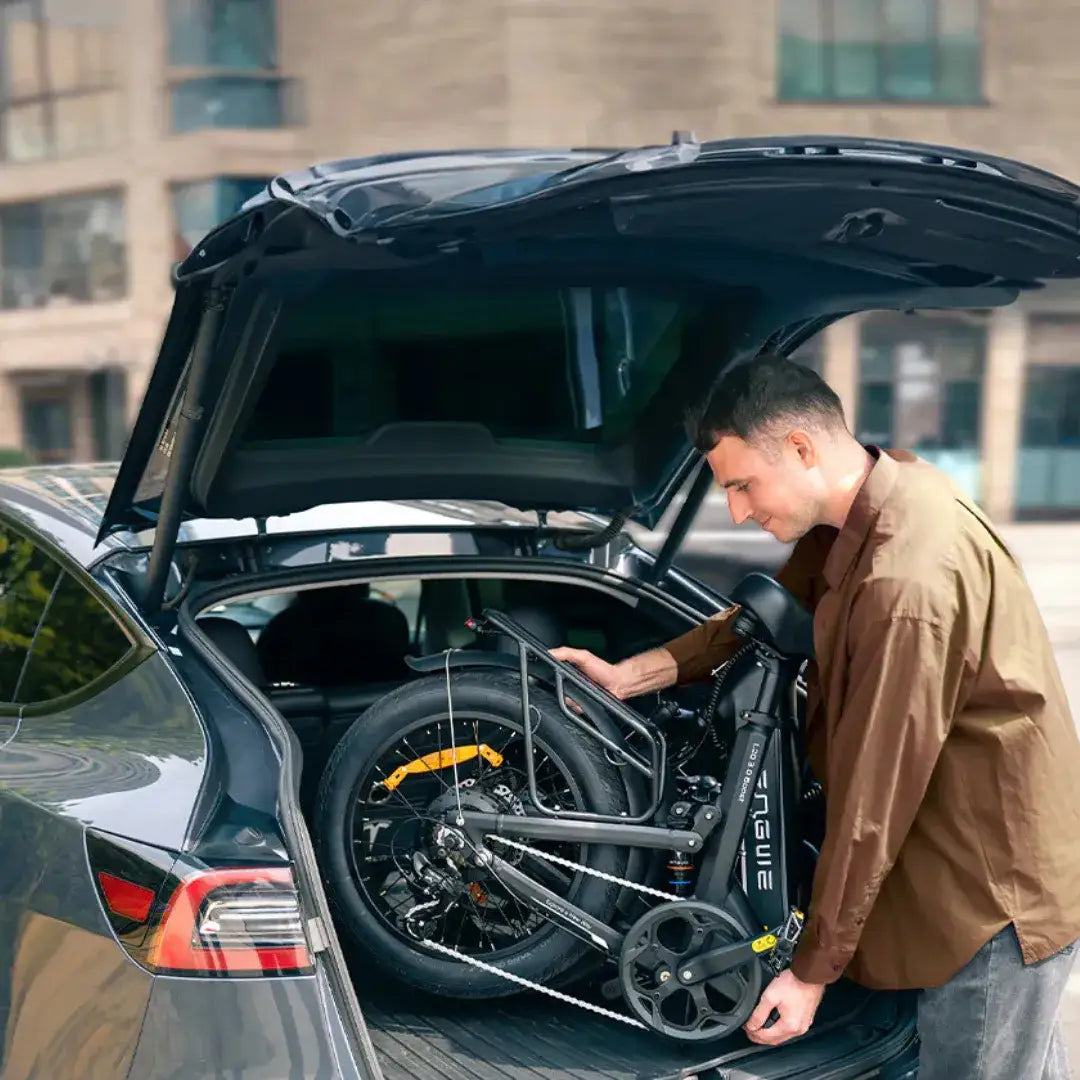
The ENGWE M20 is the first full-suspension mainstream electric fat bike setting new standards in performance and handling. The ultimate in off-the-beaten-path comfort and performance - a full suspension fat tire electric bike that’s truly designed to go anywhere! The ENGWE M20 is a premium example among these, having the best-looking motorcycle-inspired design from the bunch it belongs to, paired up with very capable dual suspension. It is purpose-built for riders who’d rather be on the trail than at the truck stop. The M20’s suspension is equipped with a hydraulic shock in the front for excellent impact absorption and reduced rider fatigue, while it offers a rear air shock. This double-punch creates twice the shock absorption of a regular bike, so no matter what you're riding, your passengers won't feel the bumps, for a superior ride.

The ENGWE M20 is designed for exploration. With hydraulic disc brakes, the bike offers more stopping power, delivering confidence and stability on city roads and mountain trails – all at a price that would leave you with enough to explore even more. It is step-over and tube-dropper compatible, so say goodbye to range anxiety. The 48V 26Ah battery (combined to get the maximum range) offers an eye-watering prospect of a distance you could not imagine.
Fun Features for the Adventurous Rider:
- Strong Motor: A powerful brushless motor produces 55 N.m of torque for tackling steep hills and accelerating with ease.
- Great Traction: The bike has super-wide 20x4.0-inch triple-layered tires that have a massive contact patch for unstoppable grip on loose surfaces such as dirt, sand, and snow.
- Reliable Stopping Power: Keeping you safe is the first priority.
- Smooth Gearing: The Shimano 7-speed drivetrain will help you find the right gear for climbing and accelerating.
- Sturdy Construction: A lightweight aluminum alloy frame gives a sturdy and resilient foundation to lift up to 120 kg (264 lbs).
For the rider seeking to embark on an off-road adventure without a care, with such control, strength, and passion: The ENGWE M20 is your best choice.
4. Cost, Maintenance, and Weight – The Real Decision Points
Aside from performance, your decision is heavily influenced by practical factors such as budget, ultimate longevity, and weight. Every type of suspension has a unique personality in these contexts, and knowing them can reduce the cost for *you* and help you select a bike that truly suits your way of life.
Here’s a look at the practical contrasts:
| Feature | Hardtail | Full / Dual Suspension |
|---|---|---|
| Price for New | Usually cheaper and more cost-effective. | Much more due to the rear shock, pivots, and frame design. |
| Maintenance Complexity | Lower. It is only the front fork that should see any form of servicing, and this should be an almost routine type of work. | Higher. Needs servicing of front fork/rear shock; main pivot and all frame pivot bearings are wear items that must be inspected or replaced halfway through its life cycle. |
| Long-Term Cost | Lower. Not as many proprietary moving parts to wear and replace. | Higher. Rear shock servicing and replacing the pivot bearings can prove expensive throughout the bike's life. |
| Weight | Lighter. The simpler frame and the absence of a rear shock make for a much lighter-feeling bike. | Heavier. The rear shock, links, and ultra-stout frame add to the overall heft. |
Money-Saving Tip: Whatever the type of suspension, you can greatly prolong its life with some basic care. Wipe your forks down with a clean cloth after every ride (just the shiny bits). This stops dirt and grime from being sucked into the seals (the leading cause of premature wear of seals).

5. A Look at the Broader Market
Granted, the M20 of which we speak is undoubtedly a great all-in-one full suspension fat e-bike option, so you might be asking yourself: Which model to choose? There are a lot of options in the full suspension fat e-bike realm. For riders doing their homework, it may help to know about other brands that play in this field. There tends to be a different emphasis they put on their designs, whether motor power, battery integration, or certain use cases like hunting or hauling cargo. When you are investigating these, it will make you more aware of the various features provided by different manufacturers.
Popular Fat Tire E-Bike Brands:
- Rad Power Bikes: Frequently praised for their affordable, utilitarian options that appeal to the masses of riders.
- Himiway: The brand, which is known for high-powered motors and durable frame builds in their long-range e-bikes.
- Aventon: Specializes in mixing sleek design with performance features to create whips that are as stylish as they are capable.
- QuietKat: Focuses on tough, heavy-duty electric bikes designed for hunters, anglers, and extreme off-roaders.
Frequently Asked Questions
Q1: Hardtail vs. Full Suspension for the beginner?
A: That depends on your budget and where you are going to ride. A hardtail is a very solid starting point – it’s cheaper, simpler to maintain, and forces you to learn the basics, such as picking smoother lines. But for a beginner hitting rougher trails from the get-go, a full-suspension mountain bike could feel more forgiving and confidence‑inspiring.
Q2: Why does the battery range vary?
A: Yes, a little bit. The weight of full suspension bikes is more, and it takes more power from the battery to move. On extremely difficult terrain, though, the traction and momentum retention does help on this front to a limited degree. Your riding style, assist mode, and terrain will have a far greater influence on your range.
Q3: Can I convert my hardtail fat tire e-bike to a full suspension one?
A: You can replace parts for comfort, but you cannot really convert a hardtail frame to full suspension. The frame does not include the appropriate pivots or mounts for the rear suspension. This would be unsafe and structurally weak. It is far better and safer to just buy a bike that was designed as a full suspension from scratch.
At the end of the day, the perfect suspension for you will depend on what type of adventure you prefer.