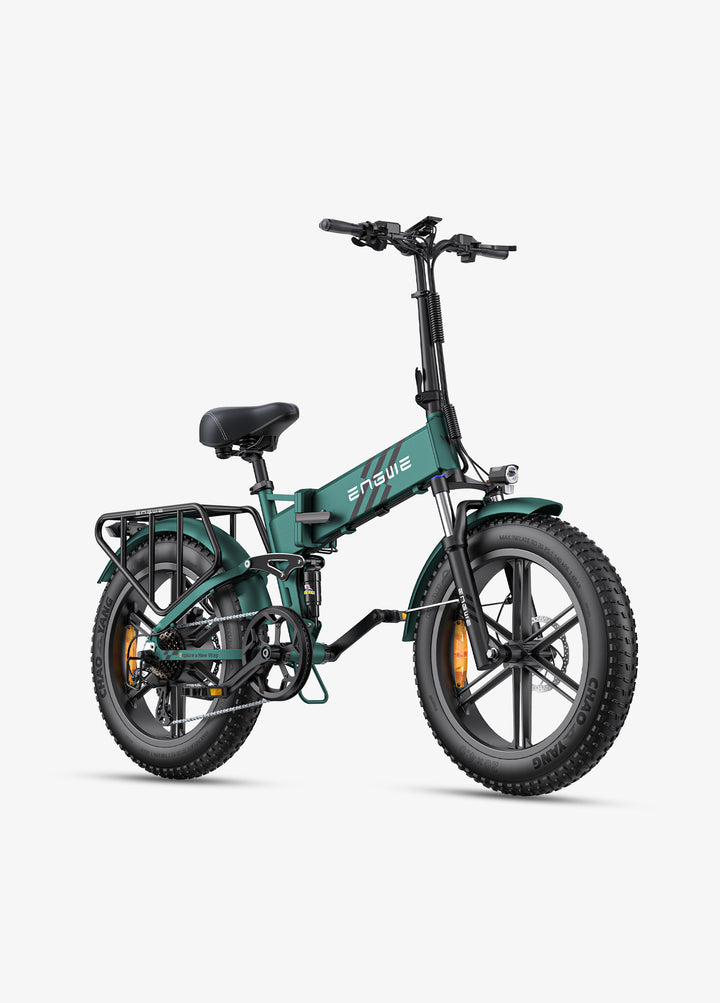
Sandy beaches definitely look like fun, but they can be incredibly difficult and frustrating to bike on, especially with a standard bicycle. Thin tires tend to get stuck, wheels spin without control, and balance is lost within moments. This is the main reason why the bike fat bike category has experienced such rapid growth.
Bikes with tire widths commonly reaching four inches or more can glide over soft surfaces rather than getting stuck in them. People who desire a peaceful ride along the shore, hauling their fishing equipment, or just having a great time watching the sunset are leaning towards fat tire models due to one simple fact: they perform well.
A good bicycle fat bike doesn't depend on brute force. It depends on the contact patch, low pressure, and continuous torque. When you reduce tire pressure to approximately 8-15 PSI, the tire behaves like a snowshoe as it spreads out. The rider's weight is distributed, and the bike remains on top of the sand. A metal frame and motor providing low-speed support without effort complete a setup that, even when the tide has left the sand loose and dry, feels like a breeze.
Why Fat Tires Change Everything on Sand
Conventional road or mountain tires are crafted for slicing through the terrain and getting grip on solid surfaces. However, such a design turns into a drawback when it comes to a beach. A fat bike bicycle deals with this issue by significantly enlarging the surface area.
Charting a bigger volume also serves as a natural suspension. ENGWE's guides say that more air in a fat tire ebike reduces bumps on rough roads. This extra air also helps you ride on soft surfaces like sand, snow, or mud, where regular ebikes struggle.
One more advantage is stability. The wide tire helps keep the bike upright at low speeds. This is useful when maneuvering between shells, driftwood, or wet areas. Also, lots of people who do the riding say sometimes it even feels like you are floating rather than making an effort to pedal. That is also the reason why the fat tire electric bike is nowadays generally understood as a vehicle to get around daily in many coastal cities rather than just something for entertainment.

6 E-Bikes That Handle Sand Well
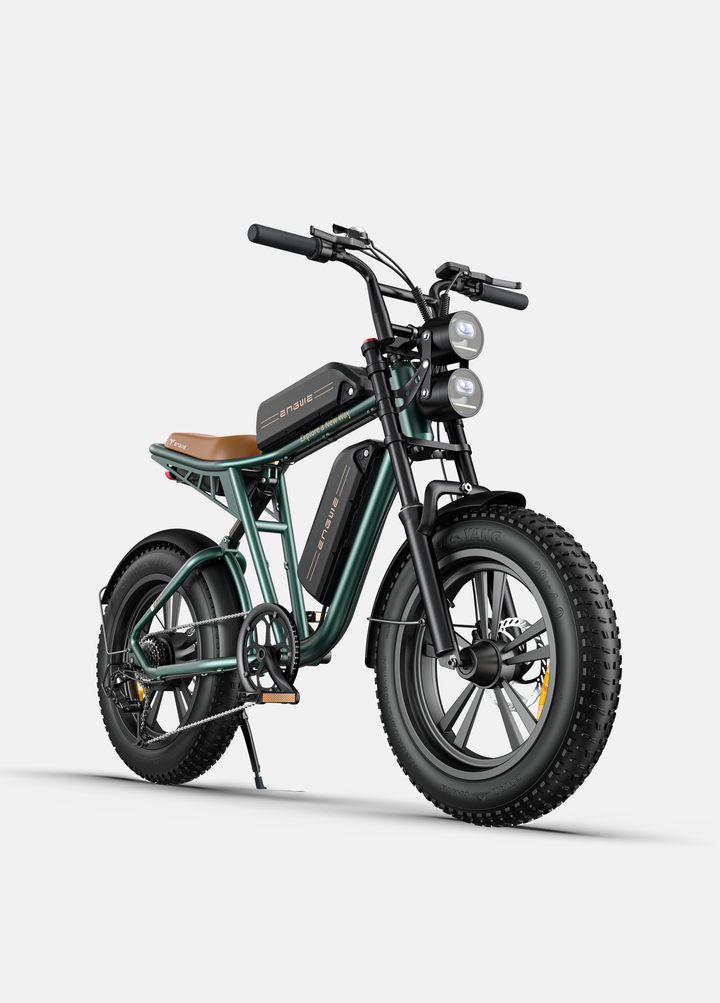
1. ENGWE M1
ENGWE M1 is a moped-style fatbike e bike that comes with a dual seat and a relaxed geometry that makes it one of its kind. A 250W motor with 65Nm of torque powers it, and it is claimed to have up to 170 km of range, so you can take long trips along the shore.
Its fat tires and dual suspension system can handle the bumps of soft sand and the paths of uneven beach access. People who take a passenger or extra gear will like the stability that is a result of a low center of gravity and a wide contact patch.


2. Rad Power Bikes RadRover 6 Plus
The Rad Power Bikes RadRover 6 Plus is among the most famous fat tire ebike models in North America. It features a 750W hub motor, hydraulic disc brakes, and 26" x 4" puncture-resistant tires.
Reviewers mention a 25 to 45 mile range and excellent hill-climbing performance, which also helps getting out of soft sand and reaching a road again. The step-thru model allows very easy mounting even when you wear beach footwear.

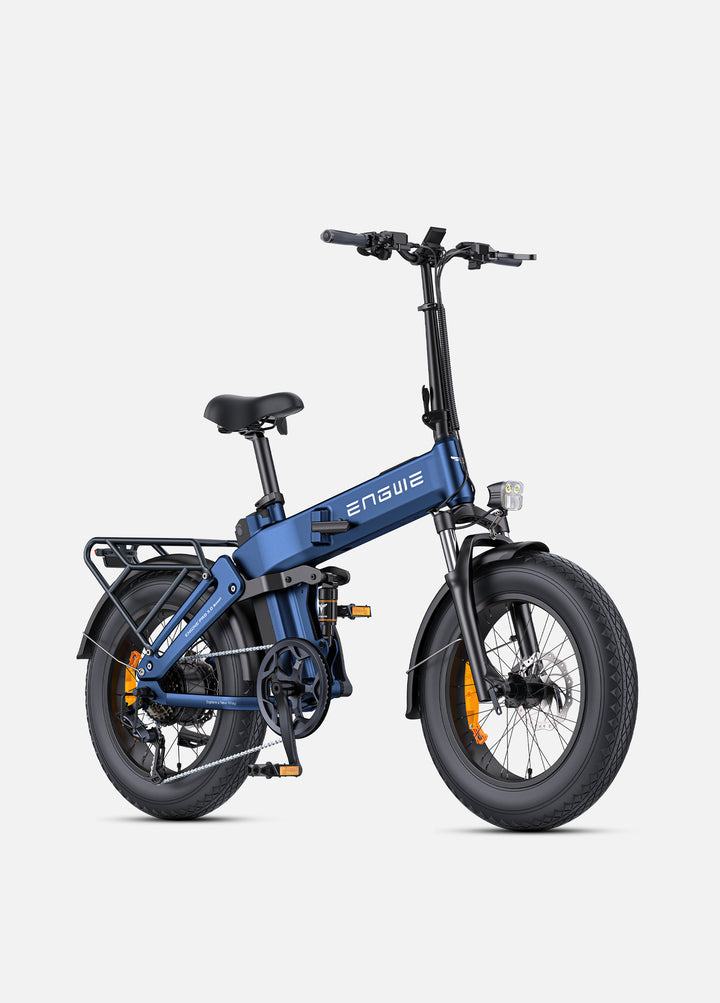
3. ENGWE Engine Pro 3.0 Boost
Next, we have ENGWE Engine Pro 3.0 Boost, which is branded as a high-performance folding model from their range. It is said to be an EU-legal 250W motor delivering 90Nm torque and a maximum of 130 km range, combined with a full suspension setup. A folding frame comes in handy for those who drive to a beach and keep a bike in the car boot.
On ENGWE's fat-tire bikes page, the ENGWE Engine Pro 3.0 Boost stands out. It’s the top pick for its full suspension system and powerful torque. This bike lets you ride smoothly over rough terrain. Sand riding will be steady traction when you leave the packed shoreline and start venturing into loose dunes.


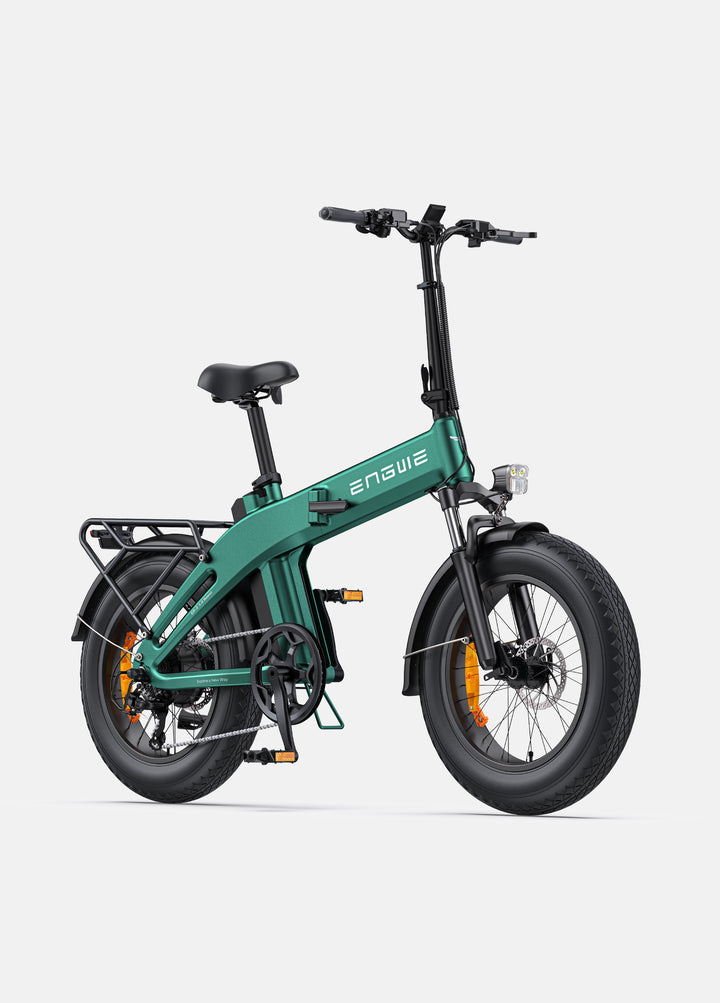
4. ENGWE L20 3.0 Pro
The ENGWE L20 3.0 Pro is a small, smart e-bike that doesn't compromise on power. The bike is driven by a 250W mid-drive motor, with a torque of 100Nm, features full suspension, and has a range of up to 160 km. It has also been awarded for its design in 2025, partly because of its waterproofing feature, IPX7, and security via IoT.
The mid-drive system of the e-bike distributes the weight evenly, which is very useful for riders who go to the beach. It also allows better handling when the front tire is floating. The small 20-inch wheels provide agility while navigating through narrow beach towns, and the fat tires, however, still offer the float needed for the sand.


5. Aventon Aventure.2
The Aventon Aventure.2 is another very popular fat e bike that gets brought up a lot. It features 4-inch wide wheels, a front suspension fork, pedal assist with a torque sensor, and the manufacturer says it can go 60 miles on a single charge.
Fairfaxines show a 750W motor and a 720Wh battery, with a max power-assisted speed of about 28 mph on private areas. Aventon markets is an all-terrain bike. Users often choose it for beach camping. Its carrying capacity and front and rear lights make it a great option.

6. ENGWE P275 SE
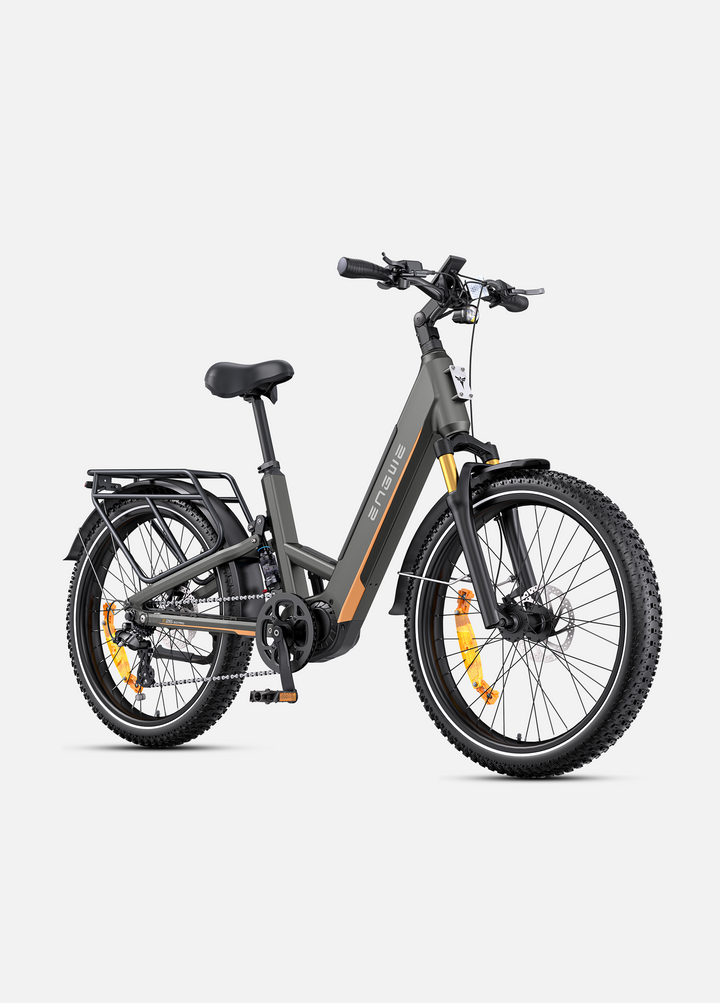
ENGWE P275 SE is a ride for those qua riders who alternate between pavement and sand.
It is not quite a traditional fat bike; however, it is commonly equipped with wider commuter tires and a torque sensor that enhances pedaling comfort and makes it feel very natural. The official specs feature a 250W motor and a 100 km range. It has a torque sensor, Shimano 7-speed gears, and hydraulic disc brakes. Plus, it comes with a 36V 13Ah battery.
This rig can be effective on firm, wet sand, especially for riders who give priority to efficiency and lightness rather than to maximum float. This is a sign of how the bike fat bike concept is changing to capture more versatile platforms here on Earth.


How to Ride a Bike Fat Bike on Sand Without Struggling
Even a great fatbike will be just a piece of equipment if the rider's technique is not up to the mark. Begin by letting some air out of your tires when you arrive at the point where you are going to cross deep sand. A good rule of thumb is to go to the lowest point of what the manufacturer suggests; generally, it is about 8 PSI.
Remain in a low gear and control your strokes so they are fluid. A forceful, sudden release of power will cause the rear tire to sink in; thus, it is best to increase your effort gradually. Keep your eyes on the path ahead, and if you can, select the wet and darker colored sand close to the waterline, as it is more solid and requires less exertion.
Weight distribution matters as well. Moving your weight a bit towards the rear helps in keeping the front tire light, and thus, it doesn't dig into the sand. In case you sense the bike decelerating, don't struggle against it. Get on your feet, pedal gently, and let the wide tires figure out the best path themselves. A lot of the riders exploring fat bike fat bike tips realize that keeping momentum beats giving horsepower on sand.

After the ride, rinse your bike with fresh water, focusing in particular on the drivetrain and brakes. Salt makes rust come faster, but a short wash can really increase the lifespan of your bike.
According to ENGWE, a high-quality fat bike ebike frame and motor with regular maintenance can be expected to last 5 to 10 years, whereas tires generally cover 3, 000 to 5, 000 kilometers before requiring replacement. Maintaining tire pressure within the 5 to 20-PSI range also helps in preventing pinch flats.
To Conclude
You don’t need strength to cross sandy terrain. It’s all about choosing the right tool. A well-made bike fat bike that has big tires, is capable of delivering balanced torque, and is easy to maintain, will change your heartbreaking trudge into a pleasant slide.
If you like the ENGWE M1 for its long range and double seat, the ENGWE Engine Pro 3.0 Boost for its easy folding, the ENGWE L20 3.0 Pro for its compact power, or the ENGWE P275 SE for mixed surfaces, the main idea remains the same. You also have great options like the RadRover 6 Plus and Aventon Aventure.2. These bikes make it easy to enjoy a day at the beach without worrying about your wheels.
Frequently Asked Questions
Is a fat tire electric bike better than a normal bike for the beach?
Is a fat tire electric bike better than a normal bike for the beach?
Ordinary bike tires are narrow, and narrow tires concentrate weight, so a normal bike sinks. A fat tyre electric bike distributes that weight, so it is able to float on sand and also provides natural shock absorption. Therefore, it is more stable and less tiring for beach riding.
Can I use a fat bike on roads too?
Can I use a fat bike on roads too?
Yes. Modern designs roll well on pavement, especially models with lockable suspension and street-oriented tread. You will feel more rolling resistance than a road bike, but you gain the ability to transition from boardwalk to sand without changing bikes.
What is the ideal tire pressure for sand?
What is the ideal tire pressure for sand?
Starting from 10 to 12 PSI should work well with 4-inch tires on the packed sand. Moving to loose sand, you will want to go down to 6 to 8 PSI. It is very important that you do not go beyond the sidewall rating at any time and inflate your tires again before you head back on the pavement.
Do I need a motor to ride on sand?
Do I need a motor to ride on sand?
No, a motor definitely gives a big advantage. A bicycle with fat ebike tires that are powered only by pedaling can work on firm sand. A fat bike ebike with motor torque assistance makes long beach rides much easier. It helps you handle soft sand, especially when you're carrying gear.
How much should I expect to pay?
How much should I expect to pay?
ENGWE's buying guide has three tiers:
- Entry-level models cost $900 to $1,500.
- Mid-range models, with better batteries and hydraulic brakes, range from $1,500 to $2,500.
- Premium models are priced above $2,500.
The majority of beach-ready fat bikes, featuring full suspension and long range, belong to the mid-range."