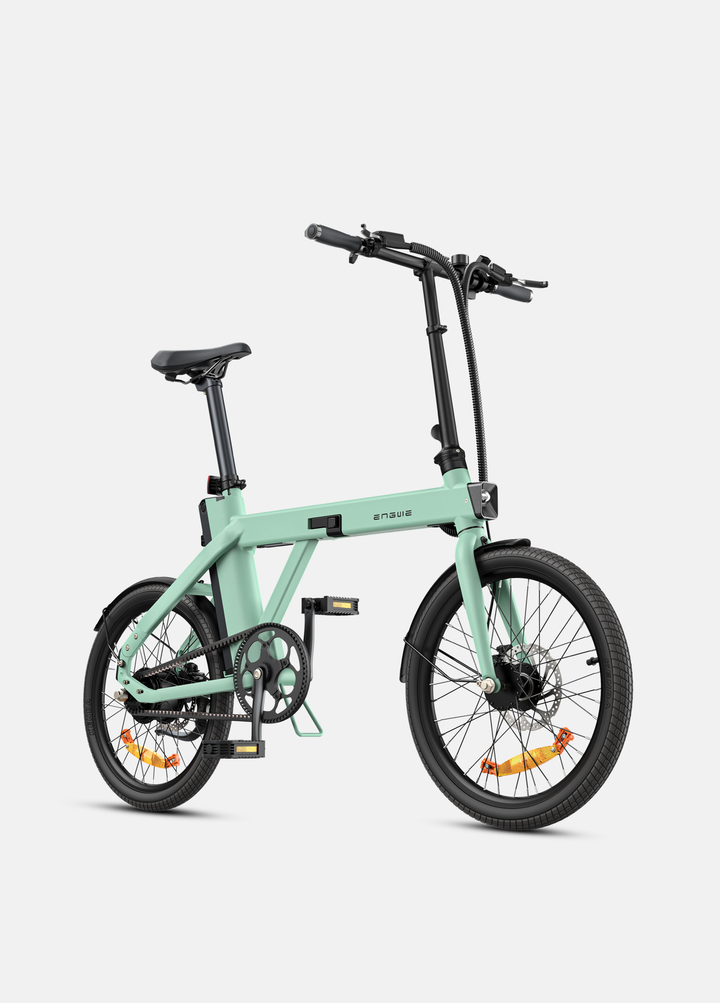
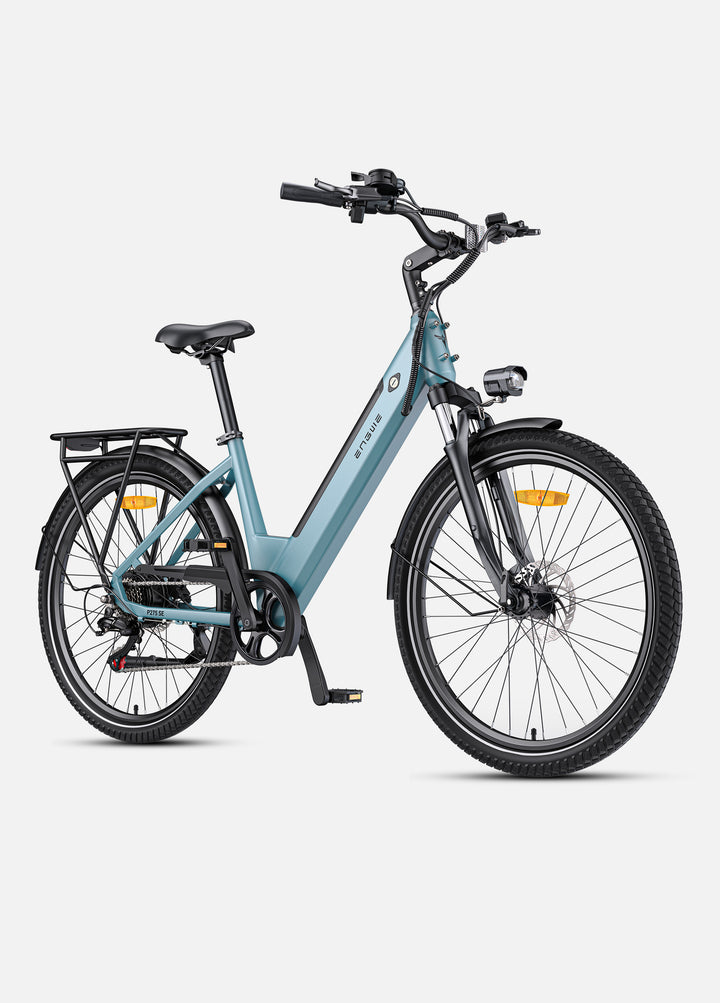
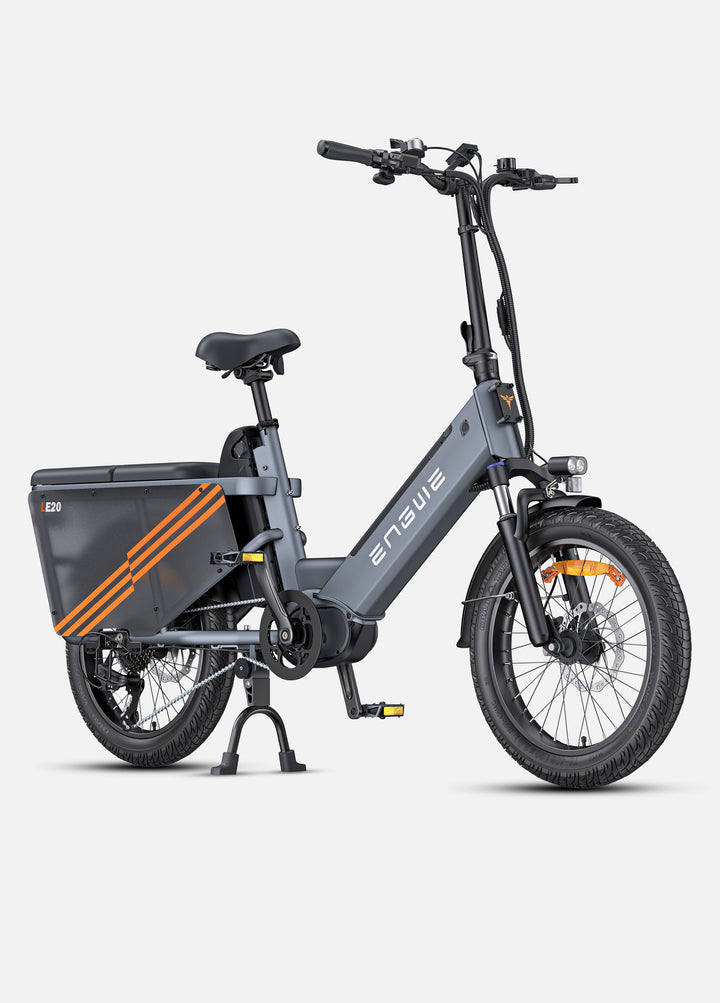
An e-bike can hardly function without a good ebike charger. With an increase in the number of riders looking for freedom, flexibility, and the ability to go off-grid, portable and solar ebike chargers have turned out to be the most appropriate means of recharging during long rides, camping trips, or daily commutes. These ingenious chargers are battery-friendly at any time and anywhere, be it on the trail, at the campsite, or far from a power outlet.
Here, we provide a list of the best 8 compact and solar-powered ebike battery charger models that offer ease, energy-saving, and trustworthiness. Let's get started!
What is an e-bike charger?
An electric bike charger is a device that safely recharges an electric bike battery by converting AC power to a suitable DC voltage. It also manages current consumption to keep the battery in the best condition and extend its lifespan. So, it is necessary to have a device like the ENGWE charger if you want to keep your e-bike working well and your battery lasting for a long time.

Top 8 Portable & Solar Charging Options for Your Ebike
Knowing the various categories of a charger for ebike is essential if you want to keep your e-bike battery in good shape and have an efficient charging process. What are the common options?

1. Standard Outlet
One of the ways for an ebike to be charged that will enable the batteries to be charged is a standard outlet, like a wall outlet. A portable ebike charger is usable almost everywhere, from home to workplace, and may accommodate an electric bike charger for all battery ranges. It is nice if you ask the business for permission to use the outlet in a public area.
These plugs are also capable of charging batteries from a 48V ebike battery charger to 120V. It is good for the charging cycle of any electric device, such as electric cars or electric bikes.
2. Generator
If you're still unsure of the proper way to charge an electric bike, then using a generator to ebike battery charge can be your rescue. A bicycle with a generator is a simple tool. It is an item that connects the battery of an e-bike to a generator, with only one end of the charging cable plugged into the generator. The higher the generator's power output, the longer the battery life of an e-bike will be per charge.
3. Fast Electric Bike Chargers
A fast charger is basically a device that enables you to charge your e-bike battery in the shortest time possible. A fast charger will supply a higher current, typically 4-6 amps, which will drastically reduce charging time. By way of example, a fast battery charger for ebike can fully charge a battery in as little as 2 to 4 hours, while a regular charger will take 6 to 8 hours to do the same.
Though fast charging may lead to heating of the battery, which hence lowers its efficiency, fast chargers are designed to have safety features that take care of most of the risks.
4. Portable Electric Bike Chargers
Portable ebike 48V battery charger has changed the game for people who need a convenient way to charge their e-bikes. These chargers are small and light, so you can easily put them in a backpack or saddlebag. In case you are a long-distance traveler or a daily commuter, a portable charger will keep your e-bike battery full no matter where you are.
The greatest part of portable chargers is that they are compatible with any standard ebike charging stations; thus, you can charge your e-bike at home, at your workplace, or even at a coffee shop.
5. Wireless Chargers
Wireless chargers are also one of the fascinating innovations. These chargers use electromagnetic fields to transfer energy without physical connectors. All you have to do is place your e-bike on a charging pad, and the battery will start charging automatically. Wireless charging is a cable-free and connector-free way that makes it extremely handy. Though the technology is still young, it may not be compatible with a wide range of e-bike models because of different ebike charger connector types.
6. Smart E-Bike Chargers
Smart chargers are essentially the future generation of electric bike chargers. These chargers come with sophisticated tech that allows them to talk with the e-bike's battery management system (BMS). A smart charger typically includes safety features such as overcharge protection, temperature monitoring, and automatic shut-off.
So, if you want a charger that is not only convenient but also technologically advanced, then a smart charger like a Bosch ebike charger would be the right pick.

7. Car Charger
One interesting aspect of ebikes is that they can consume power from a 120V battery charger. During charging, this attribute may be utilized by connecting your battery to a corresponding receiver, like a car battery, to charge an electric bike. If your vehicle is equipped with a 120V power source and a battery outlet, connect the ebike battery charger to it and start the engine.
Remember that a 48V battery is useless during the electric bike charging cycle.
So, if you're planning a 48 volt ebike battery charge, this is a point that you must have in your mind. After that, the batteries of the bike should be plugged into the socket for some hours.
8. Solar-Powered Chargers
Innovation in chargers is redefining the limits of e-bike charging technology. For example, solar-powered chargers absorb sunlight to recharge your e-bike battery. In the end, these chargers are green and economical. Outdoor types who take advantage of nature under the sun will find it great. Yet, an ebike solar charger relies on the weather, so it may not be suitable in places where it is cloudy or raining.
How Ebike Chargers Work: A Simple Breakdown
Electric bike chargers like the Jetson ebike charger are different based on the manufacturer and the voltage of the battery they use, so the amp-hour watt hours for charging time or power source will be different for each electric bike. Besides, there are some rules that you should be aware of and follow; they will assist you with the battery charging cycle and help prevent issues like an ebike battery not charging.

Here is one of the ways that you can use to charge ebike:
-
Take the battery pack out of the electric bicycle
-
Put the battery switch in the off position
-
Attach the battery pack to the charger
-
Connect the electric bike's battery to the power source
-
Starting the ebike battery charger can be done by turning the plug on.
Electric Bike Charging Duration
It will take from 3 to 6 hours to recharge an e-bike, depending on whether it is a fully used lithium-ion battery. Charging batteries that are only partially charged will take less time than charging a full battery. In case you are reluctant to wait until the very last hour, and the electric charging process, while it is referred to as top-off, is completed, don't worry, it will not be a problem.
When an efficient ebike charger 48V is used, some batteries can charge up to 90% in 2 to 3 hours. It is generally necessary to have a 500- to 800-watt-hour charger to fully charge a battery due to different battery ranges and capacities.
How Often and When to Charge Your Ebike Battery?
It can take a new e-bike up to 12 hours to recharge the battery fully, and the battery should work normally after that. From then on, it is recommended to perform e-bike battery charging cycles only between 20% and 80%. A proper charger, such as a 48V battery charger ebike, or ebike battery charger 36V, provides the most effective and safest charging for your particular battery.
Usually, electric bikes are equipped with light indicators showing the necessity of charging the electric bicycle. The green light means that the ebike charging is finished and the battery is fully charged. Nevertheless, there may be a situation when the ebike battery fully charged but not working, and this could mean that there is a problem with the connection or an internal fault.
Basically, when the red light appears, it is only necessary that you connect the charger to your battery. Make sure your battery is off before connecting it to a charger. Here, the ENGWE LE20 fast charger is a perfect example, efficiently charging your battery while ensuring safety.

Moreover, there are some reasons that you should think of while using an electric bike charger:
-
You're aiming to ride an e-bike the very same day or the next day
-
The electric bike's battery is drained by less than 30-35%
-
The day prior to a long-distance ride, it is necessary that the device is fully charged.
-
It has been a long time since you last used it
-
Provided the battery of the electric bike is kept in a safe place
-
For a few e-bike models, the battery indicator will flash even when the battery is fully charged.
Summary
You might be thinking about how to charge an electric bike and where to do it. Is it that useful to have a 48V ebike charger or a generator to charge an electric bike? Or maybe a power bank for the e-bike, an e-bike USB charger, or a bike with a generator would be better? Does a solar charger, car battery, or wall outlet help the battery life and charging cycle? There is nothing to worry about if you follow the instructions of your ebike battery charger.
So, take your bike and have a great time! Moreover, if you want to learn more and find the best options, visit ENGWE! If you are looking for a nearby place to get a charger, just look up "ebike charger near me" to find stores or services in your area that offer trustworthy, prompt charging.
Frequently Asked Questions
Can I use a fast charger all the time?
If fast chargers are used frequently, the battery life may be decreased a little due to the production of heat. So, use them only from time to time if you really need a quick recharge. For everyday charging, use a universal ebike charger to keep the battery in good condition.
What happens if I use the wrong charger for my e-bike?
Incompatible chargers can cause harm to your battery or lower its lifespan. So, it is better to always verify the voltage, current, and connector type for compatibility. The best way to find the right charger is to check the manufacturer's manual for your e-bike.
How to charge ebike battery without charger?
You may use different sources, such as a power bank of large capacity, a solar panel with the appropriate controller, an inverter connected to the battery of a car, a generator, or even a pedal-powered generator, to charge an e-bike battery without its specific charger.
Are solar-powered chargers reliable for e-bikes?
Small solar devices are efficient in charging on sunny days but can be slow to charge compared to regular ones. They are perfect for people who love the outdoors or are environmentally friendly. Nevertheless, they may not be feasible in dull or rainy weather conditions.