DYU's Comprehensive Review
Welcome to the ultimate review of DYU electric bikes - a company that has made a big name in the world of urban mobility. If you're new to e-bikes, then chances are you've run across them when searching for your very own bike. They promise comfort, value, and the latest in tech gear targeting the city-dweller, the student, and the last-mile commute. However, beneath the glossy marketing, how does it really perform as a real-world electric bike to own and ride? That is what we are here to address in this review. We separate the signal from the noise to bring you the very best analysis of the brand, its primary products, and the main elements you should bear in mind. We want to provide you with all the information that you need to make a decision on whether a DYU electric bike is the best companion for your day-to-day trips.
DYU Models and Hands-On Reviews
DYU One by One, an electric bike that is fit for city life. Combining time-tested invention and discovery with freedom, you can enjoy the limitless creativity of the city. And finding your fit starts by understanding their product hierarchy.
DYU D Series - Smart Folding Electric Bike
(More emphasis on portability and size)
DYU D3F
DYU D3+
DYU C Series - City Commuter Electric Bikes
(Comfort and utility for city riding)
DYU C1
DYU C6
DYU T Series – Best Commuter Electric Bikes
(They come with modern features such as Torque Sensors)
DYU T1
DYU A Series - The Lightweight and Portable Electric Bike of Choice
DYU A1F
DYU A5
DYU V Series - Owning Your Own Designable Folding Electric Bikes
DYU V1
DYU Fat Tyre Series - Off-Road E-Bikes
DYU King 750
DYU FF500
Now we follow with the hands-on experience for several popular models of DYU. I’ve put lots of miles on these bikes to get to know their personality, performance, and best use-cases.
DYU D3F
The first impression about the DYU D3F is it is very small in size. There is less the feeling of riding a regular bike, more that of a dedicated personal transport device. In short: The ride is zippy and nimble and well set up for zipping through clogged city streets or covering the last mile from the train station to the office. Its cadence sensor means the 250W hub motor gives you a noticeable and instant boost when you start pedaling. It’s not a nuanced, gentle assist; it’s an “on-or-off” feeling, and it’s So. Much. Fun on short sprints. Aesthetically it's a real looker too; all those tiny wheels and diminutive frame are bound to turn a few heads, and it folds so quickly you'll have it cracked within a few minutes, it's a proper "tuck-under-the-desk" machine.
DYU C6
Transitioning to the DYU C6, it’s all about convenience and comfort. This is much more in the style of a classic step-through city bike. The riding position is upright and comfortable, with no gut pain or wrist strain. The big wheels roll over city blemishes with more poise than the D3F’s. The integrated rear rack is instantly practical for strapping on a bag of groceries or a work backpack. The power is the same as the D3F — instant and robust from the hub motor — but on the C6 it seems more fitting to cruise bike lanes, set cruising speeds, and just maintain a speed.
DYU T1
The DYU T1 offers the brand's solution for luxury seekers. The big upgrade here is the torque sensor. It is night and day. It’s not power delivery as an on/off switch; it’s this incredibly smooth, intuitive extension of your own effort. Pedal easily and you receive the softest of nudges. Push harder on a hill and the motor smoothly adds in more power. It’s organic and feels as if the bike is reading your mind. That makes for a much smoother, more efficient ride that’s ultimately more comfortable than everything else, especially if you’re traveling long distances. It may look smooth, urban, and contemporary like its younger siblings, but it rides like the quality product it is.

The Ownership Experience and Alternatives
When you're entertaining the idea of visiting the store for a test ride, there is something else to keep in mind. These are other important considerations that influence the ownership experience and that, in the end, help you decide if this brand fits your lifestyle.
Accessibility and Convenience
One of the greatest advantages of DYU is its design concept. Most of their models are lightweight and are built on small or collapsible frames. This isn’t a mere gimmick; it’s a central function intended for their audience. If you live in an apartment without a garage, want to take your bike up to your flat, or even fold it up and store it in the trunk of your car or RV, DYU's craftsmanship is the answer to an age-old problem. The assembly is usually pretty easy and a lot of the harder parts have already been put in place ahead of time so it’s as simple as taking it out of the box and following the instructions. This makes it friendlier to new bike tinkerers who aren't amateur barn-builders. The controls tend to be simple, with clear displays of battery life and assist level — their overall aim is to get the rider on the bike and not fumbling with complicated settings. And the battery systems are a huge plus. Almost every model has a removable battery, a game-changer for city charging. Then, when you reach your destination, you can leave the bike locked outside or in a common storage area, bringing only the lightweight battery inside to charge at your desk or in your apartment. This practicality cannot be overstated. The DYU community and support network is strong, well-supported by a huge catalog of DYU tutorials and user groups which make troubleshooting and DIY modifications a lot less of a headache when the day comes and enable DYU beginners to enjoy peace of mind.
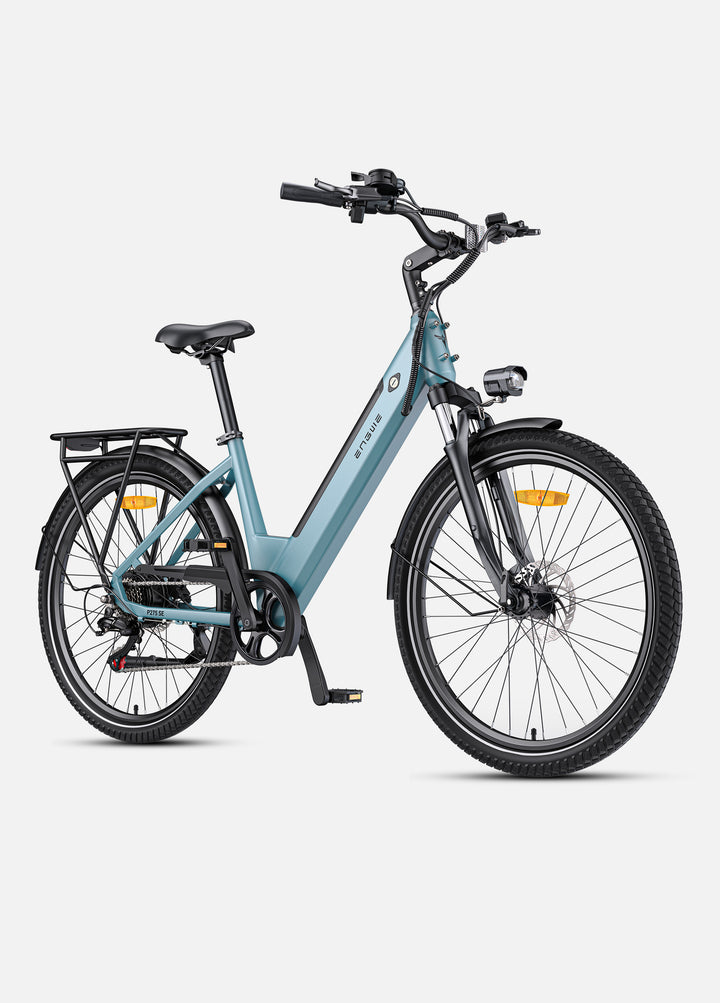
For people looking to commute within city limits, the market has exciting alternatives that provide a more premium, refined, and technologically advanced experience. If you like the idea of the comfort of a city e-bike but want something with a bit more performance and a better ride, the ENGWE P275 SE is a great option to consider. Constructed from the highest quality materials, it both looks and feels amazingly sturdy, and the 6061 Aluminum Alloy Frame paired with a road-legal 250W brushless motor makes for an exceptionally impressive and high-performance bike. The real MVP of the ENGWE E-bike is the state-of-the-art torque sensor that’s driven by ENGWE’s E-SATS system, providing an ultra-responsive and extremely smooth pedal assist. The feedback is tied exactly to your effort, so it eliminates that jerky feeling of simpler systems. It’s made for long rides, offering a maximum range of 100 km with its detachable 36V 13Ah lithium-ion battery. For rider comfort, it adopts the Dutch-style upright position, a swallow-shaped handlebar, and soft, shock-absorbing 27.5*1.95 city tires. Safety and control are taken care of by reliable, sure-footed hydraulic front and rear disc brakes with 160mm discs, effective in all conditions. The ENGWE P275 SE connects the power of today's modern smart tech to a convenient app, with 24/7 data and navigation displayed on a vivid color LCD, making it an ideal choice for the sophisticated commuter who demands an organic ride experience built on top-level range and components.

DYU Electric Bike Parameter Comparison
| Features | DYU D3F | DYU C6 | DYU T1 | DYU King 750 |
|---|---|---|---|---|
| Primary Features | Ultra-portable, Last-Mile Travel | Urban Commuting and Utility | Premium Commuter, Torque Sensor | All-Terrain, High Power |
| Motor Type | 250W Rear Hub Motor | 250W Rear Hub Motor | 250W Rear Hub Motor | 750W Rear Hub Motor |
| Type of Sensor | Cadence Sensor | Cadence Sensor | Torque Sensor | Cadence Sensor |
| Frame Style | Folding, Low-Step | Step-Through City | Step-Through City | Fat Tire, High-Step |
| Wheel Size | 14-inch | 26-inch | 26-inch | 26x4-inch Fat Tires |
| Battery | 36V 10Ah, Removable | 36V 12.5Ah, Removable | 36V 12Ah, Removable | 48V 20Ah, Removable |
| Key Feature | Extreme Portability and Light Weight | Built-in Rack & Comfort | Smooth ride thanks to the torque sensor | High Power and Fat Tires |
| Brakes | Front & Rear Disc Brakes | Front & Rear Disc Brakes | Front & Rear Disc Brakes | Hydraulic Disc Brakes |

5 Common Questions About DYU Electric Bikes
What is the practical range of a DYU bike?
The claimed range is always calculated under lab conditions: flat terrain, lightweight rider, no wind, lowest pedal-assist (PAS) setting. Practical range in the real world will almost certainly be less. A typical DYU bike is not designed for long-range driving, but many users report a realistic distance of 30-50 km depending a lot on how much you engage the motor, your weight, and to some degree on the number of hills on your route. The T1, with its better torque sensor, may provide slightly better real-world range for a battery of a given size since it also promotes more rider input. And there’s the key: Think of it like a gas tank: Top off every couple of rides to make sure you’re not caught out.
How much effort does it take to build a DYU e-bike out of the box?
DYU bicycles are designed to be assembled quickly. They come about 85% pre-assembled. The user simply needs to attach the handlebars, front wheel, pedals, and seat. The kit typically includes all the tools you need. It’s simple enough that most anyone should be able to put it together in under an hour from the instruction manual (or one of the many online tutorial videos). You don't have to be a bike mechanic.
What's the difference between the D3F/C6's cadence sensor and the T1's torque sensor?
That is the most important performance distinction. A cadence sensor determines if you are pedaling and turns on the motor to a pre-set power level based on your PAS setting. It’s an on/off system, which can feel a little jerky or unnatural at times. The T1, on the other hand, has a torque sensor that tracks how hard you’re pedaling. It offers graduated support — the harder you pedal, the more power the motor adds. This creates a much more natural-feeling and intuitive smoothness that feels like you have bionic legs. It also improves battery efficiency.
Can I use my DYU e-bike in the rain?
DYU e-bikes are water-resistant, just like most good e-bikes. They typically have an IP54 rating, which means they can resist water splashes from any direction. Riding in the rain or over wet roads is fine. But you’ll want to steer clear of heavy downpours and deep puddles and never blast the bike with a pressure washer since that can drive water past the seals and into sensitive electric components such as the motor, battery, or controller. It is good practice to wipe the bike down with a dry cloth after a wet ride.
Who is the ideal user for a DYU Electric Bike? Do they work for tall or heavy riders?
The ideal DYU rider is someone who seeks convenience, portability, and affordability in city commutes. Ideal for students, apartment residents, and commuters on short and medium-length trips. But, they are small, which may not suit all riders. Most of the basic models are designed for riders who are no taller than 6 feet. The max rider weight is 120kg or 265lbs, but heavier riders may experience lower ranges and less climbing ability. Taller or heavier riders should consider a larger bike like the King 750 or even look at brands offering larger frame sizes as it will be a more comfortable and durable option.
Ultimately, DYU represents a budget-friendly and practical way to add fun and speed to urban commuting.